

CCSD code G5100: Bypass of duodenum billing guide
CCSD code G5100 bills a bypass that leaves the duodenum in place CCSD code G5100...

Last Updated: Oct 16, 2026
H0034 is the HCPCS Level II code for medication training and support, per 15 minutes.
Delivering the service is the easy part. Getting paid for it is where practices lose money. H0034 is time-based, so a note without clock times hands the payer a simple reason to deny.
Coverage rules also shift from state to state, which makes one house billing policy hard to write. Consistent payment comes down to a repeatable routine at the point of care.
Let Pabau's smart automation suggest the right codes, reduce claim denials, and keep your practice compliant—effortlessly.
Automate repetitive tasks and focus on what matters most—your patients.
Reduce coding errors and ensure compliance with the latest regulations.
Clean claims, fewer denials, and faster reimbursements.
Powerful insights and reporting to help your practice thrive.
HIPAA compliant SOC 2 certified GDPR-compliant Trusted by 4,000+ clinics worldwide

HCPCS code H0034 covers medication training and support, billed in 15-minute units.
State Medicaid is the main payer, and Medicare coverage is limited to certain MAC jurisdictions.
Every unit needs documented start and stop times, or the claim is easy to deny.
Modifiers such as HQ, HN, HO, and GT tell the payer who delivered the service and how.
Practice management software like Pabau keeps session time, diagnosis, and claim data on one record.
HCPCS code H0034 is a Level II code maintained by the Centers for Medicare and Medicaid Services, known as CMS. It describes medication training and support delivered in 15-minute increments.
The code sits in the H-series, which holds mental health and substance use disorder (SUD) services that CPT does not cover. One unit equals one 15-minute block of qualifying service time.
Bill H0034 when a qualified provider spends dedicated time teaching a patient about a prescribed medication. The teaching has to be planned and clinically purposeful.
A quick medication check inside a psychotherapy session rarely qualifies on its own. The record has to show a distinct service, with its own purpose and its own time.
Practices running psychiatry EMR software see the same qualifying scenarios come up again and again:
The clinical need behind the session belongs in the chart. A note that reads like a friendly catch-up rather than structured training invites an audit.
Eligibility comes from state Medicaid policy, so there is no single national list. These provider types are commonly approved:
Check with your state Medicaid agency before the first claim goes out. Provider type rules vary a lot, and billing as an unapproved type is a fast route to an audit.
Credentialing data should match what leaves on the claim. A therapy practice management system can hold license type and supervision details against each provider record.
Medicaid pays for H0034 in most states. Medicare coverage is limited, and it depends on your Medicare Administrative Contractor, known as your MAC.
The table below shows the general pattern. Confirm your own plan first, because contracts differ.
Each state Medicaid program sets its own H0034 rate, and the spread is wide. Medicare publishes no national rate for this code.
Treat the ranges below as benchmarks only. Your state’s published fee schedule is the figure you bill against.
The AAPC HCPCS lookup is a useful sanity check against national benchmarks. Never use a neighboring state’s schedule as a stand-in for your own.
An H0034 claim passes five checkpoints, and any one of them can stop it. Knowing the route makes a denial much faster to trace.
Denials almost always trace back to step two or step four. Fixing the note template clears more claims than reworking rejections one at a time. A clearinghouse submission is the checkpoint that catches a formatting error before the payer’s remittance ever comes back.
A supportable H0034 note does two jobs. It proves the service happened, and it proves the time went to qualifying work.
Auditors check unit math first, because it is the quickest thing to verify. Everything below belongs in the record.
Collecting the medication list before the appointment shortens the note afterward. Digital intake forms let patients submit it from home, so the provider starts the session with a current list.
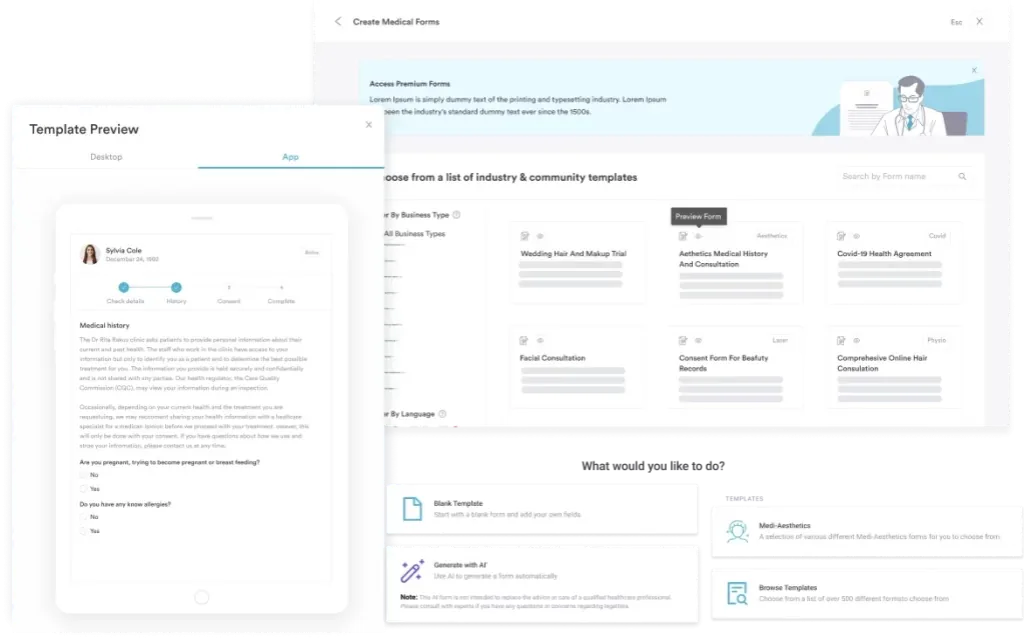
Build your H0034 note template with required fields for start time, end time, total minutes, units, medication name, training content, patient response, and medical necessity. If the note cannot be signed until those fields are filled, the most common denial triggers disappear.
Modifiers add the detail the base code leaves out, such as staff credential level or group delivery. Requirements are payer-specific.
Check your state Medicaid billing manual before you append anything. The table covers the modifiers that come up most often.
Virtual delivery deserves a second look before you code it. Medication training over video is still H0034 with a telehealth modifier. A short patient-initiated message exchange belongs under 99421 instead.
Most H0034 denials come down to unit math and thin medical necessity language. Both are operational problems, and both are fixable before submission.
Session time should be captured while the patient is still in the room. Reconstructing it later is where the errors start.
Six questions, asked before the claim leaves your desk:
Any answer of no is far cheaper to fix now than to appeal in eight weeks.
Pick the code that matches the service, not the setting. H0034 is medication education, while H2014 covers broader skills training.
Billing H2014 for a medication training session misrepresents the work. It also invites a down-coding review.
Adjacent services carry their own codes. Acute detoxification is billed under billed under H0009, and structured coaching sessions fall under coaching CPT codes.
Giving the medication is a different service again. When staff administer a dose by a route that is neither oral nor injectable, bill HCPCS code T1503 instead of H0034.
Descriptors do change between billing years. Check the NLM HCPCS database once a year before you lock in your code list.
Practices usually deliver H0034 well and then lose the claim in the handoff. The note misses clock times, or the billing team rebuilds units from a calendar entry.
Practice management software like Pabau closes that handoff. Pabau’s claims management software holds documentation and billing in one workflow, so the fields a time-based code needs get captured in the room.
Structured note templates can require start time, end time, medication name, and patient response before a note is signed. That removes the manual reconciliation step where unit errors creep in.
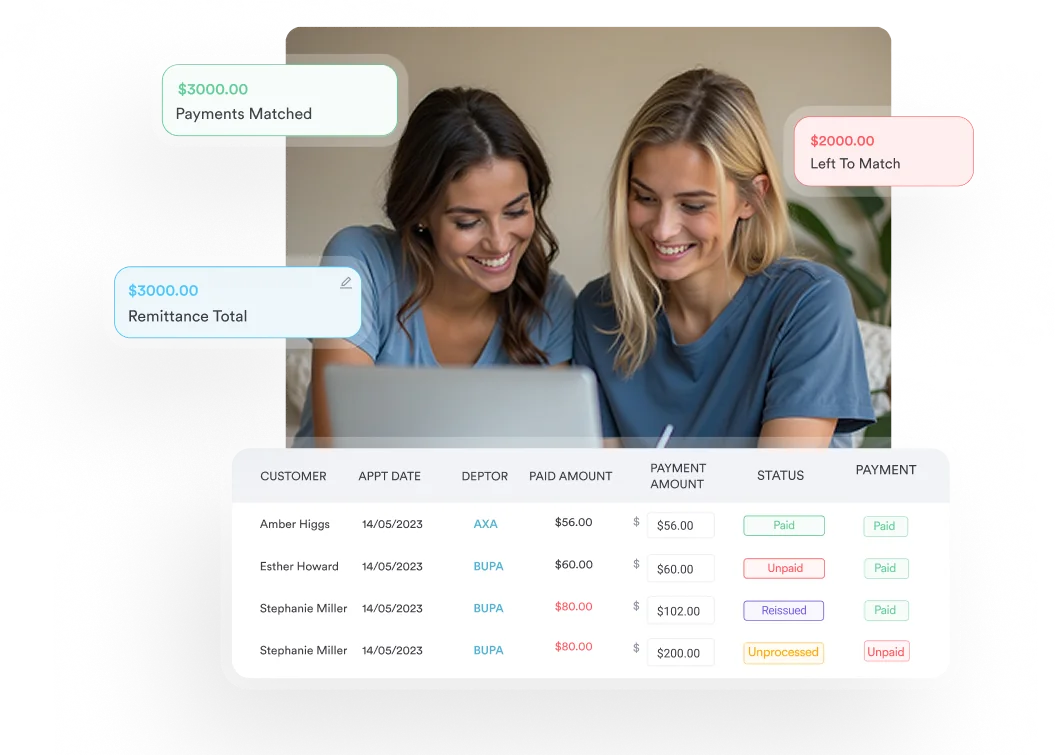
Every Pabau subscription includes automated billing workflows, so routine claim tasks run without manual chasing. Teams that want to watch H0034 unit patterns month by month can add Insights Plus, a separate paid product. It layers billing utilization reporting on top of the reporting already in your subscription.
Either way, comparing monthly H0034 volumes against your appointment log is worth the 20 minutes. Discrepancies are much easier to explain before a payer finds them.
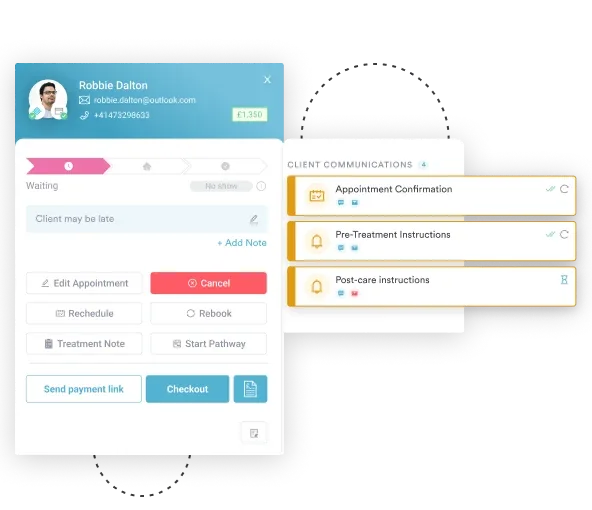
Pabau also ties diagnosis codes to service dates inside structured client records. Medical necessity becomes easy to evidence, and the same records support your HIPAA-compliant documentation reviews.
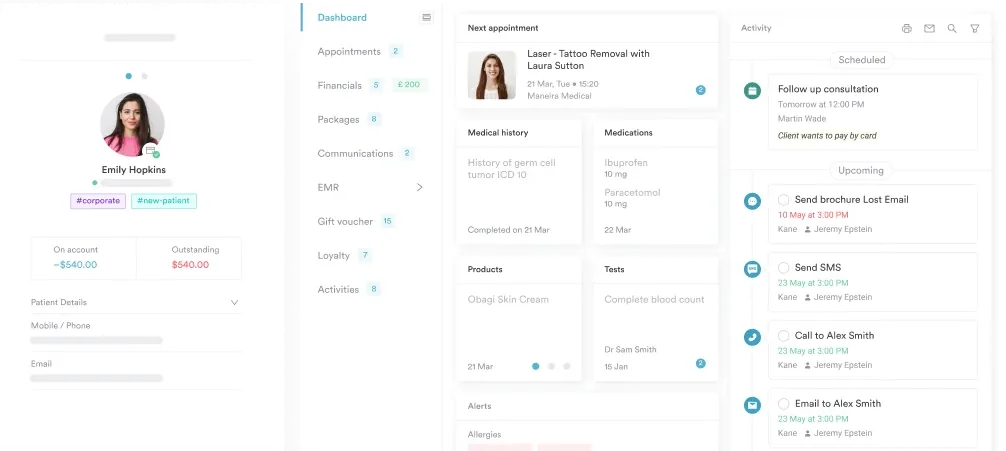

Pabau captures session times, medication details, and diagnosis codes in the note, then carries them onto the claim. Your H0034 units match the record every time.

H0034 rewards practices that treat medication training as a scheduled clinical service. Book it, time it, name the medication, and record why the patient needed it.
State rules will keep moving, because every Medicaid program writes its own. Your note template is the part you control. One that captures time and necessity by default will survive whichever plan you bill next year.
Pabau brings behavioral health documentation and claims into a single workflow, so H0034 units come straight from the note. Book a demo to see how that fits your billing routine.

Need a general malnutrition code? ICD-10 code E46 is the residual code for protein-calorie malnutrition when documentation lacks more specific detail.
Billing the opening assessment too? 90791 covers the psychiatric diagnostic evaluation that usually starts a behavioral health episode.
Running a peer support program? H0038 explains how self-help and peer services are billed by trained specialists.
Coding a vitamin A deficiency? ICD-10 code E50.1 covers vitamin A deficiency with Bitot’s spot and conjunctival xerosis documented together.
Documenting a niacin deficiency diagnosis? ICD-10 code E52 covers niacin deficiency, or pellagra, marked by dermatitis, diarrhea, and dementia.
Usually not. Most state Medicaid plans list behavioral health provider types for H0034, and pharmacists are rarely among them. Pharmacist-led medication reviews are normally billed with the medication therapy management codes 99605 to 99607. Check your state provider manual first.
Each state Medicaid program sets its own window. Many allow 90 to 365 days from the date of service, and managed care contracts are often tighter. Confirm the deadline in your provider manual, then build it into your billing calendar.
Start with the denial code on the remittance advice. Simple errors, such as a wrong unit count or a missing modifier, can often be corrected and resubmitted. Anything else needs a formal appeal, usually within 30 to 60 days, with the clinical note attached.
In many states, yes. Medicaid behavioral health programs commonly require services to link to an individualized treatment plan signed by a qualified professional. Bill without one and the payment can be recouped later, even when the note itself is strong.
Plan for at least six years. State Medicaid retention rules commonly run five to ten years, and HIPAA requires six years for required compliance documentation. Apply the longest rule that touches your practice.



