









Key takeaways
ICD-10 code S82.251E covers a displaced comminuted fracture of the right tibial shaft at a subsequent encounter, open type I or II, healing routinely
The 7th character E signals routine healing, so the note must show the fracture is knitting as the physician expects
Malunion of the same fracture is coded S82.251Q, not S82.251E. Swapping the two is the most common error on these claims
The parent code S82.251 is not billable on its own, so every claim needs one of the 16 valid 7th characters
Practice management software like Pabau captures healing status inside the visit note, so coders pick the right 7th character first time
ICD-10-CM code S82.251E reports a displaced comminuted fracture of the shaft of the right tibia at a subsequent encounter. The original fracture was open, Gustilo-Anderson type I or type II, and it is now healing routinely. The code is billable and valid for FY 2026.
E means routine healing. When the physician documents malunion instead, the code becomes S82.251Q. This article covers the full 7th character set, the documentation each one needs, and the reimbursement rules that follow.
S82.251E code details at a glance
S82.251E is a billable, specific ICD-10-CM diagnosis code accepted on UB-04 and CMS-1500 forms. The table below covers the facts coders need before submitting a claim.
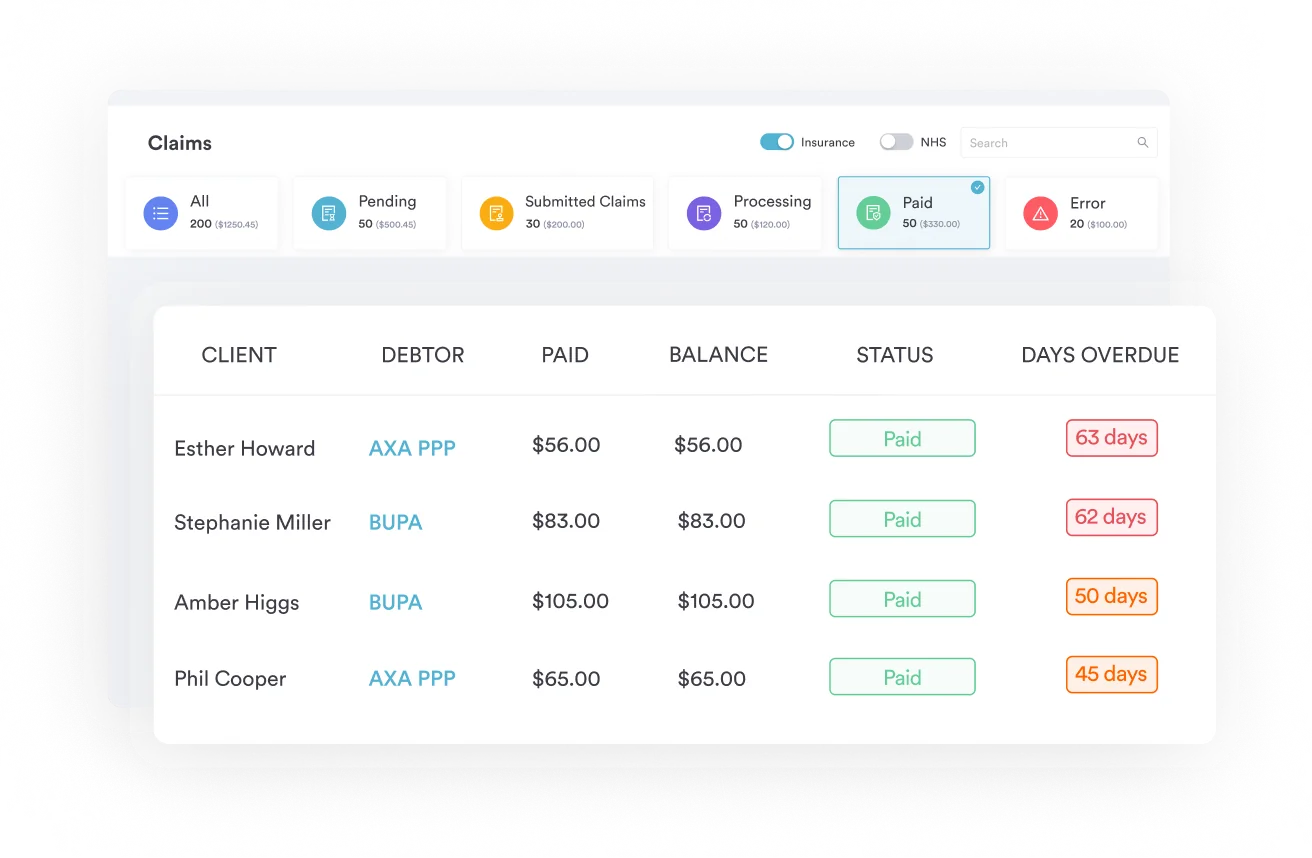
Practices managing orthopedic follow-up care can track S82.251E submissions through claims management software. Every follow-up visit is billed under its own 7th character, so the letter changes as healing progresses.
Full clinical description: Displaced comminuted fracture of shaft of right tibia
The descriptor for S82.251E packs six clinical facts into one code. Each one has to be supported somewhere in the record.
- Displaced: The bone fragments have moved out of normal anatomical alignment. A nondisplaced comminuted fracture of the same bone maps to S82.254 instead.
- Comminuted: The bone has broken into three or more fragments. High-energy trauma is the usual mechanism, such as a motor vehicle collision or a fall from height. For physical therapy EMR practices, this pattern signals a longer rehabilitation pathway.
- Shaft of right tibia: The fracture involves the diaphysis, the mid-portion of the bone, on the right side. Laterality is coded explicitly, so the note has to confirm the right leg.
- Subsequent encounter: Active treatment has finished and the patient is in aftercare. Cast changes, hardware checks, and follow-up imaging all count as subsequent encounters.
- Open fracture type I or II: The fracture broke the skin and was classified as Gustilo-Anderson type I or type II at initial treatment. Wound exploration at that visit is coded separately, for example under CPT code 20102.
- Routine healing: The fracture is knitting as the physician expects at this visit. No malunion, nonunion, or delayed union is documented.
Miss any one of those six and either a different code applies or the note needs a query.
How the 7th character works, with all 16 extensions
S82.251 is not billable on its own. Every code in the family needs a 7th character before a payer will accept it. The table below lists all 16 valid extensions, per the CDC/NCHS ICD-10-CM tool.
The set repeats in threes. For each healing status, the first letter is for closed fractures. The second covers open type I or II, and the third covers open type IIIA, IIIB, or IIIC.
Gustilo-Anderson type I and type II classification
The Gustilo-Anderson system is the classification ICD-10-CM references for open fracture coding. Gustilo and Anderson published the original three-type version in the Journal of Bone and Joint Surgery in 1976.
The type IIIA, IIIB, and IIIC subdivision in the table below came later. Gustilo, Mendoza, and Williams added it in the Journal of Trauma in 1984. The split between type I/II and type III decides which 7th character applies at every encounter.
Type IIIC turns on vascular injury rather than wound size. A documented circulation assessment at the initial visit is what separates it from type IIIB.
Critical coding rule: The Gustilo-Anderson type carries forward unchanged. Coders cannot upgrade or downgrade the classification between visits. If the initial encounter used B, a routine-healing follow-up uses E. If it used C, the follow-up uses F.
Routine healing: What it means and what the note must show
Routine healing means the fracture is progressing as the treating physician expects. No healing complication is documented at the visit. Imaging typically shows callus forming on schedule with alignment holding.
Three other healing statuses each take a different 7th character:
- Delayed healing: Union is progressing more slowly than expected, coded G, H, or J.
- Nonunion: The fracture has not united at all, coded K, M, or N.
- Malunion: The fracture healed in a position the physician judges unsatisfactory, coded P, Q, or R.
For this fracture and this open-fracture type, malunion is S82.251Q. E and Q sit next to each other in most coding tools, so they get swapped. The two letters describe opposite clinical outcomes.
The physician owns the healing status. A coder cannot read a radiology report and decide that healing is routine.
Coding guidelines: When to use ICD-10 code S82.251E
S82.251E is correct only when all five of these conditions hold at the encounter you are coding:
- Active treatment for the fracture is over. The patient is in aftercare, monitoring, or follow-up rather than acute surgical care.
- The original fracture was open and classified as Gustilo-Anderson type I or type II.
- The physician records that healing is routine, with no malunion, nonunion, or delayed union.
- The fracture involves the shaft, or diaphysis, of the right tibia.
- The original operative or radiology report describes the fracture as displaced and comminuted.
Per the ICD-10-CM Official Guidelines, the 7th character follows the provider’s documentation of the encounter. Subsequent encounter codes cover every visit after active treatment ends. That includes cast changes, hardware removal, medication adjustments, and follow-up X-rays.
Claim submission through HIPAA-compliant coding workflows depends on the encounter type being captured in the note first. The same letter logic runs through every fracture family in ICD-10-CM. S42.302K applies a nonunion extension to a humerus shaft fracture under the same rules.
Pro Tip
Pull up the initial encounter note before you assign S82.251E. Confirm the original code carried 7th character B for an open fracture type I or II. Then confirm the current note says healing is routine rather than delayed, nonunion, or malunion. A mismatch between the initial and subsequent classifications is one of the most common reasons these claims fail on audit.
MS-DRG mapping and reimbursement
On an inpatient claim, S82.251E groups to the aftercare MS-DRGs for the musculoskeletal system and connective tissue. The 7th character drives that placement, because the encounter is follow-up care rather than active treatment. The table below shows the three groupings under MS-DRG v43.0.
Relative weights are reset every fiscal year, so confirm the current figures against the CMS ICD-10 coding guidelines for FY 2026.
Two reimbursement details are worth knowing. S82.251E is exempt from present on admission reporting, so no POA indicator is required. Routine-healing follow-up visits are also usually outpatient, which means the DRG grouping only comes into play when the patient is admitted for another reason.
A wrong 7th character can come back as a denial weeks after the visit. A denial management process built around your most-billed fracture codes catches that pattern early.
Related and sibling ICD-10 codes for S82.251
The S82.25 subcategory covers comminuted fractures of the tibial shaft. Displacement and laterality are set by the 5th and 6th characters, and the 7th sets encounter type and healing status. Use the AAPC Codify ICD-10-CM lookup to check a sibling before you submit.
The sibling table above stops at encounter and healing-status codes. Sequela codes work differently, and S66.399S shows that extension at work in another injury family.
S82.251E vs. S82.251A and other commonly confused codes
Reach for the table below when a tibia fracture follow-up claim comes back rejected. Two errors account for most of them. The first is assigning S82.251A at a post-surgical follow-up visit. The second is picking E when the note documents malunion.
Documentation requirements for S82.251E
Thin documentation is the main reason S82.251E claims fail audit. Every element of the descriptor has to appear in the record. Coder inference does not count under the ICD-10-CM Official Guidelines.
Two records matter here: The original injury note and the current visit note. Digital clinical forms with structured fields for laterality, fracture pattern, and healing status keep both of them complete.
- From the original injury note: Confirmation that the fracture was displaced and comminuted. The record also has to show it was open and classified as Gustilo-Anderson type I or type II.
- Laterality, in both notes: The right tibia has to be named. If a note says left or bilateral, a different code applies.
- Healing status, in the current note: A statement that healing is routine or progressing as expected. Wording such as “healing well” or “callus formation on schedule” supports E.
- Encounter status: The note has to show active treatment has ended and this visit is aftercare or monitoring.
- Author of the classification: The Gustilo-Anderson type and the healing status must come from the treating physician or surgeon.
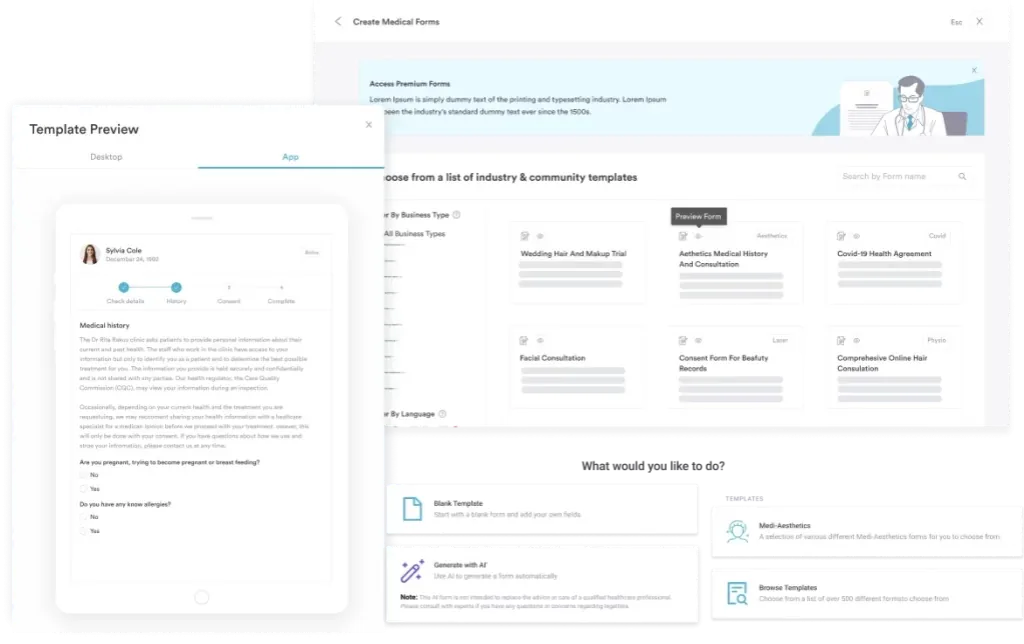
Practices that manage clinical records through structured templates spend less time chasing physicians for missing detail. A follow-up template that prompts for healing status, laterality, and fracture classification answers all three questions up front. Templates built from structured medical forms can carry those prompts as required fields.
When the record is thin, query the physician rather than assume. Assigning S82.251E with no documented healing status is a compliance exposure under payer audit criteria. A clean claim depends on what the note already says.
Pro Tip
Add a four-line prompt to the top of your fracture follow-up template. Confirm laterality, reference the original Gustilo-Anderson type, state the current healing status, and note whether active treatment has ended. Healing status has only four options — routine, delayed, nonunion, or malunion — so picking one takes the clinician seconds. That single prompt removes most 7th character selection errors.
Common coding errors and how to avoid them
Five errors account for most S82.251E rejections. Each one has a quick check attached to it.
- Using E when the note documents malunion. Malunion of this fracture is S82.251Q. Read the healing status word in the note before you pick the letter.
- Using E for a fracture that was closed. Routine healing after a closed tibial shaft fracture is S82.251D. E is reserved for fractures that were open type I or II.
- Using E at the initial encounter. Active treatment of an open type I or II fracture takes B. E applies only once that treatment is complete.
- Changing the Gustilo-Anderson type at follow-up. A fracture first classified type IIIB stays type III. Routine healing then takes F rather than E.
- Submitting S82.251 with no 7th character. The parent code is rejected as non-specific. Every claim needs one of the 16 valid extensions.
How Pabau supports accurate fracture coding
Coding accuracy is decided in the exam room. A coder working two weeks later can only use what the note already says. Practice management software like Pabau attaches the diagnosis code inside the clinical workflow, while the patient is still in front of you.
That matters most in sports medicine practices, where one patient can run through a dozen follow-up visits on a single injury. Each visit carries its own 7th character.
- Structured clinical notes: Pabau’s digital clinical forms can prompt for laterality, Gustilo-Anderson type, and healing status. The elements S82.251E needs are captured before the encounter closes.
- Full encounter history: Pabau’s structured patient records keep the original injury note on file. The initial 7th character stays visible months later, when you code the follow-up.
- Claims that carry the code through: Once the code is attached in the record, claims management takes it to submission without re-keying. That removes the transcription slips that turn an E into a Q.
- HIPAA-compliant submission: S82.251E is valid for HIPAA-covered transactions, and Pabau supports compliant transmission end to end. See Pabau’s HIPAA compliance page for the detail.
Documentation and billing work best as one workflow. The healing status, the encounter type, and the code then all come out of the same record.

Capture the right 7th character at the point of care
Pabau prompts clinicians for laterality, fracture type, and healing status at every visit. The code is right before the claim leaves your practice. See how it works.

Conclusion
Pull the initial encounter note before you assign S82.251E. That one habit settles the open-fracture type, the encounter status, and the healing status in a single read.
The trade-off worth remembering is where the risk sits. A wrong 7th character passes every clinical check in the practice, because the care itself was correct. It gets caught by a payer, weeks later.
Build the healing-status prompt into your follow-up template and the letter takes care of itself. To see how structured clinical documentation works in practice, book a demo.

Continue your research
Coding a fracture that has not united? S42.302K walks through the nonunion extension on a humerus shaft fracture.
Checking limb perfusion after an open fracture? Circulation assessment sets out the parameters and the wording that holds up in the record.
Submitting fracture claims through a third party? Medical claims clearinghouse explains the scrubbing that happens before a payer sees your claim.
Documenting a knee exam at follow-up? Posterolateral drawer test covers the technique, the grading, and the pitfalls to avoid.
Billing nurse visits during aftercare? HCPCS code G0162 covers registered nurse management of a home health plan of care.
Frequently asked questions
What does ICD-10 code S82.251E mean?
S82.251E is a billable ICD-10-CM code for a displaced comminuted fracture of the shaft of the right tibia. It applies at a subsequent encounter, where the original fracture was open Gustilo-Anderson type I or type II and healing is routine. The code is valid for FY 2026 on UB-04 and CMS-1500 claims.
Is S82.251E a billable ICD-10 code?
Yes, S82.251E is a billable and specific ICD-10-CM code valid for FY 2026. The parent code S82.251 is not billable on its own. Every code in the S82.251 family needs a 7th character extension before a payer will accept the claim.
What is the difference between open fracture type I and type II in ICD-10 coding?
Type I open fractures have a wound under 1 cm with minimal contamination. Type II wounds run 1 to 10 cm with moderate contamination and soft tissue damage. Both share the same 7th characters, B at the initial encounter and E for a subsequent encounter with routine healing. Type IIIA, IIIB, and IIIC fractures use C and F instead.
When should S82.251E be used instead of S82.251A?
S82.251A covers the initial encounter for a closed fracture during active treatment. S82.251E applies at follow-up visits after active treatment ends, when the original fracture was open type I or II and healing is routine. Using S82.251A at a post-surgical follow-up visit is a coding error that often triggers a payer audit.
Which ICD-10 code covers malunion of this tibia fracture?
Malunion of a displaced comminuted right tibial shaft fracture that was open type I or II is S82.251Q. S82.251E cannot be used, because it describes routine healing. A closed fracture with malunion takes S82.251P, and an open type III fracture takes S82.251R.
What are the coding guidelines for subsequent encounter fracture codes?
Per the ICD-10-CM Official Guidelines, subsequent encounter codes cover every visit after active treatment ends. That includes follow-up X-rays, cast changes, hardware removal, and management of healing complications. The 7th character has to reflect the original open or closed status and the healing status the physician documents at that visit.