










Key takeaways
HCPCS code E0296 describes a total electric hospital bed with powered head, foot, and height adjustments, without side rails, with mattress included.
Medicare treats powered height adjustment as a convenience feature. LCD L33820 denies E0296, E0297, E0265, and E0266 as not reasonable and necessary.
The bed is still billable through Medicare’s upgrade rules. The covered lower-tier bed goes on a GK line, and the E0296 line carries GA when the patient signed an ABN.
No Certificate of Medical Necessity is submitted for a hospital bed. CMS retired CMNs and DIFs for dates of service from January 1, 2023, and a standard written order took their place.
Practice management software like Pabau keeps the written order, the clinical notes, and the signed forms on one patient record. A review request is then quick to answer.
HCPCS code E0296 is a total electric hospital bed, and Medicare will not pay for the total electric part. LCD L33820 treats powered height adjustment as a convenience feature. So the line denies, even for a patient who plainly needs a hospital bed.
That surprises a lot of suppliers. The bed goes out the door, the claim comes back denied, and the write-off lands on whoever delivered it. Nothing about the diagnosis or the paperwork changes that answer.
The code is still billable, though. Medicare’s upgrade rules pay for the bed the patient qualifies for, on a second line of the same claim. An Advance Beneficiary Notice, or ABN, signed before delivery then puts the difference on the patient instead of your margin.
HCPCS code E0296 covers a total electric hospital bed
E0296 is a Level II HCPCS code, maintained by the Centers for Medicare and Medicaid Services (CMS). It describes a hospital bed with three powered adjustments. A motor moves the head, the foot, and the overall height.
Two further details separate E0296 from its siblings. The bed ships without side rails, and a mattress comes with it.
Semi-electric beds, E0294 and E0295, power the head and foot while the height moves by hand. Variable height beds, E0292 and E0293, move up and down mechanically with no motor at all. E0296 powers all three functions, and the third motor is where Medicare stops.
Medicare denies E0296 as a convenience feature
No, Medicare does not cover E0296. LCD L33820 (Hospital Beds and Accessories) treats the height adjustment on a total electric bed as a convenience. Claims for E0296, E0297, E0265, and E0266 deny as not reasonable and necessary, whatever the diagnosis on the claim.
That denial attaches to the total electric feature alone. The same patient, on the same clinical facts, can qualify for a fixed height, variable height, or semi-electric bed.
So two questions decide the outcome. Does the patient qualify for a hospital bed at all, and which tier does the record support? Solid patient care management answers both before the bed is loaded onto the van.
The criteria every hospital bed has to meet
Every tier starts from the fixed height criteria. The medical record has to show at least one of the following:
- The patient has a condition requiring body positioning that an ordinary bed cannot provide. Elevation of the head or upper body by less than 30 degrees does not usually justify a hospital bed.
- The patient requires positioning that an ordinary bed cannot provide in order to relieve pain.
- The patient requires the head of the bed elevated more than 30 degrees most of the time. Congestive heart failure, chronic pulmonary disease, and problems with aspiration all qualify.
- The patient requires traction equipment that can only be attached to a hospital bed.
What each higher tier adds on top
Move up the family and each tier adds one requirement to that list.
- Variable height (E0292, E0293): the patient needs a bed height a fixed height bed cannot give. The height is what allows a transfer to a chair, wheelchair, or standing position.
- Semi-electric (E0294, E0295): the patient needs frequent changes in body position, or has an immediate need to change position.
- Heavy duty extra wide (E0301, E0303): the patient weighs more than 350 pounds but not more than 600 pounds.
- Extra heavy duty (E0302, E0304): the patient weighs more than 600 pounds.
- Total electric (E0296, E0297): no criteria exist, because the tier is not covered at all.
One more condition sits behind all of them. The bed has to be for use in the patient’s home. A bed supplied during a hospital or skilled nursing facility stay falls outside the Part B equipment benefit.
For a patient who qualifies for a semi-electric bed and receives a total electric one, E0294 is the code that carries the payment. E0296 still appears as the item supplied, and that line is denied. Once the tier is settled, the file has to prove it.
Documentation for E0296 rests on the written order
No Certificate of Medical Necessity exists for a hospital bed, and none has for years. CMS discontinued CMNs and DME Information Forms for dates of service on or after January 1, 2023, in MLN Matters SE22002. A claim that still carries CMN or DIF data comes back rejected rather than processed.
Two things carry that weight now. The supplier holds a standard written order, known as an SWO. Clinical justification lives in the treating practitioner’s own records.
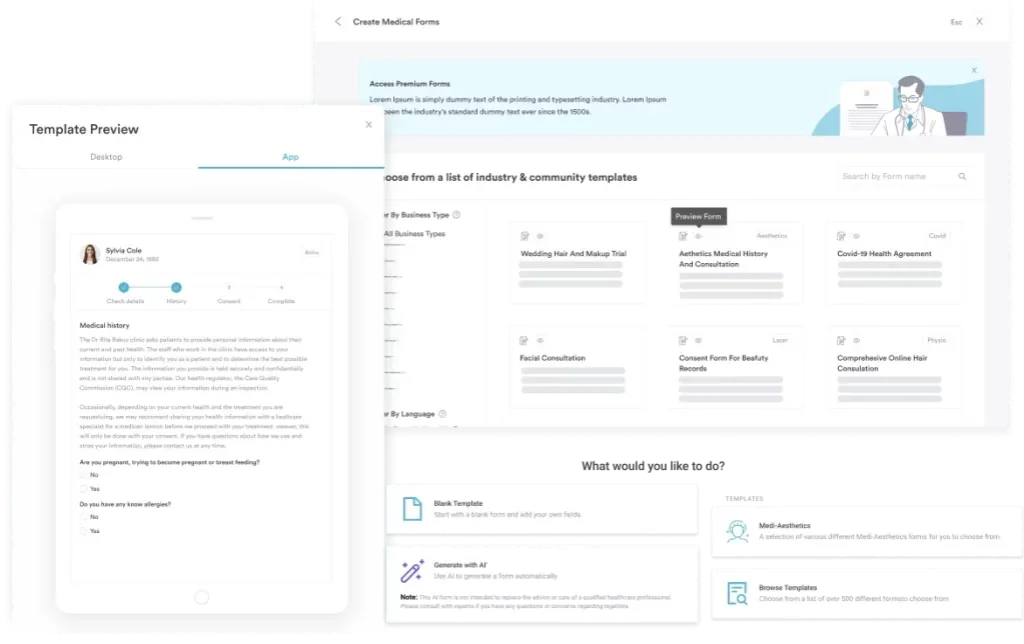
Neither document travels with the claim, so both have to surface on request. Keeping medical forms in a digital system rather than paper folders is what makes that possible months later.
One row in that table does most of the damage. Notes that describe weakness, with no mention of positioning, fail the criterion they were meant to support. The clearest positioning detail often sits in a therapist’s evaluation. Practices on occupational therapy software or a physical therapy EMR usually hold it already.
Face-to-face rules apply to three bed codes, not this one
E0296 sits off the CMS list of codes that need a face-to-face encounter and a written order prior to delivery (WOPD). Three hospital bed codes are on that list as of August 12, 2024. Those are E0290, E0301, and E0304.
Where the covered bed is one of the three, two extra rules apply. The encounter has to fall within the six months before the order date. Delivery also comes after the order, never before it.
Dates are what a reviewer checks first
Timing trips suppliers up more often than content does. The SWO must be signed and in hand before the claim goes to Medicare. An ABN must be signed before the bed reaches the patient. Equipment delivered ahead of the signed order carries modifier EY on every affected code, and those lines never pay.
MAC contractors, including Noridian Healthcare Solutions and CGS Administrators, run post-payment reviews on hospital bed claims. Records never travel with the claim, so the request lands months after delivery. Digital forms stored against the patient record turn that into a short job rather than a filing-cabinet hunt.
Pro Tip
Date-check every hospital bed file at delivery, not at billing. The written order has to be signed and in your hands before the claim goes out. The ABN has to be signed before the bed reaches the patient. A file that fails either date test is already a write-off, and no paperwork added later repairs it.
E0296 has a fee schedule amount, but the GK line pays
Payment on an upgrade claim follows the covered bed, not E0296. Look both codes up in the CMS DMEPOS fee schedule file for the state of delivery. Hospital beds are not priced in the physician fee schedule tool.
Competitive bidding does not restrict who may supply the bed at the moment. Round 2021 contracts expired on December 31, 2023, and the program has run in a temporary gap period since.
Any enrolled Medicare DMEPOS supplier can furnish hospital beds during it, and fee schedule amounts in former bidding areas still derive from bidding data.
Codes move as well as prices. HCPCS Level II codes are updated annually, per the CMS HCPCS overview, so re-check both codes each January. The fee schedule tells you the amount, and modifiers decide whether you ever see it.
Modifiers decide whether an E0296 claim gets paid
Two groups of modifiers appear on an E0296 claim. The capped rental month modifiers come first, then the liability modifiers that handle a non-covered upgrade.
A hospital bed line submitted without KX, GA, GY, or GZ is rejected as missing information, which leaves nothing to appeal.
How the two-line upgrade claim goes out
Medicare’s upgrade instructions are specific about the order of the lines. Both go on the same claim, one directly after the other.
- Line 1: E0296 at your full charge for the bed supplied, with the rental modifiers. Add GA when an ABN is signed, or GZ when it is not.
- Line 2: the covered code the patient qualifies for, such as E0294, with GK, plus KX when that bed’s criteria are met.
Line 1 denies as patient responsibility. Medicare runs line 2 through normal processing, and the patient owes the difference when the ABN is on file. Identify the upgrade features in item 19 of the CMS-1500 form, or the equivalent field on an electronic claim.
A worked example, start to finish
Take a patient with heart failure who needs the head of the bed above 30 degrees and frequent repositioning. The record supports a semi-electric bed. Total electric is what the family asks for, so you deliver it and get the ABN signed that morning.
Then the first rental claim carries two lines. Line 1 is E0296 with RR, KH, and GA. Under it sits E0294 with RR, KH, GK, and KX. Medicare denies line 1 to patient responsibility and pays its share of the E0294 allowance. The patient owes coinsurance on E0294, plus the upgrade difference on top.
Before you submit
A short pass over the file catches most of what comes back on this code.
- The month modifier matches the rental month, counted from the original delivery date.
- GA sits on the E0296 line where an ABN was signed, or GZ where it was not.
- The covered bed’s line follows directly underneath, carrying GK.
- Item 19 names the upgrade features.
- The written order is signed, dated, and in the file before the claim goes out.
- Proof of continued need is on file once the rental passes 12 months.
A second, simpler route exists. Suppliers can hand over the total electric bed at the price of the covered bed, with no charge to the patient and no ABN. Only the covered code goes on the claim then, with modifier GL, and E0296 never appears. Medicare pays the covered bed’s allowance and the patient owes nothing extra.
Modifier rules change, so confirm current instructions with your MAC before a first submission. Where a practice handles billing in-house, claims management software is what catches a missing modifier before submission.
E0296 is a capped rental, never a purchase
Hospital beds rent by the month. Medicare pays a monthly allowance, and no purchase option exists to elect. So NU and UE, the purchase modifiers, have no place on a Medicare hospital bed claim.
- Months 1 to 3: Medicare pays the monthly rental allowance. The supplier owns the bed and handles maintenance and repairs.
- Months 4 to 13: rental continues at the scheduled amount for those months, with servicing still on the supplier.
- After the 13th paid month: title transfers to the patient, and the bed that was delivered is theirs to keep.
- Break in need: a new rental period can start when the need returns. It takes a break in medical necessity of more than 60 consecutive days, plus the days left in the last rental month.
On an upgrade claim the rental clock runs on both lines together. The patient pays the upgrade difference every month, not once at delivery. An EHR integration that ties the delivery date to the patient record keeps that month count honest.
How E0296 differs from E0290 through E0297
Two variables separate the eight codes in this block. One is the adjustment type, the other is whether a mattress comes with the bed. Every code from E0290 through E0297 describes a bed without side rails, which is where the mix-ups start.
The pair to keep straight is E0296 and E0297. Both are total electric beds without side rails, and the mattress is the only difference between them. Neither is covered, so both follow the upgrade rules above.
Beds that arrive with side rails sit in a separate block, E0250 through E0266, with the same four adjustment tiers. Billing E0296 for a bed delivered with rails misstates what was supplied, and that is an audit risk. Rails added to a bed billed without them are their own codes, E0305 for half length and E0310 for full length.
Beds for children sit outside the family altogether. E0329 covers a pediatric bed with 360 degree side enclosures and a mattress included.
Eight habits that get E0296 claims denied
Denials on this code cluster around a short list of habits, and most are fixed before the claim leaves the building. Run a compliance checklist over DME files the way you already run one over charts.
Four that go wrong on the claim
- Billing E0296 on its own: a lone E0296 line asks Medicare to pay for a non-covered bed. It is denied, and no other line on the claim pays for the bed.
- No liability modifier: a hospital bed line without KX, GA, GY, or GZ is rejected as missing information rather than denied. A rejection carries no appeal rights.
- Wrong modifier for the rental month: KI in month 1, or KH in month 3, both deny. Count months from the original delivery date, not from the claim date.
- Still filing a CMN: CMN and DIF data on a claim causes a rejection for any date of service from January 1, 2023 onward.
Four that go wrong in the file
- ABN signed after delivery: the notice has to be in place before the patient receives the bed. A late signature leaves the supplier holding the upgrade cost.
- No positioning need in the notes: the record has to show the criterion being claimed. Head elevation above 30 degrees for heart failure counts, and a referral letter listing diagnoses does not.
- Diagnosis codes that do not match the record: the codes on the claim have to reflect the documented condition. A mismatch between claim and notes is a direct audit trigger.
- Order dated after delivery: the written order must be signed and received before the claim is submitted. Delivery ahead of the order requires modifier EY, and that line will not be paid.
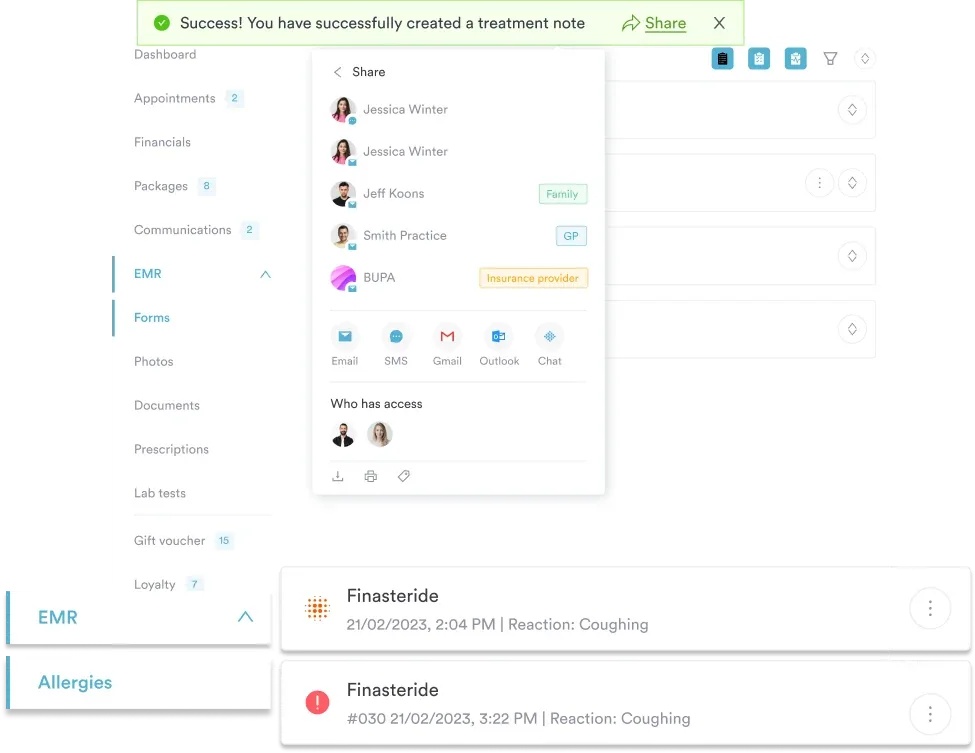
Notice how many of those are date problems rather than clinical ones. Keep the order, the notes, and the signed forms in patient record management software, attached to the patient file. That catches nearly all of them before the claim goes out.
Pro Tip
Run a two-line test on every total electric bed claim before it goes out. Does the claim show E0296 with GA or GZ, and does the very next line show the covered bed code with GK? If either line is missing, fix the claim rather than sending it and waiting for the denial to arrive.
ICD-10 codes that support a hospital bed claim
The diagnosis has to establish medical necessity for a hospital bed, and for the tier billed on the GK line. It cannot make a total electric bed covered.
The codes below map to the criteria in the hospital bed LCD rather than to the bed’s features.
These pairings are guidance, not a coverage promise. Payers decide on the whole clinical record, and every code has to reflect a documented condition. Choosing a code because it reads well for medical necessity, with no clinical support behind it, is fraudulent billing.
Check the current hospital bed LCD and policy article for your jurisdiction before billing. Noridian Healthcare Solutions and CGS Administrators publish the coverage criteria and coding guidance that apply in their own regions. CGS Medicare guidance also covers PDAC verification in that jurisdiction.
How Pabau keeps DME documentation review-ready
Most practices that order a hospital bed are not the supplier. They write the order, hold the clinical notes behind it, and answer the record request when a MAC reviews the claim months later. When those pieces live in three different systems, that request eats an afternoon.
Practice management software like Pabau keeps the order, the notes that justify it, and the signed patient forms on the same record. Custom digital forms capture the positioning findings the LCD asks for, so the note supports the tier that was billed. Every document is timestamped, searchable, and stored where a reviewer expects to find it.
The outcome is a file you can produce in minutes instead of hours, and fewer write-offs caused by a document nobody could locate.

Keep every DME order and note on one patient record
Pabau holds written orders, clinical notes, signed patient forms, and delivery paperwork against the patient record. When a Medicare review request lands, the file is already assembled and easy to send.

Conclusion
So E0296 is a code you bill on purpose, knowing one line will be denied. The total electric feature stays non-covered, and the payment sits on the GK line beside it. Get the ABN signed before delivery, keep an order and notes that match the tier billed, and that denial costs the practice nothing.
The Certificate of Medical Necessity is gone, and what replaced it lives in the clinical record. Practices that keep orders, notes, and signed forms together answer a review request without a scramble.
Pabau’s practice management software holds that documentation next to the scheduling and clinical notes your team already works in. Book a demo to see how it fits a DME-adjacent workflow.

Continue your research
Billing other home equipment for the same patient? E0248 covers the heavy duty transfer bench, another home item with its own documentation trail.
Need the same documentation discipline on a brace? L0458 walks through TLSO billing, the fee schedule, and the records a reviewer asks for.
Replacing a part rather than a whole item? E0249 covers replacement pad billing, where the same order and delivery rules apply.
Curious how modifiers work on a monitored supply? E0607 covers the home blood glucose monitor, a Part B item with its own modifier set.
Storing orders and consent forms in software? HIPAA compliance for clinic software sets out the standards that apply when a system holds patient health information.
Frequently asked questions
Will a Medicare Advantage plan pay for a total electric bed?
A Medicare Advantage plan has to cover what Original Medicare covers, so the LCD denial usually carries across. Some plans add their own equipment benefits, and most want prior authorization for a hospital bed. Check the plan’s DME policy before delivery, then get the authorization in writing.
How long does one ABN stay valid during a long rental?
A single ABN can cover an extended course of noncovered treatment for up to one year. A rental that runs past that point needs a fresh notice. Re-issue it sooner if the equipment changes, or if the reason for noncoverage changes. Date every copy before the bed arrives.
How do we bill side rails added to an E0296 bed?
Rails are their own codes when the bed is billed without them. E0305 covers half length rails, and E0310 covers full length. Bill the rail code in addition to the bed, and record why the patient needs it. A bed coded with rails already includes them, so no rail code applies.
Who pays to repair the bed once the patient owns it?
Medicare can pay to repair equipment the patient owns after title transfers. Replacement parts go on the claim with modifier RB, and the repair has to keep a medically necessary item in service. Parts and labor under warranty are not payable, so read the warranty before you bill.
Does a secondary payer pick up the upgrade difference?
It depends on the payer. State Medicaid programs set their own equipment rules, and a few cover a bed Medicare denies. A supplemental policy generally follows Medicare, so a denied line stays with the patient. Ask before delivery, and note the answer in the file.