HCPCS code E0198: Water pressure pad billing guide
HCPCS code E0198 is a water pad for a standard mattress HCPCS code E0198 is the ...

Last Updated: Oct 13, 2026
E0329 is the HCPCS Level II code for hospital bed, pediatric, electric or semi-electric, 360 degree side enclosures, top of headboard, footboard and side rails up to 24 inches above the spring, includes mattress.
The official long description reads: Hospital bed, pediatric, electric or semi-electric, with 360-degree side enclosures. It also specifies the top of headboard, footboard, and side rails up to 24 inches above the spring, plus an included mattress.
The mattress is included in this code, so never bill a separate mattress code alongside E0329. The powered drive mechanism is what sets this code apart from its closest neighbor, E0328. Both beds carry the same 360-degree side enclosures.
Let Pabau's smart automation suggest the right codes, reduce claim denials, and keep your practice compliant—effortlessly.
Automate repetitive tasks and focus on what matters most—your patients.
Reduce coding errors and ensure compliance with the latest regulations.
Clean claims, fewer denials, and faster reimbursements.
Powerful insights and reporting to help your practice thrive.
HIPAA compliant SOC 2 certified GDPR-compliant Trusted by 4,000+ clinics worldwide

HCPCS code E0329 covers a pediatric hospital bed, electric or semi-electric, with 360-degree side enclosures and a mattress included.
E0328 describes the same bed in manual form, so the drive mechanism is the only thing that separates the two codes.
Medicare covers E0329 only when a physician documents medical necessity and the patient meets bed-confinement or positioning criteria.
Prior authorization depends on your DME MAC jurisdiction, so read the applicable Local Coverage Determination before you bill.
Practice management software like Pabau keeps HCPCS code entry, modifier selection, and documentation capture in one billing workflow.
Medicare covers E0329 as DME when the patient meets specific clinical conditions. Coverage decisions are administered by DME Medicare Administrative Contractors (DME MACs), and Local Coverage Determinations (LCDs) govern eligibility at the jurisdiction level. Always verify the applicable LCD before billing, because requirements differ by DME MAC region.
Per the Medicare Coverage Database, the patient must meet at least one of the following criteria to qualify for a covered hospital bed:
The 360-degree side enclosures make E0329 appropriate for pediatric patients with significant mobility impairment, seizure disorders, or severe neurodevelopmental diagnoses. What the reviewer looks for is a documented fall or entrapment risk, written in the chart before the bed was ordered.
Medical necessity must be documented in the patient’s medical record before the equipment is provided, not after. The physician order alone is not sufficient. The record has to explain why this bed’s specific features are needed. It also has to say why a standard or lower-feature pediatric bed will not do.
The strongest supporting evidence usually comes from the therapists who see the child every week. Notes from physical therapy practices that describe transfer difficulty and positioning tolerance carry more weight on review than a diagnosis code on its own. Well-structured clinical progress notes make that history easy for a reviewer to follow.
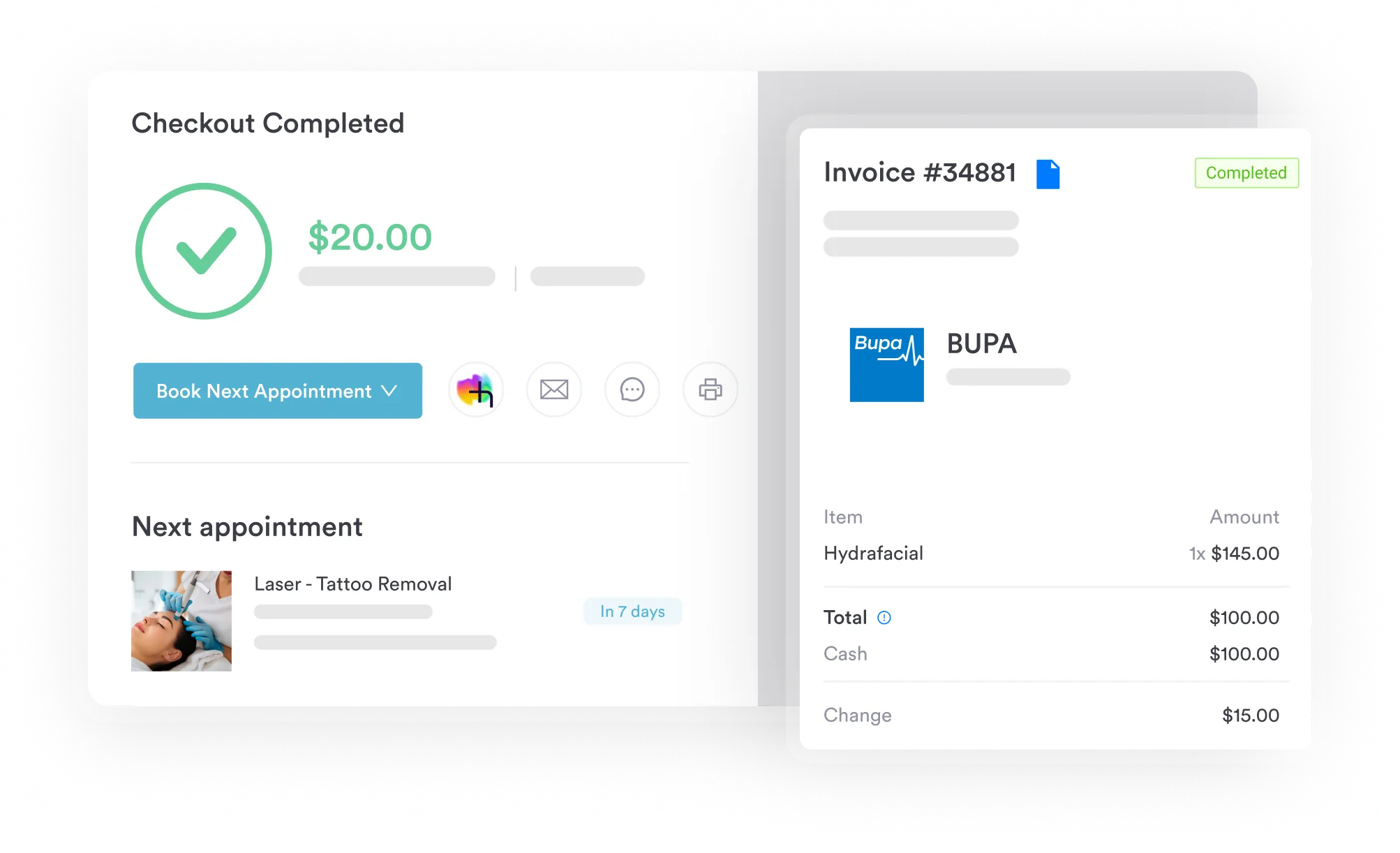
Incomplete documentation is the leading cause of E0329 claim denial. The records below must be in the file before the claim is submitted. Storing them in HIPAA-compliant software keeps them retrievable for the full audit retention period.
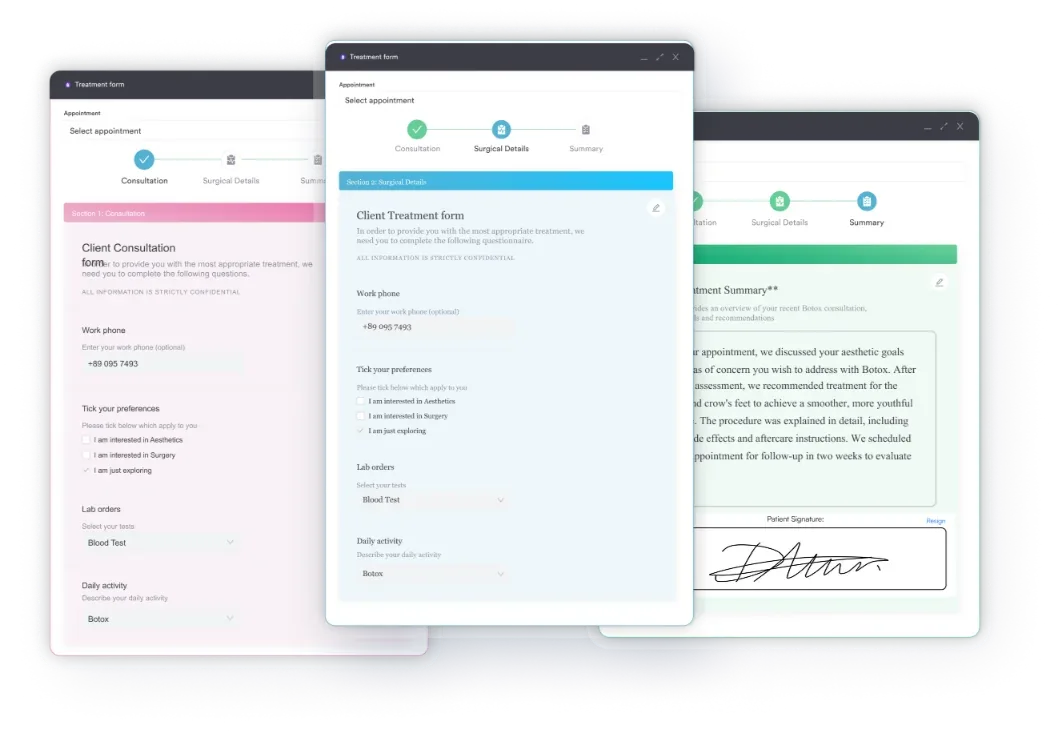
Collecting signatures and CMNs on paper slows the whole chain down. Digital intake forms capture them at the point of care and file them against the patient record automatically. The documentation stays audit-ready without a filing cabinet.
CMS has expanded its prior authorization program for certain DME items. Whether E0329 requires prior authorization depends on your DME MAC jurisdiction and the applicable LCD. Never assume the code is exempt. Delivering the bed before authorization is confirmed is a common source of non-covered write-offs.
If prior authorization is required, the general process follows these steps:
For private payers and Medicaid programs, prior authorization rules vary by state and plan. Confirm requirements directly with the payer before proceeding. Keep the medical documentation forms used during this process filed alongside the authorization confirmation.
Check your DME MAC’s LCD for E0329 before delivery on every claim, not just the first time you bill the code. LCDs are updated periodically, and prior authorization requirements or coverage criteria can change mid-year without a general announcement.
E0329 is reimbursed under the Medicare DMEPOS fee schedule, and CMS updates those rates annually. The table below reflects the general rate structure for 2026 rather than dollar amounts. For allowed amounts by geographic area, the AAPC HCPCS code lookup and the third-party PGM Billing lookup tool are useful starting points. Verify every final claim amount against the current CMS DMEPOS fee schedule publication. Batch submissions group many claims into one claim file, and one malformed record can hold up the batch.
Geographic rate adjustments apply. Rates in urban and rural areas differ based on DME MAC jurisdiction and CMS locality data. For current dollar amounts, go to the CMS DMEPOS fee schedule directly rather than a cached or third-party reproduction.
Billing E0329 follows the standard DMEPOS claim submission process, with a few code-specific requirements. Following this sequence reduces the risk of denial before a claim ever reaches the DME MAC.
DMEPOS generates more modifier errors than any other billing code category. The modifiers below are the ones that show up on E0329 claims. Applying the wrong modifier, or omitting a required one, triggers an automatic edit that returns the claim without payment.
The diagnosis code on the claim must support the need for a pediatric electric or semi-electric bed with full side enclosures. The codes below are the ones that appear most often on E0329 claims. The list is not exhaustive, and the pairing has to reflect the patient’s documented condition.
A diagnosis code rarely stands on its own under review. Occupational therapy assessments supply the functional detail that ties the diagnosis to the bed’s features. For a child coded to G40.909, a written seizure care plan is usually the document that explains why full enclosures are needed overnight.
Choosing the wrong code from the E0300 to E0330 range is one of the most common errors on hospital bed claims. Bed type, weight capacity, mattress inclusion, and patient population all matter. Use this crosswalk to confirm E0329 before submission. EMR software with a built-in HCPCS lookup can also flag a mismatch at the point of entry.
Most guidance treats the 360-degree enclosures as what separates E0328 from E0329. It does not. Both codes describe a pediatric bed with full enclosures and an included mattress, so the drive mechanism is the deciding factor. A powered or semi-powered bed is E0329, and a hand-cranked bed is E0328.
The same care applies to accessories delivered with the bed. Items like E0248 carry their own coverage criteria carry their own coverage criteria, so they are billed on separate lines rather than folded into the bed. Compliance management tools that flag code-to-equipment mismatches before submission prevent this whole category of denial.
E0329 claims fail for predictable reasons. The errors below show up repeatedly in DME MAC audit findings, and every one of them is correctable before submission.
Most of these are caught by process rather than by memory. Practice management software that builds a documentation checklist into the billing workflow stops the claim leaving your system until each item is attached.
Run a self-audit on your last 20 E0329 claims before submitting the next batch. Check that KX is present where required, and that the prior authorization number sits in field 23. Confirm the ICD-10 code matches the physician’s notes. Make sure there is no separate mattress line, and that proof of delivery is dated correctly. Denial patterns almost always surface within those 20 claims.
In most DME operations the E0329 paperwork lives in three places at once. The physician order arrives by fax, the CMN sits in a shared drive, and the delivery signature is on a clipboard in a van. Someone then reassembles all of it when the DME MAC asks for records, weeks after the claim went out.
Practice management software like Pabau holds all of it against one patient record. Claims management software pairs the HCPCS code with its modifier. The intake forms, CMN, and proof of delivery attach to that same record as they are collected. The biller can see what is missing before the claim is released, not after it is denied.
The outcome is fewer records requests that turn into write-offs, and a shorter path from delivery to payment. When an audit does land, the file is already assembled, so you spend minutes on it instead of a day.

Pabau captures physician orders, CMNs, and proof of delivery alongside HCPCS code entry. The record supporting an E0329 claim is complete before you submit it. Fewer records requests turn into write-offs.

Almost every E0329 denial traces back to a decision made before the bed left the warehouse. The code was chosen without checking whether the bed was powered or hand-cranked. The LCD was read once, a year ago. The authorization request went in after delivery. None of that is recoverable at the appeal stage.
So treat the pre-delivery checks as the billing work, because that is where the money is won or lost. Confirm the drive mechanism, read the current LCD, and get the order, CMN, and authorization in the file before the van moves. Book a demo to see how Pabau keeps that documentation attached to the claim for DME billing.

Billing other pediatric DME accessories? K0065 covers the modifier and proof-of-delivery rules that come with wheelchair components.
Supporting a child in long-term residential care? T2016 explains how habilitation days are documented and billed.
Fitting a spinal orthosis alongside the bed? L0458 walks through TLSO billing, fee schedule rules, and documentation.
Coding an obstetric injury to pelvic organs? ICD-10 code O71.5 covers bladder and urethra injuries from delivery and when the unspecified code applies.
Need the code for postpartum varicose veins? ICD-10 code O87.4 covers varicose veins of the lower extremity during the postpartum period, valid through September 2026.
HCPCS code E0329 is a Level II HCPCS code used to bill for a pediatric hospital bed, electric or semi-electric. The bed has 360-degree side enclosures, a headboard, a footboard, and side rails up to 24 inches above the spring. A mattress is included. The code sits in the Durable Medical Equipment (DME) category and is active for 2026.
Yes, Medicare covers E0329 when the pediatric patient meets CMS coverage criteria. That means bed confinement, or a documented need for positioning a standard bed cannot achieve, supported by a physician order and medical records. Coverage is administered by DME MACs, and Local Coverage Determinations set the specific requirements in each jurisdiction.
Prior authorization requirements for E0329 vary by DME MAC jurisdiction and payer. CMS has expanded its prior authorization program for certain DME items, so verify the applicable LCD and payer requirements before delivering the equipment. Providing the bed before authorization is a common source of non-covered write-offs.
You need a signed physician order, a Certificate of Medical Necessity where the LCD requires one, and medical records establishing the diagnosis and functional limitations. You also need a proof-of-delivery signature from the beneficiary or caregiver, dated on or after the actual delivery date. If prior authorization was required, retain the approval confirmation too.
The drive mechanism is the only difference. Both codes describe a pediatric hospital bed with 360-degree side enclosures and an included mattress. Both also cover the headboard, footboard, and side rails up to 24 inches above the spring. E0328 is the manual version, operated by hand. E0329 is the electric or semi-electric version. If the bed is hand-cranked, bill E0328.
No. E0330 was deleted from HCPCS effective January 1, 1992, so it is not a billable code and a claim carrying it will be rejected. For a pediatric bed with 360-degree side enclosures, use E0329 for an electric or semi-electric model and E0328 for a manual one.
The primary modifiers are RR for rental, NU for new purchase, and UE for used purchase. KX is added when the LCD medical necessity criteria are met and documentation is on file. GA applies when an Advance Beneficiary Notice is on file and coverage is uncertain. Check your DME MAC’s LCD to confirm which modifiers your jurisdiction requires.