

HCPCS code E0198: Water pressure pad billing guide
HCPCS code E0198 is a water pad for a standard mattress HCPCS code E0198 is the ...

Last Updated: Oct 13, 2026
E0248 is the HCPCS Level II code for transfer bench, heavy duty, for tub or toilet with or without commode opening.
Those two words, "heavy duty", are where the money sits. A reviewer wants to see why a standard bench would not hold this patient, and wants it in writing before the bench leaves the warehouse.
Get that reasoning into the file up front and the claim pays. Leave it out and the claim comes back down-coded to E0247, or denied outright.
Let Pabau's smart automation suggest the right codes, reduce claim denials, and keep your practice compliant—effortlessly.
Automate repetitive tasks and focus on what matters most—your patients.
Reduce coding errors and ensure compliance with the latest regulations.
Clean claims, fewer denials, and faster reimbursements.
Powerful insights and reporting to help your practice thrive.
HIPAA compliant SOC 2 certified GDPR-compliant Trusted by 4,000+ clinics worldwide

HCPCS code E0248 covers a heavy duty transfer bench for a tub or toilet, with or without a commode opening.
Weight capacity is what separates E0248 from E0247, so the record has to say why a standard bench would not hold this patient.
Suppliers bill E0248 as a purchase with the NU modifier, and payment follows the national DMEPOS fee schedule adjusted for the locality.
CMS retired Certificates of Medical Necessity for all DME on January 1, 2023, so a standard written order now anchors the file.
Practice management software like Pabau captures the functional assessment in digital forms, so the detail a supplier needs sits in the client record.
E0248 is a Level II HCPCS code maintained by the Centers for Medicare and Medicaid Services. It sits in the durable medical equipment, prosthetics, orthotics and supplies family, better known as DMEPOS. One code, one item.
The long descriptor reads: “Transfer bench, heavy duty, for tub or toilet, with or without commode opening.” Claims systems shorten it to “Hdtrans bench w/wo comm open.” Both forms turn up on remittance advice, so learn to recognize each one.
A transfer bench spans the wall of a tub. The patient sits down outside the tub, then slides across, so nobody has to step over the rim. The heavy duty build changes the frame, not the idea:
That last point saves suppliers a headache. Both seat styles bill under the same code, so there is no separate code to hunt for. Over a toilet, an open seat does much of the work of a commode chair, coded E0165. Know that before you bill both for one patient.
The treating clinician documents the need. The accredited DMEPOS supplier submits the claim. Those are almost always two different organizations, and that split is where paperwork goes missing.
The patients behind these orders tend to fall into a short list:
Occupational therapists usually run the assessment that establishes the need. They measure the transfer, the bathroom, and the patient. Practices running occupational therapy software or physical therapy software can pull those notes straight out of the record when a supplier asks.
Physicians, physician assistants and nurse practitioners write the order. Neither the therapist nor the prescriber bills E0248 though. They bill their own professional services, and the supplier bills the equipment.
Medicare Part B pays E0248 as a purchase, not a rental, at the DMEPOS fee schedule amount for the patient’s locality. Because it is purchased new, the claim carries the NU modifier. Payment goes to the supplier, not to the practice that referred the patient.
Four conditions decide whether that payment happens at all:
Coverage detail then varies by Medicare Administrative Contractor, so read the policy for your own jurisdiction before dispensing.
One thing you can stop checking is competitive bidding. Transfer benches are not in any current DMEPOS Competitive Bidding product category, so no bid rate exists for E0248.
Bidding covers categories such as hospital beds, walkers, oxygen, wheelchairs, CPAP devices and commode chairs. That is why a bed coded E0293 is priced differently from a bench.
Current dollar amounts belong in the CMS DMEPOS fee schedule files rather than in an article, because they change every January. Pull your own locality’s figure before you quote a patient.
Here is the sequence, with an illustrative allowable of $186 to show the arithmetic:
Nothing in that list is hard. The failure is almost always step two arriving after step three, which no amount of clean claim entry can fix later.
Prior authorization is a payer-by-payer question. Medicare does not require it for transfer benches, while plenty of Medicaid plans and commercial payers do. Check before delivery, and keep a prior authorization form ready for the plans that ask.
Medicaid rates are their own world. Many states publish a separate DMEPOS fee schedule, and some pay well below the Medicare allowable for the same bench.
Every E0248 claim needs a standard written order, or SWO, in the file before the bench is delivered. That single document has replaced the old certification paperwork, and reviewers open it first.
A complete SWO carries six things:
Note what is no longer on that list. CMS retired Certificates of Medical Necessity and DME Information Forms for all DME items on January 1, 2023. If your intake checklist still tells staff to chase a CMN for a bench, delete the step, because nobody is waiting for that form.
The SWO proves an order exists. It does not prove the heavy duty version was needed, and that is a separate job for the clinical record.
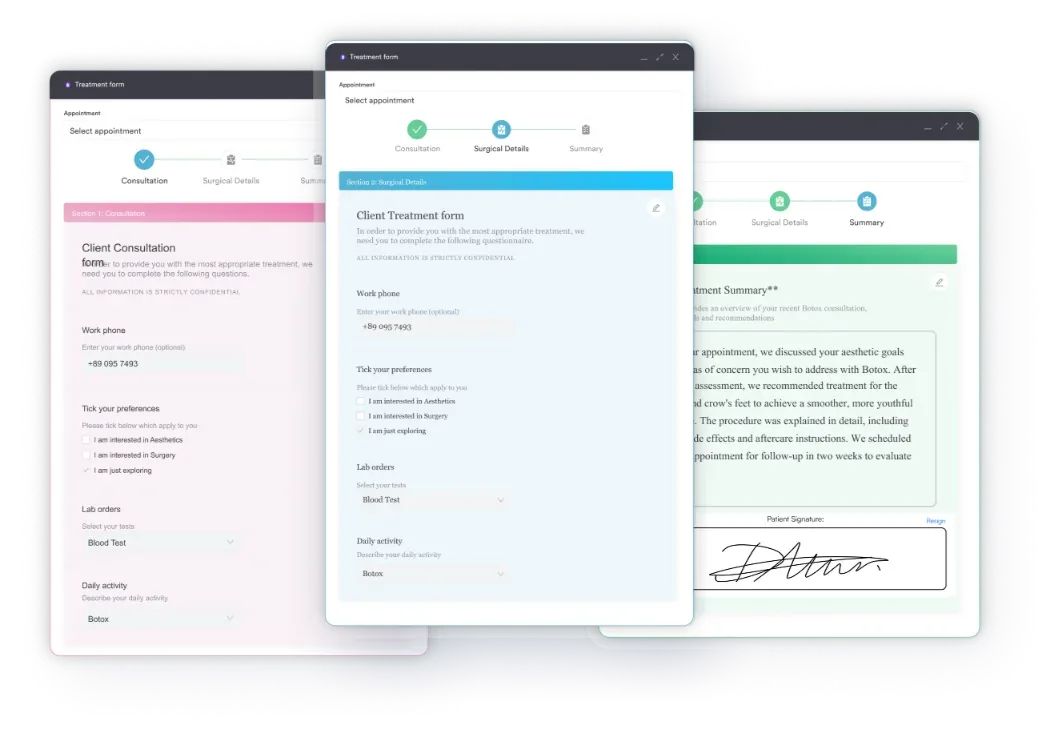
A therapist’s note giving the patient’s weight, the failed standard transfer, and the tub dimensions does the work here. Structured medical forms keep those numbers in the same place every time, rather than buried in free text.
Proof of delivery closes the file. Medicare wants the delivery date, the quantity, a description of what was handed over, and a signature from the patient or a caregiver. Post-payment reviews claw money back on this alone, months after a clean payment.
If medical necessity looks thin and you expect a denial, issue an Advance Beneficiary Notice before delivery. That conversation is uncomfortable once. An unexpected bill after the fact is worse for everyone.
Flag heavy duty orders at intake, not at billing. Build one required field into your DME order workflow. It should capture the patient’s weight and the reason a standard bench fails, before the order goes to the supplier.
The diagnosis is what turns a bench into medical equipment. The codes below show up on transfer bench claims most often.
Treat them as a starting point, not a covered list, because acceptance depends on your MAC’s policy and on what the chart actually says.
Pair the diagnosis with the rest of the equipment picture. A bariatric patient who needs a reinforced bench often needs a reinforced bed too, billed under E0304. Reviewers expect that weight documented once, for both items.
Duty rating is the only real difference. Both codes describe a transfer bench for a tub or toilet, with or without a commode opening, and both do the same clinical job. Only the frame changes.
Getting this wrong hurts in both directions. Billing E0247 for a heavy duty bench leaves money on the table and misstates what was delivered.
Billing E0248 for a standard bench is an overpayment waiting to be found. Record the product model and its rated capacity on the delivery ticket, and the code choice defends itself.
Bathing and toileting codes sit close together, and a couple of them get mixed up regularly. Here is the stretch of the range around E0248.
Two rows in that table cause most of the confusion. E0246 is a rail attachment, not a sitz bath, which is coded E0160. And E0249 has nothing to do with bath seats at all.
E0249 belongs to the heat therapy family. It replaces the pad on a water circulating unit like circulating unit like E0217, driven by a pump billed under E0236. Put it on a bench claim and the denial is immediate.
E1399 deserves its own warning. Suppliers reach for the miscellaneous code when they cannot find a specific one, and it invites manual review. A transfer bench always has a specific code, so use it.
Transfer bench claims draw medical review more often than their dollar value suggests. These are the failures that show up in remittance advice, in rough order of frequency.
On modifiers, be precise. E0247 and E0248 are billed purchase only, so a new bench carries NU on the claim line.
Skip the rental modifiers, because there is no rental period here. Check your MAC’s article if the bench replaces equipment the patient already owns. A quick look at a medical coding cheat sheet beats guessing at a modifier under time pressure.
Audit your E0248 claims in pairs. Pull the claim line next to the delivery ticket, and check the model’s rated weight capacity against the code you billed. Ten minutes of sampling each month catches down-coding and overpayment long before a MAC does.
Referring practices rarely lose a bench claim on coding. They lose it on the handover, because the assessment that justified the heavy duty bench never reached the supplier in a usable form. Weight sits in one note, the transfer test in another, and the tub measurement in somebody’s memory.
Practice management software like Pabau closes that loop on the documentation side. Digital intake forms capture the functional assessment as structured fields, so weight, transfer ability and home layout land in the client record every time. Nothing depends on a clinician remembering to type it. The clearinghouse validates structure before the payer validates content, which is why an electronic claim can fail twice.
From there, the record does the heavy lifting. Staff can find the signed form, the note and the order in one client file when a supplier or a reviewer asks. That keeps HIPAA-compliant records intact and cuts the back-and-forth that delays a delivery by a week.

Pabau’s digital forms and client records keep the assessment behind a DME order in one place. Your team hands the supplier a complete file, instead of rebuilding it from three notes.

E0248 is a small claim with a narrow margin for error. The code itself is never the hard part. What decides the outcome is whether one sentence about weight or structural need made it into the chart before the bench went out.
So build the justification into the order step, not the billing step. Suppliers who do this stop arguing with reviewers, and referring practices stop fielding calls about missing notes. The trade-off is a slightly slower order, in exchange for claims that stay paid.
If the documentation side is where your DME orders stall, book a demo. You will see how Pabau captures a functional assessment once, then keeps it with the client record.

Billing mobility aids alongside the bench? E0111 walks through crutch billing, where coverage and modifier rules work differently from a purchase-only bench.
Adding attachments to a walker order? E0159 covers brake attachments, one of the accessory codes that does sit inside competitive bidding.
Coding wheelchair parts for the same patient? K0046 explains how replacement component claims are documented and priced.
Ordering pressure care supplies too? E0189 sets out the coverage rules for sheepskin pads, another item reviewers question on necessity.
Billing a hearing screening claim? HCPCS code V5008 covers hearing screening billing and the medical necessity documentation Medicare requires for payment.
Medicare applies a reasonable useful lifetime of five years to durable medical equipment, counted from the delivery date. Earlier replacement needs documentation of loss, theft or damage beyond repair, and the claim carries the RA modifier. Wear alone is not a reason.
Yes. A treating practitioner includes a nurse practitioner, physician assistant or clinical nurse specialist. Any of them can sign the standard written order within their state scope of practice. The signature and the national provider identifier both belong on the order.
No. The Part B equipment benefit requires use in the patient’s home. A skilled nursing facility does not count as a home for this purpose. Bill the bench once the patient is discharged home and a current order supports it.
They can try, using the patient’s request for medical payment form, but the odds are poor. Medicare still expects an accredited supplier, a valid order and proof of delivery. Retail purchases usually fail one of those tests, so advise patients before they spend.



