











Key takeaways
ICD-10 code S71.031D describes a puncture wound without foreign body, right hip, subsequent encounter, and is billable from October 1, 2025.
The D suffix marks routine healing care after active treatment has finished, not the initial active treatment visit.
The parent code S71.031 is not billable on its own and needs a 7th character: A, D, or S.
Practice management software like Pabau lets coders search, link, and submit ICD-10 codes inside the patient record.
ICD-10 code S71.031D is a billable diagnosis code for a puncture wound without foreign body to the right hip, documented at a subsequent encounter. The D suffix marks routine care during healing, after active treatment has finished.
Choosing between the A, D, and S suffixes decides whether a follow-up visit produces a clean claim or a rework cycle. This reference covers billability, the code hierarchy, encounter-type selection, documentation, excludes notes, and related codes.
Definition and billable status
S71.031D is a billable, specific diagnosis code in the 2026 ICD-10-CM edition, effective October 1, 2025. It describes a puncture wound without a foreign body to the right hip, documented during the healing phase. Because it carries a full seven characters, it is valid for submission without further specificity.
The parent code S71.031 alone is not billable. Coders have to append one of three 7th character extensions, A, D, or S, before a payer will accept it. Of the three, S71.031D is the one that turns up most often in outpatient follow-up.
Where S71.031D sits in the ICD-10-CM hierarchy
Knowing the classification structure helps coders move from broad category to specific code without a wrong turn. S71.031D sits within the injury block for the hip and thigh, under the open wound category.
According to CMS ICD-10-CM coding resources, the hierarchy runs from block level down to the fully specified 7th character code.
Block S70-S79 covers every injury to the hip and thigh region. Within it, category S71 handles open wounds specifically. For coders working in physical therapy EMR environments, this hierarchy keeps a code from being routed to the wrong parent category.
How the 7th character works: A, D, and S
The 7th character extension is what turns the parent code S71.031 from a non-billable placeholder into a submittable diagnosis code. The ICD-10-CM Official Guidelines for Coding and Reporting set out what each suffix means and when it applies.
Selecting the wrong character is one of the most common reasons open wound claims come back. The resulting denial codes rarely name the character that caused the problem.
The A suffix does not belong only to the first calendar visit. It belongs to any visit where active treatment is being provided. A surgeon who reopens a wound to address dehiscence is providing active treatment, even on the patient’s fourth visit. That scenario still warrants S71.031A.
When to use S71.031D instead of S71.031A
S71.031D applies once the active phase of wound treatment is finished and the patient is receiving routine healing care.
The ICD-10-CM Official Guidelines define a subsequent encounter as a visit for routine care during the healing or recovery phase. That covers wound checks, dressing changes, suture removal, and follow-up assessments with no new intervention.
These scenarios show where the line between A and D actually falls:
- Use S71.031D: Patient returns five days after ER treatment for a wound check and dressing change. No surgical intervention at this visit.
- Use S71.031D: Primary care provider sees the patient for suture removal after a wound repair performed elsewhere.
- Use S71.031A: Patient presents to urgent care with a new puncture wound to the right hip. This is the first treatment visit.
- Use S71.031A: The wound has dehisced and is being actively debrided or re-sutured at this visit.
- Use S71.031S: Patient presents six months later with a hypertrophic scar at the wound site. The sequela is now the focus of care.
The procedure code on the same claim is a useful cross-check. A service such as CPT code 20103 signals active treatment, which points to the A suffix. An encounter carrying only an evaluation or a dressing change reads as a subsequent visit.
The provider’s documentation still decides the suffix. Coders cannot default to D simply because the patient has been seen before. The note has to confirm the healing phase and the absence of new active treatment at that encounter.
Clinical context: Puncture wounds of the right hip
A puncture wound differs from a laceration in mechanism and presentation. Lacerations involve tearing or cutting of tissue along the surface. A puncture wound comes from a pointed object penetrating the skin.
It leaves a small entry point with depth that may not be visible externally. The „without foreign body“ wording in S71.031D means nothing remains embedded at the time of coding.
Right hip puncture wounds usually arrive from falls onto sharp objects, industrial or agricultural accidents, or penetrating trauma from glass and metal fragments. Animal bites are coded under their own categories.
Orthopedic, physical therapy, and sports medicine practices tend to see these wounds at the follow-up stage rather than at the moment of injury. That is why D-suffix coding dominates their claims.
The right hip region covers the lateral hip, the femoral triangle, and the surrounding soft tissue of the proximal thigh. Documentation has to name the anatomy clearly enough to support laterality coding.
- Laterality is required: S71.031D is right hip only. Left hip uses S71.032D and unspecified hip uses S71.039D. Never code laterality by assumption.
- Foreign body status matters: If imaging or the clinical note documents a retained foreign body, the code shifts to S71.041D.
- Wound depth is not captured: S71.031D does not distinguish by depth. Depth detail belongs in the documentation, not in the code.
Documentation requirements for S71.031D
Claim accuracy for S71.031D depends on documentation that supports each element of the code. Vague notes create audit exposure and invite payer-initiated down-coding or denial. Good HIPAA-compliant documentation habits call for specificity at every level of the code description.
Four documentation elements have to be present to support S71.031D:
- Wound type confirmed as puncture: The note describes a mechanism or appearance consistent with a puncture wound. „Open wound“ alone is not enough.
- Right hip laterality confirmed: The note names the right hip explicitly. „Hip wound“ or „lower extremity injury“ does not satisfy laterality.
- Absence of foreign body documented: The note confirms nothing remains in the wound, often as „wound irrigated, no foreign body identified“.
- Subsequent encounter confirmed: The note reflects routine healing care rather than new active treatment. Wording such as „sutures removed“ supports the D suffix.
Practices using digital intake forms can build a wound assessment template that prompts clinicians to record all four elements at every follow-up. Folding that template into the medical forms a practice already uses keeps the clinical note aligned with what the code asks for.

Pro Tip
Run a periodic audit of claims submitted with S71.031 codes. Flag any encounter where the D suffix was used but the note references active debridement, wound revision, or re-suturing. Those are likely A-suffix visits that have been miscoded, which creates audit risk and recoupment exposure.
Excludes notes and coding restrictions for the S71 category
The S71 category carries Excludes notes that coders have to check before finalizing any open wound code. These notes define what cannot be coded alongside S71.031D, and what belongs to a separate category entirely.
- Excludes1, traumatic amputation of hip and thigh (S78.-): The two are never coded together. If an amputation occurred, code from S78 rather than S71.
- Excludes1, open fracture of hip and thigh (S72.- with 7th character B): An open fracture is also never coded with S71. The injury is captured by the S72 fracture code alone.
- Excludes2, bite of venomous animal (T63.-): This note covers venomous bites only. A non-venomous animal bite that leaves an open wound can still code to S71 when the record supports it.
Checking each code’s tabular notes in the CDC’s ICD-10-CM lookup tool before submission prevents Excludes1 violations, which payers catch automatically through code-edit systems.
Related ICD-10 codes for hip and thigh wounds
Knowing the sibling codes within S71 reduces laterality errors. It also speeds up coding when the documentation describes a different hip or a different wound type. Coders can verify each one against the AAPC’s ICD-10-CM code database.
Avoid defaulting to unspecified codes such as S71.039D and S71.001D when the record supports more detail. Payers increasingly flag unspecified codes for review, particularly on injury follow-up claims. The same specificity rule governs injury codes in every other body region, including S63.209A.
Pro Tip
On a superbill for a practice with frequent hip injury follow-ups, pre-populate S71.031D under the open wound follow-up codes. That cuts lookup time and limits suffix errors when the same patient returns across several visits.
How practice management software prevents suffix errors
Typing diagnosis codes by hand across separate systems is where laterality and suffix errors start. A coder working from a paper superbill can transpose S71.031D as S71.013D, or submit the parent code with no 7th character at all.
Integrated practice management software cuts those errors by putting ICD-10 lookup inside the encounter itself.
Practice management software like Pabau lets coders search ICD-10 codes by description or by number. Pabau’s claims management software then links the chosen diagnosis to the service line in the patient record. The claim goes out without anyone retyping the code into a separate billing system.

The diagnosis attaches at the clinical note, so the note and the claim always carry the same code. For practices tracking injury follow-ups, patient record management shows encounter history by code. That tells a coder at a glance whether the visit is still healing phase or the injury has resolved.
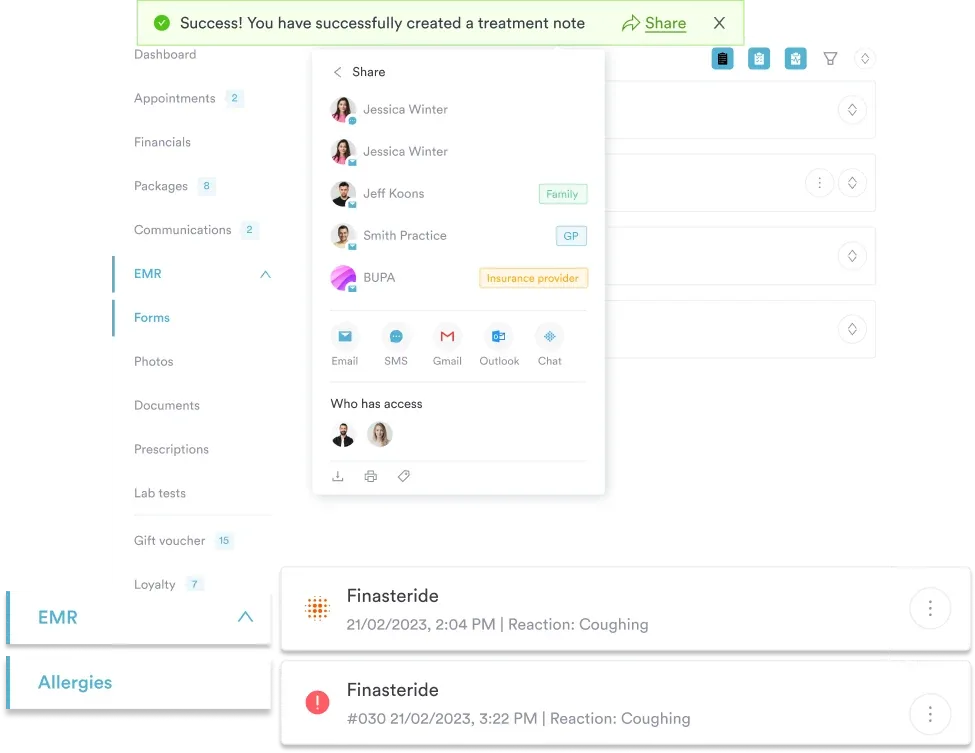

Stop re-entering ICD-10 codes across systems
Pabau links diagnosis codes to patient records and claim submissions in one workflow. Search S71.031D, attach it to the encounter, and submit, with no switching between tabs or transcribing codes by hand.

Conclusion
The D suffix is a clinical judgment before it is a coding one. If the record does not say what happened at the visit, no lookup tool can settle the suffix. A wound being treated and a wound being watched look the same on the claim.
So the fix sits with the note, not the code list. Give clinicians a follow-up template that captures wound type, laterality, foreign body status, and the phase of care. The right suffix then falls out of the documentation on its own.
The trade-off worth remembering is speed against specificity. Reaching for S71.039D when the note says right hip saves a coder ten seconds and costs the practice a review. Book a demo to see how Pabau keeps the diagnosis code, the clinical note, and the claim in step.

Continue your research
Auditing your own open wound claims? Medical billing compliance sets out the checks that stop a coding audit turning into a recoupment.
Coding the repair as well as the diagnosis? CPT code 12041 covers layered wound closure and often sits on the same claim as an open wound diagnosis.
Not sure how long you have to resubmit? Timely filing limits lists the deadlines by payer, so a corrected claim still lands in time.
Working with fracture encounter suffixes? S42.463G shows how healing-phase characters behave outside the open wound categories.
Tracing denials back to their source? Revenue cycle management explains where coding errors surface across the billing cycle.
Frequently asked questions
What is ICD-10 code S71.031D?
S71.031D is a billable diagnosis code for a puncture wound without foreign body to the right hip. It applies at a subsequent encounter, during the healing phase. The code belongs to the 2026 ICD-10-CM edition, effective October 1, 2025. It sits under category S71, within block S70-S79.
What does the D suffix mean in S71.031D?
The D suffix denotes a subsequent encounter, meaning the patient is receiving routine care during healing after active treatment has finished. It applies to visits such as wound checks, dressing changes, and suture removal, where no new intervention is performed.
When should I use S71.031D vs S71.031A?
Use S71.031A when the visit involves active treatment of the puncture wound. That covers the first assessment, wound repair, and any later visit with debridement or wound revision. Use S71.031D once active treatment is complete and the patient is in the healing phase, receiving routine wound care.
What is the difference between subsequent encounter and sequela?
Subsequent encounter (D suffix) applies while the original injury is still healing, with the patient receiving routine follow-up care. Sequela (S suffix, S71.031S) applies after the injury has healed. It covers a late effect such as scarring or chronic pain that is now the focus of treatment.
Is S71.031D a billable ICD-10 code?
Yes. S71.031D is a billable, specific ICD-10-CM code valid for claim submission. The parent code S71.031 is not billable on its own. It needs one of three 7th character extensions, A, D, or S, to become submittable.
What documentation supports S71.031D?
The record must confirm four elements. The wound is a puncture type, it affects the right hip, and no foreign body remains. The visit must also represent routine healing care rather than active treatment. Missing any element can lead to denial or down-coding to a less specific code.