










Key takeaways
S43.121S is the billable ICD-10-CM code for a sequela of right acromioclavicular dislocation with 100%-200% displacement.
The 7th character S means the dislocation itself has healed and you are coding what it left behind.
Sequence the residual condition first and S43.121S second, and never use it during active treatment.
Subluxation is a separate family, coded S43.111 on the right and S43.112 on the left.
The note has to show the side, a measured displacement percentage, and a stated link to the old injury.
A patient dislocated the AC joint months ago. It’s healed now, but the shoulder still aches and won’t move the way it used to, so today’s visit is about what got left behind, not the original injury.
That’s what ICD-10 code S43.121S captures: the sequela of a right acromioclavicular dislocation, coded only once active treatment has closed.
Here’s how to tell sequela from subsequent before it costs you a claim.
What S43.121S covers, and when it’s valid
ICD-10 code S43.121S is the billable diagnosis code for dislocation of the right acromioclavicular joint, 100%-200% displacement, sequela. The dislocation itself has healed. What you’re coding now is the problem it left behind.
That distinction is where the coding usually goes wrong. Sequela (S) and subsequent encounter (D) get swapped constantly on shoulder claims, and payers notice. One says the injury is still under treatment. The other says treatment has finished.
S43.121S took effect on October 1, 2025 and stays valid through September 30, 2026. It’s accepted on HIPAA-covered claims. In almost every case it follows the code for the residual condition rather than leading the claim.
What each character in the code tells the payer
Read the code left to right and it gives you the body region, the joint, the severity, the side, and the phase of care. Each segment narrows the one before it.
- S43: dislocation and sprain of joints and ligaments of the shoulder girdle, inside the S40-S49 block.
- S43.1: subluxation and dislocation of the acromioclavicular joint.
- S43.12: dislocation measured at 100% to 200% displacement. It sits above subluxation and below the greater-than-200% group.
- S43.121: the right acromioclavicular joint.
- S43.121S: sequela, so the visit is treating a late effect of the original injury.
That 100% to 200% band lines up with a Grade III to IV separation in surgical grading, where the coracoclavicular ligaments are fully disrupted.
Practices running sports medicine software see this range often, since it’s the grade that keeps athletes out of contact sport for months.
Why the 7th character does the heavy lifting
The 7th character sets the phase of care, and it’s the most common reason an S43.121 claim comes back. All three variants describe the same anatomy. Only the last character moves.
Not every S-code stops at A, D, and S. Fracture families carry a longer list, including P for a healed-but-malunited fracture, as in S49.109P. Dislocation codes keep it to three.
Sequela or subsequent? One question settles it
Ask what the visit is actually treating. If the answer is the dislocation, the character is D. When it’s something the dislocation caused, use S.
Per the CMS ICD-10-CM guidelines, you sequence the residual condition first, and the injury code carrying the S follows it. Flip that order and the claim reads as a bill for an injury that finished treatment months ago.
Pro Tip
When the note is ambiguous, ask the provider which problem the visit is treating. If they are still managing the dislocation, the character is D, no matter how long ago the injury happened. The switch to S comes when treatment for the injury has closed and a new complaint has taken over.
Where S43.121S sits in the ICD-10-CM hierarchy
S43.121S hangs off the injury chapter, S00-T88. Knowing the branch above it helps when documentation is thin and you have to step up a level to something less specific.
The AC joint codes you’ll reach for next
Two things drive this family. The first is how far the joint displaced, the second is which side. Both come from the note, so read it before you pick a code.
Note the top two rows. S43.101 and S43.102 carry no severity at all, so they say right or left and nothing more. Anything documented as less than 100% displacement belongs in the subluxation rows instead.
Add the 7th character to any base code above. S43.122S, for example, is the same picture as S43.121S on the left shoulder. The neighboring scapula subcategory reads the same way, right down to the sequela character, as in S43.312S.
Descriptions do shift between fiscal years, so confirm the wording before you submit. The CDC ICD-10-CM tool validates sub-classifications against the official tabular list.
Dislocation or sprain? The imaging decides
If the note carries a measured displacement percentage, you’re in the dislocation family. When it doesn’t, the sprain codes at S43.5x apply.
Reaching for a sprain code when a percentage is documented is one of the most common shoulder girdle coding errors.
„Separation“ is the word that causes trouble, because providers use it for both. Query it whenever the note gives no measurement. Exam findings such as a positive Neer’s test point to impingement, so they can’t stand in for a displacement figure.
What the chart must show to support S43.121S
Five elements have to be in the record, and an auditor will look for every one of them:
- Laterality. The record has to say right acromioclavicular joint. Bilateral or unspecified wording won’t support this code.
- Displacement. Imaging or clinical measurement has to place the displacement between 100% and 200%. Name the method, usually stress radiographs.
- Causal link. One sentence has to connect today’s complaint to the old dislocation. „Chronic instability as a sequela of the March 2025 AC dislocation“ does the job.
- Original injury date. The record should show when the dislocation happened, so the timeline supports a late effect rather than active care.
- Residual condition code. You also need a code for the nature of the sequela, and it goes ahead of S43.121S on the claim.
That causal sentence is easiest to capture where the residual is being treated. Practices running a physical therapy EMR can carry the original injury date into every follow-up note, which saves the coder a chart hunt later.
How the claim moves, and where it stalls
Picking the code is only half the work. Four handoffs sit between the appointment and the payment, and any of them can derail the claim.
- The visit gets booked as a new problem, not as follow-up on the old injury.
- The provider documents the residual condition and names the dislocation behind it.
- The coder sequences the residual first, then S43.121S, then the procedure codes for the visit.
- The payer checks whether that diagnosis pairing supports the service billed.
Step two is where things usually break. Without the causal sentence, the claim looks like a bill for an injury that stopped being treated months ago.
Before you submit: A five-point check
- Does the note name the side?
- Is there a displacement figure between 100% and 200%, with the method attached?
- Does one sentence tie today’s complaint to the old dislocation?
- Is the residual condition code sitting ahead of S43.121S?
- Do the procedure codes match a late-effect visit rather than acute care?
Three mistakes that stall these claims
- Using D on a closed injury. The visit gets billed as active care, then fails on review.
- Leading with S43.121S. The residual condition belongs first, and sequencing denial codes follow quickly when it isn’t.
- Sitting on the denial. Payers set their own window for corrections and appeals, so check the timely filing limits before you rework it.
Index paths that lead to the AC joint codes
If you look up codes in the Alphabetic Index rather than searching the tabular list, four routes land on S43.121. Each one asks for the displacement level first, then the side.
- Dislocation, acromioclavicular (joint). The main path, which branches by displacement.
- Separation, acromioclavicular joint. A cross-reference into the same S43.1x family.
- Late effect, dislocation, shoulder. Routes to the sequela codes within S43.
- Sequela, dislocation, acromioclavicular joint. The direct path to the 7th character S.
The index sends „separation“ to the dislocation entries, so separation language plus a measured percentage supports the S43.12x family.
Sprain codes sit apart, at S43.5x. When you need to confirm a description before committing to it, the AAPC code lookup is quick.
Pro Tip
Check your payer’s local coverage determination before the first sequela claim goes out. Coverage for the imaging and therapy attached to a late-effect visit varies by payer, and the LCD tells you what documentation they expect to see. Five minutes at onboarding saves a round of denials later.
How Pabau keeps sequela coding straight from note to claim
Most practices split this job across two systems. The note lives in the clinical record and the claim gets built somewhere else. Someone then retypes the side, the displacement, and the encounter type from a printout.
Practice management software like Pabau keeps both in the same place. The original dislocation, the date it happened, the imaging report, and today’s complaint all sit in one file. Pabau’s client records hold that history, so the causal sentence has something to point at.
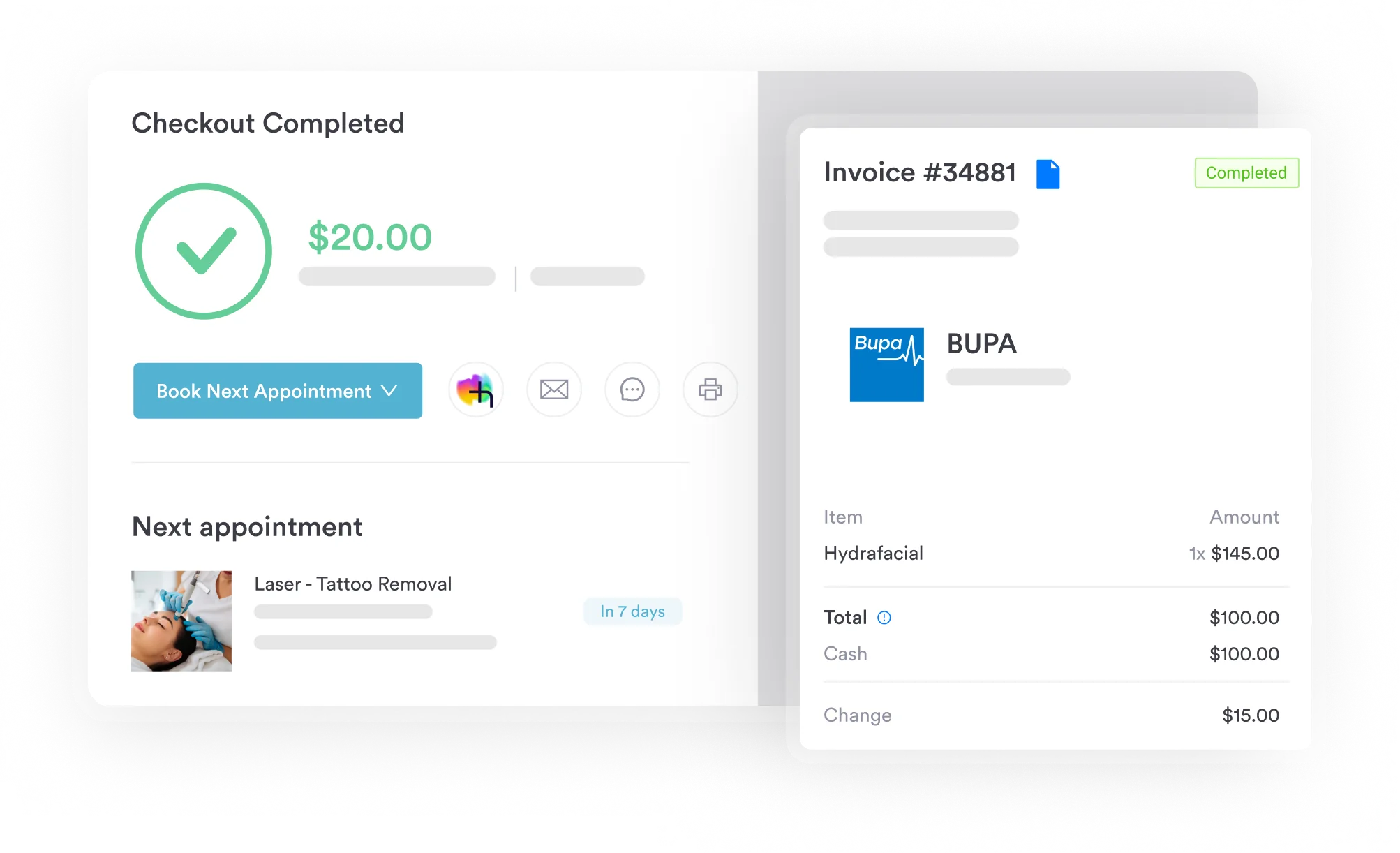
Note templates can prompt for laterality and displacement while the patient is still in the room. Invoicing and claims management run from the same record, so what got documented is what goes out. Nobody rebuilds the story at billing time.

Keep shoulder injury coding straight from note to claim
Pabau holds clinical notes, prior injury history, and invoicing in one client record. Capture laterality, displacement, and encounter type during the visit, so billing works from the note instead of a retyped summary.

Conclusion
Treat the causal sentence as the deliverable. Get the provider to write it while the patient is still in the room, and every coding decision after that becomes mechanical. Without it, picking the perfect code won’t save the claim.
There’s a trade-off worth remembering too. A narrow code like S43.121S pays well for specificity, but it’s only ever as strong as the chart behind it.
Build the prompts into the note and you stop guessing at billing time. Book a demo to see how Pabau keeps the injury history, the note, and the invoice in one client record.

Continue your research
Coding the surgery that follows chronic shoulder instability? CPT code 23462 walks through the reimbursement, RVUs, and modifiers for anterior capsulorrhaphy.
Need another right-shoulder injury code from the same block? S46.191A covers a long head of biceps injury at the initial encounter.
Wondering what the 7th characters beyond A, D, and S do? S42.463G shows how delayed healing is coded on a humerus fracture.
Want to see how a diagnosis code actually reaches the payer? The 837 claim file breaks down the electronic format your codes travel in.
Getting therapy for a late-effect shoulder approved? The prior authorization process covers what payers ask for and how to avoid a delay.
Frequently asked questions
How long after the injury can you start using S43.121S?
ICD-10-CM sets no waiting period. What matters is that active treatment has ended and the note ties the current problem to the old dislocation.
Can S43.121A and S43.121S appear on the same claim?
No. The acute injury code is never reported alongside the code for its own late effect. Once you code the sequela, the initial-encounter code drops off.
Is AC joint subluxation coded with S43.121S?
No. Subluxation has its own subcategory, S43.111 on the right and S43.112 on the left. S43.121S is only for a dislocation measured at 100%-200% displacement.
Is there a code for an unspecified side?
Yes. S43.129 covers an unspecified acromioclavicular joint at the same displacement. Most payers expect laterality, so query the provider rather than defaulting to it.
Which procedure codes usually sit alongside S43.121S?
Late-effect visits are normally office evaluations, imaging, or therapy sessions, so those codes pair with it. Reconstruction codes appear only when a surgeon repairs the instability.