

ICD-10 code S61.201A: Open wound of left index finger without nail damage
ICD-10 code S61.201A covers a left index finger wound of unstated type ICD-10 co...

Last Updated: Oct 16, 2026
Billable Code Specific Code
S46.191A is the billable ICD-10-CM code for other injury of muscle, fascia and tendon of long head of biceps, right arm, initial encounter.
The word "other" makes the code sound like a dumping ground. It's much narrower than that, because the structure and the side are already fixed. Only the injury type stays open.
That misreading is what sends claims back. A coder sees "shoulder muscle injury" in a note and reaches for a biceps code. Or the chart names the side, yet the claim goes out unspecified anyway. Both mistakes stop once you can read the six characters in front of the A.
Let Pabau's smart automation suggest the right codes, reduce claim denials, and keep your practice compliant—effortlessly.
Automate repetitive tasks and focus on what matters most—your patients.
Reduce coding errors and ensure compliance with the latest regulations.
Clean claims, fewer denials, and faster reimbursements.
Powerful insights and reporting to help your practice thrive.
HIPAA compliant SOC 2 certified GDPR-compliant Trusted by 4,000+ clinics worldwide

ICD-10 code S46.191A means other injury of muscle, fascia and tendon of the long head of biceps, right arm, initial encounter.
S46.191A is a billable ICD-10-CM code, valid for HIPAA-covered claims and unchanged in the FY2026 edition effective October 1, 2025.
The code already names the right arm, so the open question is the injury type rather than the anatomy.
The 7th character A covers active treatment. Use S46.191D for later healing visits and S46.191S for a sequela.
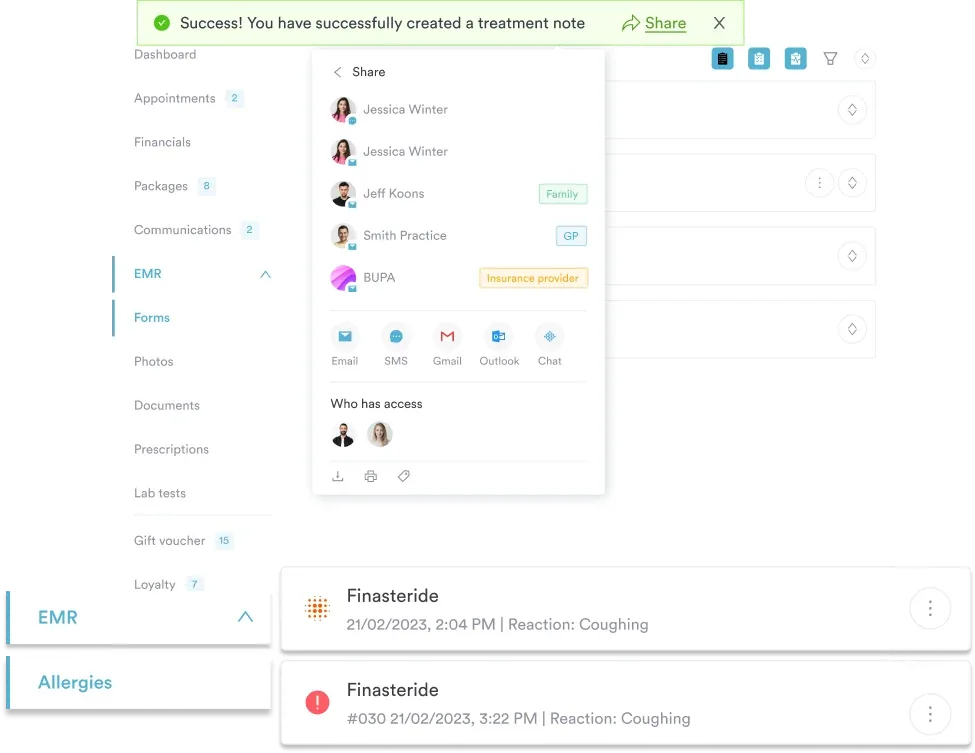
Practice management software like Pabau keeps an ICD-10-CM code library inside the patient record, so the code you document seeds the claim form.
S46.191A means other injury of muscle, fascia and tendon of the long head of biceps, right arm, initial encounter.
It is a billable, specific ICD-10-CM code, so it can stand on its own as a diagnosis. The FY2026 edition took effect on October 1, 2025, and the wording did not change.
Check the wording against the official tabular list before you appeal a denial. The CDC ICD-10-CM browser tool publishes the current entry for every code in the S46 category, including the notes that sit above it.
The long head of the biceps starts inside the shoulder. Its tendon anchors at the supraglenoid tubercle of the scapula, crosses the joint, then runs down through the bicipital groove of the humerus. An injury there is anatomically a shoulder problem, which is why S46.1 lives in the S40-S49 block.
The elbow end belongs elsewhere. S46 carries a Type 2 Excludes note for injury of muscle, fascia and tendon at the elbow.
That note sends distal biceps injuries to the S56 category. Type 2 means the two conditions can coexist, so both codes may appear on one claim when the record supports each.
Four nearby boundaries are worth memorizing:
Under S46.1, the 5th character carries the injury type and the 6th carries the side. Coders often read it the other way around and assume the “other” refers to the muscle. It never does.
Four options fill that 5th slot.
The 6th character then picks the side. Use 1 for the right arm, 2 for the left arm, and 9 when the record never says.
So S46.191A has no laterality problem at all. A query on this code is almost always about injury type or encounter phase.
Each character narrows the code by one decision. Walking down the tree is the fastest way to prove you landed on the right one.
Only the full seven characters bill. S46.19 and S46.191 are stems, so a claim carrying either one rejects as an invalid code.
If you prefer to browse the tree, the AAPC ICD-10-CM code lookup lists the same branches with their index references.
A stands for initial encounter, and initial encounter means active treatment. Visit number has nothing to do with it. Someone on their fourth appointment still codes to A while the surgeon actively treats the injury.
Every Chapter 19 injury code needs one of these three characters. A tendon sheath injection reported with CPT 20550 is still active treatment, so it takes A as well.
Switch once the plan of care shifts from treating the injury to watching it heal. A wound check, a range-of-motion review, or a therapy session under an established plan all take the D character.
Carrying A through eight weeks of therapy is what costs practices money. The payer usually flags it weeks later, long after anyone remembers the visit.
Sequela coding needs two codes and a specific order. List the residual condition first, then S46.191S for the injury that caused it.
Chronic weakness or a stiff shoulder months after the original event fits this pattern. Never add A or D alongside S for the same injury.
Most mix-ups come from the neighbors below. Each one differs from S46.191A by the structure, the injury type, or the side. All are initial-encounter codes, so you can compare them line by line.
S46.8 is where the catch-all for other muscles at this level lives. Reading S46.191A as a spare bucket for shoulder soft tissue is the most common error on this code.
Cuff problems are the other frequent detour. A positive Neer’s test points at impingement rather than the long head, and an atraumatic complete cuff tear codes to tear codes to M75.121.
When a note reads “right shoulder muscle injury” with no structure named, query the chart before you code. S46.191A only holds if the record puts the injury in the long head of the biceps. If the provider names the deltoid or the teres major instead, S46.891A is the correct family. If nobody names a muscle at all, S46.991A is the honest answer, and it invites a payer query you can avoid with one question.
CMS General Equivalence Mappings, or GEMs, convert S46.191A to ICD-9-CM 959.2, shoulder and upper arm injury.
The mapping loses almost everything useful. ICD-9 959.2 covered any unspecified injury in the region, so it carries no structure, no side, and no encounter phase.
Legacy registries and retrospective research still ask for the ICD-9 code. Claims do not. Any date of service from October 1, 2015 onward needs the ICD-10-CM code instead. Check the GEMs files published by CMS if a payer or registry asks you to map in either direction.
Seven checks decide whether this code holds up under review. Miss one and the claim either drops to an unspecified sibling or comes back for more information.
These details are cheap to capture at the point of care and expensive to chase later. A coder who has to email a provider three days after the visit is already working against the clock. Good clinical record keeping puts the answer inside the chart instead.
Orthopedics, physical therapy, sports medicine, emergency departments, and workers’ comp billing account for nearly all S46.191A claims. The code stays the same across them. What changes is how quickly the encounter phase moves on.
Workers’ comp deserves its own note. State boards set their own billing rules, and several ask for external cause codes covering the mechanism and the place of injury. No blanket statement covers them all, so confirm with the applicable board or payer.
Therapy and sports practices carry the other risk, because they see the same shoulder many times. Physical therapy software and sports medicine workflows keep the visit history next to the note, which makes the phase easy to check.
Plenty of practices split this job across two screens. The note sits in the chart, the code sits in a lookup tab, and someone re-types the result into the claim. Every re-key is another chance for S46.191A to arrive as S46.199A.
Practice management software like Pabau keeps the reference inside the chart. Its ICD-10-CM and CPT libraries hold more than 20,000 codes and refresh with each official release. A coder can search S46.1 without leaving the encounter, and codes recorded on the patient record then seed the claim form. A coding error surfaces as a cash flow problem weeks later, which is why the healthcare revenue cycle is measured end to end. A billing workflow that separates coding from submission creates a handoff where claims stall.
Pabau’s claims management checks that the fields your payer requires are complete before submission unlocks. It will not choose your 7th character for you. That call stays with the coder, which is why the wording in the note matters more than any software setting.
Documentation is the other half of the problem. Pabau Scribe, our AI scribe, drafts the consultation note while the appointment happens.
When a provider says “partial tear of the right long head of biceps”, that phrase reaches the record instead of someone’s memory. The coder then has the structure, the side, and the phase in front of them.
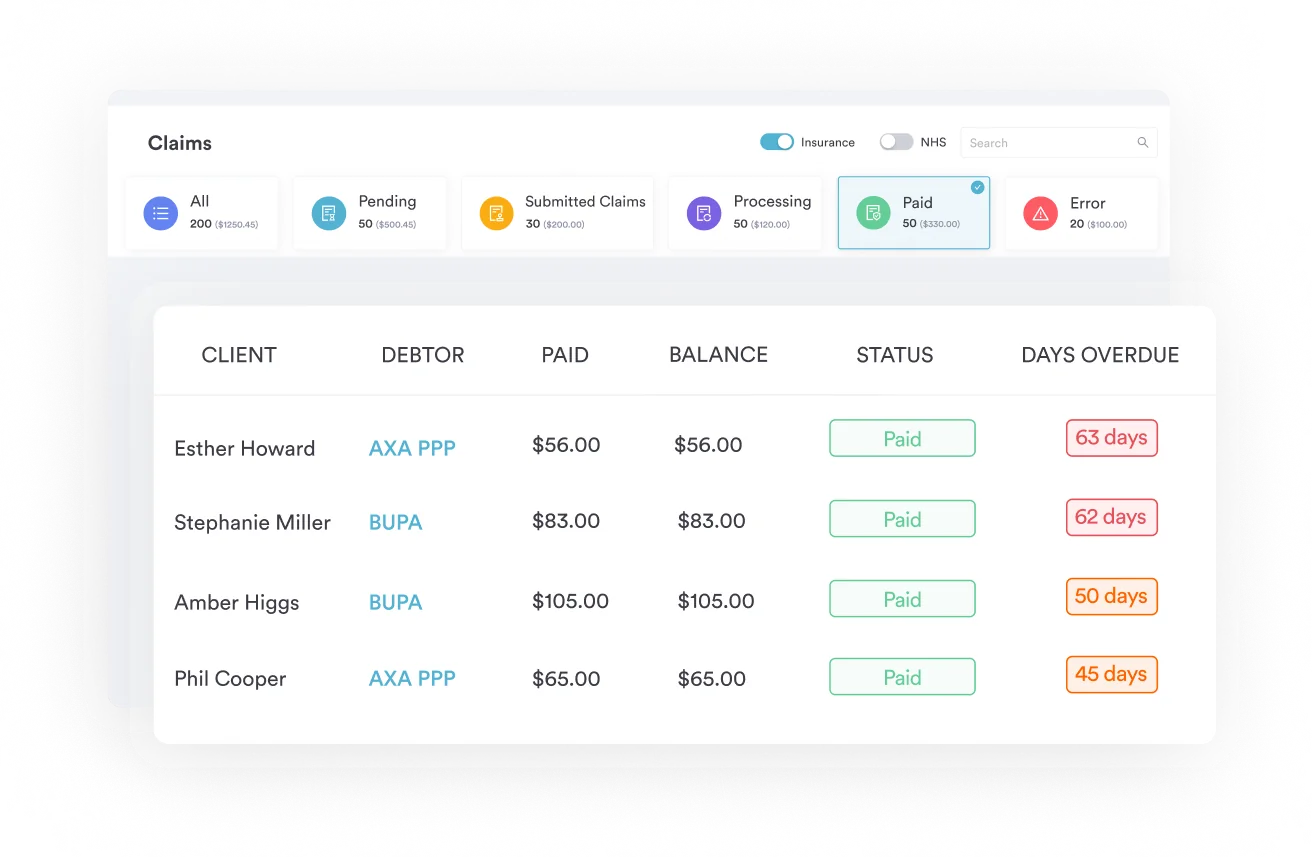

Pabau puts a refreshed ICD-10-CM library inside the patient record. Codes you document seed the claim form, and payer-required fields are checked before you submit.

S46.191A rewards a note that names the structure, the side, and the phase of care. Get those three right and the claim rarely comes back.
Two habits keep it clean. Read the 5th character as the injury type and the 6th as the side. Then confirm the visit is still active treatment before you commit to the A character. When the note names another muscle, move to the S46.8 family instead.
Pabau keeps the code library and the clinical note in the same record, which makes both checks quick. Book a demo to see how your team could code shoulder injuries and bill them from one place.

Coding another injury in the same block? S49.109P covers a distal humerus growth plate malunion.
Need the sequela side of the same chapter? S43.312S shows how to sequence a residual condition ahead of the injury code.
Billing the shoulder surgery that follows? 23462 walks through a capsule repair claim, with RVUs and modifiers.
Working at the same anatomical level? 24076 covers a subfascial soft tissue excision in the upper arm.
Tightening up your billing routine? Medical billing compliance covers the checks that keep audits quiet.
Yes, when the record documents both structures. S46.1 and S46.0 are separate subcategories with no Excludes1 conflict between them. Sequence the code that matches the reason for the visit first.
No. S46 codes take only A, D, or S. The B character belongs to fracture codes. For an open injury, follow the Code Also note on S46 and add the open wound code from the S41 category.
It depends on the wording. A documented strain goes to S46.111A and a laceration to S46.121A. An atraumatic, degenerative problem falls outside Chapter 19, so bicipital tendinitis of the right shoulder codes to M75.21.
On an inpatient claim, S46.191A groups to MS-DRG 913 or 914 for traumatic injury, with or without an MCC. It can also fall into 963, 964, or 965 for other multiple significant trauma.
Yes. It is a specific billable code, so it can be first-listed when the injury is the reason for the visit. Chapter 19 also asks for an external cause code, which is always secondary. On a sequela claim, the residual condition goes first.



