









Key takeaways
ICD-10 Code O82 describes an encounter for cesarean delivery without a documented medical or obstetric indication, valid and billable for FY2026.
O82 is the correct code for elective repeat cesareans and maternal-request cesareans where no clinical indication is recorded in the delivery note.
The tabular list requires O82 to be used as a single diagnosis code, so no other Chapter 15 code is reported with it.
Applying O82 when a medical indication does exist is the most common error. Document the indication and use a more specific delivery code.
Practice management software like Pabau helps OB/GYN practices track claim status, flag missing documentation, and keep obstetric records audit-ready.
ICD-10 Code O82 is a billable ICD-10-CM diagnosis code for fiscal year 2026. It applies when a cesarean section is performed and the provider documents no medical or obstetric indication for it.
Two rules decide almost every O82 claim. The absence of an indication has to be stated in the record, not inferred from silence. And O82 must stand alone, because the tabular list bars any other Chapter 15 code from the same claim.
This reference covers the code definition, billable status, documentation requirements, MS-DRG mapping, related procedure codes, and FY2026 validity.
What is ICD-10 Code O82?
ICD-10 Code O82 carries the official long description „Encounter for cesarean delivery without indication.“ It sits in Chapter 15 of the tabular list, Pregnancy, childbirth and the puerperium, inside the O80-O82 block titled „Encounter for delivery.“ The code is billable and specific, so it can go on a HIPAA-covered claim without a more granular child code.
The phrase „without indication“ is the clinical crux. It means the delivery note documents no recognized medical or obstetric reason for the cesarean. Per CMS ICD-10-CM coding resources, assign O82 when the physician’s final diagnosis attestation names no indication and no more specific delivery code applies.
Pro Tip
Check the delivery note and operative report together. If the operative report mentions a prior low-transverse uterine scar but the delivery note leaves indication blank, query the provider before assigning O82. The attestation must be affirmative. Silence in the record is not the same as no indication.
Code details at a glance
The table below summarizes the reference data for O82, including its status for HIPAA-covered transactions. If your HIPAA-compliant billing software keeps its own code library, check these values against it before you submit.
ICD-10-CM code hierarchy and classification
ICD-10 Code O82 sits at the bottom of a three-level hierarchy within the WHO ICD-10 classification as adapted for the United States. Checking the hierarchy is the fastest way to confirm whether a sibling code fits better.
All three codes in the O80-O82 block describe an uncomplicated encounter for delivery, with no significant complication sequenced as the principal diagnosis. They differ by delivery route, not by maternal complication. A complication in the record moves the claim out of this block entirely.
When to use O82: clinical scenarios
The clearest case is an elective repeat cesarean, or ERCS. The patient had a prior cesarean, the current pregnancy is uncomplicated, and the note records the delivery as planned rather than clinically indicated. Practices that hand out a VBAC birth plan during prenatal visits usually have that decision documented well before admission.
A second scenario is a primary cesarean at maternal request, known as cesarean delivery on maternal request, or CDMR. The delivery note must state affirmatively that no medical indication prompted it. Clear patient education before the consent discussion makes that record easier to build.
- Elective repeat cesarean: Prior low-transverse uterine incision, uncomplicated current pregnancy, and no new indication documented. O82 is the principal diagnosis.
- Cesarean on maternal request: The patient elects a cesarean after an informed consent discussion. Provider attestation confirms no obstetric indication.
- Scheduled cesarean for timing: Gestational age of 39 weeks or more, no maternal or fetal indication, delivery planned for logistical reasons. Documentation must state the absence of indication.
- Not appropriate: A prior cesarean plus a labor abnormality, malpresentation, placenta previa, or a failed induction coded to O61.1. Any coded complication sends you to a more specific delivery code.
O82 vs. O80 and O81: choosing the right delivery code
Choosing between the three codes in the O80-O82 block is straightforward once the delivery route is clear. The table below shows the distinguishing criteria. Verify each against the CDC ICD-10-CM web tool for the current fiscal year before submitting claims.
One decision point comes up constantly. When a patient has a prior uterine scar, check whether the operative note names the scar as the indication. If it does, a complication-of-pregnancy code fits better than O82. Fetal distress documented as an acid-base abnormality, coded to O68, rules O82 out the same way.
If the note states elective repeat cesarean with no indication despite the scar, O82 applies. A provider query is still the safer route.
ICD-10-CM documentation requirements for O82
Digital documentation for O82 rests on one explicit statement from the attending provider. The delivery note or discharge summary must say that no medical or obstetric indication prompted the cesarean.
Chapter 15 of the ICD-10-CM Official Guidelines requires the principal diagnosis to reflect what brought the patient to the delivery encounter. When nothing clinical drove the decision, O82 sequences first. Teams using OB/GYN EMR software can build that attestation into the delivery-note template, so it is never left blank.
Coders should verify these elements before assigning O82:
- Absence-of-indication statement: The provider explicitly notes no medical or obstetric indication in the delivery note or discharge summary. Elective C-section alone is not enough without a clarifying statement.
- Final diagnosis attestation: The attending or responsible physician signs off on the diagnosis. A coder-assigned diagnosis that the provider never confirmed does not meet ICD-10-CM Official Guidelines.
- Principal diagnosis sequencing: O82 is the first-listed diagnosis. Only codes from outside Chapter 15 may accompany it, such as the Z37 outcome code or a non-obstetric comorbidity.
- Outcome of delivery code: Always assign a Z37 code alongside O82. Z37 is never a standalone diagnosis, and its absence is a frequent denial trigger.
MS-DRG mapping for O82
For inpatient hospital claims, O82 drives grouping through the CMS Medicare Severity Diagnosis Related Group system, or MS-DRG. Secondary diagnoses that qualify as a complication or comorbidity change what the claim pays.
Claims management software tracks the status of each submitted claim and flags missing documentation before a denial arrives. It does not pick the DRG for you, so the coder still owns the secondary diagnosis review.
DRG 788 is the usual grouping for a straightforward elective repeat cesarean. A CC moves the case to DRG 787, and an MCC moves it to 786. The sterilization split is procedure-driven, so a tubal occlusion performed at the same session sends the case to 785, 784, or 783.
The qualifying CC has to come from outside Chapter 15. Morbid obesity coded to E66.01 works. Gestational diabetes does not, because O24.4- is itself a Chapter 15 code. O82 carries a tabular list instruction to be used as a single diagnosis code, which rules out every O00-O9A companion.
Relative weights change each October, so verify them against the CMS IPPS Final Rule for FY2026.
Present on Admission status for O82
O82 is exempt from Present on Admission (POA) reporting. Chapter 15 obstetric codes, including the whole O80-O82 block, sit on the CMS POA exempt list. Delivery encounter codes describe a condition that exists at admission by definition. Facilities billing Medicare and Medicaid do not assign a POA indicator for O82.
For HIPAA compliance in medical offices, that means leaving the field marked exempt with indicator E rather than assigning Y, N, W, or U.
The exemption covers O82 itself. Any secondary code reported alongside it still needs a POA indicator unless that code is independently exempt.
Related ICD-10-PCS codes for cesarean delivery
On inpatient claims, the O82 diagnosis code is reported alongside an ICD-10-PCS procedure code for the cesarean itself. The AAPC ICD-10-CM lookup cross-references the commonly paired codes. Verify each against the FY2026 ICD-10-PCS tables from CMS, since procedure definitions update annually.
Most elective repeat cesareans coded with O82 pair with 10D00Z1, reflecting the standard low-transverse incision. An operative report specifying a classical incision takes 10D00Z0. Code the approach from the operative note rather than assuming it.
Approximate synonyms and alternate descriptions
These terms appear in the ICD-10-CM tabular list as approximate synonyms for O82. Coders meet them in documentation and should map them to O82 when no indication is present. Consistent medical forms in the operative and delivery note keep the wording predictable.
- Cesarean section without indication NOS
- Elective cesarean delivery
- Elective cesarean section
- Elective repeat cesarean delivery
- Cesarean section NOS, where no indication can be identified
The NOS qualifier signals that documentation does not specify a reason. It does not license coding around missing documentation. If the record is simply silent, query the provider before reaching for NOS.
2026 ICD-10-CM updates: is O82 affected?
O82 is valid and unchanged for FY2026, which runs from October 1, 2025 through September 30, 2026. CMS and NCHS did not revise, retire, or add child codes under O82 in the FY2026 update. It stays billable and specific, with no further subdivision.
Review the Chapter 15 Official Guidelines each October even when the code number holds. Sequencing clarifications for delivery encounter codes change how O82 is applied, and they carry the same compliance weight as a code change.
Common coding errors and how to avoid them
These are the O82 errors most likely to trigger a payer audit or a denial. Each one traces back to the same omission, a missing provider attestation that no indication existed.
- Assigning O82 when an indication exists: If the note names fetal malpresentation, a prior uterine scar, or placenta previa as the reason, O82 is wrong. Use the complication-of-pregnancy code from earlier in Chapter 15.
- Reporting O82 with another Chapter 15 code: The tabular list instruction makes O82 a single diagnosis code. Pairing it with any O00-O9A code invalidates the assignment.
- Sequencing O82 second: O82 is the first-listed code when it describes the reason for the encounter. Leading with Z37 or with a comorbidity is a sequencing error.
- Omitting the outcome of delivery code: A delivery episode always needs a Z37 code alongside O82.
- Using O82 when a complication is documented: Take an obstetric injury to pelvic organs, coded to O71.5. That complication sequences first and displaces O82.
- Treating elective as equivalent to without indication: Elective often means scheduled in clinical notes. Confirm that the provider documented no medical or obstetric indication before applying O82.
How Pabau keeps obstetric coding documentation-ready
Most OB/GYN teams find the O82 problem at the wrong end. The claim comes back denied and someone pulls the chart weeks later. By then the attending is being chased for a statement about a delivery they barely remember.
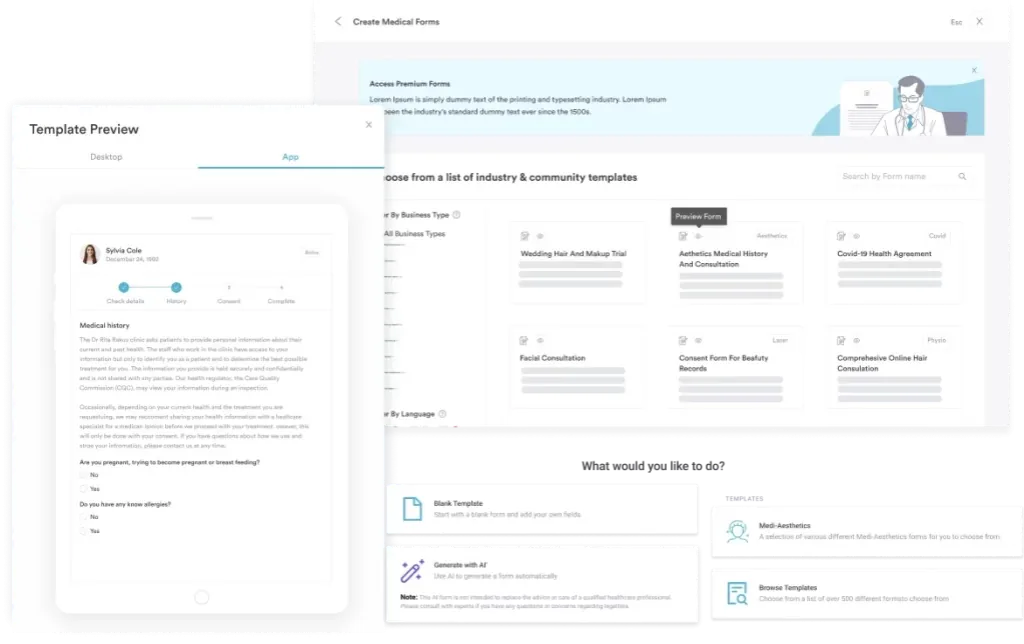
Practice management software like Pabau moves that step forward. Delivery note templates can carry a required indication field, so the attestation is captured while the provider is still at the bedside. Custom forms and treatment notes stay attached to the patient record, which means the coder reads the same document the physician signed.
From there, claim submission and status tracking sit in the same system as the record. Pabau does not choose the diagnosis code for you. It submits and tracks what the record already holds, and it surfaces the claims that are missing something before the payer does.
The same setup works beyond delivery coding. Postpartum follow-up runs on the same records. A pelvic health practice reviewing a patient after a cesarean sees the operative detail without requesting notes.

Streamline obstetric billing from documentation to claim
Pabau connects clinical documentation to claim submission for OB/GYN and women’s health practices. Track the status of every claim and catch missing paperwork before it becomes a denial.

Conclusion
O82 is a narrow code held in place by one sentence in the chart. If the attending states that no indication applied, O82 is correct and it stands alone. With no qualifying secondary diagnosis, the case groups to DRG 788.
The trade-off worth remembering is that O82 buys simplicity by giving up detail. A code that cannot travel with any other Chapter 15 code also cannot describe a complicated delivery. When the chart shows more than the code can hold, stop using it.
Fix the documentation and the coding follows. Book a demo to see how Pabau captures the delivery-note attestation and tracks obstetric claims to payment.

Continue your research
Need the code for a fetal heart rate abnormality in labor? O76 covers the finding that most often rules an elective cesarean code out.
Documenting an abandoned instrumental delivery? O66.5 explains how a failed vacuum or forceps attempt changes the delivery code you report.
Coding obstetric trauma the operative note leaves unspecified? O71.9 walks through when the unspecified option is defensible and when it invites a query.
Sequencing a postpartum infection on the delivery claim? O85 sets out how puerperal sepsis is reported and what it does to the grouping.
Planning the delivery with the patient in advance? Birth plan template gives you a structured record of what the patient chose and why.
Frequently asked questions
What does ICD-10 Code O82 mean?
ICD-10 Code O82 is a billable ICD-10-CM diagnosis code that describes an encounter for cesarean delivery without a documented medical or obstetric indication. It applies when the cesarean was performed at maternal request or by elective arrangement, with no clinical reason recorded by the provider.
Is O82 a billable ICD-10-CM code?
Yes. O82 is a billable and specific ICD-10-CM code, valid for HIPAA-covered transactions in fiscal year 2026. It does not require a more granular child code and can be submitted directly on a claim.
What is the difference between O80 and O82?
O80 applies to an uncomplicated spontaneous vaginal delivery at full term. O82 applies to a cesarean delivery performed without a documented medical or obstetric indication. Delivery route is the primary factor separating the two codes.
Is O82 exempt from Present on Admission reporting?
Yes. O82 is on the CMS POA exempt code list because it is a Chapter 15 obstetric delivery code. Facilities should assign the exempt indicator (E) for O82 and do not need to determine whether the condition was present on admission.
What MS-DRG does O82 map to?
O82 typically maps to MS-DRG 788, cesarean section without sterilization and without CC/MCC, when no qualifying secondary diagnosis is present. A CC shifts the claim to DRG 787 and an MCC shifts it to DRG 786. If a sterilization procedure is performed during the same admission, the case groups to DRG 785, 784, or 783 instead.
Does O82 apply to elective repeat cesarean sections?
Yes, provided the delivery note includes an affirmative statement from the provider that no medical or obstetric indication prompted the procedure. If the note cites the prior uterine scar as the indication, a more specific complication-of-pregnancy code applies instead of O82.
Can O82 be reported with another Chapter 15 code?
No. The ICD-10-CM tabular list instructs that O82 be used as a single diagnosis code. No other code from Chapter 15 may appear alongside it. Codes from outside the chapter, such as a Z37 outcome of delivery code, are still required.