









Key takeaways
CPT code 21355 describes percutaneous treatment of a malar area fracture, including the zygomatic arch and malar tripod, with manipulation. The approach is closed, with no open incision.
CPT 21355 carries a 10-day global period, not the 90-day period assigned to open code 21360. Only related follow-up care inside those 10 days is bundled.
Modifier -50 applies when both sides are treated in one session. Missing it on bilateral zygomatic fractures is the most common denial trigger for this code.
Total RVUs are 8.81 in a facility and 13.34 in an office. National payment lands near $290 to $300 and $440 to $450.
Practice management software like Pabau flags missing modifiers and incomplete operative notes before the claim goes out.
CPT code 21355 covers percutaneous treatment of a fracture of the malar area, including the zygomatic arch and malar tripod, with manipulation. The surgeon reduces the fracture through the skin with an instrument. No open incision is made to expose the fracture segments.
Payers treat that closed approach as a hard line. Submitting 21355 with an operative note written for an open procedure invites a denial or an audit. The claims management software your practice uses should catch that before the claim goes out.
This reference covers the billing elements coders and surgeons need for 21355. That includes the code description, ICD-10 pairings, modifiers, the global period, RVU values, and Medicare reimbursement.
The American Medical Association places CPT code 21355 in the Musculoskeletal System section. It sits in the Fracture and/or Dislocation Procedures on the Head subsection. The official description reads: Percutaneous treatment of fracture of malar area, including zygomatic arch and malar tripod, with manipulation.
When to use CPT code 21355: Clinical scenarios
CPT code 21355 applies when the surgeon treats a malar area fracture percutaneously. That means working through the skin with an instrument, typically a Carroll-Girard screw, bone hook, or elevator. No formal open incision is made for direct fracture visualization.
Two anatomical structures are explicitly covered: The zygomatic arch and the malar tripod. The tripod is the three-point articulation of the zygoma at the frontal, maxillary, and temporal bones.
- Displaced zygomatic arch fracture reduced with a percutaneous elevator or hook inserted through a small stab incision
- Malar tripod fracture treated with closed manipulation under general or local anesthesia
- Fractures managed without formal osteotomies, bone plates, or open exposure of fracture segments
- Cases where imaging (CT scan) confirms acceptable reduction achieved through the percutaneous approach
The code does not apply when the surgeon opens the skin widely for direct visualization, places fixation hardware, or performs an open reduction. Those scenarios move into CPT 21356 for the zygomatic arch, or CPT 21360 for open malar treatment without fixation.
Choosing the wrong code in either direction creates both revenue and compliance risk. Practices running plastic surgery EMR software benefit from code-selection prompts built into the documentation workflow.
Primary billers for CPT code 21355 are oral and maxillofacial surgeons and plastic surgeons. Emergency departments and sports medicine practices often see the injury first, then refer it on for definitive surgical management.
ICD-10 diagnosis codes that support the claim
Every claim for CPT code 21355 needs a supporting ICD-10-CM diagnosis code that establishes medical necessity. The S02 chapter covers fractures of the skull and facial bones. Code to the highest level of specificity the documentation supports, including laterality.
The 7th character carries a lot of weight. “A” designates the initial encounter for active treatment, “D” a subsequent encounter for routine healing, and “S” a sequela. CPT code 21355 pairs with “A” at the time of surgery. A later visit switches that character to “D”, the same pattern facial injury codes such as S01.111D follow.
Applicable modifiers and when to use them
Modifier selection is where CPT code 21355 claims most often go wrong. Bilateral zygomatic fractures treated in the same operative session require modifier -50. Omitting it is the single most common denial trigger for this code. Confirm each modifier against current NCCI indicators before submission.
Modifier rules on neighboring facial procedure codes work the same way, including CPT 15822. Every modifier must be supported by documentation written before the claim is submitted, not added retroactively. Payers do audit modifier -22 claims for supporting operative note language.
How the 10-day global period works
CPT code 21355 carries a 10-day global surgical period. CMS assigns the code a 010 global indicator on the Medicare Physician Fee Schedule, which makes it a minor procedure rather than major surgery. The period covers the day of the procedure and the 10 days that follow.
That distinction matters because the 90-day period belongs to a different code. Open treatment of a malar area fracture, CPT 21360, carries a 090 global period. CPT 21356, open treatment of the zygomatic arch, sits at 010 days like 21355.
Coders who assume a 90-day window write off follow-up visits they are entitled to bill. A wound check on day 21 falls outside the global period for 21355 and is separately reportable, with no modifier required.
The error runs in both directions on a 010-day code. Billing a routine day-4 wound check as a separate E&M service without a modifier triggers a bundling denial. Suppressing a legitimate day-30 visit because the team assumed a 90-day window gives revenue away.
Use modifier -79 when an unrelated procedure falls inside those 10 days. Other minor procedure codes such as CPT 15851 run on the same short clock, so one global-period habit covers most of them.
Pro Tip
Put a day-11 flag on every CPT 21355 case. Visits from day 11 onward sit outside the 010-day global period and are billable on their own. Inside the 10 days, confirm each related E&M visit carries the correct modifier before the claim goes out.
RVU breakdown for CPT code 21355
Relative Value Units (RVUs) determine the Medicare payment for CPT code 21355 through the Resource-Based Relative Value Scale (RBRVS). CMS updates RVU values annually in the Medicare Physician Fee Schedule final rule. The figures below are the 2026 national values. Verify them for your own year with the CMS fee schedule lookup.
The non-facility practice expense RVU is more than double the facility figure. That difference reflects the overhead a practice carries when the procedure happens in an office or ambulatory surgical setting. For locality-adjusted values, the FastRVU lookup tool pulls from CMS data and applies geographic factors by ZIP code.
Medicare reimbursement rates
Medicare payment for CPT code 21355 starts with total RVUs. Those are multiplied by the annual conversion factor and by the Geographic Practice Cost Index (GPCI) for the provider’s location. Both inputs change every year, so any dollar figure published here has a short shelf life.
Both figures are national estimates taken before geographic adjustment. Practices in high-cost localities such as San Francisco or Manhattan will see different numbers than rural, low-GPCI markets. Use the CMS Physician Fee Schedule Look-Up Tool for current rates in your locality code.
Private payer reimbursement considerations
Commercial payers negotiate rates independently. Most reimburse CPT code 21355 at a percentage of the Medicare fee schedule, commonly 110% to 150% for surgical codes. The range varies by payer and contract tier. Four factors move commercial reimbursement most:
- Network status: In-network rates are contract-defined. Out-of-network patients may owe balance billing, depending on state surprise billing rules
- Site of service: Check whether the payer reimburses the office-based non-facility rate or requires a facility setting
- Pre-authorization: Many commercial payers require prior authorization even in trauma settings. Confirm payer policy when the injury presents
- Medical necessity documentation: Payers may request operative notes and imaging reports before processing. Have both ready at submission
Related CPT codes: 21355 vs 21356 vs 21360
Selecting the correct code from the zygomatic fracture family is a documentation-driven decision. The approach determines which code applies, not the fracture complexity. A highly comminuted fracture treated percutaneously still maps to CPT code 21355. Midface fractures that run past the malar area move to separate codes such as CPT 21346.
The global periods split differently. Both 21355 and 21356 carry 010-day periods, while open malar treatment under 21360 carries a 090-day period. Coding one and following the other’s global rules is a recurring source of denials.
A common audit trigger is billing CPT code 21355 when the operative note describes exposure of fracture edges or periosteal elevation. Both indicate an open approach. State the percutaneous approach in the body of the operative report rather than leaving it to inference. The same rule governs open mandibular codes such as CPT 21470.
Documentation requirements for accurate billing
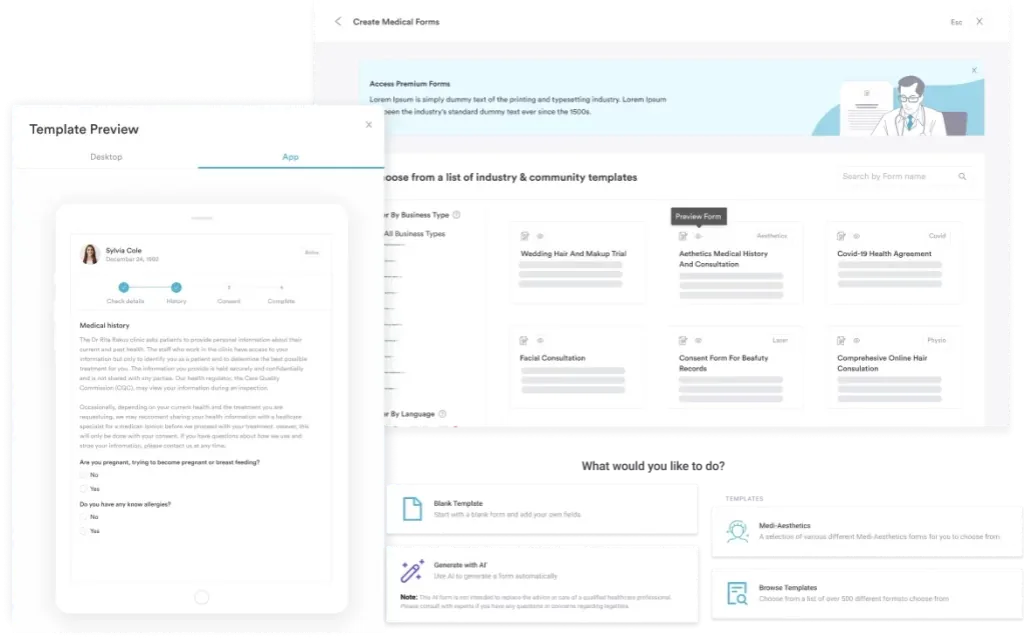
A well-structured operative note for CPT code 21355 is the primary defense against denial and the primary evidence in any payer audit. The note has to describe the percutaneous nature of the intervention outright, rather than leave it as a default assumption.
- Surgical approach: Explicit statement that the procedure was performed percutaneously, without formal open incision for fracture visualization
- Instrument used: Name the specific instrument (e.g., Carroll-Girard screw, bone hook, percutaneous elevator) and describe its placement
- Fracture confirmation: Pre-operative CT or X-ray findings confirming the malar area fracture, including displacement and anatomical involvement
- Manipulation performed: Describe the manipulation maneuver, the direction of force, and confirmation of reduction
- Post-reduction assessment: Clinical or intraoperative imaging confirmation that acceptable alignment was achieved
- Laterality: Clearly state left, right, or bilateral. Bilateral documentation triggers a modifier -50 review
- Anesthesia type: Document whether the case was performed under general, regional, or monitored anesthesia care
Practices using digital operative documentation can build structured surgical note templates that prompt for each of these elements before the note is signed. Capturing them at the time of service also satisfies HIPAA-compliant record-keeping, and it removes the need for retrospective amendments.
Missing documentation on the percutaneous approach is the most common reason payers downcode CPT code 21355 to an evaluation and management code. Some payers instead request refunds on claims they have already processed. The AAPC code lookup carries crosswalk guidance and NCCI bundling policy for this code family.
Common billing errors and how to avoid them
Experienced coders see the same errors repeat across practices billing CPT code 21355. Most stem from misreading the percutaneous-versus-open distinction, losing track of what falls inside the global period, or skipping modifier steps that payers treat as mandatory.
- Upcoding to an open treatment code: Billing 21356 or 21360 when the operative note only supports a percutaneous approach. This is a compliance risk and a common RAC audit target. A note that says “percutaneous” under a code that says “open” is a contradiction auditors flag immediately.
- Omitting modifier -50 on bilateral cases: Treating both sides in one session and submitting a single unmodified line is the most frequent denial trigger. Some payers want modifier -50 on one line, others want two lines with -LT and -RT. Verify payer-specific instructions before submission.
- Mishandling the 10-day global period: Routine follow-up visits inside the 010-day window are bundled into CPT code 21355. Billing them without modifier -24 or -79 causes an automatic denial. The opposite mistake costs just as much, because teams treating 21355 as a 90-day code stop billing visits that became payable on day 11.
- Insufficient documentation of manipulation: Some operative notes confirm the fracture and instrument placement but never state that manipulation was performed. Without that statement the claim may be denied or downgraded. The “with manipulation” language in the descriptor is doing work.
- Missing or incorrect ICD-10 specificity: Using unspecified S02 codes when laterality is known and documented. Payers increasingly require the most specific code available. Unspecified codes generate medical necessity flags.
Build code selection into the workflow at the point of documentation, not as a downstream billing step. The same discipline applies to adjacent maxillofacial codes such as CPT 21110. That order of operations clears most of these errors before the claim is ever submitted.
Pro Tip
Check NCCI modifier indicators for CPT 21355 at the start of each new calendar year. CMS updates NCCI edits quarterly, so a modifier that passed last quarter may generate an edit in Q2. Schedule a short billing team review each January and April to confirm the guidance is current.
How Pabau keeps CPT 21355 claims clean
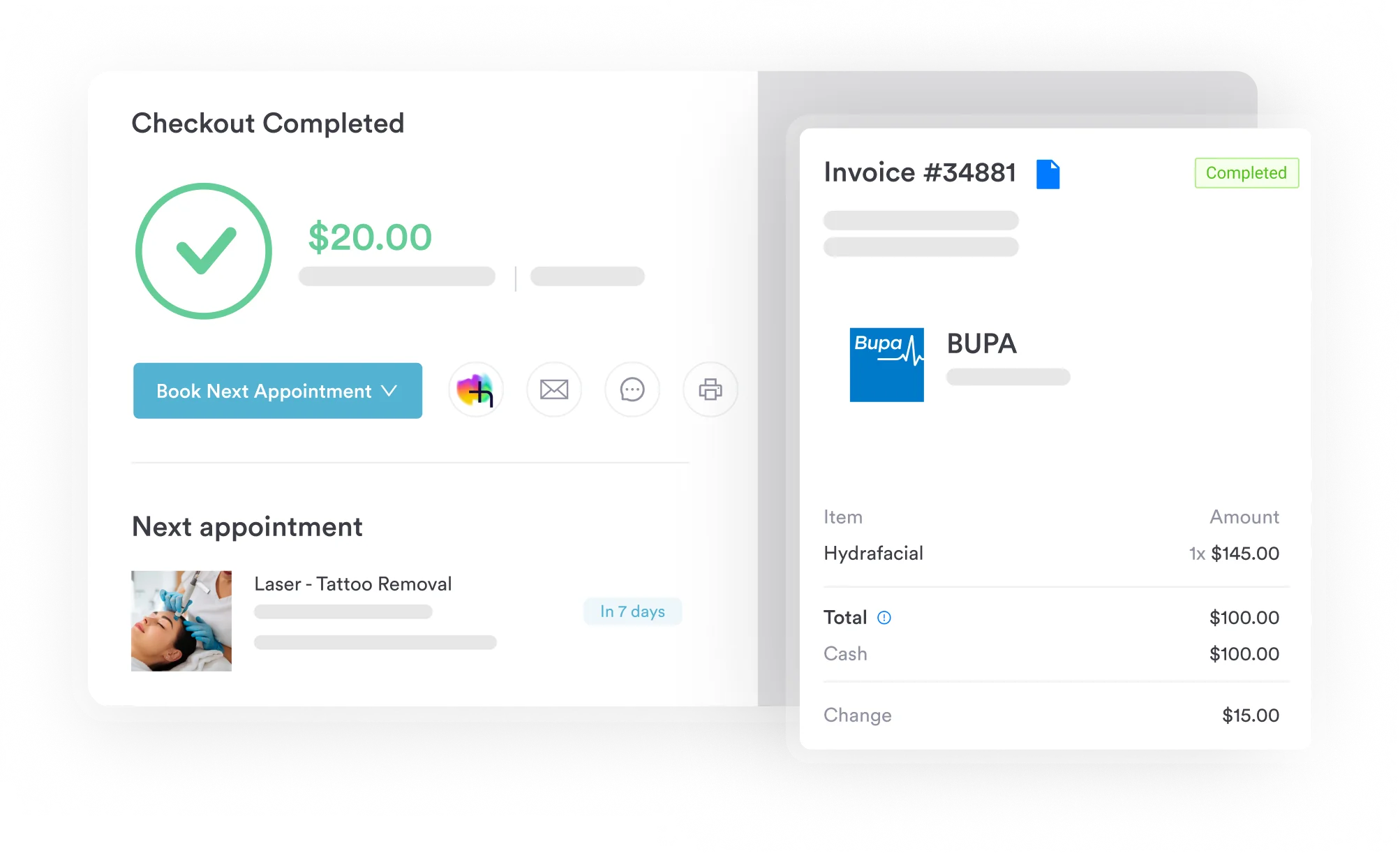
A CPT 21355 claim passes from the operative note to the coder and on to the payer. Each handoff is a chance for the percutaneous approach to blur into open language. Practice management software like Pabau keeps the note and the code in one system, so what the surgeon documented is what the biller submits.
Pabau’s claims management tools support a check before submission. Billing staff can flag a missing -50 on a bilateral case before the claim goes out. The same review catches an operative note that never says percutaneous.
The 10-day global period is easier to track when the surgery date sits in the same record as every follow-up visit. Your team can see which visits fall inside the window and which became billable on day 11.

Simplify surgical billing with Pabau
Pabau’s claims management tools help oral and maxillofacial surgery and plastic surgery practices track modifier requirements, flag missing documentation, and submit cleaner claims across payers. See how it works in your specialty.

Conclusion
CPT code 21355 is a narrow, approach-specific code. The percutaneous technique has to be explicit in the operative note, and the modifiers have to match what happened in the case. Everything else follows from those two lines of documentation.
Track post-operative services against a 10-day window, not the 90 days that belong to open code 21360. Getting that single detail right protects the visits you should not bill and recovers the ones you should. Over a year of facial trauma cases, that difference is worth more than any modifier edit.
Pabau gives oral and maxillofacial surgery and plastic surgery teams one place to track modifier requirements and catch missing documentation fields. To see how it fits your billing workflow, book a demo.

Continue your research
Treating an orbital fracture in the same session? CPT 21407 sets out the billing rules for open orbital fracture treatment with an implant.
Coding a maxillary lesion excision next? CPT 21049 walks through the documentation and modifier rules for excision of a benign maxillary tumor or cyst.
Chasing prior authorization before a trauma case? Our medical prior authorization form gives your front desk one sheet for everything payers ask for.
Standardizing how surgeons write up a case? Our guide to medical notes shows how to structure a note so coders can read the approach at a glance.
Setting up the practice billing identifiers? Our guide to NPI types explains which number belongs on a surgical claim and who needs each one.
Frequently asked questions
What is CPT code 21355 used for?
CPT code 21355 is used to report percutaneous treatment of a fracture of the malar area, including the zygomatic arch and malar tripod, with manipulation. It applies when the surgeon reduces the fracture through the skin with an instrument such as a bone hook or elevator. No formal open incision is made for direct visualization. Primary billers are oral and maxillofacial surgeons and plastic surgeons treating facial trauma.
What is the reimbursement rate for CPT code 21355?
Medicare pays roughly $290 to $300 for CPT code 21355 in a facility setting, covering the physician component only. In a non-facility setting it runs about $440 to $450. Those estimates apply 2026 total RVUs of 8.81 and 13.34 to the $33.4009 conversion factor. Rates change annually and vary by geographic location, so check the CMS Physician Fee Schedule Look-Up Tool for your locality.
What modifiers apply to CPT code 21355?
Modifier -50 (bilateral procedure) applies when both malar areas are treated in the same session. Modifier -22 applies to unusually complex cases with extended operative time, supported by specific operative note documentation. Modifier -80 applies when an assistant surgeon participates. Laterality modifiers -LT and -RT may substitute for -50, depending on payer preference. Verify current NCCI modifier indicators before submission, as they are updated quarterly.
What is the global period for CPT code 21355?
The global period for CPT code 21355 is 10 days. CMS assigns the code a 010 global indicator, covering the day of the procedure and the 10 days after it. Routine related visits in that window are bundled and need modifier -24 or -79 to be paid separately. Visits after day 10 are billable on their own. The 90-day global period belongs to CPT 21360, the open malar treatment code.
Which ICD-10 codes pair with CPT 21355?
The ICD-10-CM codes that pair with CPT 21355 sit in the S02 chapter for skull and facial bone fractures. S02.400A covers a malar fracture, unspecified, at the initial encounter for a closed fracture. S02.402A covers an isolated zygomatic fracture, and S02.42XA covers a fracture of the alveolus of the maxilla. Swap the seventh character to B when the note documents an open fracture.
How does CPT 21355 differ from CPT 21356 and 21360?
CPT 21355 covers the percutaneous, closed approach to malar area fractures. CPT 21356 covers open treatment limited to the zygomatic arch, without internal fixation. CPT 21360 covers open treatment of the full malar area including the malar tripod, without internal fixation. The approach documented in the operative note determines the correct code, and fracture complexity alone does not. The global periods also differ. Both 21355 and 21356 are 010-day codes, while 21360 carries a 090-day period.
What documentation is required to bill CPT code 21355?
The operative note must state the percutaneous approach outright and name the instrument used. It must describe the manipulation performed and the direction of force. It must also confirm post-reduction alignment through clinical or intraoperative imaging. Pre-operative CT or X-ray confirming the malar fracture must be documented, laterality must be specified, and anesthesia type must be recorded. Missing percutaneous language is the most common reason payers deny or downcode 21355 claims.