



HCPCS code E0198: Water pressure pad billing guide
HCPCS code E0198 is a water pad for a standard mattress HCPCS code E0198 is the ...

Last Updated: Oct 13, 2026

CPT Code 21346 describes open treatment of a nasomaxillary complex fracture, LeFort II type, with wiring and/or local fixation.
Medicare pays facility and non-facility settings at different rates, so check the current CMS Physician Fee Schedule for your locality.
A 90-day global surgery period applies, so post-operative E&M visits inside that window are bundled unless a separate modifier applies.
Code selection turns on access and approach. 21345 is closed, 21346 is open, 21347 needs multiple approaches, and 21348 adds a bone graft.
Practice management software like Pabau lets you attach the CPT code at the point of care, so unbundling errors surface earlier.
CPT Code 21346 describes open treatment of a nasomaxillary complex fracture of the LeFort II type, with wiring and/or local fixation. The code is maintained by the American Medical Association and sits under fracture and dislocation procedures on the head. It is billable and specific, and valid for HIPAA-covered electronic transactions.
This reference covers the descriptor, the procedure itself, Medicare reimbursement, RVUs, modifiers, ICD-10 pairing, the global period, and documentation. It also sets out how 21346 differs from the three codes around it.
A LeFort II fracture involves the midface as a pyramidal segment, separating the central midface from the cranial base. It is a high-energy injury pattern, most often from motor vehicle collisions and other significant facial trauma. Open treatment under CPT 21346 means the surgeon reaches the fracture site through incisions rather than closed-reduction techniques.
The procedure typically involves the following steps, in order:
The coding distinction that matters is access. Open treatment requires direct visualization and physical access to the fracture. If the surgeon reduces the fracture without an incision, a closed-treatment code applies instead.
Oral and maxillofacial surgeons and ENT specialists bill this code most often. A purpose-built plastic surgery EMR keeps their procedure notes and claims in one record, so coding does not depend on a separate handoff.
Every claim for CPT 21346 needs a paired ICD-10-CM diagnosis code that establishes medical necessity. Payer systems run automated edits matching the procedure code against the diagnosis code. A mismatch or an unsupported diagnosis triggers a denial. Check pairings with your Medicare Administrative Contractor (MAC) or a CPT-to-ICD-10 crosswalk tool before submission, because local coverage determinations can apply. Where a practice bills both markets, mapping between code sets is manual, so MBS item numbers are checked separately. Under current evaluation and management rules, the counted elements changed but the need to show reasoning did not.
The table below lists the ICD-10-CM codes most commonly paired with CPT 21346. Facial soft-tissue injuries often accompany these fractures, and a code like code like S01.111D covers the follow-up encounter for a periocular laceration.
Use the 7th-character suffix correctly. “A” marks the initial surgical encounter, “D” marks subsequent encounters, and “S” marks sequela. Misapplying the 7th character is a common denial trigger. Medical necessity stays payer-specific, so confirm with the patient’s MAC or payer LCD before submitting.
Medicare reimbursement for CPT 21346 varies by setting and by locality. The setting is facility or non-facility, and locality is handled through the Geographic Practice Cost Index (GPCI). The figures below reflect the 2025 Medicare Physician Fee Schedule (MPFS) national average. Verify current rates for your locality with the CMS fee schedule lookup, because they change with each annual update.
These are national averages, offered for orientation only. Your actual allowed amount will differ with locality GPCI adjustments. Private payers negotiate their own fee schedules independently of MPFS, and commercial rates for CPT 21346 are often higher. Comparing your own fee schedules per code can surface patterns worth raising in contract talks.
RVUs are the building blocks of Medicare physician payment. The total RVU for a code is multiplied by the CMS conversion factor, roughly $32.35 for CY 2025, and then by the locality GPCI.
Use an RVU lookup tool to verify current values for your MAC locality. The figures below are 2025 MPFS national values, so confirm the current year before using them in compensation models.
The work RVU reflects physician time and complexity, and it stays constant regardless of setting. The practice expense RVU is much higher in the non-facility setting, because the physician carries the overhead directly. That difference is what separates the hospital and office rates in the table above.
Verify your RVU values each January. CMS updates the MPFS annually, and RVU values for surgical codes can shift meaningfully. Pull the new fee schedule data file from the CMS website before your first Q1 claim submission.
Modifiers tell the payer that a claim has been altered, or that specific circumstances apply. Applying the wrong modifier to CPT 21346 is a common denial cause. In some cases it is also a fraud and abuse flag. Check your MAC’s published guidance for modifier-specific policies.
Modifier -22 requires documentation that the procedure took substantially more time or effort than typical. A single sentence in the operative report is not enough. Name the complication, the extra time it took, and the outcome.
CPT 21346 carries a 90-day global surgery period under Medicare. Services provided in the 90 days after the procedure date fall inside the global package. They cannot be billed separately if they relate to the original surgery.
The following services are bundled into the global package and cannot be billed independently inside the 90-day window:
Some services can still be billed during the global period. Unrelated diagnoses take modifier -24 on the E&M, new injuries stand on their own, and unrelated surgical procedures take modifier -79. Pre-operative E&M visits on the day of surgery are generally bundled, unless they address a separate condition.
Physical therapy for restricted jaw opening is generally billed separately from the fracture repair. Practices running rehab in-house on a physical therapy EMR can keep those visits on the same patient record.
Check the global period designation for CPT 21346 in the CMS MPFS data file, in the “Glob Days” column, before billing. Some private payers do not follow the standard 90-day period.
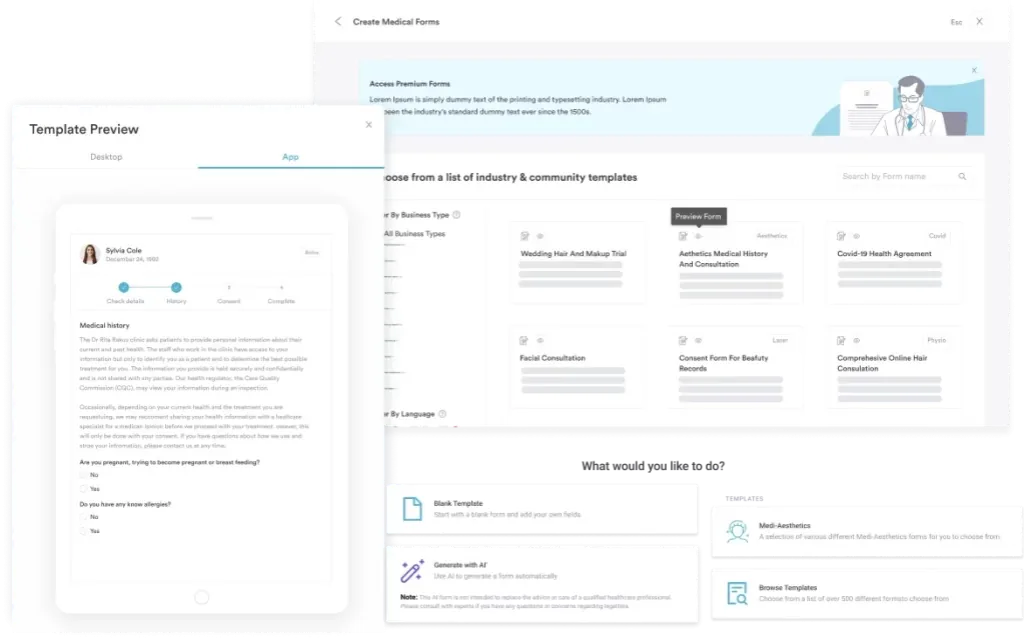
Insufficient documentation is the leading cause of post-payment audit clawbacks for surgical codes in this range. The operative report has to do more than confirm the procedure happened. It has to support the specific CPT code selected. Coders and auditors look for the elements below before approving 21346.
Practices using digital forms for operative documentation can make these elements mandatory fields, so they are the same on every procedure note.
The nasomaxillary complex fracture range holds four codes, and selection turns on two things. The first is whether treatment was open or closed. The second is how many open approaches the repair needed, and whether a bone graft was harvested. Malar and zygomatic fractures sit in a neighboring family, where 21355 covers percutaneous treatment.
Start with access. If the surgeon reduced the fracture without an incision and held it with interdental wires, a denture, or a splint, the code is 21345. If incisions were made, count the approaches.
One open approach with wiring or local fixation is 21346, and two or more separate approaches move the claim to 21347. The same multiple-approach logic separates 21470 from the simpler mandible codes. If the repair also needed a bone graft, 21348 covers both the graft and the harvest.
Billing 21346 when the note documents multiple approaches or a bone graft is a downcode, and it costs the practice revenue on every claim.
Most denials for CPT 21346 fall into three categories. Documentation falls short, the wrong code is picked from the adjacent range, or a modifier is misused. The guidelines below cut claim failure rates for practices billing this code.
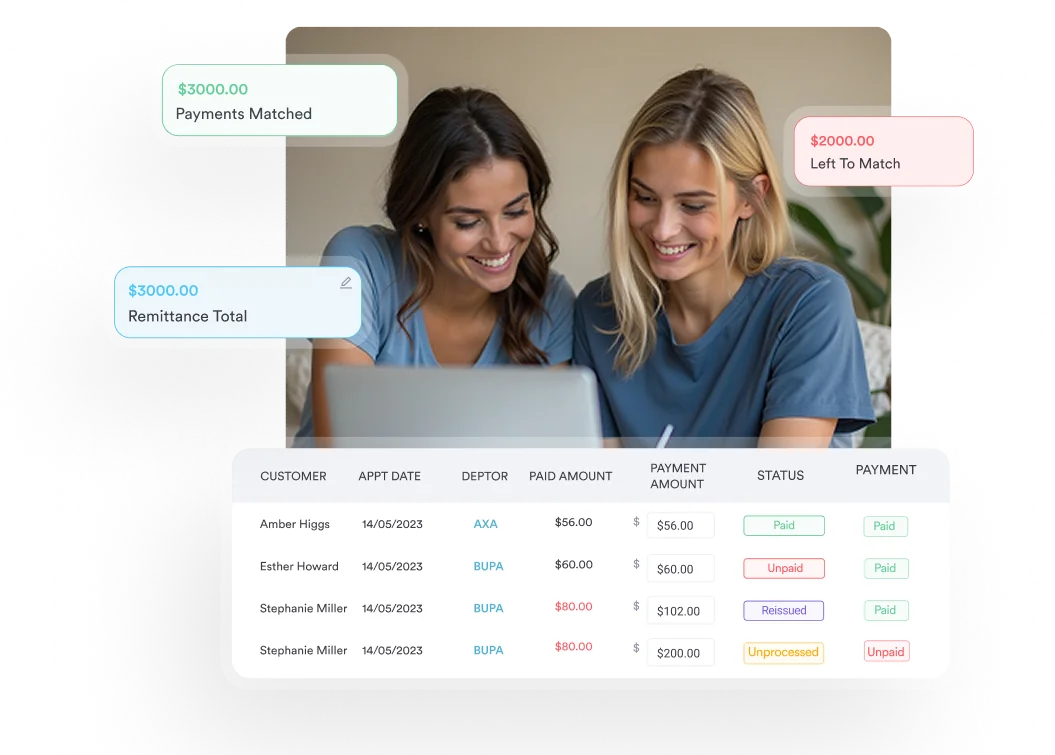
Managing CPT 21346 claims by hand gets expensive fast. Every payer has its own modifier rules, and the global period has to be tracked per patient. Practice management software like Pabau attaches procedure codes at the point of care. Its claims management software hands the billing team a pre-populated claim, instead of an encounter to reconstruct.
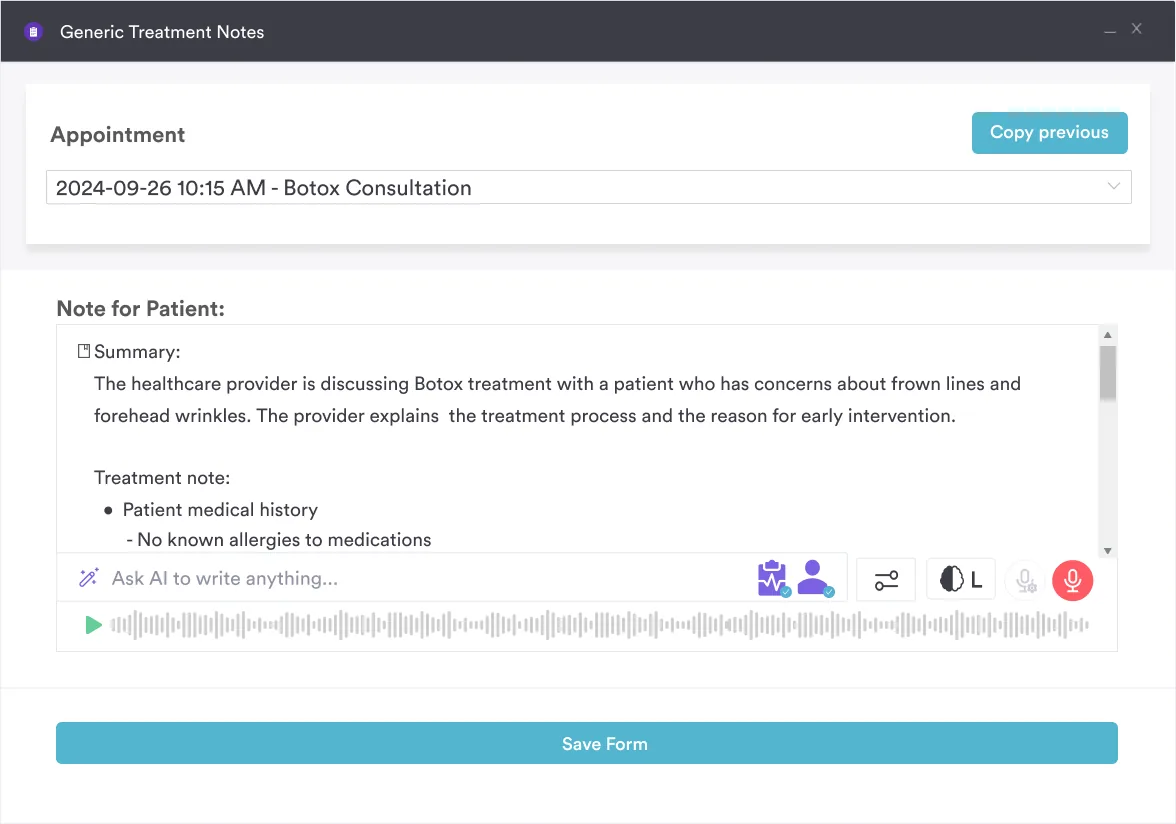
Operative note templates in Pabau can make the checklist above mandatory before a note is closed. Fracture classification, surgical approach, and fixation method all have to be filled in. That keeps the operative note and the claim in step. AI-assisted documentation speeds up post-operative note completion, which shortens the wait between procedure and claim.
Procedure-level reporting in Pabau surfaces utilization trends by CPT code. Practice managers can see:
That reporting is one piece of a wider setup. A broader look at practice management software shows where a surgical workflow leaks revenue on codes like 21346.

Pabau helps oral and maxillofacial surgery practices attach CPT codes at the point of care. Global periods are tracked automatically, and missing documentation surfaces before claims go out.

The billing risk on CPT Code 21346 sits in two places. One is code selection inside a range of four near-identical descriptors. The other is documentation that supports open LeFort II treatment with wiring or local fixation, without ambiguity. Get either wrong and every claim carries the error until an audit finds it.
Decide the code from the operative note, at the point the note is written. The surgeon already knows how many approaches were used and whether a graft was taken. Capturing that at the time removes the guesswork later. Book a demo to see how Pabau keeps surgical documentation and claims on one record.

Chasing prior authorization before surgery? Medical prior authorization form gives you a reusable request template for high-complexity surgical codes.
Coding a partial abdominal transection? ICD-10 Code S38.3XXA covers a partial transection of the abdomen at the initial encounter.
Coding post-operative suture removal? 15851 explains how removal under anesthesia is coded and when it stands on its own.
Repairing an alveolar ridge fracture in the same session? 21445 sets out the descriptor and the modifier rules for that repair.
Coding a late-effect forearm contusion? ICD-10 S50.10XS covers a forearm contusion coded as a sequela once the original injury has healed.
CPT Code 21346 is the AMA procedure code for open treatment of a nasomaxillary complex fracture, LeFort II type. The fixation is wiring and/or local fixation. It covers the whole surgical encounter, from exposing the fracture through an incision to reducing the pyramidal midface segment. Securing the fragment with wires, arch bars, or local bone plates is included.
Medicare national average rates are roughly $750-$900 in a facility setting and $1,200-$1,500 in a non-facility setting. Those figures are based on 2025 MPFS values. Actual rates vary with the locality GPCI adjustment. Verify current allowed amounts with the CMS Physician Fee Schedule lookup for your MAC locality, because rates are updated annually.
Five modifiers come up most often. Modifier -22 covers increased complexity and significantly more operative time. Modifier -51 marks multiple procedures in one session, and -62 marks two surgeons performing distinct portions. Modifier -78 covers an unplanned return to the OR for a related complication. Modifier -79 covers an unrelated procedure during the global period. Every choice must be supported by specific documentation in the operative report.
The primary ICD-10-CM pairing is S02.412A, LeFort II fracture, initial encounter for closed fracture. S02.40XA covers a fracture of malar, maxillary and zygoma bones, unspecified, initial encounter. It is also commonly paired when the operative note documents LeFort classification but the fracture code is broader. Medical necessity is payer-specific. Confirm with your MAC’s local coverage determination.
CPT 21346 carries a 90-day global surgery period under Medicare. Post-operative E&M visits related to the procedure are bundled and cannot be billed separately within this window. Unrelated services during the global period need modifier -24 for an unrelated E&M, or -79 for an unrelated surgical procedure.
21345 is closed treatment, with interdental wire fixation or fixation of a denture or splint. 21346 is open treatment with wiring and/or local fixation. 21347 is open treatment that requires multiple open approaches. 21348 is open treatment with bone grafting, and it includes obtaining the graft. The operative report must document the access, the number of approaches, and any graft.
CPT 21346 carries roughly 23.00 work RVUs, reflecting the physician time and complexity of open facial fracture repair. Total RVUs are about 30.00 in a facility setting and 41.50 in a non-facility setting. The difference is driven by the practice expense component. Verify current values annually against the CMS MPFS data file or an RVU lookup tool.



