



HCPCS code E0198: Water pressure pad billing guide
HCPCS code E0198 is a water pad for a standard mattress HCPCS code E0198 is the ...

Last Updated: Oct 13, 2026

CPT code 21110 covers the application of an interdental fixation device for conditions other than fracture or dislocation, including removal.
The code sits in the Musculoskeletal System, Head subsection and describes a permanent bonded device, while CPT 21497 covers simpler interdental wiring.
Neither code applies to fractures. Interdental fixation for a fracture is billed from the fracture and dislocation family, such as 21453 or 21462.
Documentation must establish medical necessity for a non-fracture, non-dislocation indication. Missing that detail is the most common reason for denial.
Practice management software like Pabau tracks modifiers, attaches operative notes, and catches coding errors before the claim goes out.
CPT code 21110 covers the application of an interdental fixation device for conditions other than fracture or dislocation. Removal of the device is included in the same code.
Coders reach for it after orthognathic surgery, in temporomandibular joint (TMJ) cases, and wherever the jaws need holding in occlusion. Claims fall over when the record does not spell out that non-fracture indication. Claims management software built for surgical practices catches that before submission.
This reference guide covers the official descriptor, 2026 reimbursement rates, applicable modifiers, and documentation requirements. It also explains how CPT 21110 differs from CPT 21497, and which payer policies apply.
CPT code 21110 describes the application of an interdental fixation device for conditions other than fracture or dislocation, including removal. According to the American Medical Association’s CPT code set, this code sits within the Musculoskeletal System section, under the Head subsection. It is grouped under “Introduction Procedures on the Head.” Claim scrubbing catches the mismatches that would otherwise come back as a denial two weeks later. Practices outside a payer network hand the claim work to the patient, so a superbill form has to be complete. Claim scrubbing catches the mismatches that would otherwise come back as a denial two weeks later. Practices outside a payer network hand the claim work to the patient, so a superbill form has to be complete.
The procedure secures the teeth of the upper and lower jaws together. The surgeon uses arch bars, wire loops, or a prefabricated fixation device.
The indication is the qualifier that decides the code. It has to be something other than a fracture or dislocation. TMJ disorders, stabilization after orthognathic surgery, and bruxism cases needing jaw immobilization all support 21110.
Because the code bundles both application and removal, you should not bill a separate code when the device comes out. Both services are captured under 21110 in a single episode of care.
The procedure typically takes place in an outpatient surgical setting. The surgeon attaches arch bars or intermaxillary fixation (IMF) screws to the maxillary and mandibular teeth. Wire or elastics then hold the jaws in occlusion.
Oral and maxillofacial surgeons perform this procedure most often, along with dentists who hold surgical privileges at a plastic surgery practice. Common indications include:
What it does not cover: If the fixation manages a jaw fracture or dislocation, CPT 21110 is the wrong code. Fracture care is reported from the fracture and dislocation family, such as 21453, 21454, 21461, or 21462. CPT 21497 is not the fracture alternative either.
Reimbursement for CPT code 21110 runs off Medicare’s Resource-Based Relative Value Scale (RBRVS). The three RVU components (work, practice expense, malpractice) are multiplied by the Medicare Conversion Factor. Geographic Practice Cost Indices (GPCIs) then adjust the result for your locality.
Use the CMS Physician Fee Schedule lookup tool to pull the current year’s figures for your MAC jurisdiction. The national averages below come from fee schedule data. Check them against that tool before you bill.
Geographic adjustments move rates significantly. High-cost localities such as San Francisco, Manhattan, and Alaska may reimburse 20% to 30% above the national average. Rural localities can pay 10% to 15% below it. Set your fee schedule from locality-adjusted figures rather than the national number.
Verify CPT 21110 rates against the CMS Physician Fee Schedule tool at the start of each calendar year. Medicare adjusts the conversion factor annually, and RVU values for specific codes can change. Submitting claims based on prior-year rates leads to systematic underpayments that compound over time.
Modifiers can increase reimbursement, prevent denials, or clarify billing circumstances. Appending the wrong modifier, or omitting a required one, are both common audit triggers for CPT code 21110.
Modifier -22 requires robust documentation. The operative report must name the anatomical or clinical factors that made the procedure substantially more complex than a standard application. Vague language like “difficult procedure” is not enough. Payers expect quantified detail.
Missing or vague documentation is the top reason CPT code 21110 claims are denied. The medical necessity standard here is the same one that governs the rest of surgical billing. If it is not in the record, it did not happen.
Digital clinical forms that capture these elements at the point of care cut both rework and denied claims.
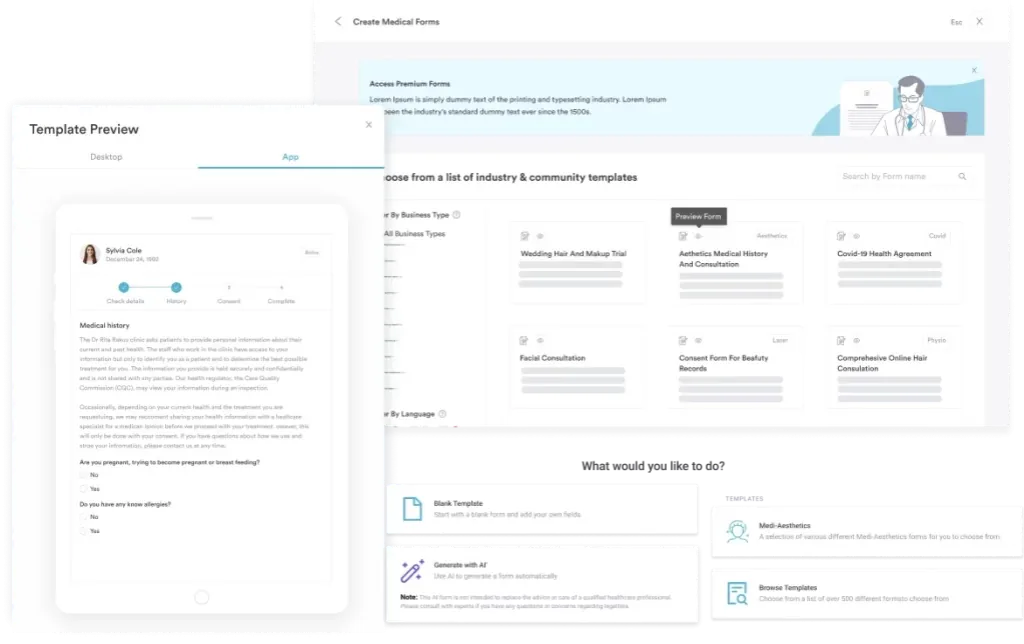
Every claim for CPT 21110 should be supported by the following documentation:
Because removal is bundled into the code, the operative note should address the application and the removal. A separate claim for removal within the same episode of care will be denied on bundling grounds.
Both codes describe interdental fixation for a condition other than fracture, so the choice turns on the device rather than the diagnosis. CPT 21110 covers a more permanent device with no removable parts, such as arch bars bonded to the teeth.
CPT 21497 covers simpler interdental wiring, which is easier to place and to take down. AMA CPT Assistant (March 1997) states the distinction plainly. CPT 21110 is the more complex service, because the device is more permanent than wiring.
One quirk of the CPT manual explains most of the confusion here. Code 21497 is printed at the end of the Fracture and/or Dislocation Procedures range for the head.
Its descriptor still reads “for condition other than fracture.” Coders who navigate by subsection heading rather than descriptor end up treating it as a fracture code. Neither code belongs on a fracture or dislocation claim.
Choosing between the two codes comes down to what the operative note describes. Record the device by name, how it is attached to the teeth, and how long it should stay in place.
If the fixation treats a fracture, code from the fracture and dislocation family instead. Check NCCI edits before billing more than one fixation code in the same session.
Understanding CPT code 21110 in context means knowing which adjacent codes describe overlapping or sequential services. Misassigning any of them creates coding errors and audit exposure.
Coders working across the head and neck ranges can keep a medical coding cheat sheet on the desk. It covers the adjacent CPT, ICD-10, and HCPCS families. The AAPC CPT code lookup is a useful cross-reference for verifying descriptors before billing.
Before billing 21110 alongside 21196 (orthognathic surgery), confirm NCCI edits do not bundle these codes for your MAC jurisdiction. When both are legitimately performed in the same session, add modifier -51 to the secondary procedure. Thorough operative documentation is what secures payment for both services.
Coverage for CPT code 21110 varies by payer and plan. Medicare generally covers the procedure when medical necessity is clearly established in the documentation. The indication also has to be a recognized non-fracture condition within the covered oral surgery benefit categories.
Medicaid coverage depends on the state. Some state programs cover interdental fixation under medical benefit carve-outs. Others classify it under dental benefits, which may not be covered for adults. Confirm your state Medicaid agency’s fee schedule and benefit policy before billing.
Commercial payers introduce additional complexity. Key considerations include:
Oral and maxillofacial surgery codes attract payer scrutiny because the boundary between dental and medical benefits is contested. Payers audit claims where surgical procedures could plausibly fall under dental exclusions, and CPT code 21110 sits in that gray zone.
The Office of Inspector General (OIG) publishes annual Work Plans targeting high-risk billing areas. Codes like CPT 21110 draw attention when claim volumes suggest unbundling, because the non-facility payment is significant and removal is bundled in.
Smaller surgical practices carry the same exposure without a dedicated coding team, so the system they run on has to catch errors. An EMR for small practices that flags modifier and diagnosis mismatches does that work at charge entry.
Four specific audit risk factors for CPT 21110:
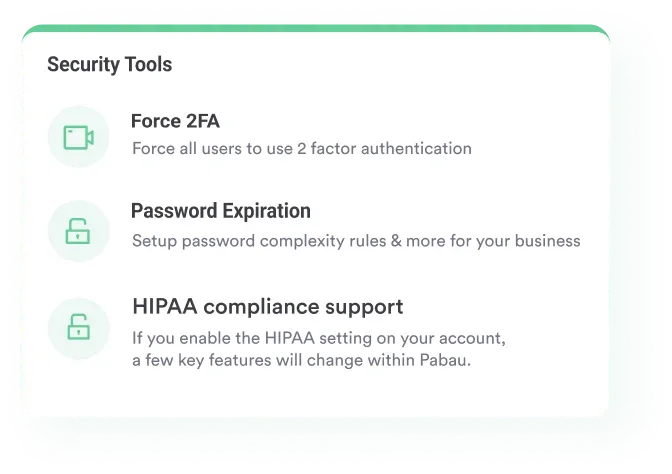
Practices using compliance management software can flag these error patterns before claims leave the office. Pairing that with structured documentation workflows lowers both denial rates and audit exposure. The AMA’s coding resources cover documentation standards for surgical procedure codes.
Most oral surgery practices assemble a 21110 claim from three places. The operative note sits in the chart, the modifier decision sits with the coder, and the authorization letter sits in somebody’s inbox.
Practice management software like Pabau holds all three against the same patient record. Surgeons complete the operative note in structured fields, so the device, the arches involved, and the non-fracture indication are captured while they work.
Your coder then sees the note, the diagnosis, and the authorization on one screen before the claim goes out. Fewer claims come back asking for detail that was in the chart all along.
Every subscription includes the whole platform, so the documentation, billing, and reporting tools arrive together. There is no tier to upgrade to once your claim volume grows.

Pabau helps oral surgery and maxillofacial practices manage operative notes, modifier tracking, and claim submission in one place. Billing errors stay out of your revenue cycle.

The code itself is narrow, so most 21110 denials trace back to the record rather than the coding. Name the device, name the indication, and state why immobilization was necessary.
Two habits protect the money on this code. Refresh your locality’s fee schedule figures each January, and treat removal as part of the original episode rather than a new claim.
If your team is rebuilding this workflow, book a demo to see how Pabau keeps operative notes, modifiers, and claim status in one place.

Grafting the mandible in the same episode of care? CPT code 21215 covers bone grafts to the mandible, with its own RVUs and modifier rules.
Coding facial fracture repair instead? CPT code 21330 covers open treatment of a complicated nasal fracture, where fixation is part of fracture care.
Want fewer denials across the whole billing cycle? Revenue cycle management walks through the stages where surgical claims usually stall.
Coding a congenital lung malformation? ICD-10 code Q33.3 guide covers this billable code and how it differs from an underdeveloped lung code.
CPT code 21110 reports the application of an interdental fixation device for conditions other than fracture or dislocation. Removal of the device is included. Common indications include temporomandibular joint (TMJ) disorders, stabilization after orthognathic surgery, and jaw immobilization for bruxism.
Both codes cover interdental fixation for a condition other than fracture, so the difference is the device rather than the diagnosis. CPT 21110 describes a more permanent device with no removable parts, such as bonded arch bars, and it includes removal. CPT 21497 describes simpler interdental wiring. Neither code should be used for fracture care, which is billed from the fracture and dislocation code family.
Modifier -22 applies when the procedure involved substantially increased complexity. Modifier -51 applies when multiple procedures are performed on the same day. Modifier -59 applies to a distinct procedural service that would otherwise be bundled. Modifiers -78 and -79 apply during the 90-day global period, depending on whether the new service is related or unrelated. Each modifier requires supporting documentation to avoid denial.
The 2026 Medicare reimbursement for CPT 21110 varies by geographic locality. National averages run at roughly $872.77 in non-facility settings and $674.70 in facility settings. These figures reflect RVU-based calculations using the 2026 Medicare Conversion Factor and are adjusted by GPCIs. Always verify current rates using the CMS Physician Fee Schedule lookup tool for your specific MAC jurisdiction.
Required documentation includes an ICD-10-CM diagnosis code reflecting a non-fracture, non-dislocation condition. You also need an operative note naming the fixation device and the surgical technique. Add a medical necessity statement explaining the clinical rationale, plus prior authorization records if the payer requires them. Since removal is bundled, the operative record should address the entire episode of care, not just the application visit.
Medicare generally covers CPT 21110 when medical necessity is clearly documented and the indication is a recognized non-fracture condition within covered oral surgery benefits. Medicaid coverage varies by state. Some programs cover the procedure under medical benefits. Others route it through dental benefit carve-outs that may exclude adult coverage. Check your state Medicaid fee schedule and your MAC’s Local Coverage Determination before billing.



