










Key takeaways
HCPCS code K0046 covers an elevating legrest lower extension tube, replacement only, each.
The phrase replacement only sits inside the official description, so a claim for new equipment is denied.
Medicare Part B covers K0046 under the DME benefit, subject to medical necessity documentation and DME MAC review.
K0043 is the footrest counterpart to K0046, and mixing the two is a common coding error.
Practice management software like Pabau helps DME billers track replacement timelines and attach the documentation each claim needs.
HCPCS code K0046 covers an elevating legrest lower extension tube, replacement only, each. It sits in the HCPCS Level II code set, which handles durable medical equipment, known as DME. The tube must replace a part the beneficiary already owns, not arrive with new equipment.
K0046 is maintained by the Centers for Medicare and Medicaid Services (CMS) as part of the HCPCS Level II code set. That set covers DME, orthotics, prosthetics, supplies, and non-physician services that CPT codes do not capture.
Practice management software like Pabau tracks HCPCS Level II codes alongside the clinical record. Pabau’s claims management software flags replacement timelines and catches code mismatches before a claim leaves the office.
The code applies to one component: The lower extension tube of an elevating legrest assembly. Coders sometimes reach for it when the part being replaced is a footplate, such as the one billed under K0041. Each component carries its own HCPCS code, and billing K0046 for the wrong one ends in denial.
The same applies to a new legrest supplied with a new wheelchair. That is never a K0046 claim, whatever the legrest type.
2026 Medicare fee schedule and payment rates
Medicare payment amounts for K0046 are set annually through the Durable Medical Equipment, Prosthetics, Orthotics, and Supplies (DMEPOS) fee schedule. Rates change each year, so verify the current amount against the CMS DMEPOS fee schedule tool before finalizing claims.
Four DME MAC contractors process K0046 claims nationally. The jurisdiction depends on where the Medicare beneficiary permanently resides, not where the supplier is located. Noridian Healthcare Solutions covers Jurisdictions A and D, and CGS Administrators covers Jurisdictions B and C.
Submitting to the wrong jurisdiction is a common reason for initial claim rejection. The same map governs every DME claim, from wheelchair accessories to the hospital beds billed under E0293.
Medicare coverage and billing rules
Medicare Part B covers K0046 under its DME benefit. Coverage is not automatic. The claim must satisfy medical necessity requirements and comply with the Local Coverage Determination (LCD) issued by the beneficiary’s DME MAC.
Suppliers must also be enrolled in Medicare as a DMEPOS supplier to bill K0046. Enrollment runs on the supplier’s own identifier, and a Type 2 NPI is what an organization bills under.
Replacement parts sit inside the same documentation regime as the rest of the practice, and compliance for medical offices sets the baseline. The core K0046 rules are short, but the replacement-only restriction is where billers slip.
Replacement-only billing: What it means in practice
K0046 covers a replacement extension tube only. It cannot bill the initial supply of a legrest assembly. It also cannot bill legrests fitted to a new wheelchair for the first time. The component being replaced must have been part of equipment the beneficiary already owns.
Replacement billing also requires that the original part has reached the end of its useful life. Damage or wear that leaves the part non-functional counts too. Routine maintenance that does not require part replacement will not support a K0046 claim.
Common replacement-only billing errors
The replacement-only restriction is where most K0046 denials originate. These are the four most frequent errors:
- Billing K0046 for new equipment: Using K0046 when supplying a new legrest assembly on a newly delivered wheelchair. The correct code depends on the full legrest type being supplied.
- Confusing the extension tube with the footplate: The footplate and the lower extension tube are separate billable components with separate HCPCS codes. Billing K0046 for a footplate replacement is a mismatch.
- Missing the useful-life threshold: Medicare expects that replacement parts are not billed before the covered useful life of the previous part has elapsed. Documentation must support why early replacement is medically necessary.
- No record of the original equipment: The claim file must show that the beneficiary already owns a wheelchair with an elevating legrest. Without that record, the replacement claim has nothing to attach to.
Prior authorization and competitive bidding
Prior authorization requirements for DME wheelchair accessories vary by payer and may change annually. Check directly with the applicable DME MAC for the current prior authorization thresholds on K0046 claims.
In competitive bidding areas (CBAs), suppliers must hold a contract with CMS to supply K0046. Billing outside a CBA contract triggers automatic denial.
Medical necessity and documentation requirements
CMS requires that all DME claims, including K0046, be supported by documentation of medical necessity. The treating physician must document why the patient needs the wheelchair accessory. The record must also say why the replacement is required. Suppliers cannot create this documentation themselves.
The clinical rationale often originates outside the supplier’s office. Seating evaluations that justify an elevating legrest usually come from a physical therapy or occupational therapy practice. The supplier has to obtain those notes before building the claim.
Maintaining paperless clinical records that meet HIPAA standards helps keep the documentation chain complete and retrievable at audit. Medical forms management that timestamps and version-controls clinical records lowers the risk of an incomplete file at submission.
Documentation checklist for K0046 claims
- Written order: A signed order from the treating physician naming the K0046 item, the beneficiary’s diagnosis, and the reason for replacement.
- Medical necessity statement: Clinical documentation explaining why the beneficiary requires an elevating legrest and why the existing tube must be replaced.
- Proof of ownership: Evidence that the beneficiary already possesses a Medicare-covered wheelchair fitted with an elevating legrest.
- Delivery confirmation: A signed delivery receipt or attestation confirming the replacement tube was supplied to the beneficiary.
- Useful-life records: Documentation of the previous part’s age, condition, or damage that supports the need for replacement.
- Supplier enrollment confirmation: Verification that the billing supplier holds an active DMEPOS Medicare supplier number.
The CGS coding verification guidance outlines how the Pricing, Data Analysis and Coding (PDAC) contractor verifies product eligibility for HCPCS codes. Suppliers should confirm their replacement tube has been assigned K0046 by the PDAC before billing.
Pro Tip
Audit your K0046 claim files before submission. Confirm a signed written order, a medical necessity statement, and a delivery receipt are all attached. Missing any one of these three documents is the most common trigger for post-payment audit recoupment.
ICD-10 diagnosis codes used with K0046
Every K0046 claim needs at least one ICD-10-CM diagnosis code on it. That code establishes medical necessity for the wheelchair and its accessory. The treating physician documents the diagnosis, and it must reflect the patient’s clinical condition. Coders should not pick diagnosis codes independently of the clinical record.
The table below lists commonly paired ICD-10-CM diagnosis codes for K0046 claims. The list is not exhaustive, and the beneficiary’s LCD remains the authority on a given claim. Always verify clinical appropriateness with the treating clinician before using a diagnosis code.
Z99.3 is frequently used as a secondary code alongside a primary diagnosis that explains the underlying condition. The primary diagnosis carries the medical necessity rationale. Z99.3 confirms wheelchair use. Not all DME MACs require it, but including it supports the claim’s clinical picture.
Related HCPCS codes for wheelchair accessories
K0046 sits within the K00xx range of HCPCS codes, which covers wheelchair accessories, replacement parts, and components. Picking the right code from that range means knowing exactly which part is being supplied. The table below maps the adjacent codes coders confuse most often.
Coders working across several wheelchair accessory claim types benefit from EHR integration workflows. Linking the ordered item to the correct HCPCS code removes most manual lookup errors. The AAPC HCPCS code lookup is a reliable reference for the full K-code range.
Note the distinction between K0043 and K0046. K0043 covers the lower extension tube for a standard footrest. K0046 covers the same part on an elevating legrest. Both are replacement-only tube codes, which is why they get mixed up more often than any other pair in this range.
When the part being replaced matches no listed code, K0108 is the miscellaneous option. It requires a narrative description on the claim line.
How claims management software reduces K0046 denials
DME replacement billing carries a documentation burden that compounds over time. Each claim needs a traceable record of the original equipment, the clinical justification, the written order, and the delivery confirmation. When those documents live in disconnected systems, something is always missing when the MAC asks.
Practice management software that ties clinical documentation to the claims workflow removes that fragmentation. Three capabilities matter most for K0046 claims:
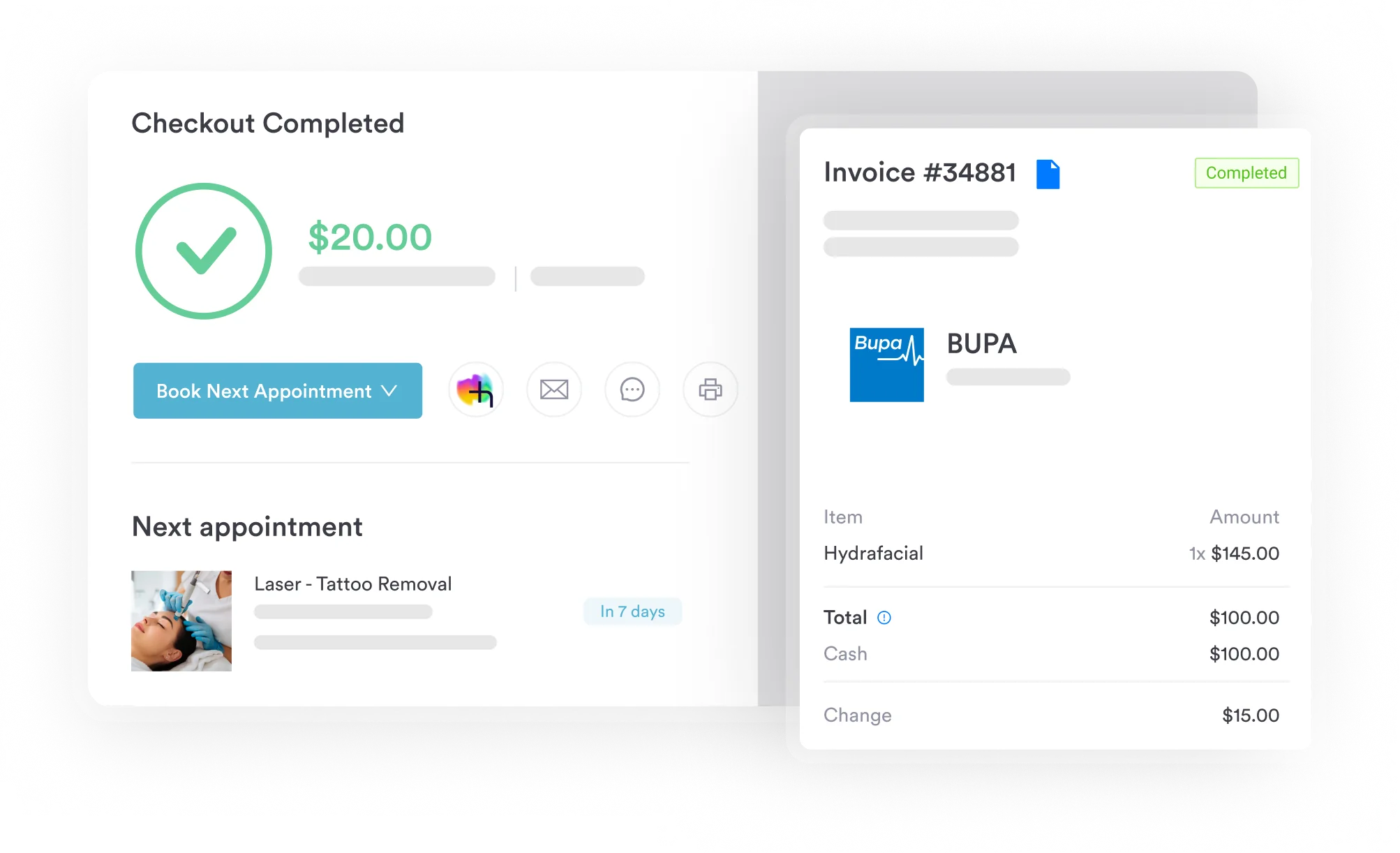
- Replacement timeline tracking: Pabau records when the original part was supplied. It flags when the useful-life threshold is approaching, so premature claims never go out.
- Document attachment at the claim level: Written orders, medical necessity statements, and delivery receipts sit against the claim record. That makes them immediately accessible during MAC review or audit.
- Code-accuracy checks: Linking the ordered item description to the HCPCS code field removes manual lookup errors. That includes the K0043 and K0046 confusion described above.
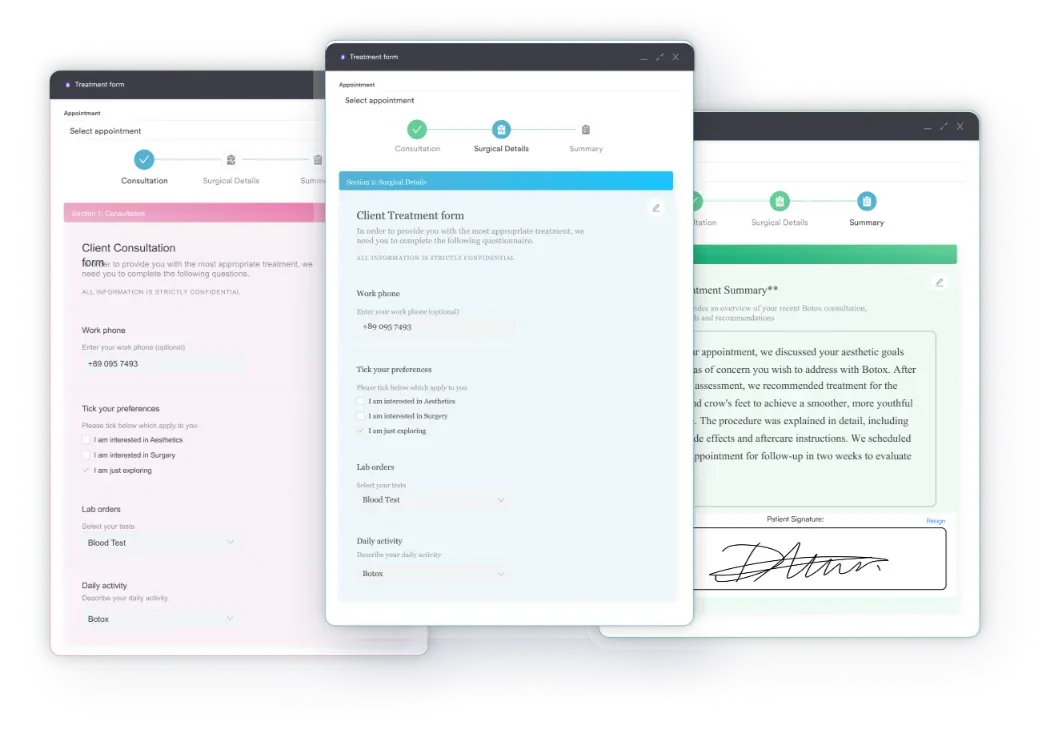
Using digital intake forms for DME orders captures the treating physician’s rationale at the point of order. The supporting documentation then exists before the claim is built, rather than being reconstructed after a denial.
Patient record management that links equipment history to each beneficiary closes the loop. The documentation chain for a replacement claim becomes auditable end to end.
Retention rules apply to DME billing records the same way they apply to clinical notes. CMS requires proof of delivery and supporting documentation to be kept for at least seven years from the date of service. Storage has to stay HIPAA-compliant for that whole period.
Pro Tip
Run a monthly claim-file audit on all open K0046 claims. Confirm each one carries a written order dated before delivery, a medical necessity note, and a signed delivery receipt. Hold any claim that is missing one of the three until the document arrives. Submitting incomplete claims raises your denial rate and your audit exposure.

Catch DME billing errors before the MAC does
Pabau’s claims tools track replacement timelines, attach supporting documentation, and check HCPCS codes before submission. That means fewer denials and less rework for your billing team.

Conclusion
K0046 is a narrow code, and the work sits in the paperwork rather than the coding. Decide once how your practice proves prior ownership, useful life, and delivery. Then apply that standard to every replacement claim you build.
The trade-off is front-loaded effort. Building the file before submission costs more time than firing off the claim. It costs far less than a post-payment recoupment two years later.
Practices handling DME replacement billing benefit from systems that connect the clinical record to the claim. Book a demo to see how Pabau attaches orders, necessity notes, and delivery confirmations before the claim is built.

Continue your research
Replacing a different wheelchair part? K0015 walks through the coverage and documentation rules for a detachable armrest replacement.
Need the code for the wheelchair itself? K0001 sets out how the base chair is billed, which anchors every accessory claim that follows.
Billing pressure-relief items alongside seating? E0189 explains the medical necessity thresholds that DME MACs apply to protective surfaces.
Covering heel and elbow protection too? E0191 covers the documentation a supplier needs before the claim goes out.
Want to reduce no-documentation denials across all claim types? Keeping client records current explains why real-time documentation habits lower audit exposure across payer types.
Frequently asked questions
What does HCPCS code K0046 cover?
HCPCS code K0046 covers an elevating legrest lower extension tube, replacement only, billed per each unit. It applies to the extension tube on an elevating legrest, and nothing else. The full legrest assembly, the footplate, and non-elevating footrest parts all have their own codes. The code is active for 2026 billing under Medicare Part B and the DMEPOS fee schedule.
How do I bill K0046 for Medicare?
Bill K0046 to the DME MAC jurisdiction assigned to the beneficiary’s permanent residence address. Submit a signed written order, a medical necessity statement, and a delivery receipt with the claim. Include at least one supporting ICD-10-CM diagnosis code. The supplier must hold an active Medicare DMEPOS supplier number. Do not bill K0046 for a new legrest assembly. It covers replacement of an existing extension tube only.
What ICD-10 codes are used with K0046?
Commonly paired ICD-10-CM codes include G82.20 (paraplegia, unspecified), G82.50 (quadriplegia, unspecified), G35 (multiple sclerosis), R60.0 (localized edema), I87.2 (venous insufficiency), and Z99.3 (dependence on wheelchair). The treating physician must document the diagnosis. Coders should select codes that reflect the patient’s clinical record, not a standard crosswalk list. Verify clinical appropriateness before submission.
Is K0046 covered under Medicare Part B?
Yes, K0046 is covered under Medicare Part B as a DME replacement part. Coverage depends on medical necessity documentation and the Local Coverage Determination from the beneficiary’s DME MAC. Medicare pays 80% of the allowed amount after the annual deductible. The beneficiary owes the remaining 20% coinsurance. Coverage is not guaranteed, and unsupported claims are denied.
What is the difference between K0043 and K0046?
K0043 covers the lower extension tube replacement for a standard, non-elevating footrest. K0046 covers the lower extension tube replacement for an elevating legrest. Both are replacement-only codes, and both describe a tube, which is why they get swapped. K0045 is a different code again, covering a complete footrest assembly rather than a tube.
Which DME MAC jurisdiction handles K0046 claims?
K0046 claims are routed to the DME MAC jurisdiction based on the beneficiary’s permanent residence address, not the supplier’s location. Noridian Healthcare Solutions handles Jurisdictions A and D, and CGS Administrators handles Jurisdictions B and C for the rest of the country. There is no Jurisdiction E in the DME MAC structure. Submitting to the wrong jurisdiction is a common initial rejection reason.