

HCPCS code E0198: Water pressure pad billing guide
HCPCS code E0198 is a water pad for a standard mattress HCPCS code E0198 is the ...

Last Updated: Oct 13, 2026
K0108 is the HCPCS Level II code for wheelchair component or accessory, not otherwise specified.
Most K0108 claim denials are not random. They follow a predictable pattern: a supplier bills a miscellaneous code for an item that already has a specific HCPCS code assigned, documentation does not explicitly confirm that no alternative code exists, and the DME MAC flags it on review.
The Centers for Medicare and Medicaid Services (CMS) and its pricing contractors have published multiple advisory articles identifying exactly this problem with HCPCS Code K0108.
Let Pabau's smart automation suggest the right codes, reduce claim denials, and keep your practice compliant—effortlessly.
Automate repetitive tasks and focus on what matters most—your patients.
Reduce coding errors and ensure compliance with the latest regulations.
Clean claims, fewer denials, and faster reimbursements.
Powerful insights and reporting to help your practice thrive.
HIPAA compliant SOC 2 certified GDPR-compliant Trusted by 4,000+ clinics worldwide

HCPCS Code K0108 describes a wheelchair component or accessory with no otherwise specified HCPCS code – it is a last-resort miscellaneous code, not a default billing option.
K0108 is only valid when no more specific HCPCS K-series or E-series code accurately describes the item being billed – suppliers must verify this before submitting.
Billing K0108 for battery chargers, transit systems, or labor constitutes incorrect coding per CMS contractor guidance and carries audit and denial risk.
Pabau’s digital forms and documentation workflows help DME suppliers and clinicians maintain the audit trails required to justify miscellaneous HCPCS codes like K0108.
HCPCS Code K0108 belongs to the K-series of HCPCS Level II codes, maintained by CMS for durable medical equipment (DME), prosthetics, orthotics, and supplies. It carries a single descriptor: wheelchair component or accessory, not otherwise specified (NOS).
“Not otherwise specified” is the operative phrase. It signals that this code should function as a catch-all only when the HCPCS code set offers no more precise match for the item being supplied.
The table below summarizes the key administrative details coders need before submitting a K0108 claim.
K0108 is processed under Medicare Part B by one of four DME MACs (Medicare Administrative Contractors): Noridian for Jurisdictions A and D, and CGS Medicare for Jurisdictions B and C. The applicable LCD for power mobility devices is L33789; for manual wheelchair bases, L33788. Billers should confirm the relevant LCD before submitting any wheelchair accessory claim, including K0108.
K0108 is valid only when the HCPCS code set contains no more specific code for the wheelchair component or accessory being supplied. That is the single governing rule. Applying it in practice requires a systematic verification step before billing. Consult compliance guidance for healthcare providers when building your internal review process.
Use K0108 when all of the following conditions are met:
Before you bill K0108: run a search of the current-year HCPCS code set using the AAPC Codify HCPCS lookup or CMS’s own published tables. If any code in the K0001-K0900 range or the E-series wheelchair accessory codes (E0950-E1298) describes the item accurately, that code must be used instead. K0108 is not interchangeable with specific codes simply because it is easier to bill.
Check the DMEPDAC’s PDAC (Pricing, Data Analysis and Coding contractor) website before billing K0108 for any new product. If a product has been submitted for coding verification and assigned a specific HCPCS code, billing K0108 instead is incorrect regardless of how similar the product appears to an NOS item. PDAC coding decisions are publicly searchable.
Miscellaneous codes attract more scrutiny than specific codes. A K0108 claim with incomplete documentation is almost certain to be denied on review. CMS and the DME MACs require the following documentation to support medical necessity. Using digital intake forms ensures these elements are captured at the point of ordering rather than reconstructed later.
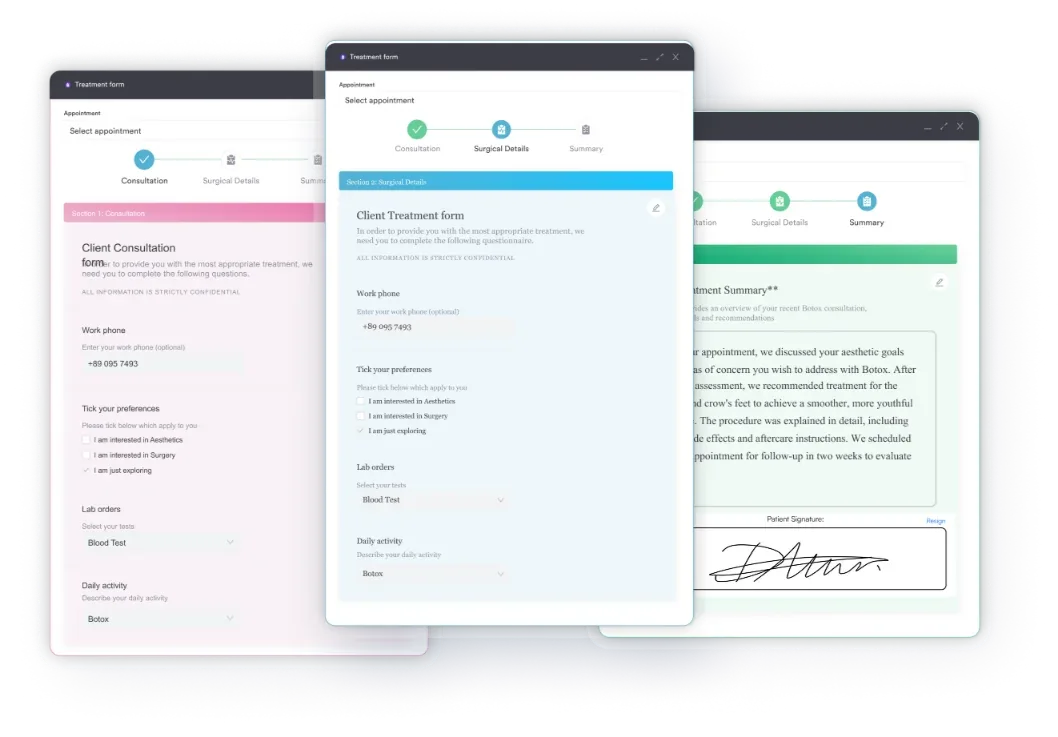
The DMEPDAC and Noridian Medicare have both noted that the product description is the element most commonly missing from K0108 claims. Without a specific description, the reviewer cannot confirm the item’s identity or verify that a more precise code does not exist. Suppliers billing other Level II codes.
Maintaining HIPAA-compliant documentation practices and standardized medical forms across your practice reduces the risk of incomplete documentation at the time of claim submission.
A patient management system reminds you when issued equipment is due for review, replacement, or return.
K0108 does not have a fixed national fee schedule allowable in the same way that specific HCPCS codes do. Because it is a miscellaneous NOS code, Medicare generally prices K0108 claims by individual review, based on the specific item described in the submitted documentation.
Reimbursement is determined by the DME MAC reviewer after evaluating the product description, invoice, and medical necessity documentation. Verify current rates using the CMS fee schedule tool.
Key factors affecting K0108 reimbursement:
Suppliers should include a supplier invoice with the K0108 claim showing the actual acquisition cost. The DME MAC reviewer typically uses this, alongside published pricing data for comparable items, to establish an allowable amount. The same individual-claim-review approach applies to other miscellaneous-adjacent codes like S0166. Maintaining patient data security and a clear audit trail for each transaction helps protect against post-payment audit recoupment. For self-pay patients submitting to their own insurer, a patient receipt template keeps the code and charge in one place.

Pabau gives DME suppliers and practice teams the digital forms and audit-ready documentation workflows to support miscellaneous HCPCS code submissions like K0108.

CMS contractor advisory articles from Noridian Medicare, CGS Medicare, and the DMEPDAC have identified specific categories of K0108 misuse, based on documented audit findings across DME suppliers. Each scenario below constitutes incorrect coding and creates elevated denial and recoupment risk. Review your billing compliance checklist to confirm none of these patterns appear in your current submissions.
The following table maps specific item categories to the correct HCPCS codes per CMS contractor guidance. If the item you are billing appears in this list, use the specified code instead of K0108.
When in doubt, search the current HCPCS code set before filing. The PGM HCPCS lookup tool uses CMS source data and allows keyword searches that help identify whether a specific code exists for an item.
A code can go stale between encounters as the record fills in. ICD-10 code D43.2 stops being correct once histology confirms a brain neoplasm as malignant or benign, and the claim moves to the confirmed code.
Before defaulting to K0108, billers should review both the K-series (DME wheelchairs) and E-series (DME general) for the most specific applicable code. The table below covers the most commonly referenced wheelchair accessory and component codes that coders check when evaluating whether K0108 is genuinely the right choice.
This is a reference guide, not an exhaustive list. The features that save time often include integrated code reference lookup within billing platforms.
Always verify the current-year descriptor for each code using the official CMS HCPCS source data. Code descriptors and coverage rules can change on January 1 with the annual HCPCS update cycle. The practice management software features most valuable for DME billing teams include built-in code reference libraries that flag annual updates automatically.
After confirming K0108 is the correct code, document your code-search process in the patient file before submitting the claim. A one-paragraph note recording which K-series and E-series codes were reviewed and why each was inapplicable takes two minutes to write and substantially reduces your audit exposure if the claim is flagged for pre- or post-payment review.
Practice management software like Pabau is not a DME-specific billing platform, but its clinical documentation features address the exact documentation shortfalls that generate K0108 denials.
The core problem is documentation: miscellaneous HCPCS codes require more supporting material than specific codes, and that material needs to be created, stored, and retrievable at the point of audit. Pabau’s digital forms and documentation workflows provide the infrastructure to manage this.
For practices that regularly supply wheelchair accessories and complex rehab technology items, building a practice management workflow around miscellaneous code documentation reduces administrative rework and denial rates. Pabau’s configurable form templates can be structured around the K0108 documentation checklist above, giving every clinician and supplier the same standardized process.
HCPCS Code K0108 is genuinely useful for a narrow set of wheelchair accessories that the code set has not yet categorized. The compliance risk comes from using it as a shortcut rather than a genuine last resort. The DMEPDAC, Noridian, and CGS Medicare have all published guidance on specific misuse scenarios. Post-payment audits in the DME space treat K0108 claims with heightened scrutiny.
Pabau’s configurable digital forms and documentation workflows give your billing team the infrastructure to support miscellaneous HCPCS submissions with confidence. To see how Pabau handles billing documentation workflows, book a demo with the team.

Billing another Medicare Part B supply code? A4642 walks through the documentation and coverage rules for radiolabeled antibody claims.
Supplying urinary catheters alongside DME? A4351 covers intermittent catheter billing requirements and common denial triggers.
Handling drug administration codes too? J3420 explains billing rules for vitamin B-12 injections under Medicare Part B.
HCPCS Code K0108 is a miscellaneous HCPCS Level II code used to bill for a wheelchair component or accessory when no more specific code in the K-series or E-series accurately describes the item being supplied. It is a last-resort code, not a default option, and requires detailed product description and medical necessity documentation to support the claim.
Use K0108 only after a thorough search of the current HCPCS code set confirms that no specific K-series or E-series code accurately describes the item. If a specific code exists, it must be used. Billers should also check PDAC coding verification records before defaulting to K0108, as products that have received a specific coding determination must be billed under that code.
Required documentation includes a signed physician order, a detailed medical necessity letter, proof of delivery, a specific product description (including manufacturer name and model number), a record of which HCPCS codes were considered and rejected, face-to-face encounter notes, and an ATP evaluation when the item is classified as complex rehab technology. The product description is the most frequently missing element in denied K0108 claims.
No. CGS Medicare and Noridian Medicare have both published specific guidance stating that battery chargers and transit systems have specific HCPCS codes assigned and must not be billed under K0108. Doing so constitutes incorrect coding and creates audit and recoupment risk. Always check the current HCPCS code set for the specific item before billing K0108.
The most relevant K-series codes for wheelchair components and accessories include K0001 (standard wheelchair), K0800 (power scooter group 1), and K0835, a complete Group 2 standard power wheelchair base rather than an accessory. The E-series also covers many wheelchair accessories, including E0992 (solid seat insert), E0990 (elevating leg rest), and E0973 (arm support), while K0739 covers non-oxygen DME repair and installation labor. Check the current CMS HCPCS tables for up-to-date descriptors.
Avoid denials by completing a documented code search before billing, including a detailed product description with manufacturer and model number in every claim, attaching a specific medical necessity letter from the treating physician, verifying that the item has not received a PDAC coding determination for a specific HCPCS code, and retaining all documentation in the patient file for post-payment audit readiness.



