









Key takeaways
CPT code 21470 covers open treatment of a complicated mandibular fracture treated through multiple surgical approaches.
The same descriptor takes in internal fixation, interdental fixation, and wiring of dentures or splints.
The code carries 15.34 work RVUs and a 90-day global period, so routine postoperative visits are not billed separately.
Modifier 22 needs an operative note that spells out the extra work, or the payer will cut the claim.
The ICD-10 7th character describes whether the fracture was open, not whether the surgery was open.
CPT code 21470 covers open treatment of a complicated mandibular fracture through multiple surgical approaches. The same descriptor takes in internal fixation, interdental fixation, and wiring of dentures or splints. It sits at the top of the mandibular fracture family for both work RVUs and payment.
Oral and maxillofacial surgeons bill it after high-energy facial trauma, almost always in a hospital operating room. Payers read the operative note before they pay, and that note has to name each surgical approach on its own.
Official AMA descriptor: Open treatment of complicated mandibular fracture by multiple surgical approaches including internal fixation, interdental fixation, and/or wiring of dentures or splints.
The American Medical Association (AMA) places CPT code 21470 in the Fracture and/or Dislocation Procedures on the Head section of the CPT code set. Its defining feature is a complicated fracture treated through more than one surgical approach. That is what separates it from the rest of the mandibular fracture family, where the descriptors turn on fixation method instead.
Procedure description and clinical context
A complicated mandibular fracture is one that cannot be fixed through a single surgical corridor. Common patterns include panfacial trauma with bilateral condylar involvement, or a parasymphyseal fracture paired with an angle fracture. Comminuted segments that need both extraoral and intraoral access also qualify.
Most of these injuries follow a motor vehicle collision, an assault, or a fall. Contact sports account for a smaller share, which is why sports medicine software often holds the first record of the injury. By the time the case reaches surgery, a plastic surgery EMR has to log each approach separately.
The three fixation methods named in the descriptor are not mutually exclusive. A surgeon may apply rigid plate-and-screw internal fixation at the symphysis, then place arch bars to hold the occlusion during healing. For an edentulous patient, a denture splint may be wired in place instead.
The billing requirement is the same in every version. The operative report has to document each approach and each fixation type that was actually used.
- Intraoral approach: Access through an incision inside the mouth, which leaves no visible scar
- Extraoral (transcutaneous) approach: Access through a submandibular or retromandibular incision, used when intraoral access is not enough
- Subcondylar approach: Used for condylar neck or subcondylar fractures where open reduction is indicated
- Intermaxillary fixation (IMF): Arch bars, IMF screws, or an Erich arch bar system used to wire the jaws together
- Rigid internal fixation: Titanium plates and screws applied directly to bone under direct vision
CPT code 21470 fee schedule and reimbursement rates
The CMS Physician Fee Schedule lookup tool is the authoritative source for Medicare payment on this code. The figures below reflect 2026 Medicare Physician Fee Schedule data. Check them against your own locality before you rely on them for a billing decision.
Facility vs non-facility reimbursement
This procedure is almost always performed in a hospital inpatient or outpatient surgical setting. The facility rate is lower because the hospital bills separately for the operating room, anesthesia support, and implants under its own APC code. The surgeon collects only the professional fee.
A practice-based surgical suite that is not Medicare-certified as an ASC falls under the non-facility rate. Payers tend to question the setting when a case of this complexity is billed that way.
Pro Tip
Verify your facility’s Medicare status before billing 21470 at the non-facility rate. A practice-based surgical suite without ASC certification will be flagged for setting-appropriateness review, which can trigger a full claim audit.
Modifiers and when to use them
Modifier selection on this code drives both payment and audit risk. The table below covers the modifiers that matter most, based on AAPC coding guidance and current AMA modifier policy.
ICD-10-CM diagnosis codes that support the claim
This code needs a supporting ICD-10-CM diagnosis that establishes medical necessity. The S02.6 series covers mandibular fractures in the CMS ICD-10-CM tabular list. Almost every code in the series now carries a laterality digit, so the claim needs the right one for right, left, or unspecified side.
The 7th character then records the encounter and the state of the fracture. Use A for an initial encounter with a closed fracture and B for an initial encounter with an open fracture. Later encounters take D for routine healing, G for delayed healing, K for nonunion, and S for sequela.
One trap here catches experienced coders. The 7th character describes the fracture, not the surgery. Open treatment under CPT 21470 does not make the injury an open fracture. A closed fracture repaired through two approaches still takes the A extension.
Reach for B only when the surgeon documents a wound that connects the fracture to the outside. Many mandibular fractures do communicate through the gingiva, so the answer sits in the operative note rather than in a coding rule of thumb.
When several fracture sites are present, code each one separately using every applicable S02.6x code. List the surgically treated or most clinically significant fracture first. Panfacial trauma often pairs a mandibular fracture with midface injury, which pulls codes such as 21346 and 21407 onto the same claim.
How 21470 differs from the rest of the mandibular fracture family
Picking the right mandibular fracture code means matching the operative report to the descriptor word for word. Upcoding to 21470 when a simpler code fits creates audit exposure, and so does downcoding a genuine multi-approach repair. The table below maps the family to what actually separates each code.
The distinction that costs the most money is 21461 against 21470. Coders often describe 21461 as the single-approach code, but the descriptor never says that. What 21461 actually excludes is interdental fixation, which 21462 includes.
21470 sits above both. It applies when the fracture is complicated and the surgeon works through more than one approach to fix it. A retromandibular approach for a condylar fracture plus an intraoral approach at the symphysis, in one session, supports it.
The alveolar ridge codes are a separate trap. 21440 and 21445 describe fractures of the mandibular or maxillary alveolar ridge, not the body of the mandible. Midface fractures have their own family again, including 21355 for the malar area.
Documentation requirements for a clean claim
Weak operative documentation is the main reason these claims get denied or downgraded. Auditors look for specific language confirming the complexity threshold. Structured digital clinical forms can standardize the note and stop elements going missing.
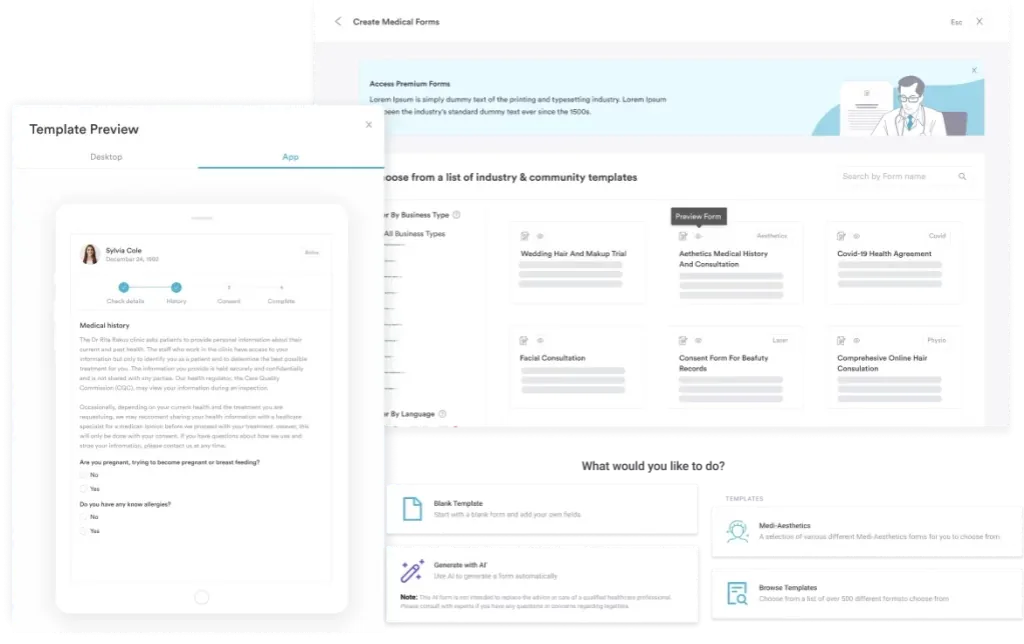
Every claim for this code should carry an operative report containing all of the elements below.
- Each surgical approach named: The note must state every approach outright, such as “right retromandibular approach and intraoral symphyseal approach”
- Fracture sites identified: An anatomic location for each fracture treated, matching the ICD-10-CM codes on the claim
- Fixation methods documented: Whether internal fixation, IMF, external wiring, or a combination was applied, with hardware type where relevant
- Medical necessity narrative: A short clinical rationale for why the fracture pattern required more than one approach
- Anesthesia type and duration: Supports facility billing and confirms the operative complexity
- Implant documentation: Manufacturer and lot number for any titanium hardware, for implant tracking compliance
- Postoperative plan: Follow-up instructions and any planned hardware removal, which both affect the 90-day global period
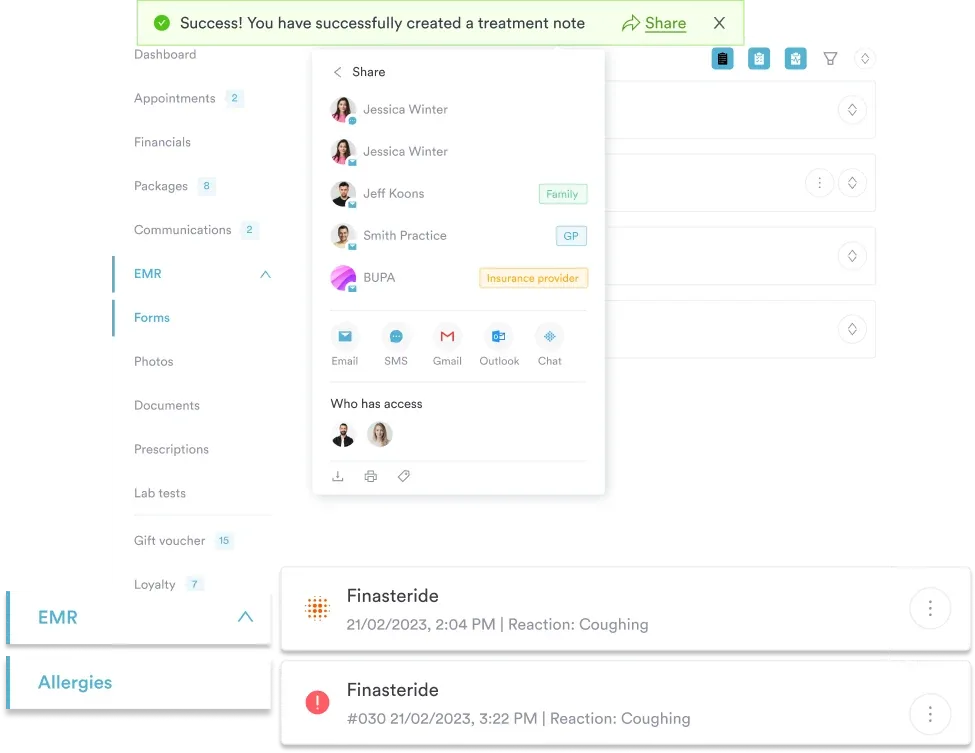
Practices billing this code often link operative report templates to the procedure code itself, so missing elements surface before the claim leaves the building. Keeping surgical patient records in one system also lets the biller review the whole encounter in a single pass.
Common billing errors and how to avoid them
21470 draws more payer scrutiny than the simpler fracture codes because it pays more and its descriptor is narrower. The errors below are the ones that show up most often in OMFS billing. Almost all of them start in the operative note.
- Upcoding from 21461: Billing 21470 when the note documents one approach and a straightforward repair. The word “complicated” in the chart is not enough on its own.
- Using modifier 22 without support: Appending modifier 22 with no letter or expanded operative note describing the extraordinary work. Payers will cut the claim and may flag the provider for a pattern audit.
- Missing or wrong 7th character: Submitting S02.611 with no episode-of-care character, or coding B because the surgery was open. The extension follows the fracture, not the approach.
- Bundling failures with fixation codes: Separately billing 21462 when the interdental fixation is integral to 21470 and already paid inside it. Check payer bundling edits before adding companion codes.
- Global period violations: Billing separately for routine postoperative visits, arch bar removals, or wire changes inside the 90-day global period. Those need modifier 54, 55, 78, or 79.
- Facility-setting mismatch: Submitting the non-facility rate for a case performed in a hospital or certified ASC, which creates an inconsistency that triggers review.
How Pabau keeps 21470 claims clean from the first submission
An OMFS practice billing this code juggles several ICD-10 codes, modifier logic, implant records, and a 90-day global period. Tracking all of that by hand across separate systems is where claims come apart. Practice management software like Pabau holds the whole encounter in one HIPAA-compliant record.
Pabau’s claims management software pairs the procedure code with the right S02.6x diagnosis while the surgeon is documenting, rather than weeks later at billing. Procedure-level templates pre-fill the modifier fields and raise a documentation checklist before the note is signed.
That removes most of the back-and-forth between surgeon and biller, so more claims clear on the first pass. Every Pabau subscription includes the full practice management feature set, so billing, records, and scheduling all read from the same patient file.
Pro Tip
Build a 21470 operative note template with a checkbox for each required element. That means named surgical approaches, lateralized fracture sites, specific fixation methods, and a medical necessity narrative. Hand it to your OMFS team before the next multi-approach case, not after the first denial.

Stop chasing denied claims for complex surgical codes
Pabau’s claims management software flags modifier mismatches and missing documentation before submission, so your 21470 claims go out clean the first time.

Conclusion
21470 pays more than any other mandibular fracture code, and payers price that difference in scrutiny. The claim holds up when the operative note names each surgical approach and each fixation method in plain terms. When it doesn’t, the claim drops to 21461 or gets denied outright.
Build the note template before the next panfacial case, not after the first denial. Pair it with a lateralized ICD-10 code and the correct 7th character, and most of the audit risk goes with it. Book a demo to see how Pabau handles coding, documentation, and claim tracking for surgical practices.

Continue your research
Need prior authorization before an elective facial reconstruction? Medical prior authorization form gives you a ready-made request form and the clinical detail payers ask for.
Want operative notes that hold up under audit? Medical notes covers structure, timing, and the wording that keeps a note defensible months later.
Billing suture removal inside a global period? 15851 explains when the removal is separately payable and which modifier it needs.
Comparing systems for a surgical practice? Practice management software features walks through the billing, scheduling, and records tools that matter most.
Frequently asked questions
What is CPT code 21470 used for?
CPT code 21470 bills open treatment of a complicated mandibular fracture that needs multiple surgical approaches. A typical case combines an intraoral incision with a transcutaneous one. The repair must also include at least one fixation method: internal fixation, interdental fixation, or wiring of dentures or splints. Oral and maxillofacial surgeons bill it after high-energy facial trauma.
What is the Medicare reimbursement rate for CPT 21470?
The 2026 Medicare facility rate is roughly $614 and the non-facility rate roughly $1,247. The code carries 15.34 work RVUs. Both dollar figures move with your geographic locality, so check the CMS Physician Fee Schedule lookup tool for your own locality code before you submit.
Which modifiers apply to this code?
The most common are 22 for increased procedural services and 51 for multiple procedures in one session. Modifier 78 covers an unplanned return to the operating room during the global period. Modifiers 54 and 55 split surgical and postoperative care between providers. Modifier 22 needs a supporting letter or an expanded operative note, or the payer will deny it.
Which ICD-10 codes pair with CPT 21470?
The S02.6x series covers mandibular fractures, and most of it is lateralized. Common pairings are S02.611A and S02.612A for the right and left condylar process. The angle takes S02.651A or S02.652A, and the symphysis takes S02.66XA. Each takes a 7th character of A for a closed fracture or B for an open one. When several sites were treated in one session, list them all with the most clinically significant first.
What is the difference between CPT 21470 and 21461?
21461 is open treatment of a mandibular fracture without interdental fixation, and 21462 is the same repair with it. Neither descriptor mentions the number of approaches. 21470 is the code for a complicated fracture treated through multiple surgical approaches in one session. Billing 21470 without an operative note that names each approach counts as upcoding.
Is CPT 21470 a facility or non-facility code?
It is nearly always performed in a facility setting, either a hospital or a certified ASC. The case needs general anesthesia and a surgical team. Medicare pays the lower facility rate in those settings. The non-facility rate applies only in a surgical suite that is not Medicare-certified, which is rare for a case of this complexity.
Does CPT 21470 require prior authorization?
That depends on the payer. Medicare does not require prior authorization for this code, but many commercial insurers do for elective facial reconstruction after trauma. Emergency cases usually qualify for concurrent or retrospective authorization. Check each payer contract before you schedule a non-emergency case.