










Key takeaways
A mental health safety plan is a written, client-owned guide to warning signs, coping steps, and emergency contacts.
The Stanley-Brown Safety Planning Intervention builds the plan in six steps, from spotting warning signs to limiting access to lethal means.
The client generates the content and the clinician records it, which is what makes the plan usable in a crisis.
Store the finished plan in the client record, flag it at check-in, and review it whenever the client’s situation shifts.
Download your free mental health safety plan template
Six numbered sections covering warning signs, coping strategies, distraction and support contacts, professional and crisis numbers, and a means-safety agreement. Print it, or fill it in on screen while you sit with the client.
Download templateA suicidal crisis rarely announces itself during a session. It builds at 11pm on a Sunday, when your client is alone and your office is closed. Whatever is written down in front of them at that moment is what they have to work with.
That is the job a mental health safety plan does. It hands the client a short, ordered sequence to follow when clear thinking is gone. Two things decide whether it works. The client has to have written it, and they have to be able to find it later.
What is a mental health safety plan?
A mental health safety plan is a written crisis guide that a clinician and client build together. It lists the client’s own warning signs, the coping steps they will try, and the people they will call. The client keeps it and uses it without needing anyone’s permission.
The format most clinicians use comes from the Stanley-Brown Safety Planning Intervention. Trials have linked it to fewer suicide attempts and better follow-up attendance. The Joint Commission expects documented safety planning for anyone screened at risk, so this counts as standard of care.
The plan covers six domains, always in the same order:
- Warning signs the client recognizes as the start of a crisis
- Internal coping strategies they can use alone
- People and places that reliably distract them
- Family or friends they can ask for support
- Professionals and crisis lines they can contact
- Steps that make their immediate environment safer
That order carries real weight. Each step asks a little more of the client than the last. The plan starts with what they can manage alone, then reaches for other people, then for professionals.
A safety plan is also a different document from a crisis plan. A crisis plan tells your team what to do when a client deteriorates. A safety plan tells the client what to do, in their own handwriting. For a wider prevention exercise to sit alongside it, a suicide prevention worksheet covers reasons for living and hope-building.
The plan earns its keep with clients living with suicidal ideation, unstable mood, or ongoing self-harm urges. It adapts well to panic, dissociation, and substance cravings too. That is why general therapy practices now use it as a routine preventive tool.
Six steps to build the plan with your client
The six steps below map one to one onto the sections of the downloadable form. Work through them in order, in a single sitting where you can.
Before you start: A five-point check
A plan built at the wrong moment gets filed and forgotten. Run through this list before you open the form.
- You have completed a risk assessment, including a mental status examination
- You have 30 minutes that nobody is going to interrupt
- The client is settled enough to think, rather than mid-crisis in your room
- You know who lives with them and who could hold their medication
- You have a printable copy, plus a place in the record to file it
Steps 1 to 3: warning signs, coping, and distraction
- Identify warning signs. Ask what happens in the days before things get bad. Write the answers in the client’s own words, not in clinical language. «My sleep falls apart» beats «insomnia» every time. Push for detail across thoughts, feelings, body sensations, and behavior. Most clients name three or four once you give them room to think.
- List internal coping strategies. These are things the client can do alone, with nobody else involved. Ask what has actually helped before, then test each idea out loud. Cold water, a short walk, a puzzle, box breathing, and one particular playlist all qualify. Aim for three, which is what the form has room for. A grounding techniques worksheet or a self-compassion meditation script helps when a client draws a blank.
- Name people who distract them. These contacts are not for talking about the crisis. They are for company: a brother who will get coffee, a friend who will watch a film, a gym buddy. Record names, numbers, and how the client prefers to reach each one. Frame the question as «who takes my mind off things?» and the answers come quickly.
Steps 4 to 6: Support, professionals, and means safety
- Name people who can support them. Now you want the people the client can tell the truth to. They should already know some of the history, and they should not flinch. A partner, a parent, or one close friend is usually enough. Include numbers here as well, because a first name on its own is not a contact.
- List professionals and crisis lines. Your after-hours number, the psychiatrist’s line, the local crisis team, the nearest emergency department, and the 988 Lifeline all belong here. Add opening hours and one line on when to use each. Something like «call 988 if I am thinking about it, call 911 if I have started» removes the guesswork.
- Make the environment safer. Ask directly how the client would do it, then work on barriers together. Who can hold the medication? Could a firearm go to a relative for a month? Where do the sharps live right now? Even temporary distance from a method lowers immediate risk, so treat this as joint safety work rather than surveillance.
How to run the session itself
Book 30 to 45 minutes and resist filling the silences. Clients need time to retrieve a warning sign or a coping strategy, and the pauses are where the useful material surfaces.
Let the client speak or write while you record. Close by reading the plan back and agreeing where their copy will live. Then ask them to name one warning sign and one coping step to watch for that week. Write the session up in your psychotherapy progress notes the same day, while their phrasing is still fresh.
Who needs a safety plan, and when
Any client whose risk you are actively monitoring needs a plan. In practice that means suicidal ideation, non-suicidal self-injury, unstable mood, acute anxiety, or a substance use crisis.
Therapists, counselors, psychologists, psychiatrists, psychiatric nurse practitioners, and social workers all write them. So do school counselors and crisis teams. A solo counselor uses the same six steps as a hospital ward.
Two moments deserve extra attention. The first is discharge from inpatient care, because the days straight after leaving carry the highest risk. Attach the plan to the patient discharge form and check the client physically leaves with a copy.
The second is early in a new episode of care, before you have the full picture of someone’s supports. A rough plan you refine later beats a perfect one you never get around to.
Where the record lives shapes how often the plan gets seen. Private practices usually keep it inside their psychology practice software. Hospital and community teams work in psychiatry EMR software that any covering clinician can open.
The framework travels across diagnoses too:
- Bipolar disorder, where the warning signs often track a mood shift upward rather than down
- Anxiety and panic, where the plan interrupts escalation before it peaks
- Depression, where hopelessness and withdrawal are the early signals
- Post-traumatic stress disorder, where flashbacks and dissociation are the crisis
- Borderline personality disorder, where impulsive self-harm is the main risk
What safety planning changes for your clients
The plan changes what happens in the 20 minutes when a client is closest to acting. That is the return on the session you spent building it.
- Fewer attempts in the short term. Research links safety planning to fewer suicide attempts in the hours and days after a crisis starts. Pre-written steps and numbers lower the effort of reaching out.
- Ownership the client can feel. Someone who wrote their own plan reads it differently from someone handed a leaflet. «I chose these» is what makes a client try step two after step one fails.
- No decisions left to make. Acute distress wrecks decision-making. A numbered sequence means the client is following instructions instead of solving a problem.
- A record that holds up. Safety planning is expected wherever suicide risk is screened. A dated plan in the file shows you assessed risk and then acted on it.
- A conversation you can repeat. «How did the plan hold up?» is a fast, useful way to open a session. It keeps the document current and tells you when risk is moving.
What a completed plan looks like
Below is an anonymized plan for a 32-year-old client with bipolar II disorder and two previous attempts. Read it for the level of detail rather than the content.
Every line here is specific to one person. The warning signs use his own phrasing. Every coping step is one he has already tried. Contacts have numbers, and the means section fits his actual home.
Compare that with «call a friend» and «use breathing exercises». A generic plan fails at the exact moment it is needed. Where mood episodes drive the risk, the plan works best next to a bipolar treatment plan that names the same early signals.
Mistakes that make a safety plan useless
Safety plans usually break down for one of five reasons, and all five are avoidable in the session:
- The clinician wrote it. If the wording is yours, the client will not recognize it under pressure.
- The strategies are untested. «Try mindfulness» is not a coping step. Only list what the client has done and found helpful.
- Contacts have no numbers. Nobody looks up a phone number at 2am. Get the digits onto the form.
- Means safety got skipped. It is the most uncomfortable step, and the one with the strongest evidence behind it. Ask the direct question.
- Nobody knows where the copy is. A plan in a drawer does nothing. Agree the location out loud, then write it down.
That last one is the failure you can design out of your workflow, which brings us to storage.
Where to store the plan so it gets used
Keep two copies. One the client carries, and one in the client record. Anything looser than that, and somebody will be hunting for it during a phone call at 9pm.
Label the record copy so it is findable at a glance. «Safety plan, completed August 13, 2026» does the job. Then flag it on the client summary so it surfaces at check-in. That flag is what turns a review from an intention into a habit.
A digital version earns its place if clients update it between sessions. You get version history, and the client cannot lose the only copy.
Review cadence. Once a year is the floor, not the target. Review sooner after a medication change, a relationship ending, a move, a job loss, or any escalation in symptoms.
Write each review up in a line or two. «Plan reviewed. All contacts confirmed current. No new warning signs.» Compliance management tools can flag a plan that has gone a year without one.
Coverage and privacy. A plan in the record is available to whoever covers your caseload, which matters most in group practices and on-call arrangements. Proper storage is also a HIPAA compliance question, because the plan names people outside the client’s care team.
How Pabau keeps every safety plan in the client record
The safety plan tends to end up somewhere slightly wrong. It becomes a scanned PDF in a shared folder, an attachment on an old email, or a paragraph buried halfway down a session note. None of those surface when a covering clinician opens the record on a Friday night.
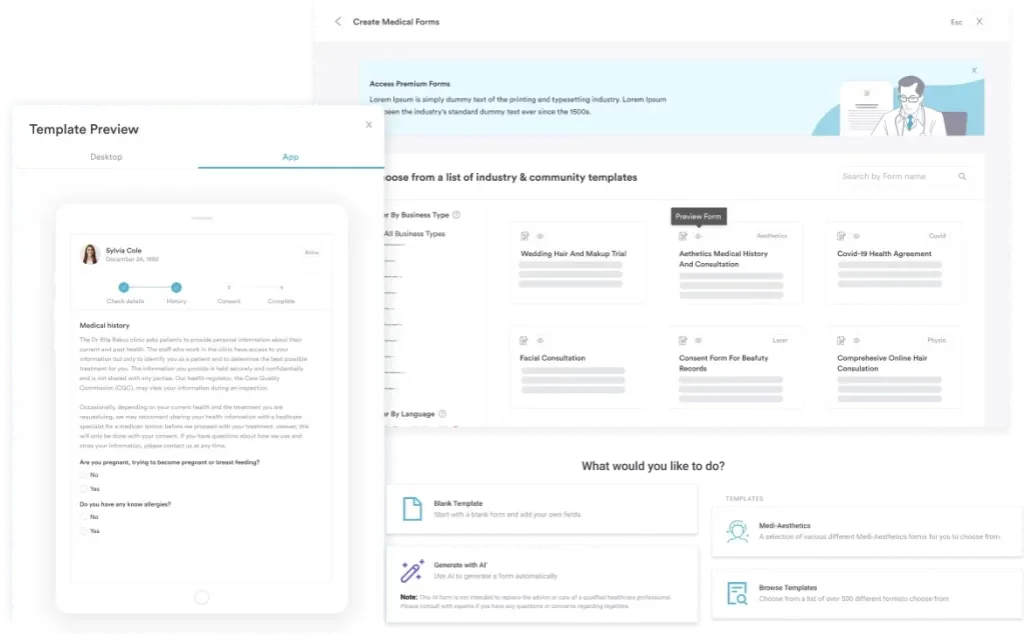
Practice management software like Pabau keeps the plan where the rest of the client’s care already sits. You can build the six sections as a digital form the client completes on a tablet in the room. Their answers land straight in the record, with no scanning step and no retyping.
From there the plan behaves like any other part of the file. It is dated, version-tracked, and visible to anyone covering your caseload. Pabau Scribe, our AI scribe, writes up the session around it, so the plan and the note explaining it stay together.
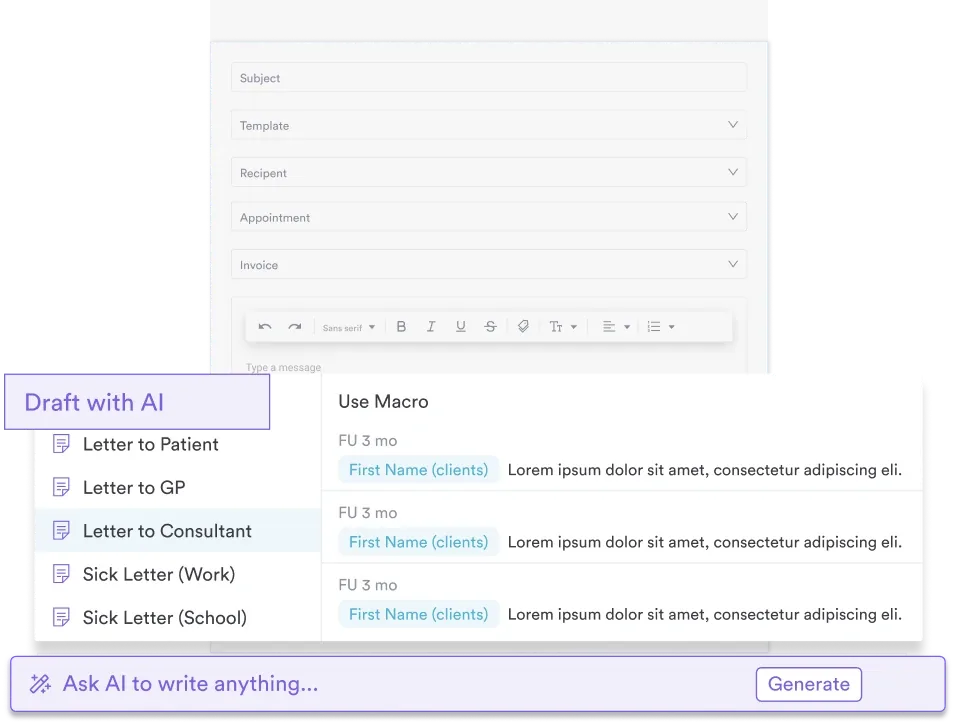
The gain here is small per client, and it compounds across a caseload. Nobody hunts for the plan, nobody re-types it, and the annual review stops depending on somebody’s memory.

Keep every safety plan in the client record
Build the safety plan as a digital form, store it against the client record, and get a prompt when a review is due. Whoever covers your caseload sees the same plan you do.

Conclusion
Safety planning is one of the few things in mental health practice where a single session measurably changes an outcome. It is also easy to do badly. A form filled in by the clinician, in clinical language, with no numbers and no means conversation, is just paperwork.
So spend the 40 minutes. Let the client write it. Ask the uncomfortable question about method. Then put the plan somewhere it will be seen again, and open it often enough that the client knows you take it seriously.
That last part is where most plans quietly die, and it is a storage problem more than a clinical one. Book a demo to see how Pabau keeps every client’s safety plan in their record, review dates included.

Continue your research
Building a care plan for a client with psychosis? Schizophrenia nursing care plan sets out the goals, interventions, and risk sections a safety plan feeds into.
Managing behavior that puts a client at risk? Behavioral intervention plan walks through antecedents, replacement behaviors, and the documentation each one needs.
Need a fuller picture before you plan around risk? Comprehensive assessment template gathers history, function, and current supports into one form.
Working with a client through substance use relapse? Relapse prevention plan worksheet maps triggers and coping steps the same collaborative way.
Want the in-the-moment skills to go with the plan? Crisis intervention strategies covers de-escalation when a client is already in crisis.
Frequently asked questions
Is a safety plan the same as a no-suicide contract?
No. A no-suicide contract asks the client to promise not to act, and there is no evidence it reduces attempts. A safety plan gives them something to do instead of something to promise. Most current guidance treats contracting for safety as contraindicated.
What if a client refuses to make one?
Start smaller. Ask for warning signs only, or for one person they would call. A partial plan built in five minutes beats a refusal, and it usually opens the door to the rest at the next session.
Do you need consent to share the plan with family?
Yes, in normal circumstances. Get a signed release naming each person before you send anything. HIPAA does permit disclosure without authorization to prevent a serious and imminent threat, but that is an emergency route rather than your default.
Can safety planning be billed on its own?
No, there is no standalone code for it. Clinicians document safety planning inside the visit they are already billing, such as a diagnostic evaluation, a psychotherapy session, or a crisis code. The note has to show the conversation happened.
Does the framework work with teenagers?
Yes, with two adjustments. Involve a parent or guardian in the means conversation, since they control the house. Keep the coping strategies short and age-appropriate, and check that every contact named is someone the teenager will actually call.