ADHD Cleaning Checklist
An ADHD cleaning checklist is a cleaning list built for adults with ADHD. In oth...

3
Last Updated: Oct 12, 2026

A behavioral intervention plan (BIP) sets out the target behavior, the replacement behavior, and how the team will track progress.
IDEA does not require a written BIP every time behavior disrupts learning. A written plan is mandated after a disciplinary change of placement tied to a manifestation determination.
Every BIP rests on a functional behavior assessment (FBA), which identifies why the behavior happens before anyone picks an intervention.
A complete plan covers the target behavior, antecedents, behavior function, replacement behavior, intervention strategies, measurable goals, data collection, and a review schedule.
Practice management software like Pabau stores the plan, prompts staff to record data, and shows progress to every practitioner working with the student.
The template covers target behavior, antecedents, behavior function, replacement behaviors, intervention strategies, measurable goals, and a progress monitoring log. Print it or complete it on screen.
Download templateA behavioral intervention plan (BIP) is a written plan for changing one specific behavior. It names the behavior, the trigger, the replacement behavior, and the data the team will collect. This guide walks through every section and includes a free template you can use today.
One point is worth settling first. The Individuals with Disabilities Education Act (IDEA) does not order a written BIP the moment behavior disrupts a classroom. The mandate is narrower than that, and the difference shapes how your team documents its decisions.
A behavioral intervention plan is a written document that sets out evidence-based approaches to a student’s or client’s challenging behavior. It identifies the target behavior, the situations that trigger it, and the interventions the team will use to teach alternative behaviors.
Under IDEA, the IEP team must consider positive behavioral interventions and supports whenever a student’s behavior impedes learning. That covers the learning of other students in the room too. It is a duty to consider, set out in 34 CFR §300.324, rather than an automatic order to produce a written plan.
A written BIP is explicitly mandated in one situation. After a disciplinary change of placement, the team holds a manifestation determination. If the behavior was a manifestation of the disability, the school must conduct an FBA and write a BIP.
34 CFR §300.530 also lets the team review and modify an existing plan instead of writing a new one. Either way, this applies to a student already found eligible under IDEA.
In clinical behavioral health settings, a Board Certified Behavior Analyst (BCBA) usually leads development of the plan. That includes psychology practices working with autism or developmental delays. The framework is the same one schools use.
Before you write anything, you need to know why the behavior is happening. That is the job of the functional behavior assessment (FBA).
An FBA identifies the function of the behavior, meaning the purpose it serves for the student or client. All behavior is functional. A child who yells in class might be seeking attention, avoiding a hard task, or communicating frustration.
A student who leaves their seat might be escaping an activity they dislike. Two children can show the same behavior for opposite reasons, so the function decides how you intervene.
A plan that skips the FBA usually fails, because it treats the surface behavior instead of the need behind it. Recording the observations on a comprehensive assessment form keeps that groundwork readable for everyone on the team.
Every plan must include the core components below. Together they keep it specific, measurable, and evidence-based.
Each component has to be specific and grounded in the FBA data. A vague entry such as “use positive reinforcement” will not translate into consistent action on a Tuesday morning.
Follow this six-step process to produce a plan your team can actually implement.
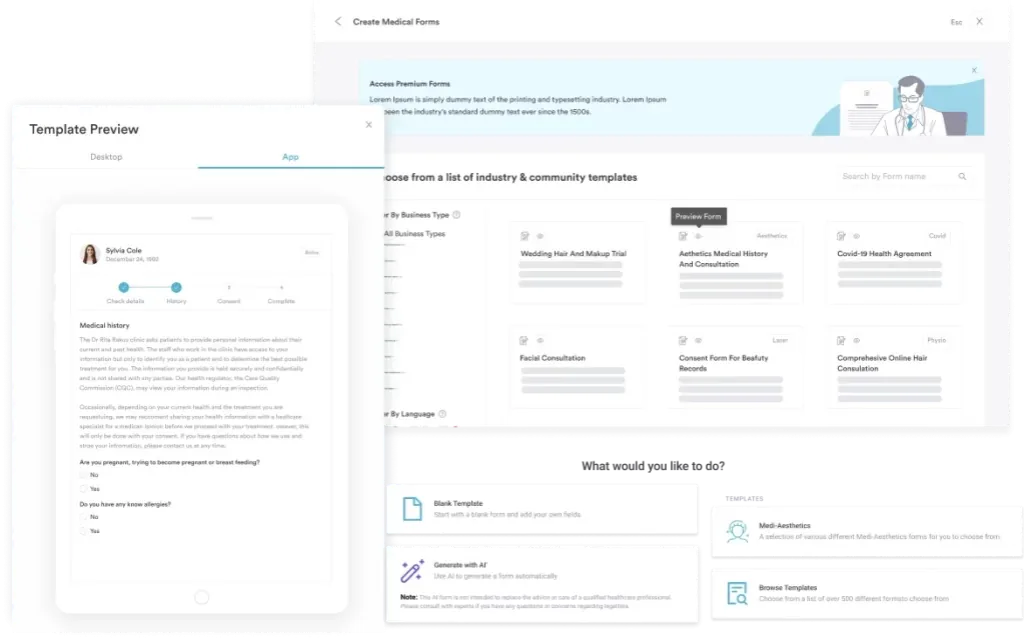
Digital intake forms in practice management software like Pabau keep all six steps in one record. Every practitioner then works from the same version, and the baseline stays available when you review progress months later.
Strategies are selected on the strength of the identified function, not on what worked for the last student. These are the core categories.
Every intervention has to be written down and shared with everyone who works with the student. Dictated treatment notes keep that record current without adding an hour of evening paperwork. Inconsistent implementation is the most common reason plans fail.
A behavioral intervention plan and an Individualized Education Program (IEP) are complementary, but they are not the same document.
In school settings, a student may have an IEP for academics and a separate plan for behavior. In clinical or therapeutic settings, the plan is often the primary behavior-change document.
A behavioral intervention plan is never written in isolation. It takes a multidisciplinary team, and each member owns a different piece of it.
Centralized clinical records keep that team aligned on who owns each intervention and each data collection task. Handoffs during absences stop being guesswork.
Data collection is not optional. It is the only way to know whether the plan is working, or whether the team simply feels like it is.
Automated workflow reminders keep the team on schedule for data collection and progress reviews. Consistent clinical progress notes then make the trend readable months later, when someone asks what changed and when.
Running plans across a team creates its own work. Someone has to hold the current version, chase the daily tallies, and pull the paperwork together when an audit or a records request arrives. A therapy practice juggling several plans at once faces the same admin burden that eats into client-facing time.
Pabau keeps the plan in the client’s record, next to the FBA, the consent forms, and the session notes. Staff get prompted when a data entry or a review is due. Nothing sits in a shared drive or an email thread that only one person can find.
The outcome is a plan the whole team can see and a documentation trail you do not have to assemble by hand. Every subscription includes every feature, so the forms, records, and reporting are all there from the first week.

Pabau stores each plan in the client record, prompts staff when data or a review is due, and keeps the audit trail complete. Your team works from one current version, wherever they are.

A plan is only as good as the assessment under it and the consistency behind it. Teams that agree on one function, one replacement behavior, and one way of recording data tend to see change. A plan written only to close out a file rarely changes anything.
Be careful with the legal framing as well. Consider behavioral supports early and document that you did, rather than waiting for a disciplinary trigger to force a written plan into existence.
Most plans lose ground in the fourth week, when data collection slips and nobody notices for a fortnight. Decide now who records what, and how the team will see it. Book a demo to see how Pabau keeps a behavioral plan, its data, and its review history in one place.

Need a quick coping reference for mid-crisis moments? coping wheel template turns scattered coping skills into one page a client can scan during a crisis.
Want to address the belief driving the behavior? core belief worksheet helps a client name a fixed belief, weigh the evidence, and write a balanced replacement.
Is the target behavior a peer problem? Friendship questionnaire helps you pin down the social skills a replacement behavior needs to cover.
Working with an older student? Self-esteem worksheet for teens supports the self-monitoring side of a behavior plan.
Screening an adolescent for substance use risk? CRAFFT screening tool template asks six targeted questions to evaluate substance use risk in adolescents and young adults.
A behavioral intervention plan is a written strategy for addressing a student’s or client’s challenging behavior. It identifies the triggers, teaches a replacement behavior, and monitors progress with objective data. It must be grounded in a functional behavior assessment (FBA) that establishes why the behavior occurs.
A complete plan includes eight components. Start with the target behavior in observable terms, the antecedent, and the behavior function. Then add the replacement behavior, intervention strategies, measurable goals, the data collection method, and the review schedule.
Complete the FBA first, then define the target behavior precisely. Identify the antecedents and design prevention. Select and teach replacement behaviors, and match the reinforcement to the behavior’s function. Finish with a data collection and review plan, then implement it consistently and adjust on the evidence.
A BIP addresses specific challenging behaviors and must be grounded in an FBA. An IEP is a comprehensive special education plan covering academics, related services, and behavior. A student may have both, with the BIP focused narrowly on behavior and the IEP much broader.
IDEA requires the IEP team to consider positive behavioral interventions when behavior impedes learning, under 34 CFR 300.324. A written BIP is mandated after a disciplinary change of placement. The trigger there is a manifestation determination finding that the disability caused the behavior, under 34 CFR 300.530. In clinical ABA settings, a plan is used whenever behavior change is a treatment goal.
The team usually includes the special education teacher, a school psychologist or BCBA, and the general education teacher. An administrator, the parents, and the student, when age-appropriate, complete it. In clinical settings, the BCBA typically leads development of the plan.