









Key takeaways
ICD-10-CM code S72.309P covers an unspecified fracture of the shaft of an unspecified femur, subsequent encounter, closed, with malunion.
The 7th character P means the closed fracture healed in poor alignment, and the treating physician has noted that at a follow-up visit.
S72.309E is not the malunion code. Instead, it covers an open type I or II femur shaft fracture with routine healing.
Malunion means the bone healed crooked. Nonunion means it never healed, and closed nonunion takes the 7th character K instead.
Practice management software like Pabau holds encounter phase and healing status as structured fields, so coders are not guessing at follow-up.
Specifically, ICD-10-CM code S72.309P reports a closed femur shaft fracture that healed in poor alignment, seen at a follow-up visit. In fact, its full descriptor is unspecified fracture of shaft of unspecified femur, subsequent encounter for closed fracture with malunion. Reaching it means getting the 7th character right, since that single letter separates S72.309P from the fifteen other codes built on the same base.
Generally, coders in orthopedic practices, rehab facilities, and outpatient physical therapy meet this code during follow-up care. In detail, this reference covers the descriptor, the complete 7th character set, the sibling codes, the malunion versus nonunion split, and the MS-DRG mapping. It also clears up the S72.309E mix-up, because those two codes sit close together and mean very different things. Meanwhile, rehab teams working from a physical therapy EMR keep that follow-up detail in one record from visit to visit.
ICD-10 code S72.309P: definition and billable status
Currently, S72.309P is a billable, specific ICD-10-CM diagnosis code valid for the FY2026 code set, effective October 1, 2025. As a result, it can be reported for payment on inpatient and outpatient claims. Additionally, billable status and the current descriptor can be checked in the CDC ICD-10-CM browser tool. Similarly to other injury codes, S72.309P is exempt from present on admission reporting.
Code description: what each character means
In particular, every character in S72.309P carries a distinct clinical meaning. Check each one against the physician’s notes before you assign the code.
Laterality note: the 6th character 9 is what makes S72.309P unspecified. When the record shows a side, use S72.301P for the right femur or S72.302P for the left. Otherwise, reserve the unspecified code for cases where laterality genuinely cannot be determined, and note why in the chart.
Understanding the 7th character in femur shaft fracture codes
Indeed, the 7th character carries more meaning than any other part of a fracture code. Specifically, sixteen valid characters apply across the S72.3 group, each one showing the phase of care, the wound type, and the healing status at once.
The ICD-10-CM Guidelines are clear here: report malunion with 7th character P, Q, or R, and nonunion with K, M, or N instead. However, aftercare Z codes never apply to fractures caused by injury. Accordingly, the set below is checked against the CMS ICD-10-CM code files.
Once you read down each column, the logic falls out.
- Closed fractures: A, D, G, K, P.
- Open type I or II: B, E, H, M, Q.
- Open type IIIA, IIIB, or IIIC: C, F, J, N, R.
A common mistake: the 7th character does not mark a change of provider. Instead, it only shows the phase of care, no matter who gives it.
S72.309P and S72.309E: the pair coders swap most often
In fact, S72.309E does not mean malunion. Instead, it means an open type I or II femur shaft fracture that is healing routinely at a subsequent encounter. In contrast, the malunion code for a closed fracture is S72.309P. The two differ on both axes that matter, so swapping them misstates the wound and the healing status in the same claim line.
So, if you landed here searching for S72.309E, the row above is the code you want. Otherwise, if your physician noted malunion, S72.309P is the code, and the rest of this page applies.
Code hierarchy and parent codes
Overall, the full code tree shows where specificity is gained at each level. Consequently, each added character narrows the clinical meaning. A femoral neck code such as S72.041B sits in the same category but branches at the fourth character.
Related codes: the full S72.309 series
Overall, the S72.309 base code gives sixteen billable codes, one for each valid 7th character. Also, all of them share the descriptor „unspecified fracture of shaft of unspecified femur“ and differ only as shown below. For example, codes for other fracture patterns follow the same rule, as S72.334N shows. Likewise, for the wider femur group, see S72.91XH.
Malunion vs. nonunion: the distinction that sets the 7th character
Certainly, malunion and nonunion are the two complications coders confuse most, and the choice between them changes the 7th character outright. In short, the distinction is clinical. It has to come from the treating physician, since a coder cannot read it off an image.
In fact, delayed healing is its own category, not a soft form of nonunion. A closed femur shaft fracture that is healing slowly takes 7th character G, while nonunion takes K instead. As a result, coding one for the other is a mismatch a payer can spot on the chart.
Radiology language alone will not support S72.309P. For example, a radiologist noting malalignment gives you a finding, not a diagnosis. Instead, the attending or treating physician has to interpret it and record malunion in their own note. The same rule governs malunion codes elsewhere in the femur category, such as S72.452Q.
Initial vs. subsequent encounter: when S72.309P applies
In truth, subsequent encounter does not mean a different provider. Rather, under the ICD-10-CM Official Guidelines, Section I.C.19.a, it means the patient has moved past active treatment into healing, recovery, or rehab. The surgeon who fixed the fracture on day one uses a subsequent-encounter character at every follow-up after that.
Documentation requirements for S72.309P
Generally, solid clinical documentation practices carry every subsequent-encounter fracture code. In particular, orthopedic and sports medicine practices meet these codes at almost every follow-up. Five things have to appear in the record before S72.309P can be assigned.
- Fracture site: the record shows the femur, not the hip joint, acetabulum, or pelvis.
- Shaft location: the physician or radiologist places the fracture in the shaft, or diaphysis, rather than the femoral neck, head, or distal end.
- Encounter phase: at this point, the note shows the patient in the healing or recovery phase, not presenting for the first time.
- Fracture closure status: the fracture is noted as closed. An open fracture with malunion takes S72.309Q or S72.309R instead.
- Malunion diagnosis: the treating physician records malunion, or matching wording such as healed with varus deformity. A radiology finding alone will not do.
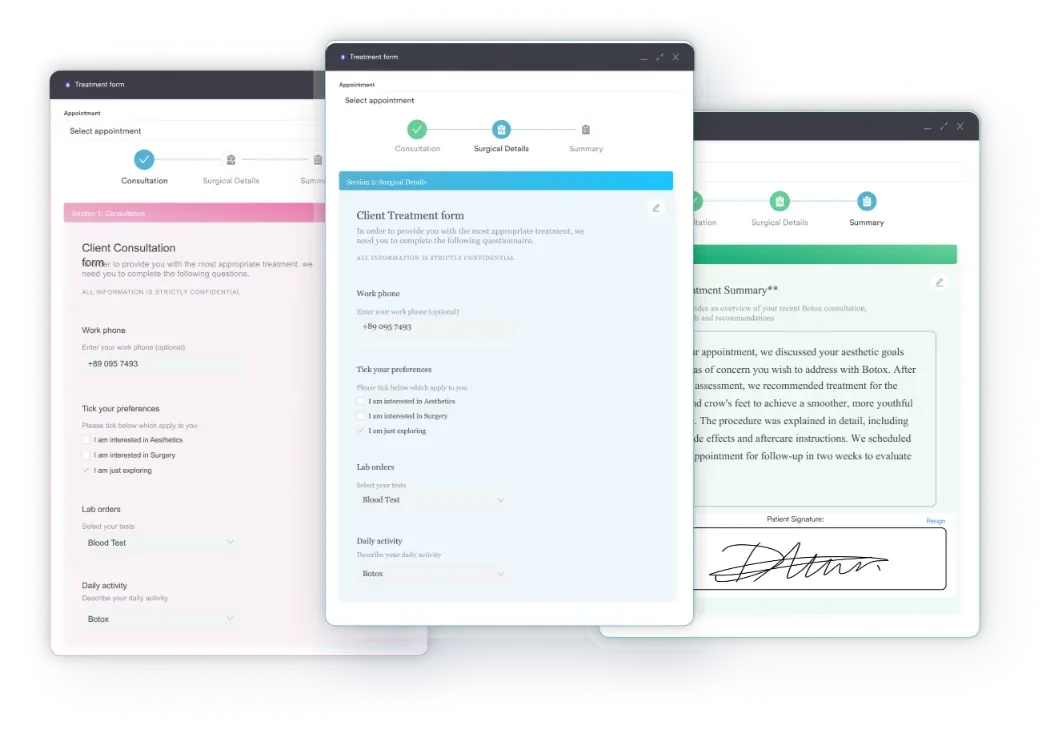
For instance, practices carrying a musculoskeletal caseload can capture those elements with digital intake forms. Specifically, good forms ask for encounter phase and healing status at every visit. Otherwise, where laterality is genuinely unknown, as in a multi-trauma admission without side-specific imaging, record the reason. So, that note is what supports the unspecified code if the claim is reviewed.
Pro Tip
First, audit your S72.3 subsequent-encounter codes once a month and compare the volumes of D, G, K, and P against each other. When P and K rarely appear next to a healthy count of D, malunion is probably slipping through the notes rather than genuinely absent. Take the pattern back to the treating physicians before a payer finds it first.
Submitting a clean claim
Most S72.309P denials trace back to missing notes that surface at the billing desk days after the visit. Working the claim in this order catches them while the note is still open.
- Check that the encounter is a follow-up rather than active treatment for the fracture.
- Next, read the physician note for the word malunion or matching wording.
- Then, check that the first fracture was closed. An open fracture moves you to S72.309Q or S72.309R.
- Check for noted laterality and use S72.301P or S72.302P when a side is recorded.
- Add the external cause code from the first injury only when your payer requires it on subsequent encounters.
- Sequence S72.309P against the reason for the visit, since the malunion is usually what brings the patient in.
- Query the physician before submission when the note describes deformity without naming the complication.
Generally, payer rules vary on how much of the first injury’s detail has to travel with a subsequent-encounter claim. For instance, some commercial plans want the external cause code on every line. Conversely, others accept the fracture code alone. Check the policy once per payer and record the answer, rather than resolving it claim by claim.
MS-DRG mapping for S72.309P
On inpatient claims, S72.309P groups differently from the acute fracture codes. Consequently, coders who assume the whole S72.309 series lands in one place get caught out. Under the MS-DRG v43.0 grouper for FY2026, S72.309P falls into the other musculoskeletal diagnoses group rather than the femur fracture group. In contrast, the initial-encounter code S72.309A maps to MS-DRG 533 or 534, fractures of femur. Therefore, check each admission against the AAPC ICD-10-CM lookup and the CMS grouper files.
Which of the three applies depends on the secondary diagnoses on the admission, not on the malunion itself. Therefore, that makes comorbidity capture the one lever inpatient coders control here. Confirm borderline cases with your clinical documentation improvement team before the claim goes out.
Approximate synonyms and alternate wording
Generally, encoder searches and physician wording rarely match the tabular descriptor word for word. Still, these alternate phrasings all resolve to S72.309P.
- Closed fracture of shaft of femur with malunion, subsequent encounter
- Malunion of femoral diaphysis fracture, follow-up visit
- Femur shaft fracture healed in poor alignment, closed, subsequent care
- Unspecified femur shaft fracture with malunion complication, subsequent encounter
- Follow-up for closed femur shaft fracture complicated by malunion
Common coding mistakes to avoid
Five errors account for most S72.309P denials and audit flags. Catching them before submission takes far less work than appealing afterward. When a 7th character looks wrong, confirm the descriptor against the tabular list before the claim leaves the practice.
- Reaching for S72.309E when you mean malunion: E is the open type I or II routine healing code, and closed malunion is P instead. That single swap misstates both the wound and the healing status.
- Confusing malunion with nonunion: malunion means the bone healed crooked and takes P, while nonunion means it never healed and takes K.
- Treating delayed healing as nonunion: use G for a closed fracture that is still healing slowly. Instead, reserve K for one the physician has actually called a nonunion.
- Using the initial-encounter suffix for follow-up visits: defaulting to A is a habit worth breaking. Once active treatment is over, A is wrong regardless of who is seeing the patient.
- Leaving laterality unspecified without rationale: instead, use S72.301P for the right femur and S72.302P for the left whenever the record names a side.
How Pabau supports accurate ICD-10 coding workflows
Generally, wrong 7th characters start in the exam room, not at the billing desk. If the follow-up note never records healing status, no amount of care downstream will recover it. Therefore, that is a workflow problem, and practice management software is where it gets solved.
Specifically, Pabau, our practice management software, keeps the clinical record and the billing record in one place. Digital forms capture laterality, encounter phase, and healing status as structured fields at the point of care, so the coder reads data rather than prose. Our claims management software then submits and tracks the claim from that same record. It does not choose the diagnosis code for you. Instead, it makes sure the information your coder needs is already there.
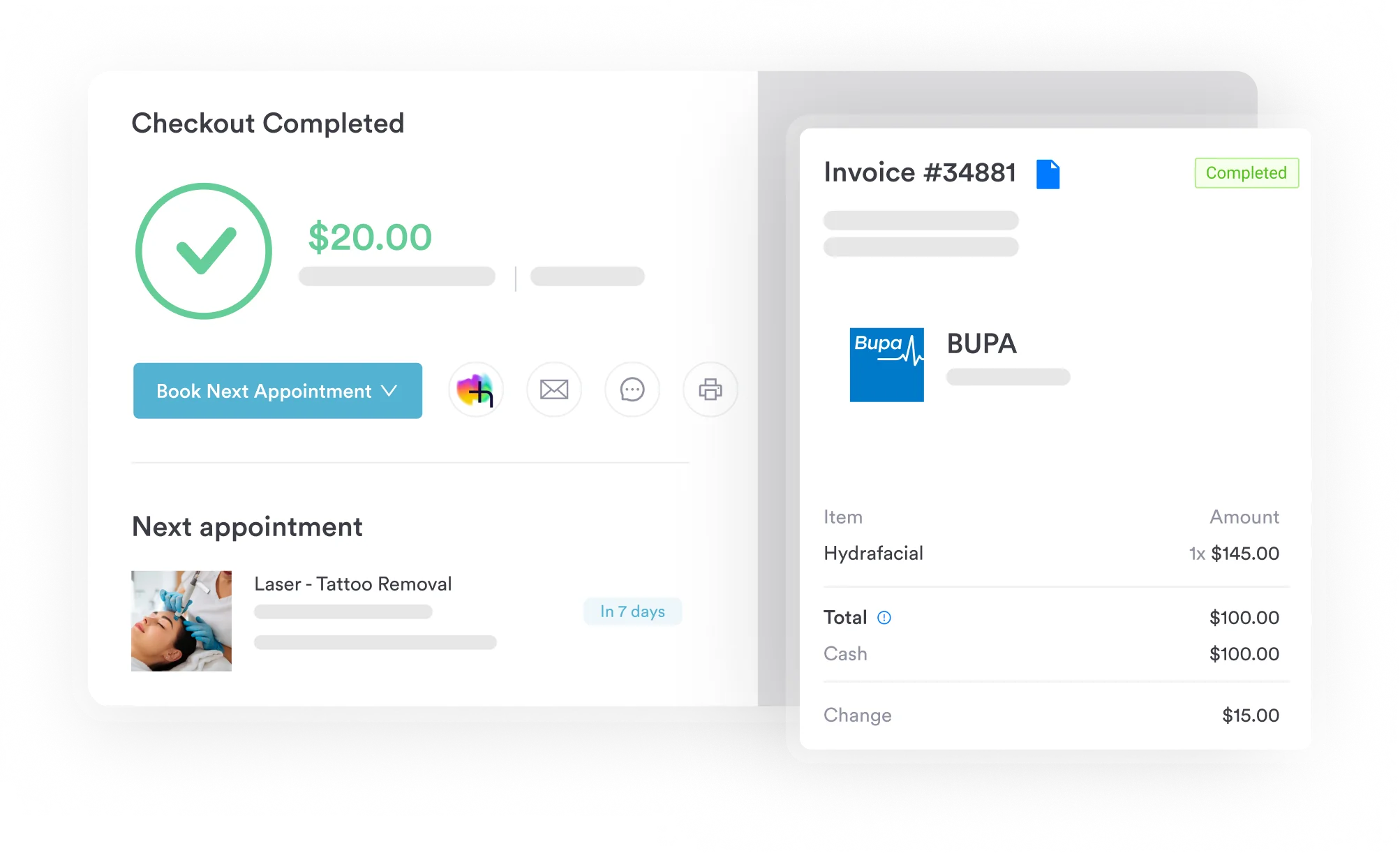
Clinical record management in Pabau stores each encounter in a structured format that clinicians and billing teams both work from. Additionally, Pabau Scribe, our AI scribe, turns the consult conversation into a chart-ready note. As a result, that removes the manual transcription step where healing status most often goes missing. Consequently, across an episode of care, that consistency keeps the 7th character stable from visit to visit.
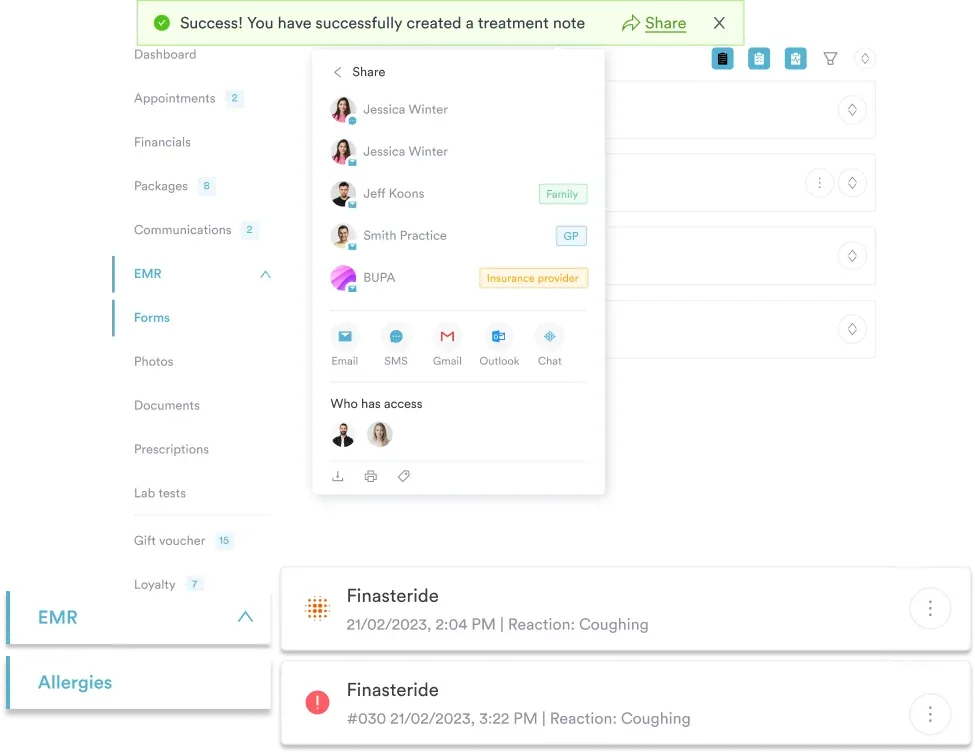

Document fracture encounters accurately, every time
Pabau captures laterality, encounter phase, and healing status as structured fields at every visit, so your coders work from data instead of guesswork. Fewer queries. Fewer denials.

Conclusion
The whole code hangs on one letter. For example, where the follow-up note names malunion and confirms a closed fracture, S72.309P is a straightforward assignment. Otherwise, where it does not, no amount of coder judgment will make the claim safe, and a query is faster than an appeal.
So treat this as a charting problem rather than a coding one. Build the follow-up template so healing status and laterality get asked every visit, and the 7th character stops being a judgment call. Book a demo to see how Pabau captures that detail for orthopedic and rehab practices.

Continue your research
Coding the sequela phase of a femur fracture? S72.411S covers the late effects of a displaced condyle fracture of the right femur.
Working further down the leg? S82.036S handles the sequela of a nondisplaced transverse patella fracture.
Documenting a thigh soft-tissue injury? S76.129S applies to the late effects of a quadriceps muscle laceration.
Need a format for follow-up notes? Therapy progress notes gives you a structure that records healing status at every visit.
Coordinating care across a rehab team? Multidisciplinary review template keeps each specialist’s findings in one shared record.
Frequently asked questions
What is ICD-10 code S72.309P?
Specifically, S72.309P is a billable ICD-10-CM diagnosis code for an unspecified fracture of the shaft of an unspecified femur, subsequent encounter for closed fracture with malunion. It is valid for FY2026, effective October 1, 2025. Use it at follow-up visits once the treating physician has documented that the fracture healed in abnormal alignment.
Is S72.309P a billable ICD-10 code?
Yes. Indeed, S72.309P is a billable, specific ICD-10-CM code in the FY2026 code set. It can be reported for reimbursement as a primary or secondary diagnosis. That covers outpatient, inpatient, and rehabilitation claims where the documentation supports every element of the descriptor. The code is also exempt from present on admission reporting.
What is the difference between S72.309P and S72.309E?
Specifically, S72.309P covers a closed femur shaft fracture with malunion at a subsequent encounter. S72.309E covers an open type I or II femur shaft fracture with routine healing at a subsequent encounter. They differ on both the wound status and the healing status, so the two cannot be used interchangeably.
What is the difference between malunion and nonunion in ICD-10 coding?
Malunion means the fracture healed, but in poor alignment. Nonunion means it never healed at all. A closed femur shaft fracture with malunion takes 7th character P, and closed nonunion takes K instead. Both need explicit physician documentation, since neither can be inferred from an imaging report alone.
When should I use S72.309P instead of S72.309D?
Use S72.309D when the physician documents that the closed femur shaft fracture is healing routinely. Use S72.309P when the physician documents malunion, meaning the bone united in abnormal alignment. If no complication is recorded, S72.309D is the correct subsequent-encounter code for a closed fracture.
What documentation is required to use S72.309P?
The record must show the femur as the fracture site and the shaft as the specific location. It must also show the fracture as closed and the visit as a follow-up rather than active treatment. Finally, the treating physician has to document malunion. A radiologist noting malalignment does not by itself satisfy that last requirement.
What MS-DRG does S72.309P map to?
Under the MS-DRG v43.0 grouper, S72.309P maps to MS-DRG 564, 565, or 566, the other musculoskeletal system and connective tissue diagnoses group. Which one applies depends on documented secondary diagnoses that qualify as a CC or an MCC. Acute femur fracture codes such as S72.309A group elsewhere, to MS-DRG 533 or 534.
Can a physical therapist use S72.309P?
Indeed, a physical therapist can report S72.309P on outpatient claims during the subsequent-care phase. The referring or treating physician must have documented malunion of a closed femur shaft fracture. That diagnosis has to originate in the physician documentation rather than the therapy assessment. Scope of practice and payer rules vary by state.