










Key takeaways
HCPCS code G0283 covers unattended electrical stimulation for anything other than wound care under Medicare Part B.
Medicare rejects CPT code 97014 for this service, while most commercial plans still expect it.
G0283 pays as one untimed unit per day per discipline, however many areas you treat.
Facility and office rates are identical in 2026, roughly $12.69 before your locality adjustment.
Practice management software like Pabau pre-fills the claim from the record and checks required fields before you send it.
HCPCS code G0283 covers unattended electrical stimulation, delivered to one or more areas for indications other than wound care. It only applies as part of a therapy plan of care.
The clinical side of that is simple. The billing side is where practices lose money. One modality carries two different codes, and the right one depends entirely on who is paying. Send Medicare the CPT version and the line comes back denied.
Two facts drive everything else about this code. It is untimed, and it is unattended. Get those straight and the units, the modifiers, and the documentation all fall into place.
What HCPCS code G0283 covers
G0283 is a permanent Level II HCPCS code maintained by CMS. Its official long description runs as follows. Electrical stimulation (unattended), to one or more areas, for indications other than wound care, as part of a therapy plan of care.
Three conditions have to hold before you can bill it:
- Unattended: the clinician sets the modality up and is not in constant attendance.
- Outside wound care: pain control, muscle re-education, and edema reduction all qualify.
- Under a plan of care: a signed, current therapy plan has to sit in the chart.
When the therapist stays with the patient and delivers current one-on-one, the service becomes CPT code 97032 instead. That one is timed and bills in 15-minute units, so the two are never interchangeable.
One unit a day, whatever you treat
G0283 is untimed, so it bills as a single unit per day per discipline. Two areas is still one unit. Twenty minutes and forty minutes bill exactly the same way.
Because the code is untimed, it also sits outside the 8-minute rule. There is no threshold to reach and no minutes to total on the claim line. Your note still records the areas treated, the parameters used, and how the patient responded.
G0283 vs CPT code 97014: Same service, two payers
Medicare requires G0283. Most commercial payers want 97014. The service on the treatment table is identical, which is exactly why the mistake is so easy to make.
Choose the code by payer, before the claim goes out
- Medicare Part B: bill G0283, with no exceptions.
- Commercial insurance: bill 97014, and check the plan’s fee schedule first, because payer contracts vary.
- Medicare Advantage: check the provider manual. Some plans follow original Medicare and want G0283, others accept 97014.
- Medicaid: rules vary by state, so review the state fee schedule before you submit either code.
The two codes cannot share a claim for the same date of service. Put both on there and an edit fires, which usually denies one line and sometimes both.
What Medicare pays for G0283 in 2026
Medicare pays roughly $12.69 for G0283 nationally in 2026, and the setting makes no difference to that figure. Facility and non-facility relative value units are identical for this code, so there is no site-of-service payment differential to plan around.
That national figure is a starting point, not your payment. The Geographic Practice Cost Index, known as the GPCI, adjusts it for your locality. Practices in California, New York, and Massachusetts see more per claim, and rural localities see less.
Verify the current amount for your own locality with the CMS fee schedule tool before you build it into a forecast. Rates move every year with the fee schedule final rule, and this code has no cushion in it.
Pro Tip
Run a fee schedule audit every January. Pull your top 10 HCPCS and CPT codes through the CMS lookup tool and compare the new rates against your charge master. For G0283, check that your fee still clears the Medicare amount by enough to cover the cost of billing the line at all.
The plan of care decides whether G0283 gets paid
Without a signed, current therapy plan of care, a G0283 claim has no basis for payment. The descriptor itself makes the plan a condition of the code, which is why reviewers go looking for it first.
Medicare and its contractors audit after payment, so the record has to be complete on the day of service. Nothing you write after a denial arrives will carry the same weight. Here is what a clean G0283 chart holds:
- A valid plan of care: signed and dated by a physician or non-physician practitioner, with diagnosis, goals, frequency, duration, and discipline.
- Medical necessity: the impairment and functional limit that make unattended stimulation reasonable for this patient.
- Clinician detail: the treating therapist’s license and discipline, because Medicare pays only for PT, OT, and SLP services here.
- Visit notes: what was done, which areas, the patient’s response, and progress against the plan’s goals.
- Frequency and duration: how often the modality is delivered and for how long.
Medical necessity is where most charts thin out. A shoulder that fails Neer’s test and cannot reach a top shelf is an impairment a reviewer can follow. The claim’s diagnosis then has to match that story, whether the injury is acute or a sequela coded like S43.121S.
Capturing all of this is far easier at the front of the visit than at the end of the month. Digital intake forms put the plan’s required fields in front of the clinician. A structured physical therapy intake form does the same while the patient is still in the room.

Certification dates worth tracking
A physician or non-physician practitioner has to certify the initial plan within 30 days of the evaluation that produced it. After that, the plan needs recertification at least every 90 days for the episode to keep billing.
Recertification goes down easier when there is something concrete to compare. An evaluation code like 97161 sets the baseline, and a repeat functional status questionnaire shows whether the patient has moved since.
Every G0283 line needs a discipline modifier
Medicare wants GP, GO, or GN on every outpatient therapy line, and G0283 is no exception. The modifier tells the contractor which discipline delivered the care. Leave it off and the line denies, which makes this the most preventable denial on the list.
For most physical therapy practices, GP goes on virtually every G0283 line. Assistants change that picture. When a PTA or an OTA furnishes the service, CQ or CO joins the discipline modifier. Medicare then pays that line at 85% of the fee schedule amount.
The KX modifier threshold replaced the therapy cap
The hard therapy cap disappeared in 2018 under the Bipartisan Budget Act, so the old cap language is out of date. What remains is the KX modifier threshold.
For 2026 it sits at $2,480 for physical therapy and speech-language pathology combined, with the same amount again for occupational therapy.
Once a patient’s year-to-date therapy total passes that figure, KX goes on the line to attest that the care is still medically necessary.
A separate targeted medical review threshold of $3,000 also applies, and claims above it may be selected for review. The CMS therapy services page publishes both figures each year.
Modifier 59 is the one to use sparingly. It belongs on a genuinely separate service, not on a line you are trying to push through an edit. The AAPC HCPCS lookup shows the bundling edits that tell you which situation you are in.
How a G0283 claim moves from note to payment
The code is easy. The handoffs around it are where claims fall over. A clean G0283 line travels through seven steps, and every one of them is a place where something can go missing.
- The evaluation establishes the impairment, the goals, and the plan of care.
- A physician or non-physician practitioner certifies that plan within 30 days.
- The therapist delivers the modality and writes the visit note the same day.
- The charge posts as one untimed unit of G0283 with GP, GO, or GN.
- CQ or CO joins the line if an assistant furnished the service.
- The claim leaves on the CMS-1500, or its electronic equivalent, with the supporting diagnosis.
- The MAC prices the line against your locality and the remittance posts back.
Step three is the one practices underestimate. A note written two days later tends to lose the detail that justified the modality, and that detail is what an auditor reads.
The wider mechanics of physical therapy billing follow the same pattern, so fixing the habit pays off across every code you bill.
Run this six-point check before you submit
- Payer confirmed as Medicare Part B, not a commercial plan expecting 97014.
- Plan of care signed, certified, and still inside its 90-day window.
- One unit on the line, however many areas were treated.
- Discipline modifier attached, plus CQ or CO if an assistant treated the patient.
- KX added if the year-to-date therapy total has passed the threshold.
- Visit note names the impairment, the areas treated, and the response.
Why G0283 claims get denied, and how to stop it
G0283 denials cluster around a short list of repeat offenders. None of them are clinical. Each one is a workflow problem you can close off before the claim leaves the building.
Reading the remittance properly is half the job. Two lines can deny for very different reasons behind similar wording, so map your denial codes to a fix once, then reuse it. Steady denial management beats reworking claims one at a time.
Appealing a $12 line is a numbers game
At roughly $12.69 a unit, one denied G0283 line will never reach the $200 needed for an Administrative Law Judge hearing.
Medicare lets you combine claims to reach that amount. That is why practices batch these denials by reason instead of appealing them one by one.
Medicare’s appeal process runs to five levels, and most correctable denials end at the first or second.
- Redetermination: file with the MAC within 120 days of the denial notice, with the signed plan of care and treatment notes attached.
- Reconsideration: file with a Qualified Independent Contractor within 180 days. This is the first independent review.
- ALJ hearing: request within 60 days of the reconsideration decision, once at least $200 is in dispute.
- Medicare Appeals Council: ask the Departmental Appeals Board to review within 60 days of the ALJ decision.
- Federal court: the final step, available when more than $1,960 is in dispute in 2026.
Those windows close quietly. Automated workflows that timestamp each denial and count down to the filing deadline stop claims aging out while someone means to get to them.
Picking the right code in the electrical stimulation family
G0283 sits in a small cluster of stimulation codes, and two questions separate them. Was the clinician in constant attendance, and was the target a wound?
Wound care is the split that trips people up. G0281 covers unattended stimulation on specific chronic ulcers that have not healed after 30 days of standard treatment.
G0282 picks up the other wound-care indications. G0283 excludes wound care outright, so the therapeutic goal in your note is what decides the code.
Confirm each of these codes is still active at the start of every year. The CMS annual code list is the source for that, and most billing systems will not warn you when a code retires.
Pro Tip
Build a one-page code card for the treatment room. Put G0283, G0281, G0282, 97014, and 97032 side by side. Next to each, note only the deciding factor. Attended or unattended, wound or not, Medicare or commercial. A laminated card at each workstation stops most wrong-code submissions before they start.
How Pabau keeps G0283 claims clean before they go out
Picture a Friday afternoon. A biller is working through 50 claims, and the patient on line 12 is Medicare while the last five were commercial. Nothing on screen says so. That is how 97014 ends up on a Medicare claim, and no amount of coding knowledge prevents it.
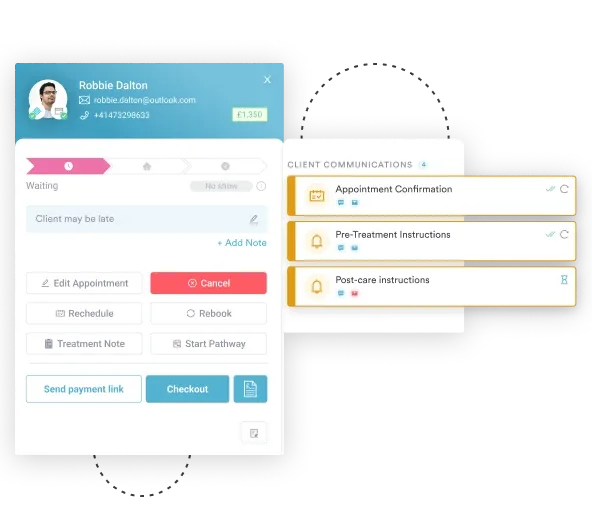
Practice management software like Pabau works from the record instead of from memory. The code attached to the service lands on the charge line, and the diagnosis pulls from the client’s recorded problem list. ICD-10 and CPT or HCPCS lookup libraries sit behind a search icon, so a biller can check a descriptor without leaving the claim.
Required claim fields also have to be complete before the send button unlocks, which is what stops half-built claims reaching a payer. Claims management software then submits through the clearinghouse for your region, and returns eligibility checks, claim status, and remittance posting to the same screen.
The payoff is that documentation and billing stop living apart. Whether the practice runs on physical therapy EMR or occupational therapy software, everything lands in one record. The plan of care, the visit note, and the claim are all there when a reviewer asks.

Send cleaner therapy claims the first time
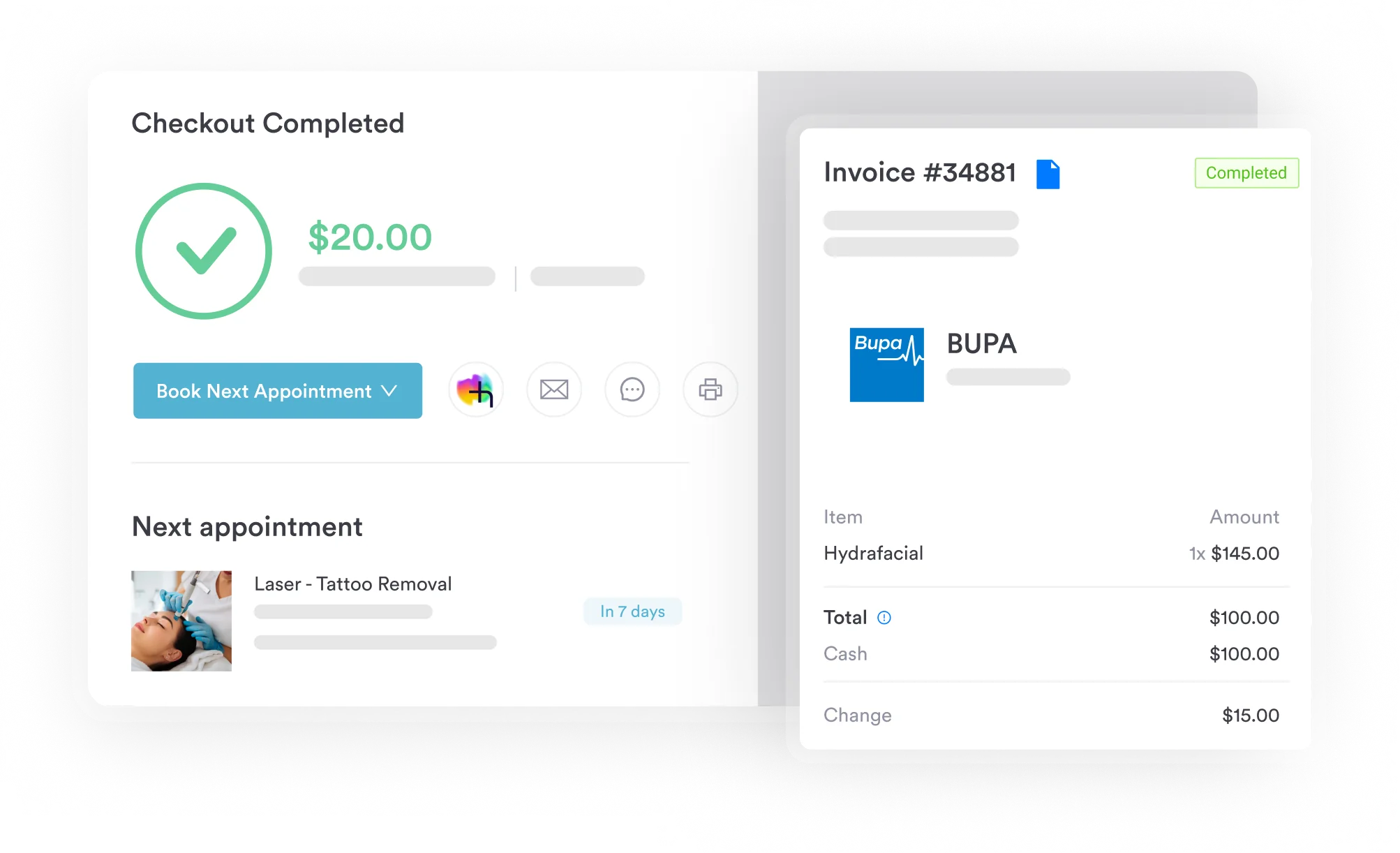
Pabau pre-fills claims from the client record, checks required fields before submission, and keeps the plan of care beside the charge. See how it works for a therapy practice.

Conclusion
G0283 is a simple code with three rules attached. Medicare gets it instead of 97014. It bills as one untimed unit a day, and every line needs a discipline modifier plus a signed plan of care. Nearly every denial it produces traces back to one of the three.
The economics are what should shape your process. At roughly $12.69 a unit, no single line is worth an appeal. The controls belong ahead of submission, well before anything reaches your denials queue. Fix the claim template and the plan-of-care check once, and this code stops costing you money to bill.
Would you rather keep the plan of care, the visit note, and the claim in one place? Book a demo to see how Pabau handles therapy billing from evaluation through to remittance.

Continue your research
Billing electrical stimulation for a wound instead? G0281 sets out the coverage rules for chronic ulcers that have not healed after 30 days.
Treating patients on commercial plans? 97014 covers the CPT side of unattended stimulation, including the documentation commercial payers expect.
Need to read a remittance faster? Denial codes explains what the common codes mean and which ones are worth reworking.
New to submitting Medicare claims? Medicare billing walks through enrollment, claim submission, and the rules that catch new practices out.
Billing the evaluation that starts the episode? 97161 covers the low-complexity physical therapy evaluation and what the note has to show.
Frequently asked questions
Can a chiropractor bill G0283 to Medicare?
No. Medicare’s chiropractic benefit covers manual manipulation of the spine only, so electrical stimulation in a chiropractic office is statutorily excluded. Bill the patient directly, or append modifier GY when you need a formal denial for a secondary payer.
Does G0283 cover a TENS unit the patient takes home?
No. A home unit is durable medical equipment and bills on its own supply codes through the DME contractor. G0283 only covers stimulation delivered in your practice as part of the therapy plan of care.
Which code covers electrical stimulation for a wound?
G0281 or G0282, never G0283. G0281 applies to specific chronic ulcers that have not healed after 30 days of standard care. G0282 covers other wound-care indications. G0283 rules wound care out in its own descriptor.
Should a patient sign an ABN before a G0283 session?
Yes, whenever you expect Medicare to deny the line, such as care that no longer meets medical necessity. Have the patient sign the advance beneficiary notice before the visit, then bill with modifier GA. Skip it and you absorb the cost.
Can you bill G0283 and therapeutic exercise at the same visit?
Yes. G0283 is a supervised modality and therapeutic exercise is a timed, one-on-one procedure, so both can sit on the same claim. Each needs its own documentation, and the modality still bills as a single untimed unit.