









Key takeaways
S60.159D is a billable ICD-10-CM code for contusion of the unspecified little finger with damage to nail, subsequent encounter. It is valid for FY2026 claims from October 1, 2025.
The 7th character D signals a follow-up visit: Active treatment is ongoing, but the patient is no longer presenting for the initial acute encounter.
Documentation must confirm the little finger, the nail involvement, and that the encounter is a subsequent visit. Missing any element risks a claim denial.
Pabau’s claims management software streamlines claim submission and helps reduce billing errors.
ICD-10 code S60.159D describes a contusion of the unspecified little finger with damage to the nail, coded at a subsequent encounter. It is a billable, specific ICD-10-CM code valid for reimbursement under the FY2026 edition, effective October 1, 2025.
Coders and billing staff use this code when a patient returns for follow-up care. The initial contusion and its nail involvement must already be documented, and treatment must already have begun.
The code is accepted on both UB-04 (institutional) and CMS-1500 (professional) claim forms, so it works across hospital outpatient and physician office settings. ICD-10-CM codes are updated every October 1. Confirm the code’s active status against the CDC ICD-10-CM lookup tool before billing any year beyond FY2026.
Billable status does not guarantee payer reimbursement. Coverage still depends on the individual plan and on medical necessity documentation.
What does S60.159D mean? Breaking down the code
Each segment of ICD-10 code S60.159D carries a distinct clinical meaning. Understanding the structure helps coders pick the right code. It also heads off the common mistake of using the initial-encounter suffix when the patient is returning for ongoing care.
The “unspecified” in S60.159D reflects that the record does not document whether the left or right little finger was injured. Where laterality is documented, use S60.151 (right) or S60.152 (left) instead.
Reaching for the unspecified variant without checking the record first is a common audit risk. Accurate clinical record documentation reduces that exposure.
Understanding the 7th character: Initial vs. subsequent vs. sequela
The 7th character is the most frequently misapplied element in the S60 code family. According to the CMS ICD-10-CM coding guidelines, the suffix must reflect the status of the encounter, not the stage of healing.
A patient can still be in a subsequent encounter even when the injury has not fully healed. The D suffix applies to routine follow-up visits, therapy check-ins, and wound monitoring, as long as active treatment continues.
Sequela (S) becomes appropriate only once the injury has resolved and a late-effect complication presents on its own. Every injury code in chapter 19 takes the same three suffixes, so the same test decides S59.009D and S01.111D.
Billing teams handling HIPAA-covered transactions should build this distinction into coder training. A suffix error is far cheaper to prevent than to appeal.
Pro Tip
Check the provider note for the words follow-up or return visit. If either appears alongside an injury still under active management, suffix D is almost always correct. Switch to suffix S only when the provider documents that the original injury has resolved and ties a new complaint to its after-effects.
Clinical description: Contusion of the little finger with nail damage
A contusion is a bruise caused by blunt force trauma without breaking the skin. In S60.159D, the injury affects the fifth (little) finger and involves damage to the nail. That usually means subungual hematoma, nail-bed laceration, partial nail avulsion, or pressure injury to the nail matrix.
Common mechanisms include crush injuries from doors, machinery, or heavy objects, plus sports impacts and workplace accidents. Clinicians working in urgent care, occupational health, or sports medicine meet this code regularly at follow-up visits.
- Subungual hematoma: Blood pooling under the nail, often requiring trephination for drainage
- Nail-bed injury: Disruption to the tissue beneath the nail plate requiring monitoring for deformity
- Nail avulsion (partial): Portion of the nail plate detached from the nail bed
- Contusion without disruption: Bruising and soft-tissue swelling at the fingertip with visible nail discoloration
For subsequent visits, the provider note should confirm that the nail injury is still being actively managed. A wound check after nail trephination or a suture removal visit both qualify.
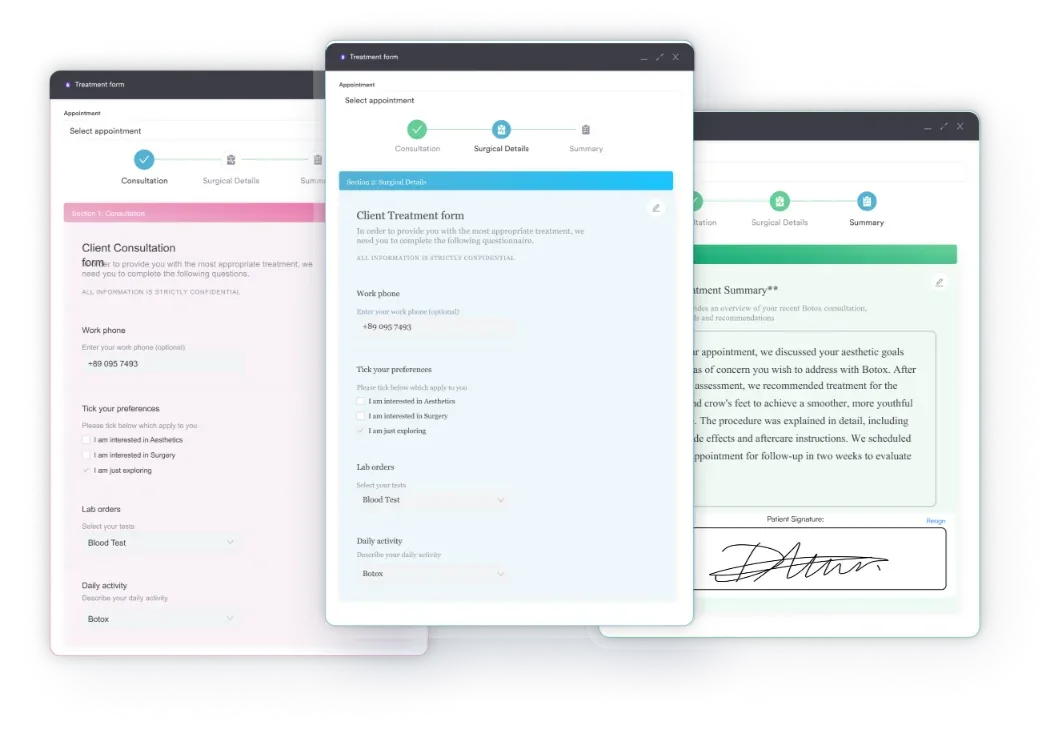
Practices using digital intake forms for returning patients can prompt clinicians to re-document the injury site, laterality, and treatment stage at every visit. That makes the D suffix easy to support at coding time.
Code hierarchy and parent codes for S60.159D
S60.159D sits within a defined hierarchy under the S00-T88 block covering injuries. Understanding this structure helps coders verify they have the most specific code available before submitting a claim. The AAPC code lookup lays the hierarchy out visually.
S60.159 itself is not billable. Only the 7th-character variants (A, D, and S) can go on a claim, and payers reject the bare parent code as non-specific.
Related and sibling codes
Several sibling codes sit alongside S60.159D within the S60.15 subcategory. They cover the laterality variants and the three encounter types. Confusing right with left, or reaching for the initial-encounter code at a follow-up, is a top denial trigger here.
Practices that track claim patterns through claims management software can see which sibling codes generate the most rework. Coder training can then target the codes that actually cost the practice money.
For finger contusions without nail involvement, see the S60.0 subcategory. If the provider notes a crush injury to the nail alongside an open wound, a separate wound code such as S61.238A may also be needed.
Practices handling physical therapy follow-ups for hand injuries rotate between the A, D, and S variants across a single episode of care.
Approximate synonyms and index terms
Coders searching by clinical description rather than code number use these approximate synonyms. Each one maps to S60.159D and its parent S60.159. Recognizing the terms in a provider note speeds up lookup and lowers the risk of picking the wrong code.
- Bruised little finger with nail damage, follow-up visit
- Contusion of pinky finger with nail injury, subsequent encounter
- Contusion of fifth finger with damage to nail, subsequent encounter
- Little finger nail contusion, subsequent encounter
- Bruised fingernail, little finger, follow-up
- Subungual hematoma, little finger, subsequent encounter
- Pinky finger blunt trauma with nail involvement, follow-up
Documentation requirements for accurate coding
Claim denials for this code almost always trace back to missing or ambiguous documentation. The note must support all four elements the code communicates: The injury type, the finger, the nail involvement, and the encounter stage. Getting documentation practices right at the point of care prevents downstream rework.
- Injury type: The note must confirm a blunt force or crush mechanism without an open wound. If a wound is present, add the open wound code separately.
- Finger specificity: Little finger, fifth digit, and pinky are all acceptable, and the coder resolves them to S60.15x. If the note names a side, use S60.151 or S60.152 instead.
- Nail involvement: The note needs explicit mention of nail damage, subungual hematoma, nail discoloration, or nail-bed trauma. Without it, S60.0 applies instead of S60.1.
- Encounter stage: Language such as return visit, wound check, follow-up, or suture removal supports the D suffix. Absence of that language may prompt payer review.
Some practices attach a QuickDASH outcome measure to hand injury follow-ups. The score gives the note concrete evidence that treatment is still active, which is what the D suffix rests on.
Coding guidelines and compliance tips for S60.159D
These reminders cover the compliance issues coders hit most often in the S60.15x family. Official guidance is published every year in the ICD-10-CM Official Guidelines for Coding and Reporting.
- Do not default to A at follow-up: The initial-encounter suffix fits only the first time the provider actively treats the injury. If the patient has been seen before for the same injury, D is correct, even with a different provider this visit.
- Check laterality before selecting unspecified: Use S60.159D only when the provider genuinely does not document which hand was injured. If the note says right pinky or left fifth finger, the unspecified code is wrong.
- Sequela requires a second code: When you code S60.159S, also report the nature of the late effect. Scar contracture and nail deformity are typical examples.
- Billable does not mean covered: Verify payer-specific policies for injury follow-up visits. Medicare, Medicaid, and commercial payers set different medical necessity thresholds for subsequent encounters.
- Annual update check: ICD-10-CM codes are revised every October 1. Confirm S60.159D is still active in the fiscal year of service before you bill it.
How Pabau supports accurate coding on injury follow-ups
In most practices, a thin follow-up note only surfaces days after the visit. The coder queries the provider about laterality, waits for an answer, and the claim sits unbilled while that happens.
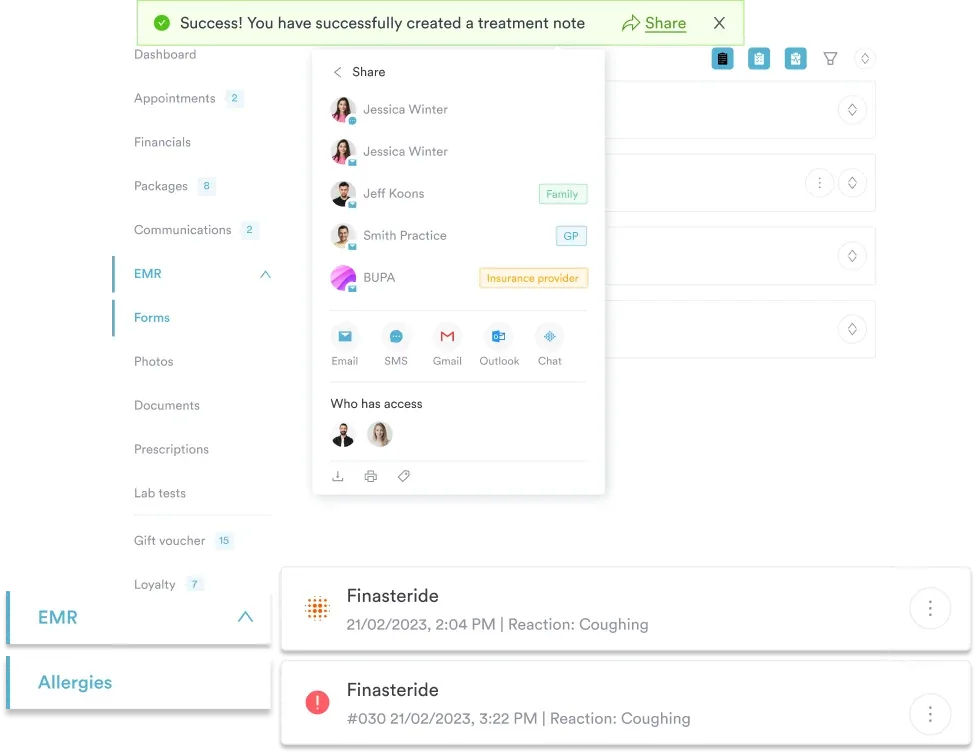
Practice management software like Pabau keeps the client record, the forms, and the claim in one system. Follow-up templates can ask for the injured side, the nail status, and the treatment stage before the patient leaves the room.
Pabau’s claims management software then streamlines claim submission and helps reduce billing errors. Your billing team spends less time chasing missing detail, and more time on the claims that genuinely need a human.

Reduce claim errors on injury follow-up codes
Pabau’s claims management software streamlines claim submission and helps reduce billing errors, so your billing team gets subsequent encounter codes right the first time.

Conclusion
Selecting S60.159D is the easy part. The note behind it decides whether the claim gets paid. Laterality and encounter stage are the two details providers skip when a finger injury looks minor.
Fix that at the point of care rather than at the billing desk. A follow-up template that asks for the injured side, the nail status, and the treatment stage takes seconds to complete.
The unspecified code stays available, and it is the right call when the record genuinely names no side. It just hands the payer one more thing to question. Book a demo to see how Pabau keeps injury follow-up notes and claim submission in one place.

Continue your research
Coding another injury at a follow-up visit? S59.009D works through the same 7th-character rules for a healing wrist fracture.
Working out which open wound code applies? S61.059A shows how nail damage changes the code you select on the thumb.
Want follow-up notes that support the code? Medical notes covers how to write clinical notes faster without dropping the detail coders need.
Checking your billing workflow against HIPAA? HIPAA compliance checklist sets out what a billing team needs before submitting covered transactions.
Coding upper limb trauma at a later visit? S58.022D applies the subsequent encounter rules to a far more complex injury.
Frequently asked questions
What does ICD-10 code S60.159D mean?
S60.159D is a billable ICD-10-CM diagnosis code for a contusion of the unspecified little finger with damage to the nail. It is reported at a subsequent encounter. The D suffix means the patient is returning for ongoing care after the initial visit was coded.
Is S60.159D a billable ICD-10-CM code?
Yes. S60.159D is a billable, specific ICD-10-CM code valid on UB-04 and CMS-1500 claim forms under the FY2026 edition, effective October 1, 2025. The parent code S60.159 carries no 7th character, so payers reject it.
What is the difference between S60.159A, S60.159D, and S60.159S?
All three share the same clinical description and differ only by encounter type. S60.159A covers the initial visit, when active treatment first begins. S60.159D covers every follow-up visit while active treatment continues. S60.159S applies once the original injury has resolved and a late effect, such as nail deformity, becomes the focus of care.
When should the 7th character D be used in ICD-10 coding?
Use 7th character D whenever the patient returns for follow-up or routine care for a condition first treated at an earlier encounter. The condition must still be under active management. Per CMS ICD-10-CM Official Guidelines, D applies whether or not the condition has improved.
What conditions does S60.159 cover?
S60.159 is the parent code for contusion of the unspecified little finger with damage to the nail. The nail damage element covers subungual hematoma, partial nail avulsion, nail-bed injury, and visible discoloration from blunt trauma. The parent code is not billable, so submit only the A, D, or S variant.
How is a contusion of the little finger with nail damage documented for coding?
The provider note must document four elements: The injury type, the affected finger, explicit nail involvement, and the encounter stage. Blunt trauma, pinky or fifth digit, subungual hematoma, and wound check are all acceptable wording. If the note names a side, use S60.151 or S60.152 rather than the unspecified S60.159.