








Key takeaways
HCPCS code G0247 covers routine foot care for a diabetic patient with confirmed loss of protective sensation (LOPS).
The descriptor lists wound care, corn and callus debridement, and nail work, but only the components present at that visit.
G0247 never pays on its own. Medicare accepts it only when G0245 or G0246 is on the same claim and date.
G0247 has no frequency limit of its own. The evaluation codes it rides on are payable once every six months per patient.
A routine foot care CPT code paid in the prior six months blocks all three LOPS codes, so read payment history first.
HCPCS code G0247 covers routine foot care for a diabetic patient with loss of protective sensation, known as LOPS. Medicare accepts G0247 only when the evaluation code it belongs with, G0245 or G0246, sits on the same claim and date of service.
Everything below follows the CMS Medicare Claims Processing Manual, Publication 100-04, Chapter 32, Section 80. Check any workflow change with your biller or compliance officer before you roll it out.
What HCPCS code G0247 covers, word for word
G0247 describes routine foot care by a physician for a diabetic patient whose sensory neuropathy has caused LOPS.
CMS maintains the descriptor in the Healthcare Common Procedure Coding System, or HCPCS. It reads «to include if present, at least the following»:
- Local care of superficial wounds (superficial to muscle and fascia)
- Debridement of corns and calluses
- Trimming and debridement of nails
Those two words, «if present», carry the coverage rule. You render and document the components the foot needs that day, not all three every time. A patient with no superficial wound does not need one invented to support the claim.
CMS used that conditional deliberately, and only here. G0245 says «which must include». G0246 says «to include at least the following».
Neither carries the qualifier, so their listed elements are mandatory. G0247 is the one LOPS code where the service list flexes with the foot in front of you.
A monofilament test is what makes LOPS billable
LOPS means the patient cannot feel pain, pressure, or temperature in the feet, and the record has to prove it. Diabetic peripheral neuropathy causes it.
Patients cannot feel injuries forming, so ulcers and infections develop unnoticed. Medicare therefore treats this foot care as preventive.
CMS is specific about the test. Test five sites on the plantar surface of each foot with the 5.07 Semmes-Weinstein monofilament, which delivers 10 grams of force. Absence of sensation at two or more of the five sites on either foot confirms peripheral neuropathy with LOPS.
So a patient who feels nothing at three sites on the right foot and one on the left still qualifies. The threshold applies per foot, and one foot can carry it alone.
Two details in the CMS instructions are easy to miss. Test the sites randomly rather than rhythmically, because the loss can be patchy and a rhythm gives the patient clues. Avoid heavily callused areas, since thick skin masks the result.
Then record which sites you tested and which ones failed. Your Medicare Administrative Contractor (MAC) may add detail in its local coverage determination (LCD), so read that before you finalize a documentation template.
LOPS from a non-diabetic condition, such as hereditary neuropathy, does not qualify here, and the note has to carry the diabetes diagnosis alongside the neuropathy.
Six conditions Medicare checks before it pays
Medicare pays G0247 when six conditions hold at the same time. Miss one and the claim denies, so settle each of them before it goes out.
- Confirmed diabetes diagnosis: Type 1, Type 2, or other specified diabetes, documented in the record and carried on the claim as an ICD-10 code.
- Documented LOPS: The monofilament result, with the tested sites named, sitting in the visit note.
- A same-date G0245 or G0246: The qualifying evaluation on the same claim and date of service, accepted as payable.
- No routine foot care paid recently: A routine foot care CPT code paid in the prior six months makes the LOPS codes reject. Those codes are 11055 to 11057 and 11719 to 11721.
- Physician or qualified provider: The treating provider meets the eligibility rules that apply to the LOPS codes in your jurisdiction.
- No excluding conditions: Coverage does not extend to foot problems caused independently by another systemic illness.
Turn that list into a pre-visit check rather than an appeal argument. Whether it lives in a compliance checklist or on a printed sheet, work through it while the patient is in the room.
G0245 and G0246 are the codes G0247 travels with
The three LOPS codes are not a sequence you work through over months. G0245 and G0246 are the evaluation codes.
G0247 is the routine care that has to travel with one of them on the same claim. A G0247 line on its own has nothing to attach to, whatever the patient’s history shows.
The manual leaves no room here. Section 80.2 says G0247 must be billed on the same date of service as G0245 or G0246 to be considered for payment. Section 80.6 turns that into a claim edit, which denies G0247 when neither code is on the claim.
The Common Working File (CWF) applies the same test. It pays G0247 only once the same-day evaluation is accepted as payable.
Denials from this edit come back with claim adjustment reason code 107, the related or qualifying service was not identified on this claim. The patient’s summary notice shows MSN 21.21. When 107 turns up on diabetic foot care claims, the fix is a billing one rather than a clinical one.
Pro Tip
Pull every paid G0247 line from the last quarter. Check each one for a G0245 or G0246 on the same claim and date. Practices that bill routine care on its own between evaluations tend to build up a run of unpayable visits before anyone reads the reason code.
Routine foot care CPT codes block the LOPS codes
A routine foot care CPT code paid in the prior six months makes G0247 reject, along with G0245 and G0246. The two families cannot share a six-month window.
The reasoning sits in the manual. Once a patient’s condition progresses far enough for routine foot care to become covered on its own, Medicare stops paying for LOPS evaluation and management. From that point you bill the routine foot care codes instead.
One common mistake belongs here rather than with the G codes. Many MAC local coverage determinations expect at least 60 days between nail debridement services billed with 11720 or 11721. That interval governs those CPT codes, so keep it out of a diabetic foot care recall schedule.
The diagnosis code decides whether the claim pays
CMS pays the LOPS codes only when the claim carries a diabetes-with-neuropathy diagnosis. This edit is national rather than a local variation. A general diabetes code, with no neuropathy detail, fails it.
The CMS list runs wider than the six codes above. For the E10, E11, and E13 families it also carries the mononeuropathy, autonomic, amyotrophy, other-complication, and arthropathy codes. For E08 and E09, only the unspecified neuropathy and polyneuropathy codes appear.
So check the current version before you build a favorites panel. The CMS Chapter 32 manual and your MAC’s LCD update on their own cycles.
Documentation that survives a LOPS audit
Two problems account for most G0247 audit findings. The note asserts LOPS with no test result behind it, or it records the routine care without the same-day evaluation that makes it payable.
Standardized medical forms built around these requirements close most of that at the point of documentation.
Each chart note for a G0247 visit should include the following:
- LOPS confirmation method: Record the test used, the sites tested, and which sites had no sensation. Two failures out of five per foot is the threshold CMS describes.
- Diabetes diagnosis reference: Document the diagnosis in the note, or point to the problem list entry that carries it.
- Services rendered: Describe each component you performed. Where one of the three was not clinically indicated, say so, since the descriptor asks only for what is present.
- The paired evaluation: Show that the G0245 or G0246 encounter happened on the same date, with its own required elements documented.
- Provider credentials: The provider’s name, credentials, and NPI need to be identifiable in the note.
- Date of service: The note carries the date of the visit rather than a later date.
- Medical necessity statement: Connect the LOPS finding to the care you delivered that day.
In a primary care practice, the LOPS exam usually sits inside a longer diabetic review. The monofilament grid needs a place of its own in the note.
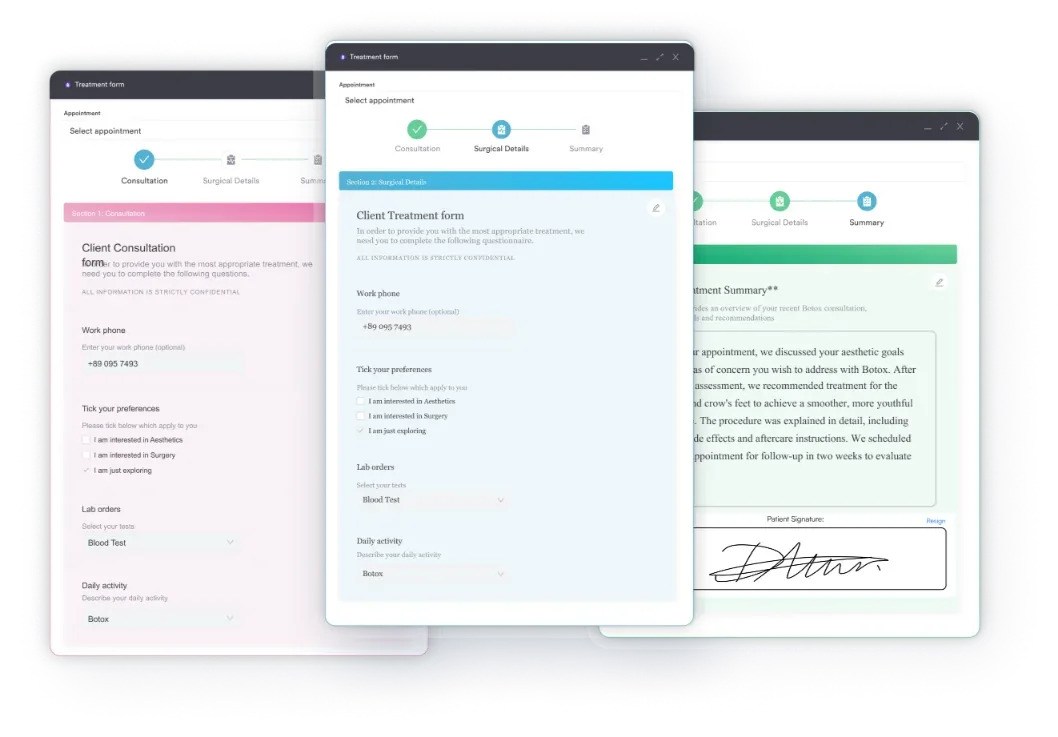
Digital intake forms can pre-populate that grid and the service fields, which lets providers complete them during the visit.
HIPAA-compliant documentation then keeps those records retrievable and intact for the length of an audit window.
What Medicare pays, and what the patient owes
Medicare pays 80 percent of the lesser of the fee schedule amount or your actual charge. The patient covers the rest through the Part B deductible and 20 percent coinsurance.
Say the allowed amount is $500 and the patient has already met the deductible for the year. Medicare pays $400, and the patient owes $100. If the deductible is still open, it comes off first, so the patient pays more.
The rate itself moves every year. CMS sets it in the Physician Fee Schedule final rule, building it from relative value unit (RVU) components and the annual conversion factor. A geographic practice cost index (GPCI) then adjusts the figure for your locality.
Institutional settings work differently. Hospital outpatient departments fall under the Outpatient Prospective Payment System (OPPS). Rural health clinics and federally qualified health centers receive an all-inclusive rate instead.
Because the figures move and differ by locality, look yours up in the CMS fee schedule tool. Facility rates, where you bill the professional component only, sit below non-facility rates.
Rates are the easy part of this code. Most of the money at stake turns on how you assemble the claim.
How to bill G0247, step by step
G0247 needs more checkpoints than a standard Medicare billing workflow, and most of them look at payment history rather than the chart. Work through them in this order.
- Confirm the diagnosis and the LOPS finding: The patient needs a documented diabetes diagnosis and a recorded monofilament result before G0247 applies.
- Check the evaluation window: G0245 and G0246 are payable once every six months between them. Find the last paid date, because that sets when you can bill the next paired visit.
- Check for paid routine foot care codes: 11055 to 11057 or 11719 to 11721 paid in the prior six months makes the LOPS codes reject. Bill the routine foot care CPT codes instead.
- Render and document what is present: Treat the wounds, corns, calluses, and nails that need attention. Note why any component was not indicated.
- Attach a covered diagnosis code: Use a diabetes-with-neuropathy code from the CMS list, such as E11.40, and check it against your MAC’s LCD.
- Bill G0247 on the same claim and date as the evaluation: Submit G0245 or G0246 alongside it. On its own, G0247 denies with reason code 107.
- Submit under the right provider and track the remittance: Check the rendering NPI against eligible provider types, then read the remittance advice. Documentation denials are often correctable on first appeal.
Before and after you hit submit
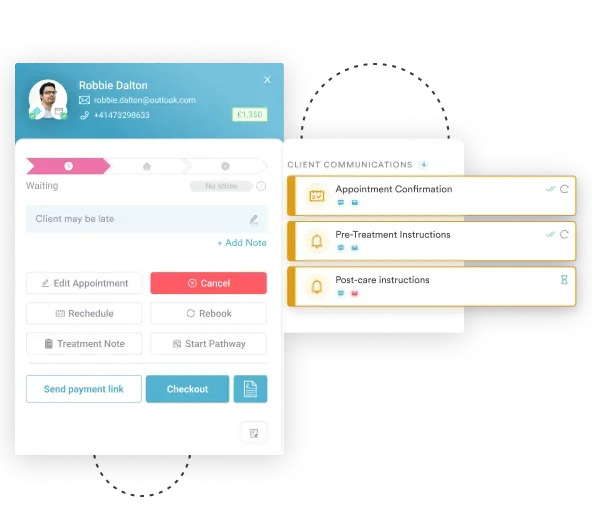
A steady diabetic foot care caseload is where automated workflows earn their place. They prompt the required fields and surface the recall date for the next evaluation before anyone books the visit.
Most practices send claims through a claims clearinghouse, which returns format rejections within hours. A 107 denial comes from Medicare itself, so watch the remittance rather than the clearinghouse report.
Why these claims deny, and how to get ahead of it
Six patterns cover almost every G0247 denial. Four of them come straight from the CMS manual, so they are predictable rather than discretionary. The other two are documentation habits.
Read your MAC’s LCD next to that table, because local policy can add its own documentation demands. Most of these denials are correctable on appeal, but an appeal costs staff time that a pre-submission check does not.
Pro Tip
Sort your G0247 denials by reason code each month rather than by dollar value. Reason code 107 points at a claim assembly problem. Code 96 with remark M86 points at a payment history problem, and a diagnosis denial points at your coding panel. Each one has a different owner.
How Pabau keeps the LOPS exam and the claim together
Most G0247 problems start in the workflow rather than the coding. Nothing in the visit asks for the monofilament result, so it gets skipped. The routine care then ends up recorded away from the evaluation it depends on.
Practice management software like Pabau closes that distance. Treatment-specific digital forms can carry the five-site monofilament grid, so the tested sites and the failures land in the record during the visit.
The form, the treatment note, and the appointment all sit on one client record. That gives the evaluation and the routine care a visible shared date of service. Pabau Scribe, our AI scribe, drafts the visit note from the consultation, so clinical detail survives a full appointment book.
Reporting shows which patients are approaching six months since their last LOPS evaluation. Recalls then line up with the window when a paired G0247 becomes payable. Claims management keeps the billing record beside the patient file, so nobody reassembles it at submission.
The same setup carries across specialties. A metabolic health practice reviewing the same patients works from one documentation standard rather than a workaround. Practice management software that connects clinical notes to the billing queue removes the manual handoff where coding errors start.

Keep every G0247 claim beside the visit that supports it
Pabau helps podiatry and primary care practices capture the LOPS exam and keep the evaluation and routine care on one dated record. Recalls bring patients back when the next visit becomes payable.

Conclusion
G0247 rewards a practice that treats billing as part of the visit. The monofilament result, the diagnosis code, the paired evaluation, and the six-month payment history are all knowable before the patient leaves the room.
So build the habit rather than the appeal file. Treat G0247 as a line that travels with its evaluation, and document the components you actually rendered rather than a fixed set of three. Denials on this code are cheap to prevent and slow to argue.
Pabau keeps the LOPS exam, the treatment note, and the billing record on one patient file. A coder can then match a G0247 line to its same-day evaluation in seconds. Book a demo to see how that runs in a podiatry or primary care workflow.

Continue your research
Coding nail work outside the LOPS benefit? G0127 covers how trimming of dystrophic nails is reported and when Medicare pays for it.
Paring corns and calluses on more than one lesion? 11056 explains how lesion counts decide which hyperkeratotic lesion code applies.
Coding other diabetic preventive services? S3000 covers the dilated retinal exam reported for patients with diabetes.
Choosing software for a podiatry caseload? Podiatry practice software compares the platforms podiatry practices run their scheduling and billing on.
Building the education part of a diabetic foot visit? Patient education covers the materials and delivery methods that get patients to act on advice.
Frequently asked questions
Isn’t routine foot care excluded from Medicare?
As a rule, yes. Peripheral neuropathy with LOPS counts as a localized illness of the feet, and the regulation at 42 CFR 411.15(l)(1)(i) exempts that from the exclusion. The LOPS codes exist to carry the exception.
Does a visit to another foot care specialist affect coverage?
It can. CMS covers the LOPS evaluation every six months. That holds only if the patient has not seen a foot care specialist for some other reason in between. Ask about outside podiatry visits when you book.
Why did our rural health clinic claim with revenue code 940 deny?
Revenue code 940 pays only when the claim also carries a visit revenue code, 520 or 521. Rural health clinics and federally qualified health centers report the LOPS codes on bill type 71X or 73X.
Does the six-month clock run on the date of service or the paid date?
The dates of service set the interval, and only a paid claim starts it. The Common Working File rejects a second evaluation less than six months after a paid one, whoever furnished it.
Can a facility and a physician both bill for the same LOPS visit?
On bill types 13X and 85X, yes. The Common Working File posts one claim as technical and the other as professional, so the second is not a duplicate. Rural health clinic and health center claims do reject against an exact match.