Health appraisal form
A health appraisal form is a record a licensed provider signs to document someon...

2
Last Updated: Oct 13, 2026

Software covered: Pabau, ModMed, AdvancedMD, Compulink Advantage, CareCloud, Zanda Health, Carepatron
Pabau offers all-in-one scheduling, billing, and clinical documentation suited to multi-specialty podiatry clinics without per-module fees
ModMed and Compulink Advantage offer the deepest podiatry-specific EHR templates, but at a premium price point with steeper onboarding
Pabau’s automated recall workflows and digital intake forms reduce no-shows and administrative time across podiatry practices of any size
Podiatry practices run on more than clinical skill. Between SOAP note documentation, ICD-10 coding, orthotics tracking, insurance claims, staff payroll, and patient recall, the administrative load compounds quickly. Choosing from the seven podiatry practice management software options evaluated here can determine whether your practice runs smoothly or bogs down in manual work. This guide breaks down each platform by EHR capability, billing automation, scheduling, patient engagement, and pricing, so you can pick the right fit without wading through vendor marketing.
The platforms below range from flexible all-in-one systems for growing multi-specialty clinics to purpose-built podiatry EHRs for high-volume specialist practices. Every evaluation is based on verified feature data and publicly available review platform scores.
The table below shows where each of the seven platforms stands on pricing, ratings, and core strengths.
Pabau is built for multi-specialty clinics that want scheduling, clinical documentation, billing, and patient engagement handled from a single platform. Podiatry practices using Pabau benefit from customizable treatment note templates, automated appointment reminders, online self-booking, and integrated payment processing, all without paying per-module fees.
Where Pabau stands out in this evaluation is its breadth. A clinic offering podiatry alongside physical therapy, occupational therapy, dermatology, or sports medicine does not need separate tools. Pabau’s digital intake forms and customizable SOAP note templates handle podiatry documentation without restricting the practice to a single specialty. Automated recall campaigns keep patients returning for orthotics reviews and follow-up appointments without requiring manual outreach.
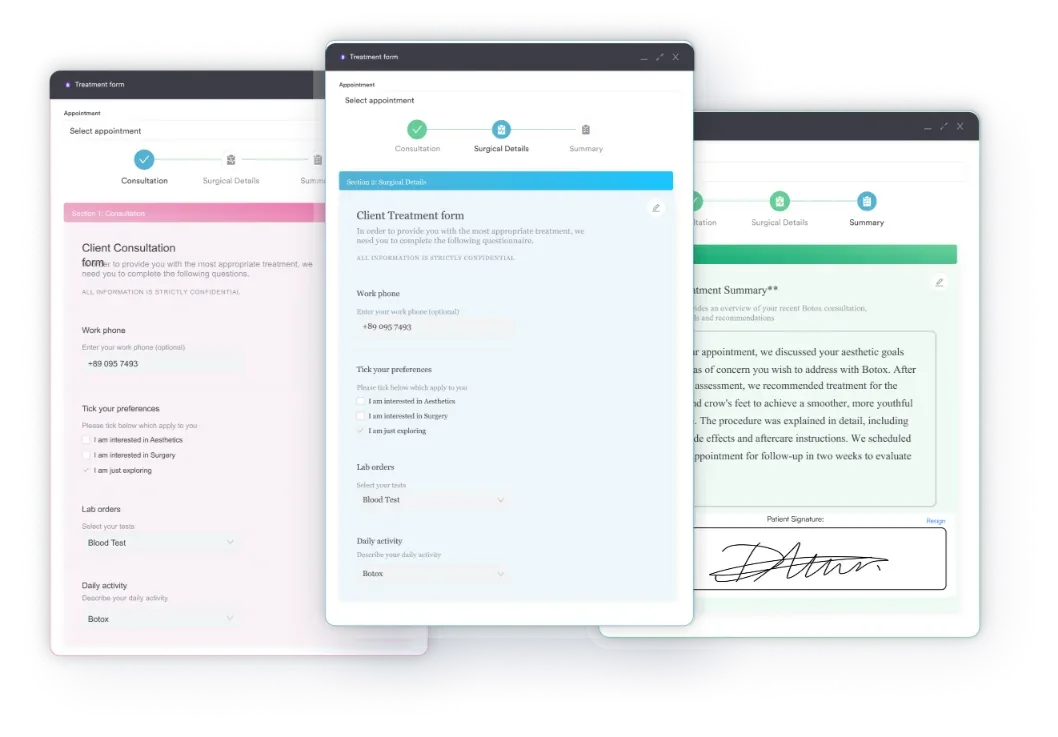
Pabau pricing starts from $104/month, scaling by location and user count. All core features are included in every plan with no per-module fees. See current tiers at pabau.com/pricing.
According to Capterra reviewers, Pabau earns 4.7/5 from 600+ verified reviews. Reviewers highlight the all-in-one nature of the platform and strong automation for reminders and follow-ups. Some note the initial setup period as a learning curve.
Clinics whose service mix leans toward aesthetics can also compare the best medical spa scheduling software before deciding.
ModMed (EMA) is an AI-powered, cloud-based platform purpose-built for medical specialties. Its podiatry module includes specialty-specific EHR templates, automated documentation workflows, revenue cycle management, and patient engagement tools within a single system, according to ModMed’s podiatry page. Its specialty modules extend well beyond feet, as our roundup of the best plastic surgery software shows.
ModMed does not publish pricing publicly. Contact their sales team for a quote specific to practice size and specialty mix.
ModMed does not have a public Capterra or G2 profile with sufficient verified reviews to cite a rating at the time of writing. Reviewer themes from research highlight specialty workflow depth as a key strength, with onboarding complexity noted as a friction point.

Scheduling, clinical notes, billing, and patient recall in one platform. No per-module fees, no stitched-together tools.

AdvancedMD is a comprehensive practice management and EHR platform that includes integrated telemedicine for podiatry scheduling, according to AdvancedMD’s podiatry page. Its RCM capabilities include clearinghouse integration, insurance eligibility verification, and denial management, making it a strong candidate for practices where billing complexity is the primary pain point.
AdvancedMD does not publish transparent pricing. Higher-tier plans and add-ons for RCM, telemedicine, and advanced reporting increase the total cost significantly. Contact their sales team for a quote.
According to Capterra, AdvancedMD holds 3.6/5. Reviewers praise the breadth of RCM functionality while flagging interface complexity and support response times as significant weaknesses.
Compulink Advantage is an AI-powered podiatry EHR and practice management platform with pre-built templates designed specifically for foot and ankle care, according to Compulink’s podiatry page. Its clinical documentation depth is among the strongest in this comparison, particularly for practices that want to reduce template configuration time.
Compulink does not publish pricing publicly. Contact their sales team for a quote based on practice size and configuration.
Compulink Advantage does not have a public Capterra or G2 profile with sufficient verified reviews to cite a rating at the time of writing. Reviewers highlight podiatry template depth and AI documentation as standout strengths.
CareCloud offers podiatry-specific EHR and practice management software with specialty-defined workflows and a cleaner interface than some older platforms in this category, according to CareCloud’s podiatry page. Its billing tools cover claims submission and charge capture, though patient engagement features are positioned as an add-on suite rather than natively embedded.
CareCloud does not publish pricing. Practices typically receive a quote based on size and the specific modules required.
According to Capterra, CareCloud holds 3.6/5. Reviewers note interface quality as a strength and billing setup complexity as a friction point.
Document your current workflow before evaluating any podiatry practice management platform. Track how long each step takes, from patient intake through claims submission. This baseline makes it easier to judge whether a new system genuinely reduces administrative time or just shifts it to different screens.
Zanda Health (formerly Power Diary) supports paperless podiatry workflows with online forms, treatment note templates, and EHR functionality within a single platform, according to Zanda’s podiatry page. It positions itself as a practice operations tool with a strong focus on going paperless and monitoring practice performance through dashboards.
Pabau’s detailed comparison with Zanda Health covers the feature differences across scheduling, billing, and clinical documentation in more depth.
Zanda Health does not publish transparent pricing publicly. Contact their team for current rates based on practice size.
Zanda Health (formerly Power Diary) does not have a sufficient public review profile with verified ratings at the time of writing. User feedback highlights ease of going paperless as a key benefit.
Carepatron is a lightweight, affordable practice management platform suited to solo or very small podiatry teams. It includes scheduling, a patient portal, and basic clinical documentation tools at a price point accessible to independent practitioners. As one of the seven options in this guide, it ranks last in clinical depth but first in accessibility.
Carepatron offers a free plan for individual practitioners. Paid plans are available at a low monthly rate. See current pricing at carepatron.com.
According to Capterra, Carepatron holds 4.5/5. Reviewers highlight ease of use and affordability, with limited podiatry-specific clinical templates noted as a constraint for specialist practices.
Running through this comparison, the right choice depends on five factors that reflect your practice’s current scale and growth trajectory.
Most podiatry practices do not suffer from a lack of software options. They suffer from choosing a platform that covers one workflow well and leaves gaps everywhere else. The right pick from this guide depends on your clinical focus, billing volume, and whether you run a single specialty or a broader multi-disciplinary clinic.
For dedicated podiatry-only practices, ModMed and Compulink Advantage offer the deepest specialty templates. For growing multi-specialty clinics that include podiatry, Pabau delivers scheduling, billing, clinical documentation, and patient recall in one platform without the module fees. To see how Pabau handles podiatry workflows in practice, book a demo with the team.

Need a patient-reported outcome measure for the knee? Knee Outcome Survey template rates knee function, pain, and symptoms across 14 items with scoring instructions.
Need a quick way to grade spasticity? Modified Ashworth Scale template carries the testing instructions and all six score definitions on one printable page.
Need a scoring form for daily living activities? Modified Barthel Index form scores 10 daily activities across five assistance levels with interpretation bands out of 100.
Podiatry practice management software is a digital platform that handles the clinical, administrative, and financial workflows of a foot and ankle practice, including appointment scheduling, SOAP note documentation, billing, insurance claims, and patient communication. It differs from general-purpose EHRs in that it may include podiatry-specific templates for common conditions, orthotics management, and wound care documentation.
Core features include customizable SOAP note templates, ICD-10 and CPT code support for podiatry diagnoses, appointment scheduling, online patient booking, insurance billing and claims management, and patient recall automation. Platforms designed for multi-specialty clinics should also support flexible template configuration so the same system works across podiatry, physical therapy, and related disciplines.
Yes. ModMed and Compulink Advantage both offer podiatry-specific EHR systems with integrated billing and RCM. Pabau includes integrated invoicing, payment processing, and financial reporting across all plans without requiring a separate billing module, making it a practical choice for practices that want clinical and financial workflows in one place.
Pricing varies significantly across platforms. Carepatron offers a free plan for sole practitioners. Pabau starts from $104/month with all core features included. ModMed, AdvancedMD, Compulink Advantage, and CareCloud do not publish pricing publicly and typically require a sales consultation, with costs generally higher and often structured around per-module or per-user fees. Where a platform does publish its tiers – the Practice Better pricing breakdown is one transparent example – comparing them side by side makes each option’s true cost easier to judge.
A podiatry EHR includes specialty-specific templates for foot and ankle conditions, orthotics documentation, wound care tracking, and relevant ICD-10 coding built in. General practice management software handles scheduling, billing, and basic clinical notes without podiatry-specific content out of the box. Multi-specialty platforms like Pabau fall between the two: they offer customizable templates that can be adapted for podiatry while also serving other disciplines.