HCPCS code E0198: Water pressure pad billing guide
HCPCS code E0198 is a water pad for a standard mattress HCPCS code E0198 is the ...

Last Updated: Oct 13, 2026
S3000 is the HCPCS Level II code for diabetic indicator; retinal eye exam, dilated, bilateral.
S3000 looks like a simple screening code until it lands on the wrong payer's desk. Send it to Medicare and the claim bounces back automatically, regardless of how well the exam was documented. That is because HCPCS code S3000 only works for a narrow slice of payers. It also requires proof in the chart that the exam was bilateral and dilated.
Get the payer, the diagnosis code, and the documentation right, and S3000 pays cleanly every time.
Let Pabau's smart automation suggest the right codes, reduce claim denials, and keep your practice compliant—effortlessly.
Automate repetitive tasks and focus on what matters most—your patients.
Reduce coding errors and ensure compliance with the latest regulations.
Clean claims, fewer denials, and faster reimbursements.
Powerful insights and reporting to help your practice thrive.
HIPAA compliant SOC 2 certified GDPR-compliant Trusted by 4,000+ clinics worldwide

HCPCS code S3000 covers a bilateral, dilated retinal eye exam for patients with diabetes, used as a diabetic indicator quality screening.
S3000 is not covered by traditional Medicare. It is billed mainly to commercial payers and Medicaid managed care plans. A few HEDIS-reporting Medicare Advantage plans and some state Medicaid FFS programs may also accept it, so verify with each payer first.
Avoid denials by documenting bilateral dilation, pairing S3000 with a qualifying diabetic ICD-10-CM code, and verifying payer acceptance before submitting.
Practice management software like Pabau centralizes claim tracking and reporting, helping billing teams catch payer mismatches such as this one before a claim goes out.
HCPCS code S3000 carries the official long description: Diabetic indicator: retinal eye exam, dilated, bilateral. Its short descriptor, the version payers see in remittance systems, is Bilat dil retinal exam.
The code sits in HCPCS Level II. That is the code set the Centers for Medicare and Medicaid Services (CMS) maintains for services that CPT does not describe well. S3000 also falls within the S-code series, classified as a Temporary National Code for non-Medicare use.
That classification tells billers two things right away. CMS assigns and maintains the code, and Medicare will not cover it.
According to the CMS HCPCS overview, S-codes are temporary national codes assigned for use by non-Medicare payers. CMS maintains and updates them annually, so confirm the code’s active status against the current code year before billing.
The bilateral, dilated retinal exam described by S3000 is a specific clinical event, not a routine eye check. A provider dilates both eyes of a patient with diabetes.
The exam checks the retina for diabetic retinopathy, macular edema, or other diabetes-related complications. That diabetes diagnosis.
Three elements must be present for the code to apply correctly.
The “diabetic indicator” language in the descriptor is not incidental. It ties S3000 directly to quality reporting frameworks, particularly the HEDIS Eye Exam for Patients with Diabetes (EED) measure. Payers accept the code as evidence that the required diabetic eye screening occurred within the measurement year. Many diabetic patients are first diagnosed at a GP practice. A solid referral loop between primary care and eye care catches more of these screenings before the measurement year closes. Out-of-network practices hand reimbursement to the patient, and the superbill format is what makes that possible.
S3000 is definitively not covered by Medicare. That is not a policy choice that varies by Medicare Administrative Contractor (MAC) region or clinical context. S-codes are structurally excluded from Medicare reimbursement, because CMS designates the whole Temporary National Codes category for non-Medicare use.
Submitting S3000 to Medicare results in an automatic denial.
The Medicare Advantage nuance is worth noting separately. Some MA plans participate in HEDIS quality reporting and track the EED measure. A subset of those plans accept S3000 as valid evidence of diabetic eye exam completion. This is plan-specific rather than a universal MA rule.
Confirm acceptance with each plan’s provider manual before billing.
If codes like these are new territory, start with what practice management software actually does for billing workflows.
No Medicare fee schedule rate exists for S3000, since Medicare does not cover the code. Reimbursement instead comes from individual commercial payer contracts and Medicaid managed care plan agreements. Rates vary by geographic region, network tier, and contract terms. The CMS Physician Fee Schedule lookup will not return a value for S3000, because it only prices Medicare-covered codes.
Practices billing S3000 should take three steps to establish their expected reimbursement.
Because no universal rate applies, the guidance throughout this article deliberately avoids citing specific dollar figures. Any rate published by a third-party lookup tool reflects a payer-reported or estimated value and may not match your contracted rate.
Verify S3000 coverage and contracted rates at the start of each plan year, not when a denial arrives. Payer fee schedules for S-codes can change with annual contract renewals. A quick pre-authorization check or provider portal query takes two minutes. A denial rework cycle takes far longer.
S3000 must be paired with an ICD-10-CM code that identifies the patient as having diabetes mellitus. That diagnosis code establishes medical necessity and tells the payer this is a diabetic indicator screening, not a routine eye visit. A non-diabetic diagnosis code will typically cause a denial, even when the procedure itself was performed correctly.
The most commonly paired codes fall within the diabetes-with-ophthalmic-complications chapter, shown in the table below. Where retinopathy has not yet been documented, E11.9 can still support the screening context. Always verify code choice against the current CMS ICD-10-CM tabular list.
Selecting the most specific code the documentation supports strengthens medical necessity and HEDIS EED attribution alike. Use a retinopathy-specific code once retinopathy has been identified, rather than the unspecified diabetes code.
If the exam turns up vision loss with no clear cause yet, H54.7 can support interim documentation. Use it until a definitive diagnosis is confirmed. Always check codes against the current fiscal year ICD-10-CM tabular list before billing.
The most common crosswalk question for S3000 involves CPT 92250, which covers fundus photography with interpretation and report.
Both codes involve imaging or examination of the retina in a diabetic context, but they differ in several clinically and administratively important ways. Knowing which code to use prevents billing errors that lead to denials or underpayment.
When a Medicare patient with diabetes receives a dilated retinal exam, CPT 92250 or another applicable CPT code is the correct billing vehicle. S3000 should never appear on a Medicare claim. For commercial or Medicaid MCO patients where S3000 is the contracted code, use S3000 rather than 92250.
The exception is when the payer’s HEDIS EED coding guide explicitly prefers the CPT code. Referencing the AAPC HCPCS code lookup can help coders confirm descriptors and crosswalk details when payer guidance is unclear.
CPT 92014 covers a comprehensive ophthalmological exam for an established patient, including refraction, extraocular movements, and a retinal evaluation. S3000 is scoped narrowly to the bilateral dilated retinal exam alone.
The two codes serve different billing purposes and should not be treated as interchangeable. See the CPT 92250 billing guide for the full crosswalk when a comprehensive exam and a screening exam overlap on the same visit.
Some payers bundle S3000 with comprehensive exam codes. When that happens, the retinal exam is considered part of 92014 and cannot be billed separately on the same date of service. Always check the payer’s bundling policy and any relevant Correct Coding Initiative (CCI) edits before submitting both codes together.
CPT 92227, 92228, and 92229 cover technology-assisted retinal imaging rather than a traditional dilated exam, and Medicare recognizes all three. They come up alongside S3000 in diabetic eye exam billing. All four codes serve the same patient population and the same HEDIS quality measure.
If an exam turns up a condition that needs treatment, such as vitreous hemorrhage, that treatment falls under a separate code.
Some practices use automated retinal imaging devices, such as non-mydriatic fundus cameras, instead of a traditional dilated exam. For those, 92227, 92228, or 92229 may be the correct code regardless of payer. S3000 applies only when the exam is a traditional bilateral dilation with direct or indirect ophthalmoscopy.
Check the payer’s HEDIS EED coding guide for the full list of codes it accepts alongside S3000.
HCPCS code S3000 plays a specific role in the Healthcare Effectiveness Data and Information Set (HEDIS) framework. NCQA, the National Committee for Quality Assurance, administers it. The relevant measure is EED, the Eye Exam for Patients with Diabetes measure. EED tracks whether patients aged 18 to 75 with diabetes received a retinal or dilated eye exam during the measurement year.
Many commercial payers and Medicaid managed care organizations use this measure to assess diabetes care quality. Practices that coordinate care across metabolic health and primary care teams tend to catch these screenings earlier.
S3000 is one of several codes NCQA accepts as evidence of EED compliance. When a payer receives an S3000 claim with a qualifying diabetic ICD-10-CM code, it can count toward the plan’s EED numerator. Accurate S3000 billing benefits more than the practice’s revenue cycle.
It also supports the health plan’s quality ratings, which can affect star ratings and incentive payments.
Commercial payers such as MVP Health Care and Johns Hopkins Health Plans publish HEDIS EED coding reference guides. These guides explicitly include S3000 as an accepted code, making them the most reliable source for verifying acceptance before billing.
NCQA’s published measure specifications focus on clinical criteria, not code acceptance at the individual plan level.

Practice management software like Pabau centralizes claim tracking, digital intake forms, and reporting, so billing teams can catch payer mismatches like this one before a claim goes out the door.

Most S3000 denials stem from three preventable errors: submitting to Medicare, missing the bilateral documentation requirement, or pairing with a non-diabetic ICD-10 code. A structured pre-submission checklist eliminates the majority of these.
That means no chart chase after the fact.
One subtle denial pattern shows up in practices seeing both Medicare and commercial diabetic patients. Staff sometimes default to S3000 across the board without checking the primary payer first. Building a payer identification step into the billing workflow before any HCPCS S-code is selected prevents this category of error entirely.
The PGM Billing HCPCS lookup tool provides a quick reference for verifying S3000 descriptors and current code status when training new billing staff.
For multi-provider eye care or diabetes practices seeing many diabetic patients each week, checking payer-specific S3000 rules at every encounter adds up fast. A practice management platform gives billing teams one place to track that work instead of relying on memory.
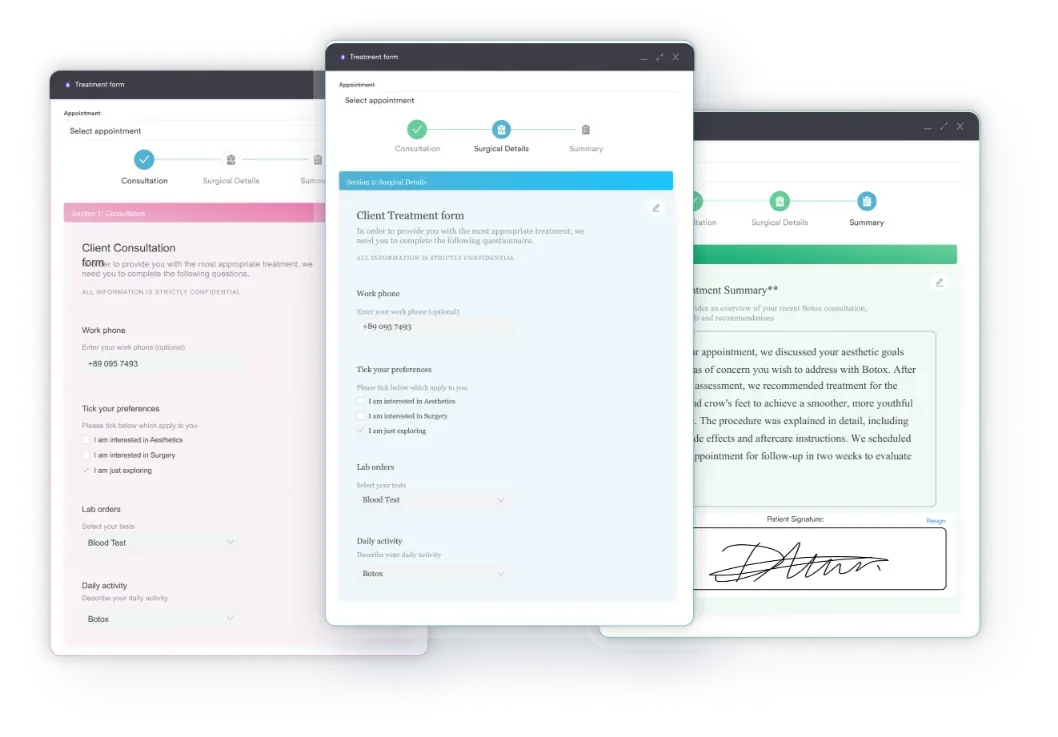
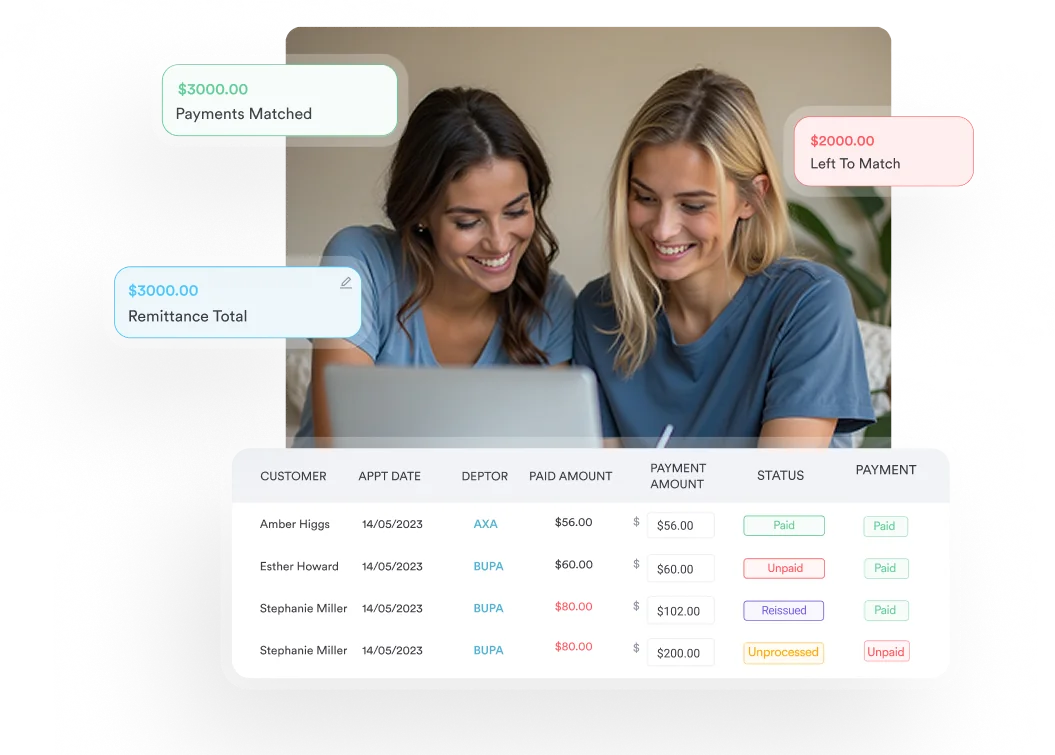
Practice management software like Pabau centralizes claims and billing, so staff are not tracking payer rules in a spreadsheet on the side. Digital intake forms can capture the patient’s diabetes diagnosis and consent at check-in, so the documentation billing needs is already on file. Centralized claim tracking makes it easier to see which claims are pending, paid, or denied across every payer at a glance.
Practices that follow a structured diabetes mellitus nursing care plan can fold this screening into the same visit instead of booking a separate one.
Automated appointment reminders help diabetic patients show up for their annual screening. That matters for both patient care and HEDIS EED attribution. Built-in reporting can also show which diabetic patients are coming due for their next exam. Front-desk staff can then schedule proactively, instead of catching a missed exam only when the quality report comes back.
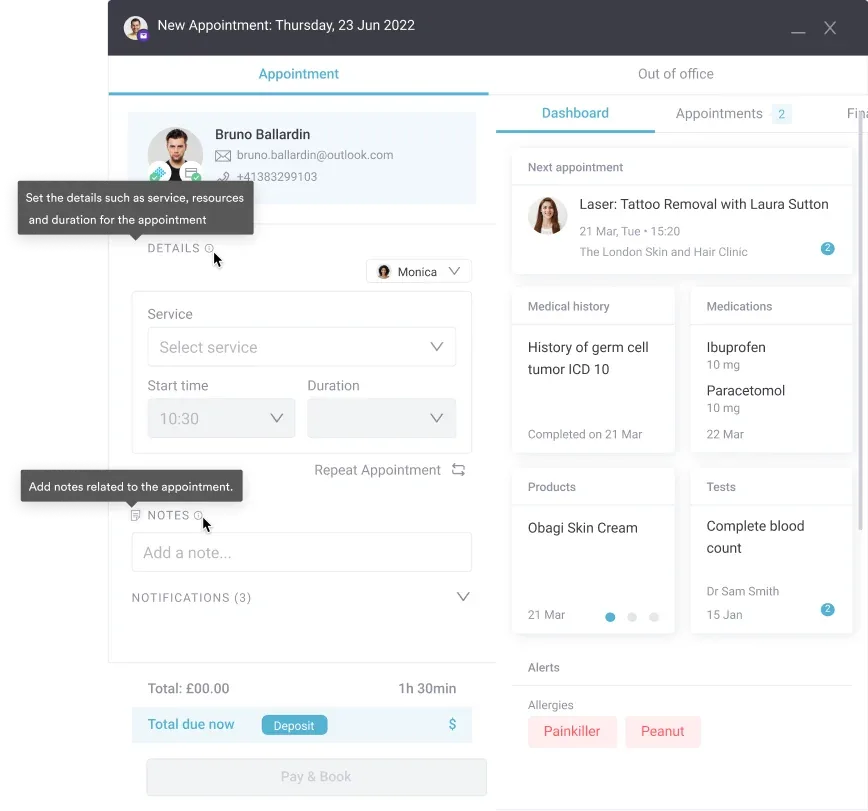
A practice management platform with these pieces in place changes how S3000 billing works. It turns a reactive, denial-by-denial fix into a routine part of every diabetic eye exam visit.
HCPCS code S3000 is a narrow-use code that rewards practices who understand its limits. Three rules matter most.
Get those three right, and S3000 becomes a reliable, claimable code for diabetic eye exams with commercial and Medicaid managed care patients.
Practice management software like Pabau centralizes claim tracking and reporting. That helps billing teams catch a payer mismatch like this one before it becomes a denial. Book a demo to see how Pabau supports accurate, multi-payer billing.

Curious about other sole-procedure billing codes? Shoulder hemiarthroplasty billing guide covers the CCSD code for shoulder hemiarthroplasty performed as a sole procedure, without concurrent procedures.
Billing a comprehensive exam instead of the S3000 screening? CPT 92002 covers the intermediate eye exam code for new patients.
Need documentation standards for elbow procedures? Radial head excision billing guide walks through the complexity classification and documentation needed for radial head excision claims.
No. S-codes are Temporary National Codes that CMS designates for non-Medicare use, so a Medicare claim with S3000 denies automatically. Bill CPT 92227, 92228, or 92229 for a Medicare diabetic eye exam instead.
Either provider type can typically perform and bill this exam, since the descriptor does not restrict it to one specialty. Confirm the performing provider’s credentialing status with the specific payer before billing.
Most payers reimburse it once a year, matching the HEDIS EED measure’s annual window. Some plans allow it once every two years if a prior dilated exam showed no retinopathy, so check the plan’s frequency limit first.
Usually not. The descriptor already specifies a bilateral exam, so adding modifier 50 or LT/RT can trigger a duplicate-billing edit. Check the payer’s coding policy if a claim denies for this reason.
S3000 is an HCPCS Level II code that only commercial and Medicaid managed care payers accept for a bilateral dilated retinal exam. CPT 92250 covers fundus photography with interpretation, and Medicare accepts it. Both can satisfy HEDIS EED, so the right code depends on the patient’s payer.
Pair S3000 with a diabetic ICD-10-CM code, such as E11.311 or E11.319 for type 2 diabetes with retinopathy, E10.311 or E10.319 for type 1, E11.9 for type 2 without complications, or an E13.xx code for other specified diabetes with ophthalmic complications. Use the most specific code the documentation supports.