CPT code 93503: Swan-Ganz catheter billing and modifiers
CPT code 93503: Official descriptor and procedure overview In the AMA CPT code s...

Last Updated: Oct 23, 2026

CPT code 11719 covers trimming of nondystrophic nails, any number, and you report it once per encounter.
Medicare treats nail trimming as hygiene unless a qualifying systemic condition, such as diabetes, makes professional care necessary.
Class finding modifiers Q7, Q8, and Q9 tell Medicare which vascular findings you documented at the visit.
Most Medicare contractors pay for covered foot care no more often than once every 60 days.
Practice management software like Pabau validates the fields insurers require and holds a claim back until they are complete.
CPT code 11719 is the billing code for trimming of nondystrophic nails, any number. Nondystrophic means the nail looks normal. It is not thickened, not fungal, not deformed by disease. One unit covers the whole encounter, however many nails you trim.
It is a small claim that fails often. Payment turns on three things: a qualifying systemic condition, a documented class finding, and a diagnosis code your contractor accepts. Miss one and the claim comes back. A separate evaluation and management visit billed the same day still needs its own documented level of complexity to get paid.
The rules are federal, but your Medicare Administrative Contractor, the MAC, decides most of the detail. That is where the variation lives, and where a clean claim is won or lost.
The code covers trimming of healthy nails, in any quantity, at a single visit. The AMA’s CPT code set places it in the surgical procedures on the nails range, 11719 to 11765.
The phrase “any number” does the heavy lifting. Trim one nail or all ten and you still report a single unit. Billing one unit per foot, or per toe, is a rejection waiting to happen.
Podiatrists file most of these claims.
One caveat on that provider list. Registered nurses are not independent Medicare Part B billing providers. Work a nurse performs is billed incident to the supervising physician.
Medicare covers 11719 when a systemic condition makes professional nail care necessary. Without one, the service is routine foot care and the program does not pay. CMS coverage article A57759 sets out both sides of that line.
Coverage follows the condition, not the nail. The record has to name a systemic diagnosis and show why self-care would be unsafe.
Diabetes drives most covered claims. That is why metabolic health practices meet this code about as often as podiatry offices do.
For several qualifying conditions, Medicare expects the patient to be under the active care of a doctor of medicine or osteopathy. That physician manages the systemic disease, and the last visit must fall within six months of the foot care. Write the physician’s name and that visit date into your note.
Most contractors pay for covered foot care no more often than every 60 days. Submit sooner and expect a frequency denial. You can still bill it, but the note has to explain why the patient could not wait.
Trimming for grooming, comfort, or convenience is not covered, and no modifier changes that. Issue an Advance Beneficiary Notice, form CMS-R-131, before you touch the nails. The ABN tells the patient what they will owe and lets you collect it. Where a payer still wants a paper claim instead of an electronic one, keep the current CMS-1500 revision on file to submit it.
Skip the ABN and you generally cannot bill the patient at all. The payer will not pay either, so the visit becomes free work.
The claim lives or dies on the diagnosis. Your MAC publishes a covered diagnosis list for routine foot care, and a code that is not on it denies automatically. That happens however good your clinical note is.
Below are the pairings you will use most. Check them against your MAC’s current Local Coverage Determination, or LCD, before you submit anything.
Sequence the systemic condition first. Add the nail diagnosis as a secondary code where the record supports it.
A diagnosis code’s last character can move an admission into a different DRG family. ICD-10 code S72.309P groups to the other musculoskeletal DRGs 564 through 566, while initial-encounter S72.309A maps to MS-DRG 533 or 534.
One habit is worth building here. Write the systemic condition into the note before you pick a code, not afterwards. Structured medical forms keep that consistent across the whole team.
A57759 is the federal baseline, but each MAC publishes its own covered diagnosis list. Novitas, CGS, and WPS do not always agree. A code that passes under A57759 can still deny in your jurisdiction, so read the LCD that applies to you.
Surgeons billing these codes often run the whole workflow inside dedicated plastic surgery software.
The Q modifier tells Medicare which vascular or neurological findings you documented. Pick it from the record, never from the payment you would prefer. A missing or mismatched Q modifier is the most common reason a clinically sound 11719 claim denies.
CMS sorts the findings into three classes, and the classes are narrower than most coders assume.
Advanced trophic changes behave differently from the two pulses. Five sub-signs feed that one finding:
Three or more of those five add up to one Class B finding. Two are not enough, and they do not count as separate findings either.
A 71-year-old with type 2 diabetes and neuropathy comes in for a nail check. The exam records an absent dorsalis pedis pulse, claudication on walking, and a cool left foot.
That is one Class B finding plus two Class C findings, so the claim carries Q9. The diagnosis is E11.40, the nails are normal, and the note names the endocrinologist who saw her in May. One unit of 11719, and it pays.
Class findings belong in the physician’s own note. A nursing note on its own will not carry the modifier through an audit.
Expect roughly $14 from Medicare at the national average, and less in low-cost localities. The code carries a small RVU total, because the work is brief and non-invasive.
Payment comes from the total RVU, adjusted by your Geographic Practice Cost Index, then multiplied by the year’s conversion factor. Check your own locality with the CMS fee schedule lookup before you quote a figure to anyone.
Treat those numbers as approximations. GPCI moves the figure up or down, so a Manhattan practice and a rural Kansas practice will not see the same payment. Commercial payers usually pay a multiple of the Medicare rate, so read your contracts rather than assuming.
11719 is one of the lowest-paying codes in the nail section, so its value comes from volume and from the visit around it. Perform a distinct evaluation on the same day, document it separately, and append modifier 25 to that E/M service. Fold the two into one vague note and you lose the E/M payment.
Look at the nail, not the number. Healthy nails go to 11719. Thickened, mycotic, or otherwise diseased nails go to the debridement codes, 11720 for one to five and 11721 for six or more.
So describe the nail every single time. “Nails trimmed” tells an auditor nothing, and it leaves the code indefensible in either direction. Upcoding and downcoding both create exposure, and your note is the only thing standing between you and a repayment demand.
Knowing the neighbors keeps you from under-billing or tripping a bundling edit. These are the codes that turn up alongside 11719 in a foot care visit.
G0127 is the one people reach for by mistake. It also trims, so only the nail’s condition separates the two codes. National Correct Coding Initiative edits bundle G0127 into 11719, which means the pair is never billable at the same visit.
Nail removal is a separate procedure. When the plate is avulsed rather than trimmed, the service becomes CPT 11730, the code for a single nail plate.
Corn and callus paring is the frequent companion. 11055 covers a single lesion and 11056 covers two to four, and either can pair with 11719 when the record supports both services.
The same integumentary chapter holds the lesion excision codes. If a foot check turns up a suspicious lesion you go on to remove, 11622 may be where you land. The AAPC code lookup is a quick way to confirm descriptor wording.
Your note has to prove the service you performed and the reason a clinician had to perform it. Auditors read for both, and a note covering only the first one fails.
CMS is blunt about one point. A simple list of class findings is not sufficient documentation. The note needs a description of the feet detailed enough to show that non-professional care would be hazardous.
Include all of the following on a covered 11719 claim:
Skin findings deserve their own line. Dry, scaly skin has its own diagnosis code.
Free text is where this usually falls apart. A structured format such as a DAP note does the same job for the narrative.

For practices running high volumes of foot care visits. The same records also carry your HIPAA compliance obligations, so build them once and build them properly.
Here is the path a covered claim takes, and the point at which each step tends to break.
Steps one and five cause most of the trouble.
Ten seconds per claim, and it catches most of what would otherwise deny.
Denials on this code repeat themselves. Five patterns account for most of them.
Claim scrubbing catches several of these before submission.
Routine foot care creates more admin than it pays. The claim is worth about $14, and behind it sits a frequency check, a modifier decision, a diagnosis lookup, and an ABN. Plenty of practices do all four across three systems and a paper folder.
Practice management software like Pabau works on the submission step itself. Its claims management software validates the fields an insurer requires, then holds the claim back until they are complete. Nothing leaves the practice half-finished.
You still choose the code and the modifier, because that judgment belongs to the clinician and the coder. What changes is everything after. A status dashboard shows each claim’s state in one place, so a rejection surfaces the same day instead of at month end.
For a practice running 40 foot care visits a week, that is the difference between chasing claims and closing them.
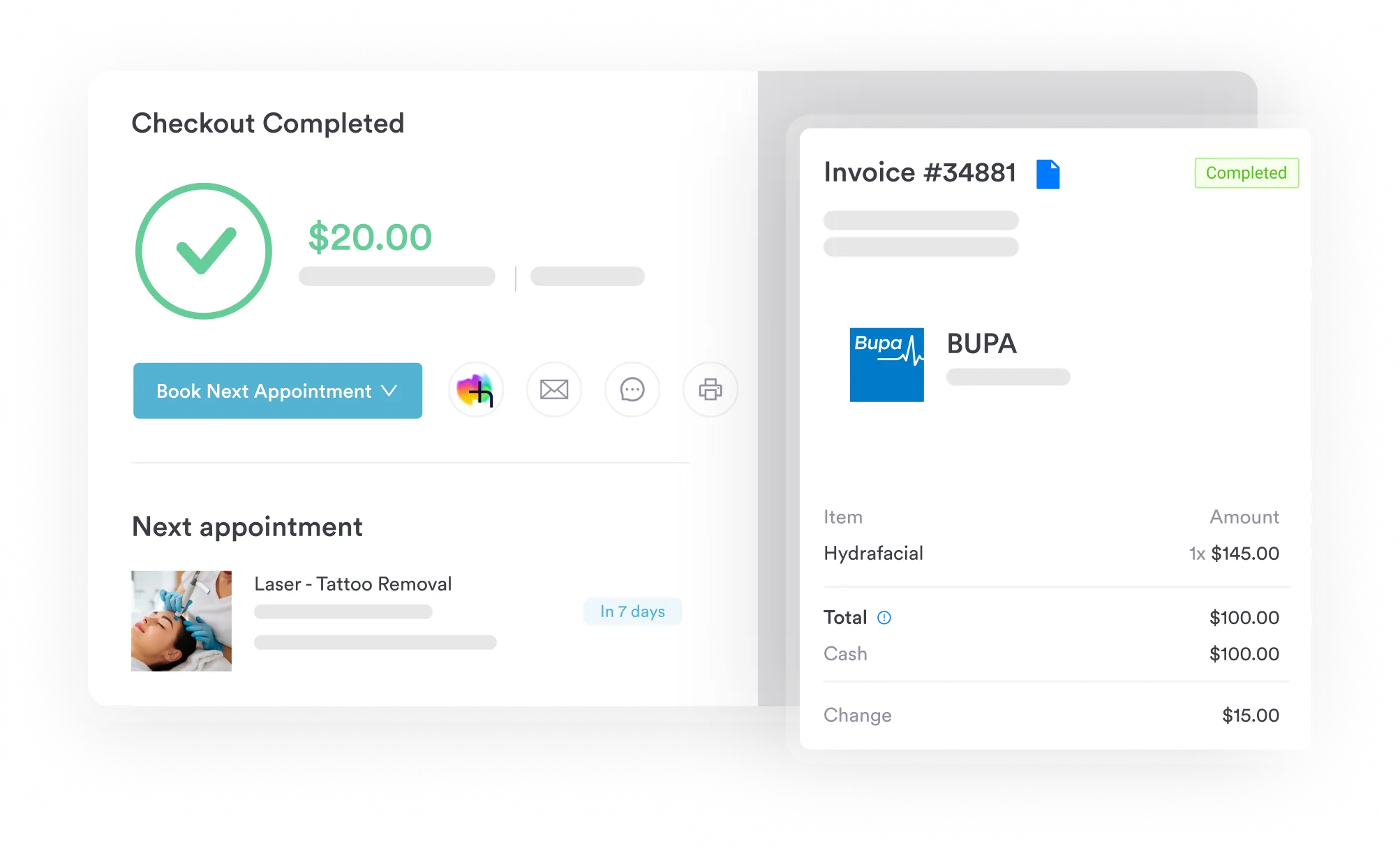

Pabau validates the fields your insurer requires, holds back an incomplete claim, and tracks every submission on one status dashboard. Fewer surprises at month end.

11719 is a small code with a long checklist. The descriptor is simple, and everything difficult about it sits in the coverage rules, the class findings, and the calendar.
So build the checks into the visit rather than the claim. When the exam note already names the systemic condition, the class findings, and the treating physician, the modifier picks itself and the diagnosis is defensible. Reconstruct all that at billing time instead and you will keep losing $14 claims to rework worth far more.
That is worth setting up once and leaving alone. Book a demo to see how Pabau validates foot care claims and tracks them through to payment.

Removing a lesion you found at the same visit? 11624 sets out the size tiers and the margin detail an excision claim needs.
Billing supplies for the same diabetic patients? A4234 explains the replacement battery rules for home glucose monitors.
Closing a small foot wound without sutures? G0168 covers when tissue adhesive on its own is billable.
Coding a benign lymph node finding? ICD-10 code D36.0 coding guide covers the benign lymph node code and why it applies only after pathology confirms a benign process.
Coding a vitamin B12 deficiency diagnosis? ICD-10-CM code D51.0 coding guide covers pernicious anemia caused by intrinsic factor deficiency and the resulting vitamin B12 absorption problem.
The descriptor says nails rather than toenails, so the code itself is not limited to the feet. Medicare’s coverage exception is written for foot care, though, so trimming fingernails is normally routine care the program will not pay for. Issue an ABN and bill the patient instead.
Nurse practitioners and physician assistants can bill 11719 under their own numbers where state law allows it. Registered nurses and medical assistants cannot, so their work is billed incident to the supervising physician. That route needs the required level of supervision and the physician’s own record of the class findings.
No. Coverage turns on a systemic condition, not on whether the patient can reach their own feet. Arthritis, obesity, or poor eyesight on their own will not make the trim payable. You can still perform it, issue an ABN, and bill the patient directly.
Medicare Advantage plans must cover what Original Medicare covers, so the class finding logic still applies. They can add rules on top, including prior authorization and tighter frequency limits. Check the plan’s foot care policy before the visit rather than after the denial.