










Key takeaways
HCPCS Code G0008 covers the administration of an influenza virus vaccine under Medicare Part B, not the vaccine product itself.
Submit G0008 on the same claim as an eligible vaccine product code such as 90658, 90686, or 90656. Submitting it alone is the most common denial cause.
ICD-10 Z23 is the required primary diagnosis code, and no patient deductible or coinsurance applies under Medicare Part B.
The 2026 national Medicare payment rate for G0008 is $34.62 per administration, before any locality adjustment.
Pabau’s claims management software pairs administration and product codes automatically, so fewer G0008 claims are denied after submission.
HCPCS Code G0008 covers the administration of an influenza virus vaccine to a Medicare Part B beneficiary. It pays for giving the shot, not for the vaccine itself. The vaccine product always needs its own code on the same claim.
The 2026 national payment rate is $34.62 per administration, and the patient owes no deductible or coinsurance. This guide covers the paired product codes, the required diagnosis code, place of service rules, and the errors behind most G0008 denials.
HCPCS Code G0008: definition and clinical use
Official description: HCPCS Code G0008 covers the administration of an influenza virus vaccine. The code captures the act of administering the vaccine, not the vaccine product itself. Both must appear on the same Medicare Part B claim.
According to the Centers for Medicare and Medicaid Services (CMS), G0008 is a HCPCS Level II code in the G-code range. That range covers Medicare-specific services with no CPT equivalent. G0008 applies only to Medicare Part B beneficiaries and cannot be used on commercial claims.
- Code type: HCPCS Level II (G-code)
- Payer: Medicare Part B only
- Service covered: Administration of influenza virus vaccine
- What is not covered: The vaccine product itself, which is billed separately
- Assignment: Provider must accept Medicare assignment
- Cost-sharing: No patient deductible or coinsurance
G0008 vs CPT 90471: key differences
G0008 and CPT 90471 are not interchangeable for influenza vaccine administration. Using 90471 on a Medicare Part B flu shot claim results in a denial.
Practices billing both Medicare and commercial payers have to hold two sets of code rules at once. That is where errors multiply, because a coder working mostly commercial claims reaches for 90471 out of habit. A workflow gate that confirms payer type before code selection prevents it.
2026 Medicare reimbursement rate for G0008
The 2026 national Medicare payment rate for G0008 is $34.62 per administration. CMS publishes that amount in its vaccine pricing update for claims dated January 1 through December 31, 2026. Your Medicare Administrative Contractor (MAC) republishes the same figure with locality adjustments, so check the Physician Fee Schedule before billing.
Three reimbursement rules apply regardless of locality:
- No patient deductible applies. Medicare Part B waives the annual Part B deductible for influenza vaccine administration.
- No coinsurance applies. The standard 20% patient coinsurance is not collected for this service.
- Providers must accept assignment. Billing the beneficiary above the Medicare-approved amount is prohibited.
Pro Tip
Before flu season starts, pull your MAC’s locality-specific G0008 rate from the CMS Physician Fee Schedule. Then confirm your practice management system reflects the updated amount. A discrepancy caught in July prevents revenue leakage across hundreds of administrations in October and November.
Comparing the best EHRs for primary care matters here, since G-code services live or die on documentation quality.
Vaccine product codes that pair with G0008
G0008 must appear on the same claim as the vaccine product code. The product code identifies which influenza vaccine was administered. CMS publishes an annual influenza vaccine policy article listing every eligible product code, and that list changes as new formulations are approved.
Verify the current-year list before each flu season. A product code dropped from the Medicare-approved list will be denied even when G0008 itself is correct. The same pairing discipline applies to other preventive services.
Practices serving mostly older patients. Check which formulations your ordering pattern actually covers before the season starts.
Diagnosis codes required when billing G0008
ICD-10-CM code Z23 (encounter for immunization) is the required primary diagnosis code on G0008 claims. MAC guidance consistently identifies Z23 as the correct pairing. Submitting no diagnosis code, or an influenza illness code instead, results in a denial.
Secondary diagnosis codes can be appropriate in specific clinical contexts, such as a high-risk condition that influenced the vaccination decision. They supplement Z23 rather than replace it. The Z-code category covers encounters for preventive services where no illness is being treated, which is exactly a routine flu shot visit.
Medicare billing guidelines for G0008
CMS and MAC contractors publish detailed billing instructions for G0008. The rules below reflect guidance from Palmetto GBA and CGS Medicare, two of the largest MAC jurisdictions. Check your own MAC for jurisdiction-specific variations.
- Same-claim submission: G0008 and the vaccine product code must appear on the same claim. Separate claims for the administration and the product get one or both denied.
- Mandatory assignment: Providers must accept Medicare assignment for this service. Billing the patient above the Medicare-approved amount violates assignment rules.
- No cost-sharing collection: Do not collect a deductible or coinsurance from the beneficiary. Doing so is a compliance violation.
- Same-day E/M visit: G0008 may be billed on the same day as an evaluation and management (E/M) visit when the E/M is separately identifiable. Confirm current NCCI edit status before billing both on one date of service.
- Claim form: Submit on the CMS-1500 form, or its electronic equivalent 837P, with the correct place of service code.
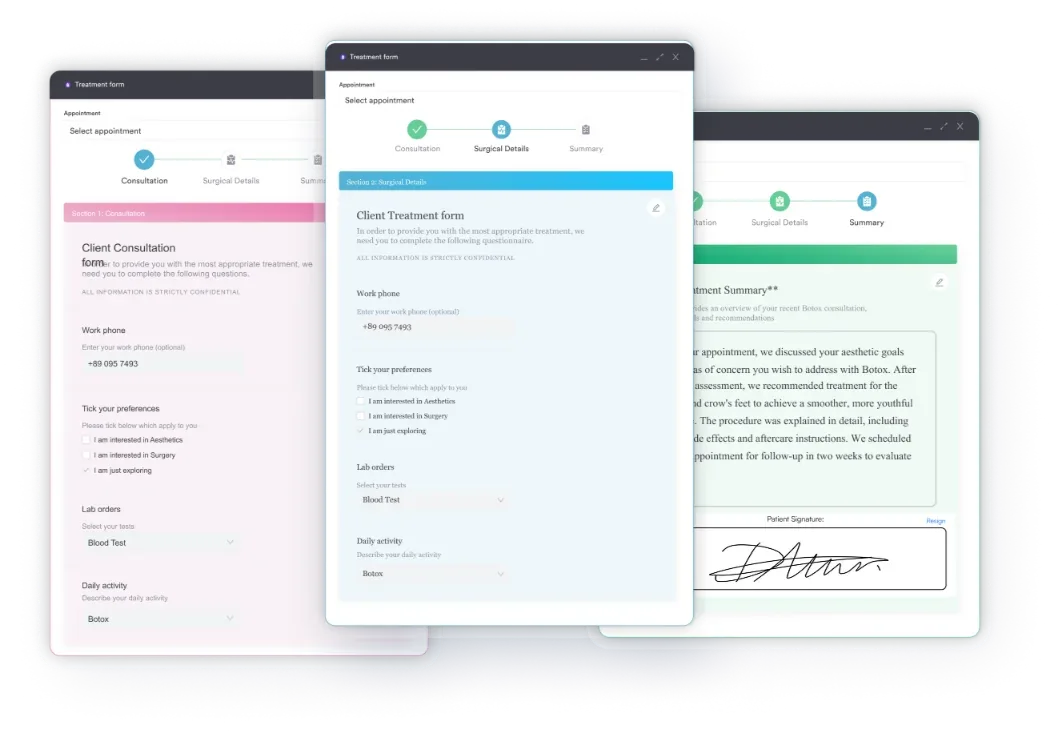
Digital intake and digital forms remove the paper trail that creates audit exposure.
Place of service codes
The place of service (POS) code must reflect where the vaccine was administered. An incorrect POS code is a common source of claim processing delays.
Common billing errors with G0008
MAC audit data and AAPC coding guidance highlight the same G0008 error patterns year after year. Each one is preventable.
- Missing vaccine product code: Submitting G0008 without a paired product code on the same claim. This is the most frequent denial cause.
- Using CPT 90471 instead of G0008: CPT 90471 is for commercial payers. Medicare Part B requires G0008.
- Wrong or missing diagnosis code: Omitting Z23, or substituting an influenza illness code such as J10 or J11 for a preventive encounter.
- Collecting patient cost-sharing: Collecting a deductible or coinsurance for this service violates CMS policy and can trigger a compliance review.
- Incorrect POS code: Billing POS 11 when the vaccine was given at a nursing facility or a pharmacy.
- Out-of-date product code: Using a product code no longer on the current CMS influenza vaccine list. CMS updates that list annually.
Related vaccine administration codes: G0009 and G0010
G0008 sits in a three-code family covering Medicare Part B preventive vaccine administration. Practices offering several vaccine types.
All three share the same cost-sharing waiver and mandatory assignment rules. Each needs a paired vaccine product code on the same claim. The only difference is the vaccine type, which is why the hepatitis B guidance under G0010 reads almost identically.
How practice management software streamlines flu vaccine billing
Flu season compresses hundreds of vaccine administrations into six to eight weeks. Manual code entry at that volume creates denial patterns that take months to unwind. Practice management software like Pabau closes those paths off with built-in claims management, so every claim is checked before it leaves your building.
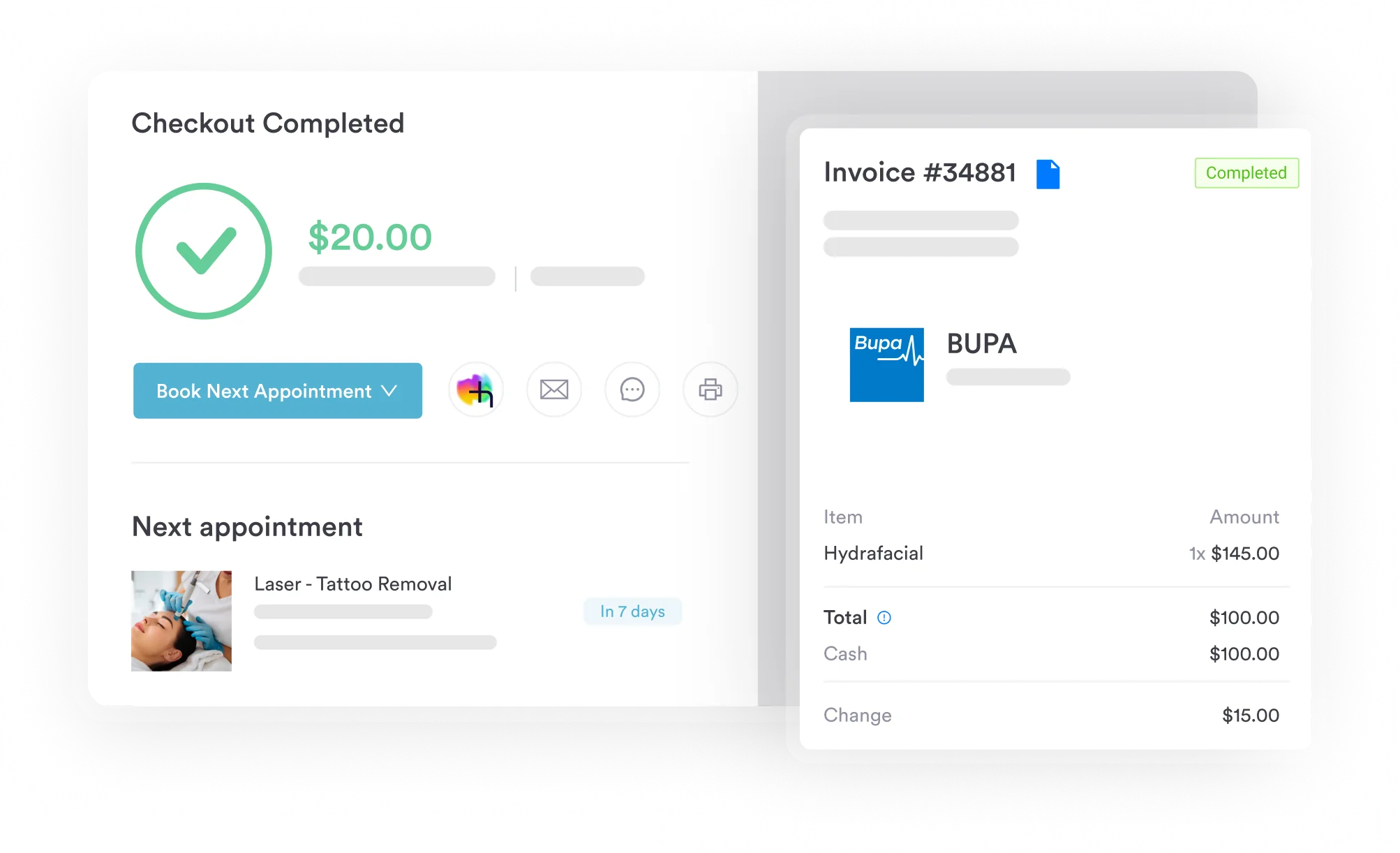
- Automatic code pairing: The system links G0008 to the product code documented in the patient record before the claim is assembled.
- Diagnosis code validation: Claim scrubbing flags anything missing Z23 or carrying an incompatible diagnosis code.
- Payer routing: Medicare Part B claims route to G0008 and commercial claims route to CPT 90471, with no manual selection.
- POS code capture: The practice location or off-site event setting pre-populates the POS code from the appointment record.
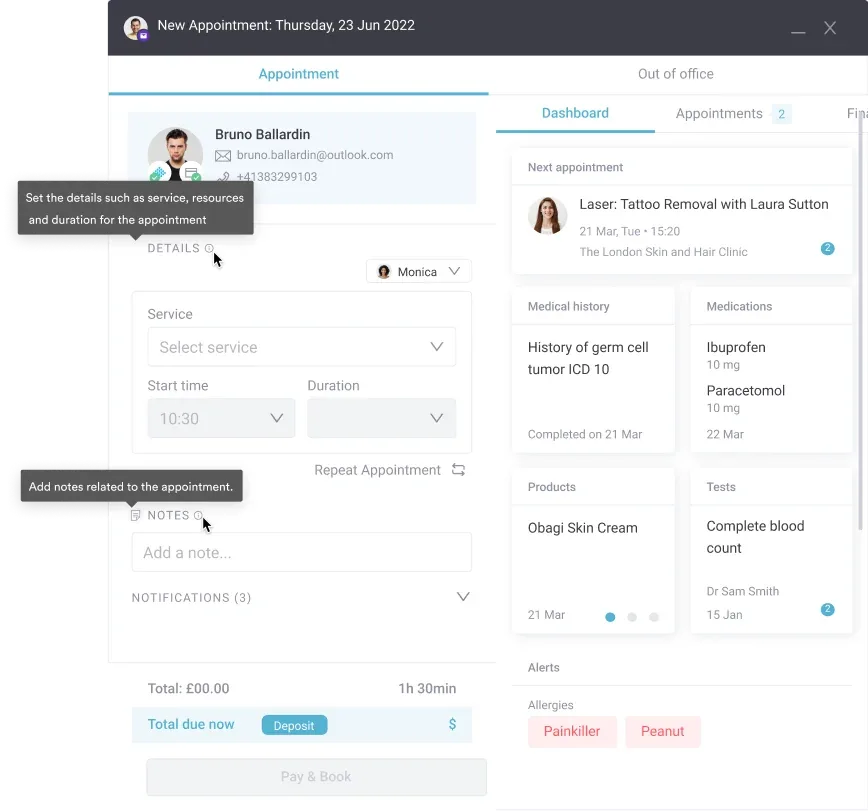
Pabau’s vaccination management tools log lot numbers, injection sites, and administering staff against the appointment. That record supports the code you billed when a MAC asks for documentation. It also keeps immunization histories in one place from one season to the next.
Pabau’s automated workflows run claim scrubbing before submission rather than after a denial. The medical forms layer captures the clinical documentation that supports correct coding at the point of care.
Pro Tip
Audit your G0008 denial rate at the close of each flu season. If more than 2% of G0008 claims are denied, categorize the reason codes. Missing product code and wrong diagnosis account for over 80% of denials in most practices. Fixing those two error types with workflow automation pays for itself within one flu season.
Related HCPCS codes
- HCPCS code G0155 — Clinical Social Worker Home Health Billing
- HCPCS G0101 — Medicare billing for pelvic and breast exams
- HCPCS Code G0103 — Prostate cancer screening PSA

Stop losing flu season revenue to G0008 denials
Pabau’s claims management software pairs vaccine administration codes with product codes automatically and flags a missing diagnosis code before submission. See how it handles your flu season volume.

Conclusion
G0008 is a simple code with an unforgiving claim structure. Almost every denial traces back to the pairing rules rather than to a hard coding judgment. Fix the pairing in the system and the denial rate falls on its own.
The work worth doing before October is checking your locality rate and your product code list against the current CMS figures. Everything after that is a workflow decision you only have to make once.
Book a demo to see how Pabau pairs vaccine codes, validates Z23, and routes Medicare claims automatically through flu season.

Continue your research
Billing another Medicare G-code? G0168 covers wound closure by tissue adhesive and follows the same Part B claim structure.
Pairing a drug with its administration code? J0190 shows how a product code and an administration code sit together on one claim.
Coding supplies used during a visit? A4234 walks through supply-code billing and the documentation that has to support it.
Billing other Medicare preventive services? G0104 covers screening flexible sigmoidoscopy, another service with waived patient cost-sharing.
Need the prostate screening equivalent? G0103 covers the screening PSA test and the Medicare frequency limits that apply to it.
Frequently asked questions
What is HCPCS Code G0008 used for?
HCPCS Code G0008 is the Medicare Part B code for administering an influenza virus vaccine. It covers the administration service only. The vaccine product is billed separately with an eligible product code, such as 90658, 90686, or 90656, on the same claim.
What is the difference between G0008 and CPT 90471?
G0008 is a HCPCS Level II code used only for Medicare Part B influenza vaccine administration. CPT 90471 is the immunization administration code for commercial payers. Using 90471 on a Medicare Part B claim results in a denial, so the two are not interchangeable.
How much does Medicare pay for G0008 in 2026?
The 2026 national Medicare payment rate for G0008 is $34.62 per administration. Your MAC applies a locality adjustment, so the amount you actually receive can differ from the national figure.
What diagnosis code is used with G0008?
ICD-10-CM Z23, encounter for immunization, is the required primary diagnosis code for G0008. Secondary codes reflecting a high-risk condition can be added, but they never replace Z23 as the primary.
Does Medicare reimburse G0008 without patient cost-sharing?
Yes. Medicare Part B waives both the annual deductible and the 20% coinsurance for influenza vaccine administration under G0008. Providers must accept assignment and cannot bill the beneficiary for any cost-sharing amount.
What are the most common billing errors with G0008?
The two most frequent denial causes are submitting G0008 without a paired vaccine product code, and using CPT 90471 on a Medicare claim. Other errors include omitting Z23, collecting patient cost-sharing, and using a product code that CMS has dropped.
Can G0008 be billed on the same day as an E/M visit?
G0008 may be billed on the same date as an evaluation and management visit when the E/M is separately identifiable. Verify current National Correct Coding Initiative (NCCI) edit status with your MAC first, because bundling edits change annually.