

CCSD code G5100: Bypass of duodenum billing guide
CCSD code G5100 bills a bypass that leaves the duodenum in place CCSD code G5100...

Last Updated: Oct 16, 2026
G0104 is the HCPCS Level II code for colorectal cancer screening; flexible sigmoidoscopy.
Let Pabau's smart automation suggest the right codes, reduce claim denials, and keep your practice compliant—effortlessly.
Automate repetitive tasks and focus on what matters most—your patients.
Reduce coding errors and ensure compliance with the latest regulations.
Clean claims, fewer denials, and faster reimbursements.
Powerful insights and reporting to help your practice thrive.
HIPAA compliant SOC 2 certified GDPR-compliant Trusted by 4,000+ clinics worldwide

HCPCS code G0104 reports colorectal cancer screening by flexible sigmoidoscopy for average-risk Medicare Part B beneficiaries aged 45 and older.
Medicare covers G0104 once every 48 months with no patient cost-sharing when billed correctly as a preventive service.
Screening-to-diagnostic conversion is a high-error area: If polyps or lesions are found and the procedure becomes diagnostic, cost-sharing rules change and modifier selection must reflect that shift.
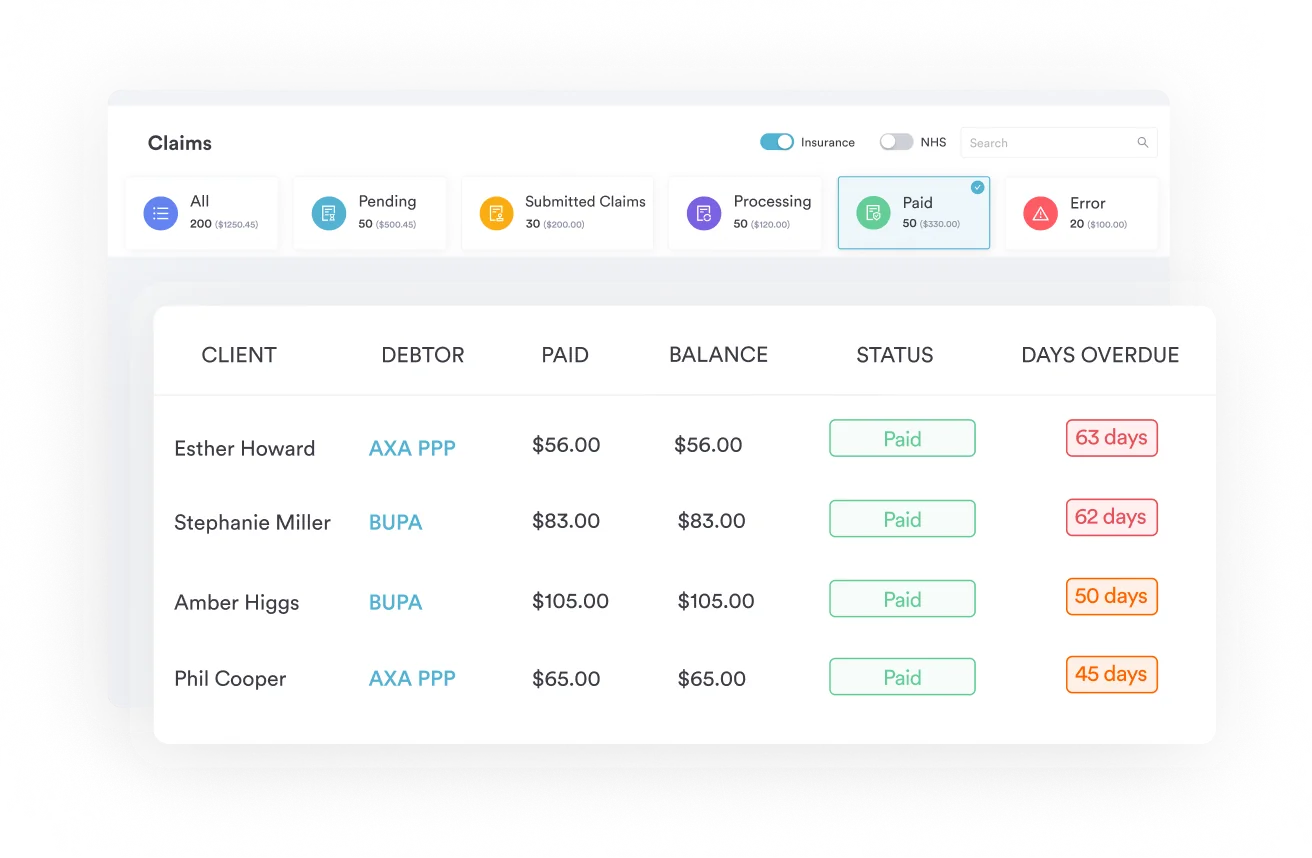
Pabau’s claims management software supports billing workflows including frequency tracking, ICD-10 pairing, and modifier logic for preventive service codes like G0104.
Claims management software that handles preventive service codes needs to start from the correct source definition. According to the Centers for Medicare and Medicaid Services (CMS), HCPCS code G0104 carries the official descriptor: “Colorectal cancer screening; flexible sigmoidoscopy.” Practices billing in Australia check the current MBS descriptor before submitting, since descriptors are revised on a schedule.
G0104 is a Level II HCPCS G-code, maintained by CMS rather than the American Medical Association. G-codes cover services not described in the CPT code set, primarily Medicare-specific preventive and diagnostic services. This code is exclusive to Medicare Part B and cannot be used for commercial payer claims.
Medicare Part B covers flexible sigmoidoscopy for colorectal cancer screening under National Coverage Determination (NCD) 210.3. Coverage applies when the following eligibility conditions are all met:
When these criteria are satisfied and HCPCS code G0104 is filed with a correct ICD-10 diagnosis code, the service is covered as a Medicare preventive benefit. The patient pays no deductible or coinsurance.
That no-cost-sharing status disappears if the procedure converts from screening to diagnostic during the encounter. Billers must track the conversion carefully, because the modifier and cost-sharing rules change on the same claim.
Primary care practices and longevity-focused practices serving large Medicare-aged panels see this benefit most often, since G0104 is one of the few procedures billed with zero patient cost-sharing when the paperwork is correct.
Reviewing the Medicare compliance checklist for primary care before submitting G0104 claims can help practices confirm eligibility verification steps are built into the workflow, not left to individual staff memory.
Medicare reimburses HCPCS code G0104 once every 48 months for average-risk beneficiaries. Claims submitted before the 48-month window has elapsed are denied on frequency grounds. The table below shows how G0104 frequency compares with related colorectal screening codes.
Medicare reimburses G0104 under the Physician Fee Schedule (PFS), with rates varying based on place of service. Facility rates apply when the procedure is performed in a hospital outpatient department (HOPD) or ambulatory surgical center (ASC). Non-facility rates apply to office-based settings. Geographic adjustments through local GAF (Geographic Adjustment Factor) multipliers mean final payment varies by MAC jurisdiction.
Use the CMS Physician Fee Schedule lookup tool to retrieve the current national and locality-adjusted rates for G0104 in your jurisdiction. The table below reflects approximate 2025-2026 national rates. Always confirm current figures directly with CMS before submitting claims.
Facility rates are lower because the facility receives a separate payment directly from Medicare. Non-facility rates are higher to compensate the practice for overhead costs. Submitting a facility POS code when the procedure was performed in an office setting (or vice versa) is one of the leading causes of underpayment and claim adjustment requests on G0104 claims.
Run an eligibility verification check at least 48 hours before the procedure. Confirm the patient’s last sigmoidoscopy date in their Medicare history. A frequency denial on G0104 cannot be billed to the patient as a preventive service denial, so the revenue is simply lost.
Every G0104 claim requires a valid ICD-10-CM diagnosis code to establish medical necessity for the screening. The two most commonly paired codes are Z12.11 (encounter for screening for malignant neoplasm of colon) and Z12.19 (encounter for screening for other malignant neoplasms of digestive organs). According to multiple AAPC coding resources, these are the standard pairings for average-risk colorectal cancer screening.
Note that specific ICD-10 code requirements may vary by MAC LCD. Always verify the required pairing against your jurisdiction’s current LCD before submitting. The table below lists the primary diagnosis codes and the clinical contexts in which each applies.
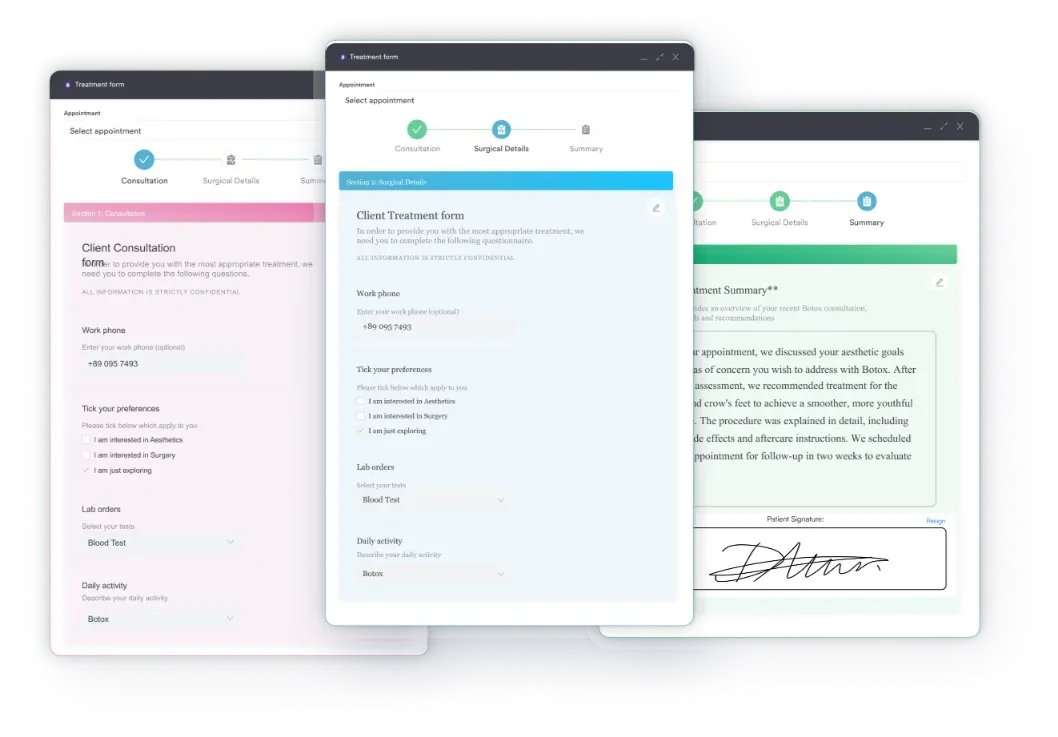
When polyps or lesions are found and removed during the encounter, additional ICD-10 codes reflecting those findings may be required alongside the screening code. A clean pre-procedure workflow with digital intake and documentation forms can capture the patient’s risk factors and prior screening history before the procedure, reducing the chance of a wrong diagnosis code pairing at claim submission.
Modifier selection for G0104 is one of the most error-prone parts of the billing workflow. Three modifiers are regularly encountered, each serving a distinct purpose. Applying the wrong one, or omitting a required one, is a direct path to denial.
The PT modifier is specifically designed for the screening-to-diagnostic conversion scenario and is where most modifier-related denials occur. When a polyp is found and biopsied or removed during a sigmoidoscopy that began as a G0104 screening, the claim should reflect the conversion. Verify current CMS and MAC guidance before asserting universal modifier applicability, as payer-specific rules can vary.
Consistent claim approval on G0104 comes from a repeatable pre-claim workflow. These steps incorporate HIPAA-compliant documentation practices to keep billing aligned with CMS requirements.
The medical record must support every element of the G0104 claim. Using medical forms for healthcare practices that prompt providers to capture the required fields at the point of care reduces missing fields in post-procedure documentation. Required documentation includes:
Maintaining structured clinical documentation also supports clinical compliance documentation requirements across the practice, particularly when claims are selected for post-payment audit by a MAC or the OIG.

Pabau’s claims management software helps gastroenterology and primary care practices track frequency rules, match ICD-10 pairings, and apply correct modifiers for preventive service codes like G0104. Book a demo to see how it works in practice.

Most G0104 denials are preventable. The billing errors behind them repeat across practices precisely because they are not caught in the pre-submission workflow. Good patient data security in billing workflows also ensures that verification steps are logged and traceable, which matters during payer audits.
G0104 is one code in a broader family of colorectal cancer screening codes. Using the right code depends on procedure type, patient risk level, and whether the screening converts to a diagnostic.
Use the PGM Billing HCPCS lookup tool or the CrossCoder code crosswalk tool to verify current code status and ICD-10 pairings for each of these codes before submitting claims.
CPT code 45330 and 45378 cover diagnostic sigmoidoscopy and colonoscopy rather than screening. When a G0104 screening converts to a diagnostic procedure, the claim typically transitions to the appropriate CPT code with Modifier PT appended to signal the screening origin. The distinction affects patient cost-sharing and reimbursement rates.
Manual frequency tracking, ICD-10 pairing, and modifier selection for preventive service codes like G0104 create the conditions for the exact errors that generate denials.
Pabau’s claims management software supports gastroenterology (GI) and primary care billing teams with structured claim workflows. For practices managing G0104 volume, the key workflow benefits include:
Practices running high volumes of Medicare preventive service claims benefit most from these automations. A frequency denial on G0104 cannot be passed to the patient, so every prevented denial is direct revenue recovery.
Audit your G0104 claims quarterly: Pull all submitted claims, cross-reference the ICD-10 codes used, and check which claims used Modifier PT for converted procedures. Patterns in denial reasons reveal recurring billing mistakes that a workflow fix can close permanently.
G0104 denials are almost always preventable. The 48-month frequency rule, the Z12.11 ICD-10 pairing, and the Modifier 33 / PT distinction account for the vast majority of claim rejections on this code. Getting those three elements right on every claim is the baseline.
Pabau’s digital forms and structured billing workflows help GI and primary care practices build those rules into the process itself, so the right code, the right modifier, and the right diagnosis pairing are defaults rather than decisions.
To see how the claims workflow handles HCPCS code G0104 and other preventive service codes in practice, book a demo with the Pabau team.

Still billing a deleted CPT code? CPT code 19304 is deleted, so this guide covers the replacement code and modifiers to use.
Billing DMEPOS or other Medicare-only G-codes? A4720 walks through the descriptor, modifiers, and MAC requirements for a similar Medicare-specific code.
Coding nursing facility visits? 99307 explains the medical decision making thresholds that separate this E/M tier from higher-complexity visits.
HCPCS code G0104 is a Level II Medicare G-code used to report colorectal cancer screening by flexible sigmoidoscopy for average-risk Medicare Part B beneficiaries. It is maintained by CMS and applies exclusively to Medicare preventive screening claims, not commercial payer claims.
G0104 covers flexible sigmoidoscopy for average-risk Medicare beneficiaries, with a 48-month coverage frequency. G0105 covers colonoscopy for high-risk beneficiaries (those with personal history of colorectal cancer, adenomatous polyps, or inflammatory bowel disease) and is covered every 24 months. Patient risk classification must be documented before selecting between the two codes.
Z12.11 (encounter for screening for malignant neoplasm of colon) is the primary ICD-10-CM code paired with G0104 for average-risk colorectal cancer screening. Z12.19 may apply in specific circumstances. Always verify required diagnosis codes against the current LCD for your MAC jurisdiction, as requirements can vary by region.
Medicare covers HCPCS code G0104 once every 48 months for average-risk beneficiaries aged 45 and older. Claims submitted before the 48-month interval is satisfied will be denied with reason code CO-119. This denial cannot be billed to the patient as a covered preventive service, so frequency verification before scheduling is essential.
Yes, when billed correctly as a Medicare preventive service with Modifier 33 and a screening ICD-10 code (Z12.11), G0104 carries no patient deductible or coinsurance. However, if the procedure converts from screening to diagnostic during the encounter (for example, because a polyp is found and removed), cost-sharing rules change and the PT modifier must be applied to reflect that conversion.
The most common G0104 denial reasons are: Frequency exceeded (prior claim within 48 months), wrong or missing ICD-10 diagnosis code (symptom code used instead of screening code), incorrect modifier (missing Modifier 33 or failure to apply PT on converted procedures), and wrong place of service code. Most are preventable with a structured pre-submission verification workflow.



