CPT code 93503: Swan-Ganz catheter billing and modifiers
CPT code 93503: Official descriptor and procedure overview In the AMA CPT code s...

Last Updated: Oct 23, 2026
J0190 is the HCPCS Level II code for injection, biperiden lactate, per 5 mg. CMS terminated it with effect from 31 December 2025, so it is no longer valid for claims after that date.
J0190 has no connection to buprenorphine or to opioid use disorder treatment. That descriptor belongs to a different code, J0592.
Let Pabau's smart automation suggest the right codes, reduce claim denials, and keep your practice compliant—effortlessly.
Automate repetitive tasks and focus on what matters most—your patients.
Reduce coding errors and ensure compliance with the latest regulations.
Clean claims, fewer denials, and faster reimbursements.
Powerful insights and reporting to help your practice thrive.
HIPAA compliant SOC 2 certified GDPR-compliant Trusted by 4,000+ clinics worldwide

HCPCS code J0190 described injection, biperiden lactate, per 5 mg, an anticholinergic sold in the US as Akineton. It never described buprenorphine.
CMS deleted J0190 effective December 31, 2025, and the discontinue action took effect January 1, 2026. No successor J-code was created for it.
No biperiden injection is marketed in the US today. Practices treating drug-induced extrapyramidal symptoms bill J0515 for benztropine or J1200 for diphenhydramine instead.
J0190 remains correct on claims for dates of service through December 31, 2025, and Medicare’s one-year filing window keeps those claims open into 2026.
Practice management software like Pabau flags a retired HCPCS code before the claim leaves your practice, so a deleted J-code never reaches the payer.
J0190 was a HCPCS Level II J-code maintained by the Centers for Medicare and Medicaid Services, known as CMS. J-codes cover drugs administered by a route other than oral. One unit of J0190 equaled 5 mg of biperiden lactate.
The descriptor was unusually stable. CMS added the code on January 1, 1982, and the wording never changed across more than four decades of annual updates. Archived HCPCS year-files from 2007 through 2013 carry the same text as the code’s final year.
Biperiden lactate was sold in the US as Akineton, originally by Knoll and later by Abbott. The injectable form came as a 1 mL ampule containing 5 mg of biperiden lactate. That single ampule matched one billing unit of J0190 exactly.
J0190 is not a valid 2026 code. CMS terminated it on December 31, 2025, and the discontinue action took effect on January 1, 2026. AAPC and other code references now list it under deleted codes for the 2026 code year.
The deletion tracked the drug’s availability. Akineton injection and its generics were withdrawn from the US market. No manufacturer reported an average sales price, and no NDC crosswalked to the code. CMS retires J-codes that no longer describe an available product.
Deletion does not make the code retroactively wrong. J0190 stays correct on any claim with a date of service through December 31, 2025. Medicare allows one calendar year from the date of service to file, so 2025 encounters can still be billed or corrected with J0190 during 2026. Medicare claim submission runs through several channels, each carrying its own compliance rules beyond this one-year filing window.
Watch the date-of-service edit rather than the submission date. A claim submitted in March 2026 for a December 2025 injection is valid. The same code on a January 2026 encounter will reject at the front end, before any human reviews it.
Don’t delete J0190 from your charge master on January 1. Deactivate it for new dates of service and keep it selectable for 2025 encounters until the timely filing window closes. Teams that purge retired codes immediately lose the ability to rebill a denied 2025 claim without a manual workaround.
Biperiden treats drug-induced extrapyramidal symptoms. These are the movement disorders that antipsychotic medication can cause, including acute dystonia, parkinsonism, akathisia, and dyskinesia. The injectable form existed for acute episodes, where a patient needs relief within minutes rather than hours.
The drug works as an anticholinergic. It blocks central muscarinic receptors and restores the dopamine-to-acetylcholine balance that antipsychotics disturb. Oral biperiden also had a role in idiopathic Parkinson’s disease, though newer agents largely displaced it.
Labeled dosing for acute extrapyramidal symptoms was 2.5 mg to 5 mg as a single injection, given intramuscularly or by slow intravenous push. The dose could be repeated after 30 minutes if symptoms persisted. This context matters for billing because a single dose rarely used a full 5 mg unit.
The settings that used it were inpatient psychiatry, emergency departments, and community mental health programs. Those programs bill mostly H-codes.
Outpatient mental health practices saw it far less often. That is part of why the code is unfamiliar to most outpatient billers.
An EMR built for IV therapy records the infusion, the units administered, and the J-code in one entry.
There is no direct replacement code. Unlike S0189, which CMS replaced with J1073, J0190 was deleted without a successor. CMS split J2001, the deleted intravenous lidocaine code, into three per-milligram replacements. Check a deleted code for a successor before you bill an unclassified drug. The correct 2026 code depends on which drug you actually administered.
For acute drug-induced extrapyramidal symptoms, benztropine mesylate injection is the usual US substitute. Injectable diphenhydramine. Both codes are active for 2026.
Switching from J0190 to J0515 changes more than the five digits on the claim. Benztropine is unit-priced per milligram, so a 2 mg dose becomes 2 units. It also sits on the CMS single-dose container list, which brings the JW and JZ wastage modifiers into a workflow that never needed them before.
Avoid reaching for J3490 by habit. Payers review unclassified drug claims manually and price them case by case, which delays payment. Use it only when no specific code describes the product you gave.
Unit math for J0190 was simpler than for most J-codes, and that tripped people up. The billing unit was 5 mg, and the labeled single dose topped out at 5 mg. One injection therefore equaled one unit, even when the physician gave only 2.5 mg.
You never rounded down. CMS pays to the nearest whole billing unit, so a partial dose from a single ampule still billed as one unit. Two doses given 30 minutes apart billed as two units when a second ampule was opened.
NDC reporting followed the standard Part B drug rule. CMS requires the 11-digit NDC, a unit-of-measure qualifier, and a quantity on drug claims. That rule sits in the Medicare Claims Processing Manual, Publication 100-04, Chapter 17. The NDC came from the ampule administered.
The practical problem was supply. No current NDC crosswalked to J0190 in its final years, because no US-labeled biperiden injection was on the market. Billers who kept a stored NDC default in the charge master were reporting a number that no longer validated against the payer’s drug file.
Pull the NDC from the vial or ampule in hand, every time. That removes the lookup step where most of these errors start.
J0190 sat outside the drug wastage policy that governs most J-codes. CMS publishes a list of HCPCS codes assigned only to single-dose containers, and those codes require either JW or JZ on Part B claims. J0190 never appeared on that list. A single-dose vial drug such as J0131 does carry that requirement, with JW for discarded drug and JZ when none is wasted.
That exception is worth understanding before you migrate. J0515 does appear on the CMS discarded drugs list. A practice moving from biperiden to benztropine inherits a modifier requirement it may never have configured.
The coverage code on J0190 was D, meaning special coverage instructions applied. In practice that put the decision with your Medicare Administrative Contractor. Check the contractor’s local coverage article before appealing a denial on a 2025 date of service.
Medical necessity for biperiden rested on a drug-induced movement disorder diagnosis. The G21, G24, and G25 series carry those codes, and payers expect the specific one rather than an unspecified stand-in. The same pairings support J0515 and J1200 today.
Code the adverse effect as well as the symptom. A T43 code identifies the drug class that caused the reaction. Payers use that pair to confirm the injection was treatment rather than routine care. Legacy G20 alone no longer works, because the code expanded into the G20.A to G20.C subcategories.
Pull the diagnosis from the active problem list rather than retyping it at billing. Practices using patient management software can carry the coded diagnosis from the encounter note onto the claim, which keeps documentation and claim in agreement.
A drug claim is only as defensible as the note behind it. In psychiatry that note is usually the record of a psychiatry interview, where the antipsychotic and the movement symptoms both appear.
Take a 2025 J0190 line under audit, or the J0515 line that replaced it. The record needs to show what was given, how much, by which route, and why.
Keep the units on the claim traceable to the milligrams in the note. That single link resolves most drug-code audits without an appeal. It also catches unit errors before submission, which is cheaper than catching them after a denial.
Record the drug in milligrams, not in ampules or milliliters. Billing units differ by code: J0190 paid per 5 mg, while J0515 pays per 1 mg. A note that says “one ampule” forces the biller to guess, and the guess is what shows up in an audit sample.
Most J0190 problems came from unfamiliarity. It was a low-volume code for a drug few US practices stocked, so it rarely had dedicated rules in a billing system. These are the errors that showed up most, and they carry over to its replacements.
Two of these are structural rather than clerical. A charge master that still offers a deleted code will keep producing rejections. A note that records ampules instead of milligrams will keep producing unit errors. Fix the workflow and the individual denials stop repeating.
Every January, a batch of HCPCS codes is deleted and a batch of new ones takes effect. Practices often discover which ones they still had in use only when the rejections arrive. By then the coding team is reworking claims instead of billing new ones.
Practice management software like Pabau closes that loop earlier. Our claims management tools let you set rules by code. A retired entry such as J0190 can be blocked for new dates of service, while staying available for 2025 rebills. You keep the filing window and lose the rejections.
The drug details travel with the claim, too. Dose, route, and NDC captured at the point of administration flow into the billing record, so nobody retypes a strength or reuses a stale NDC. Coded diagnoses come straight from the encounter note in our psychiatry EMR.
Your billers see unit counts, modifiers, and diagnosis pairings together on one screen. The result is fewer reworked claims and a shorter wait for payment. Revenue cycle management treats coding, submission and collection as one process rather than three handoffs.
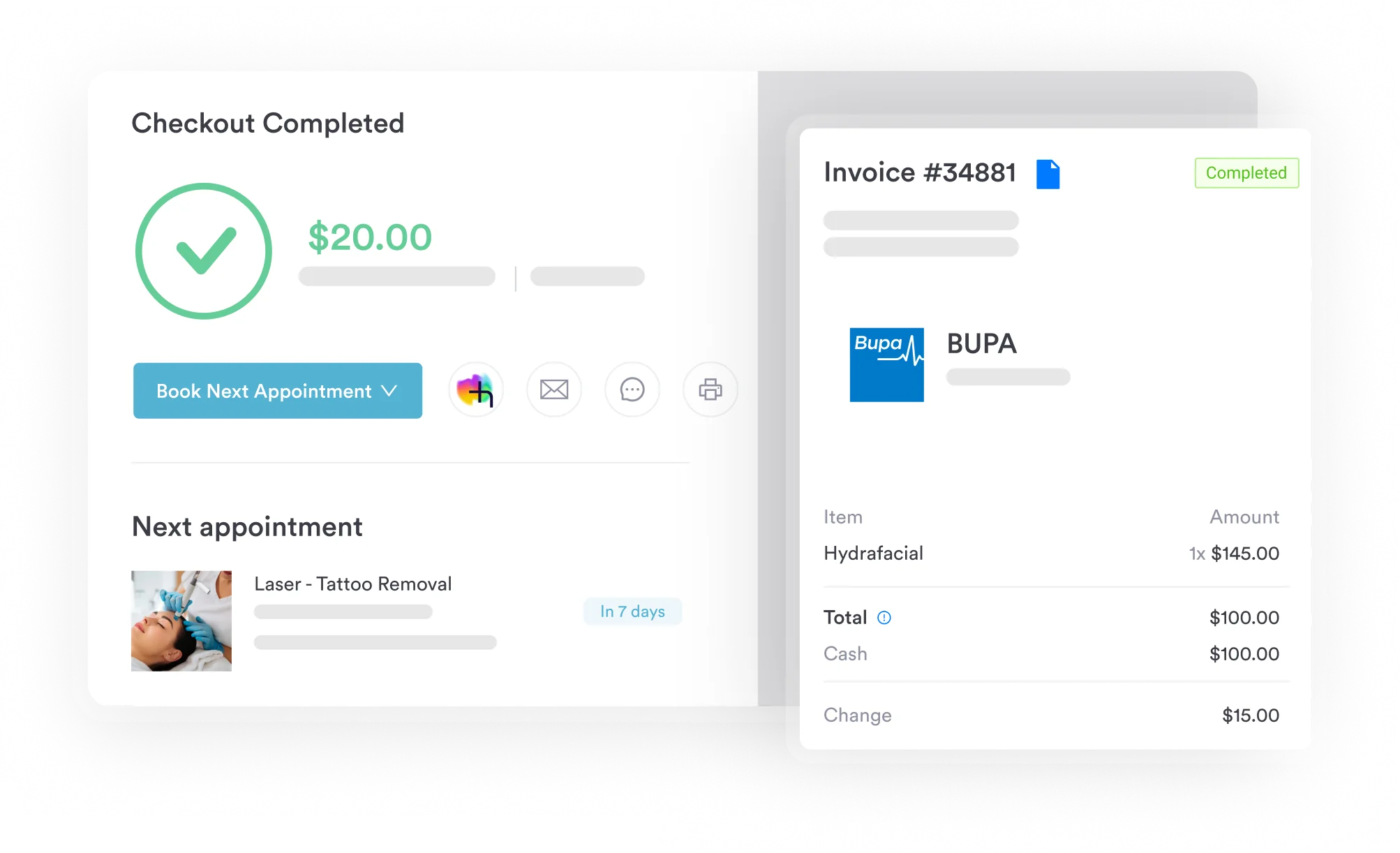

Pabau lets you deactivate a deleted HCPCS code for new dates of service, while keeping it open for rebills. Dose and NDC data carry straight from the note onto the claim. See how it fits your billing workflow.

J0190 is a closed chapter, and the date of service is the only thing that still decides whether it belongs on a claim. It was an anticholinergic code for drug-induced extrapyramidal symptoms, never a buprenorphine code. Anything that tells you otherwise has copied the wrong descriptor.
For 2026, bill the drug you actually gave. That usually means J0515 for benztropine or J1200 for diphenhydramine. Add a specific drug-induced movement disorder diagnosis, and keep J0190 selectable only for 2025 dates still inside the filing window.
Pabau’s claims management software builds those rules into the billing process, so retired codes and stale NDCs are caught before submission. To see how it handles J-code billing in your practice, book a demo with our team.

Billing the antihistamine route for acute dystonia? Our guide to HCPCS code J1200 covers units, coverage, and documentation for injectable diphenhydramine.
Need the other deleted-code playbook? HCPCS code S0189 shows how a clean transition looks, since CMS replaced it with J1073.
Billing the injection itself? CPT code 96372 explains the administration charge that sits alongside every drug line.
Screening patients in a behavioral health program? HCPCS code H0002 walks through screening units, payer rules, and documentation.
Coding an unspecified sclera disorder? ICD-10 code H15.9 is the billable code for an unspecified sclera disorder within the H15-H22 disorder block.
HCPCS code J0190 described “injection, biperiden lactate, per 5 mg.” Biperiden lactate is an anticholinergic drug, sold in the US as Akineton, used to treat drug-induced extrapyramidal symptoms. CMS added the code on January 1, 1982 and deleted it effective December 31, 2025.
No. J0190 is not billable for dates of service on or after January 1, 2026. It remains correct on claims for dates of service through December 31, 2025, and Medicare’s one-year filing window keeps those claims submittable during 2026.
No. Buprenorphine hydrochloride 0.1 mg is HCPCS code J0592, which is still active. J0190 described biperiden lactate and has no connection to buprenorphine or to opioid use disorder treatment. The two codes are frequently confused in third-party code lookups.
Nothing replaced it directly. CMS deleted J0190 without assigning a successor code, because no biperiden injection is marketed in the US. For drug-induced extrapyramidal symptoms, practices bill J0515 for benztropine mesylate or J1200 for injectable diphenhydramine instead.
One unit. The billing unit for J0190 was 5 mg, so a 5 mg injection equaled a single unit. A partial dose from one 5 mg ampule also billed as one unit, because CMS pays to the nearest whole billing unit.
It treated drug-induced extrapyramidal symptoms, the movement disorders that antipsychotic medication can cause. These include acute dystonia, parkinsonism, akathisia, and dyskinesia. The injectable form was used for acute episodes needing relief within minutes, typically at 2.5 mg to 5 mg per dose.
No. J0190 never appeared on the CMS list of HCPCS codes assigned only to single-dose containers, so neither wastage modifier was required. J0515 does appear on that list, so practices switching to benztropine need a JW or JZ attestation rule they did not need before.
Use the specific drug-induced movement disorder code. Examples include G24.02 for drug induced acute dystonia, G21.11 for neuroleptic induced parkinsonism, and G25.71 for drug induced akathisia. Add a T43 code, such as T43.505A, to identify the medication that caused the reaction.