CPT code 93503: Swan-Ganz catheter billing and modifiers
CPT code 93503: Official descriptor and procedure overview In the AMA CPT code s...

Last Updated: Oct 23, 2026
A4234 is the HCPCS Level II code for replacement battery, alkaline, j cell, for use with medically necessary home blood glucose monitor owned by patient, each.
HCPCS code A4234 pays for a single replacement alkaline J-cell battery, and only for a home blood glucose monitor the patient already owns. The official descriptor names the monitor, the medical necessity, and the ownership. A battery for any other device belongs on a different code.
Battery lines on a glucose monitor claim deny more often than they should. The cause is almost always a modifier or a bundling rule rather than a coverage problem.
Timing decides the bundling half. A battery dispensed with the monitor, or under a continuous glucose monitoring allowance, is already paid for. The modifier half comes down to whether the beneficiary uses insulin.
Let Pabau's smart automation suggest the right codes, reduce claim denials, and keep your practice compliant—effortlessly.
Automate repetitive tasks and focus on what matters most—your patients.
Reduce coding errors and ensure compliance with the latest regulations.
Clean claims, fewer denials, and faster reimbursements.
Powerful insights and reporting to help your practice thrive.
HIPAA compliant SOC 2 certified GDPR-compliant Trusted by 4,000+ clinics worldwide

HCPCS code A4234 covers one replacement alkaline J-cell battery for a medically necessary home blood glucose monitor that the patient owns.
The code never covers general durable medical equipment. Batteries for other devices bill under separate codes such as A4602, A4611, or A4630.
Every A4234 claim needs modifier KX for an insulin-treated beneficiary or KS for a non-insulin-treated one, per CMS article A52464.
A4234 is a lump-sum purchase item, so the capped-rental modifiers KH, KI, and KJ make the claim unprocessable.
Pabau, practice management software for medical practices, keeps the order, the intake form, and the delivery record in one audit-ready patient file.
HCPCS code A4234 is a Level II HCPCS code maintained by the Centers for Medicare and Medicaid Services, or CMS. Its official long descriptor is: Replacement battery, alkaline, J cell, for use with medically necessary home blood glucose monitor owned by patient, each.
Every element of that descriptor limits the code. The battery must be alkaline and a J cell, and the device must be a home blood glucose monitor. That monitor must be medically necessary, and the patient must own it. A4234 sits in the A-code range of HCPCS Level II, the medical and surgical supplies category.
The descriptor does not reach general durable medical equipment. A battery for a suction unit, an external infusion pump, a ventilator, or a TENS unit bills under its own code. Examples include A4602, A4611, and A4630. Choosing A4234 because a device happens to take a J cell is a coding error.
A4234 is separately payable only for a monitor the beneficiary already owns and uses at home. While the supplier owns or rents the monitor, the battery is not separately payable, because the equipment payment already covers it.
CMS policy article A52464 also bundles batteries into the monitor itself. A battery code that ships at the same time as the monitor is included in the monitor allowance. That applies to A4233 through A4236 alongside E0607, E2100, E2101, and E2104.
Suppliers may bill test strips under A4253, plus lancets and lancing devices, with the initial issue of a monitor. Batteries are the stated exception. A battery line dated the same day as the monitor is an unbundling denial waiting to happen.
Continuous glucose monitoring changes the picture again. For a non-adjunctive CGM, the monthly supply allowance A4239 already includes a home blood glucose monitor, its supplies, and its batteries. Billing A4234 alongside A4239 is unbundling, so the line will be denied.
The device side of that same CGM claim has its own code, E2103. It replaced HCPCS code K0554, which CMS deleted on December 31, 2022.
Medicare prices A4234 from the DMEPOS fee schedule, not the physician fee schedule. CMS assigns the code to payment category IN, inexpensive and other routinely purchased items. That makes it a lump-sum purchase, so no capped-rental month applies to it.
Fee schedule amounts are set by state and jurisdiction, so there is no single national figure to quote. That holds for every item on the file.
Download the current file from the DMEPOS fee schedule before you quote a rate to a patient or a payer. Third-party aggregators publish estimates for A4234, and those figures lag CMS updates. Treat them as a sanity check, never as the rate you bill.
Supply billing leaks revenue quietly, and medical practice management software catches unbilled items before they’re written off.
Medicare covers A4234 when the home blood glucose monitor it serves is itself covered for that beneficiary. The joint DME MAC glucose monitor LCD L33822 sets two basic criteria, and both have to be met before any related supply is payable.
The beneficiary must have diabetes, and the treating practitioner must have concluded that the beneficiary or a caregiver is trained on the device. That conclusion is evidenced by a prescription for the appropriate supplies and the testing frequency.
Practices running weight loss programs see these criteria often, since many of their patients test at home. Where a family member does the testing, a caregiver care plan is a simple way to record who was trained.
Billing A4234 correctly comes down to three things: the modifier, the units, and where the code sits on the claim. Errors in those three areas cause most denials on battery supply lines.
Modifier selection on an A4234 claim turns on the beneficiary’s insulin status, not on rental months. Article A52464 requires KX or KS on every claim for a glucose monitor or one of its related supplies.
Leave KH, KI, and KJ off the claim. Those modifiers describe capped-rental billing months, and CMS returns claims that pair them with an inexpensive or routinely purchased code as unprocessable. The remittance comes back as CARC 4 with RARC N519, an invalid modifier combination.
CG and KF belong to continuous glucose monitoring codes such as E2103 and A4239, so they never appear on an A4234 line. The same logic rules out RR, which describes a rented item. The modifier set changes again on A4235, so check the series before you copy a claim across.
One unit of A4234 is one J-cell battery. If the monitor takes more than one battery, bill the number of units the practitioner ordered. Do not combine battery types on a single line, since A4234 describes an alkaline J cell and nothing else.
On the CMS-1500, A4234 goes in box 24D with KX or KS in the modifier field beside it. Place of service is usually 12, the home, because the beneficiary uses the monitor there. The 837P electronic claim carries the same data in the SV101 composite, with the modifier in SV101-3.
Missing documentation is cited in most post-payment reviews of DME supply codes. Capturing the record at the point of care with digital forms shortens retrieval time during a MAC audit. Standardized medical forms keep the same fields on every order, so nothing is left to a handwritten note.

One item no longer belongs on that list. CMS discontinued Certificates of Medical Necessity and DME Information Forms for dates of service on or after January 1, 2023. No CMN ever existed for glucose monitors in the first place. The medical necessity evidence still has to sit in the record, but the form itself is gone. Denial codes in medical billing group the reasons a payer refuses, and the group decides the fix.
Run a short pre-billing check on every A4234 claim. Confirm the standard written order, the beneficiary’s insulin status, and that the patient owns the monitor. Then confirm the units match the documented testing frequency and that proof of delivery is on file. Five minutes here removes most of the audit exposure on battery lines.
The A4233 to A4236 series splits by battery chemistry, and nothing else. All four codes describe a replacement battery for a medically necessary home blood glucose monitor owned by the patient. Match the chemistry in the monitor’s manual to the code, then bill.
Every code in the series ends with the same phrase: for use with medically necessary home blood glucose monitor owned by patient, each. None of them covers a general DME battery. The same rules carry across the other chemistries, and our guide to A4236 walks through them.
Billing the wrong chemistry denies the line and can invite a look at your other battery claims. The AAPC HCPCS code reference confirms the current descriptor for each code in the series before submission.
A4234 denials cluster around a small set of preventable errors. Pre-submission checks built into your practice management software catch most of them before the claim leaves the building. A short DME billing checklist.
Ask the PDAC contractor if you are unsure whether a specific battery qualifies as A4234. PDAC, run by Palmetto GBA, issues product coding verification decisions for DMEPOS items. A verification on file is far cheaper than defending a device-specific claim in a post-payment review.
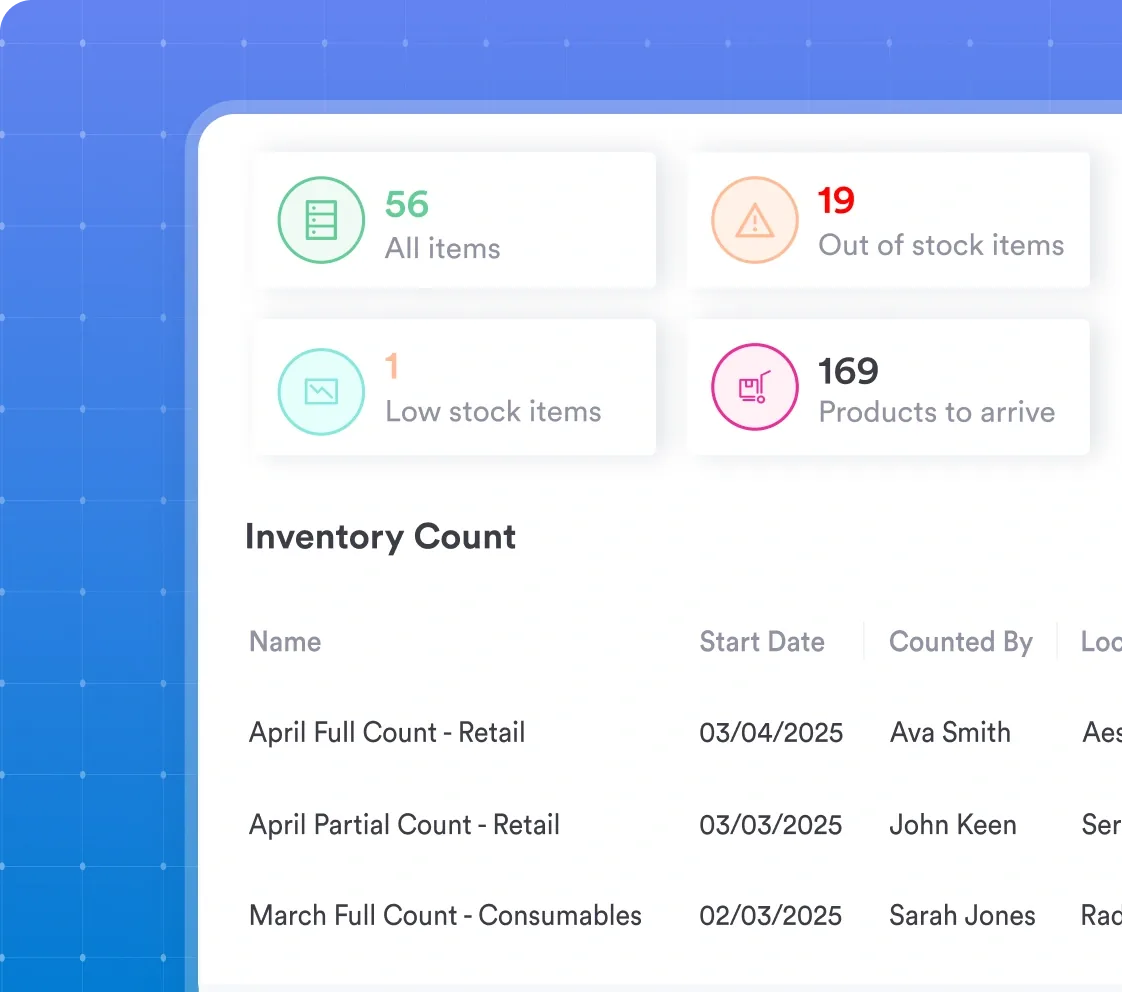
Most of what decides an A4234 claim is paperwork that lives outside the billing system. In a busy primary care practice, the order sits in a scanned PDF and the delivery slip in a shared drive. The testing log often stays on paper. When a MAC asks for that file, someone spends an afternoon assembling it.
Practice management software like Pabau keeps those records in the patient’s chart instead. Digital forms capture the practitioner’s order and the patient’s testing frequency at the point of care. Custom fields hold the monitor model and who owns it, so ownership is settled long before anyone bills a battery.
Across several sites.
The outcome is a shorter response to an audit request and fewer denials for paperwork that existed all along. Everything sits in one patient file, so the order, the form, and the delivery note are one click apart.

Pabau holds orders, digital forms, and delivery records in the patient’s chart, so an audit response takes minutes instead of an afternoon. See how it fits your practice.

A4234 is narrow by design. It pays for one alkaline J-cell battery for a medically necessary home blood glucose monitor that the patient owns, and for nothing else. The descriptor works as a coverage rule, so treat every clause in it as a condition.
Three habits remove most denials on this code. Confirm the patient owns the monitor, append KX or KS by insulin status, and keep the order and the delivery record on file. Pabau keeps that documentation in the patient’s chart where a reviewer can find it. To see how it works for your practice, book a demo.

Billing a battery in the same series? A4233 covers the alkaline cell that is not a J cell, under the same ownership and modifier rules.
Billing respiratory muscle therapy sessions? Respiratory muscle therapy billing covers G0237’s 15-minute units, direct supervision rule, and the 36-session lifetime cap.
Billing pulmonary rehab beyond G0237? Pulmonary rehabilitation billing guide covers G0238, billed per 15-minute unit for individual, face-to-face respiratory therapy with monitoring.
Billing a Medicare-excluded nerve test? Sensory nerve conduction billing guide explains why Medicare excludes G0255 and how an ABN with modifier GA shifts the charge to the patient.
A4234 bills for one replacement alkaline J-cell battery used in a medically necessary home blood glucose monitor that the patient owns. It does not cover batteries for general durable medical equipment. Those bill under their own codes, such as A4602 for an external infusion pump or A4630 for a TENS unit.
Yes, when the home blood glucose monitor is covered for that beneficiary and the patient owns it. The beneficiary must have diabetes, and the treating practitioner must have prescribed the supplies and a testing frequency. Coverage is not automatic, and a battery supplied on the same day as the monitor is bundled into the monitor allowance.
You need a standard written order from the treating practitioner, chart evidence of the diabetes diagnosis, and proof of delivery. Keep support for the quantity billed, such as the practitioner’s stated testing frequency or the beneficiary’s log. A Certificate of Medical Necessity is not required, because CMS discontinued CMN and DIF forms for dates of service on or after January 1, 2023.
Medicaid coverage for A4234 varies by state. Some programs cover J-cell battery replacements for glucose monitors under their DME benefit, but criteria, quantity limits, and billing rules differ from Medicare. Check your state’s fee schedule and coverage policy before you bill A4234 to Medicaid.