GLP-1 usage by state: Who’s taking, searching and paying in 2026
GLP-1 usage by state peaks in West Virginia, America’s GLP-1 capital, with...

Last Updated: Oct 16, 2026

The eight tactics below split into three jobs: communication and personalization, software and automation, and loyalty and retention.
Automation moves the needle fastest, because recalls and precare fire on their own instead of relying on someone remembering.
Score any patient engagement platform on six criteria: message compliance, calendar integration, automation depth, patient self-service, reporting, and pricing model.
The comparison table in this article shows what good looks like on each criterion, so you can grade a vendor demo as it happens.
Engaged patients leave more reviews and refer more friends, which turns engagement into a patient acquisition channel.
Eight tactics reliably improve patient engagement in a med spa, and they split into three jobs. Talk to patients like individuals. Automate the follow-up. Give them a reason to come back. Those last two jobs depend on marketing and retention tools, which our ranking of the best medical spa software compares vendor by vendor. Talking to patients is easier when calls, texts, and emails share one inbox.
Agreeing on a patient engagement definition is the easy part. Patients take an active role in their treatment decisions, using the information you give them. Our guide to patient care management covers that ground in depth.
Executing it is where med spas lose ground. Patients forget a four-month recall. They skip the precare email and go quiet after one visit. And most advice on how to improve patient engagement in healthcare is written for hospitals. An aesthetics practice with a 20-minute slot has a different problem.
One report says that 62% of patients in America value good communication and continuous check-ins from their own healthcare professionals above all else.
This guide starts with the barriers, then the payoff, then a criteria table for picking a platform. The eight tactics close it out. Our companion guide to patient engagement strategies covers the full pre-, during-, and post-visit framework.
Five barriers block patient engagement in healthcare settings, and only one of them is about technology. Put yourself in the shoes of a patient who has just been handed a chemical peel precare sheet.
Note what is missing from that list. In aesthetics, patients care a lot about their result, so apathy is rarely the cause. What breaks down is timing and channel. The precare email lands in a promotions folder, and the recall arrives four weeks after the filler has already softened.
That reframes healthcare engagement as an operations problem rather than a motivation problem. Fix when the message goes out and which channel carries it, and most of these barriers shrink.
The benefits of patient engagement show up in four places for a med spa. Satisfaction scores, treatment outcomes, rebooking rates, and referrals all move together.
That list is also the short answer to why patient engagement is important commercially. The importance of patient engagement in healthcare is usually argued on clinical grounds alone. In aesthetics, the clinical case and the commercial case are the same case.
Engaged patients tell you more. They share preferences, concerns, and honest feedback. That lets you tailor a treatment plan to the person in front of you rather than to a category.
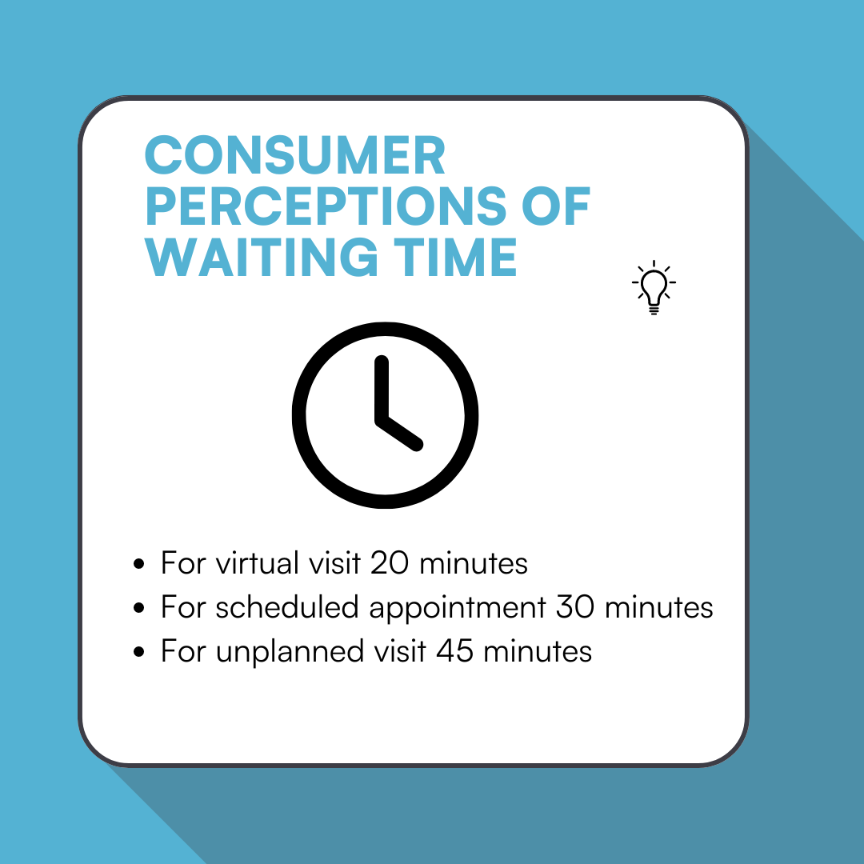
Wait time is the other half of satisfaction, and it is easier to fix than most owners assume. 63% of patients would switch providers over repeated waiting. Tolerance also varies by visit type.
Patients accept roughly 20 minutes for a virtual visit, 30 minutes for a scheduled appointment, and 45 minutes for an unplanned one. Past the hour mark, frustration climbs in every visit type.
You cannot control what a patient does once they leave the treatment room, and that is where results are won or lost. Adherence to precare and aftercare is the single biggest variable you do not touch.
Take a chemical peel. The patient needs to stop retinol days beforehand, avoid sun, and use the right moisturizer afterward. Say it once in the consultation and much of it will not survive the week.
Send the same instructions as timed messages before and after the appointment and adherence improves. The reminder arrives at the moment the patient has to act on it. Better treatment adherence means better health outcomes, and better outcomes are what patients rebook for.
Repeat bookings are the clearest return on increasing patient engagement. A patient who understands their treatment plan, and who gets prompted at the right interval, simply rebooks more often.
The interval is the part that gets missed. Anti-wrinkle injections soften at around 12 to 16 weeks. Filler runs closer to six months. A single quarterly newsletter cannot hit both of those windows.
Practices that track recall dates against treatment type keep the calendar fuller than practices that market to the whole list at once. Our guide to patient engagement in clinics goes deeper on that mechanic.
Engagement feeds new-patient growth through two channels: reviews and referrals. Both are worth counting alongside your paid patient acquisition strategies, because they cost nothing per booking.
An engaged patient answers a review request. A patient who has heard nothing since their appointment usually ignores it. That difference decides how fast your review count grows, and review count is what a local search result shows first.
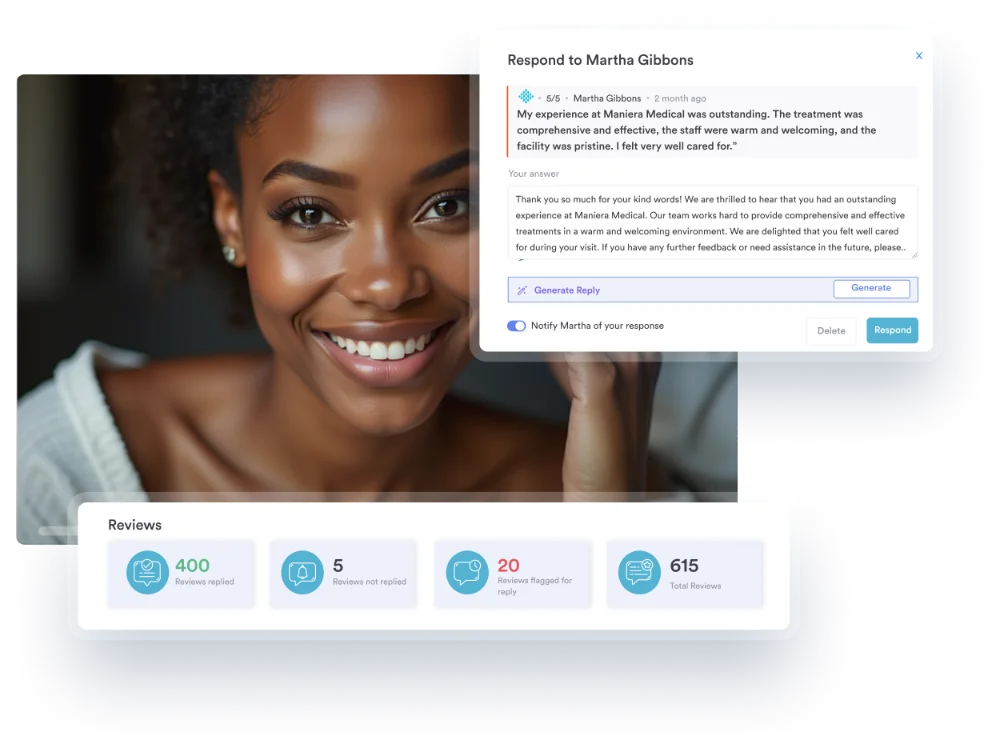
Referrals work the same way. Happy patients recommend you when the experience is still fresh, which is usually within two weeks of the appointment. Ask then, not at the end of the year.
Six criteria decide it: message compliance, calendar integration, automation depth, patient self-service, reporting, and pricing model. Everything else in a demo is decoration. On the reporting criterion, measuring patient engagement with defined metrics shows which campaigns actually move rebooking rates.
The order matters. The first two are pass or fail. A patient engagement solution that cannot store messages safely, or that cannot see your calendar, is out before you compare anything else. Knowing what practice management software is also clarifies when an all-in-one platform beats stitching point solutions together.
You will also see a patient engagement agency pitched as an alternative to buying software. An agency writes and sends campaigns for you, which works well for a launch or a seasonal promotion.
It falls over on recalls. A recall has to fire off a treatment date sitting in your calendar. If nobody on your patient engagement team owns that calendar, the messages stop matching reality within a month.
Look for a patient engagement platform that already holds your calendar and your patient records. Engagement messages are only ever as accurate as the data sitting behind them.
Take these six questions into the demo and make the salesperson show you, rather than describe it.
The best patient engagement tools for med spas are the ones already holding your calendar and patient records. A bolt-on messaging app cannot see what was injected or when, so its timing will always be a guess.
Use the table below to grade whatever you are shown. Each row is one of the six criteria, with the standard a med spa should hold a vendor to.
| Criterion | Why it matters for a med spa | What good looks like |
|---|---|---|
| HIPAA-safe messaging | Treatment names and before-and-after photos count as protected health information. | Messages send from the patient record, store there, and never touch a personal phone. |
| Booking-calendar integration | A reminder that ignores a reschedule is worse than sending nothing. | Two-way sync. Move the appointment and every linked message re-times itself. |
| Automation depth | Botox, filler, and peels each run on a different recall clock. | Recalls trigger from treatment type and treatment date, not one flat interval. |
| Self-service patient portal | Every rebooking a patient does alone is a call your front desk never takes. | Patients rebook, sign forms, pay, and reread aftercare without phoning you. |
| Engagement reporting | Send volume says nothing about whether patients came back. | Recall conversion, rebooking rate, and portal sign-ups in one report. |
| Pricing model | Commission per booking taxes exactly the growth you are working for. | A flat subscription priced on users and locations, with every feature included. |
On best value patient engagement tools for med spas, the number to compare is not the monthly fee. It is the fee plus messaging costs plus the hours your front desk still spends chasing people.
A cheaper tool that leaves recalls manual usually costs more once you price that admin time. Judged across all six rows, the best patient engagement software for a med spa is normally the practice management system you already run. Running billing through that same system also avoids medical spa accounting gaps that show up when packages, retail, and payroll sit in separate tools.
Here are eight strategies for patient engagement, grouped by the job each one does. Run them as one patient engagement program rather than eight separate experiments.
Set patient engagement goals you can read straight off a report. Recall conversion rate, portal sign-up rate, and 90-day rebooking rate are three a med spa can move inside a quarter. If you are tracking by hand, a spa tracker template covers rebooking rate and utilization on one page.
How can a health professional promote patient engagement without adding admin? Automate the parts that repeat, and spend the time you save on the parts that cannot be automated. The patient engagement examples below follow that split.
If you want a single answer on how to increase patient engagement, start with the automation group. It works whether or not anyone on the team remembers.
This group is the human work. It decides whether a patient feels known by your practice or processed by it.
A patient portal removes the phone call from every routine request. Patients cancel, reschedule, sign forms, and reread their aftercare whenever it suits them, which is often at 10pm. The same portal can collect patient intake forms before the visit, so front desk staff spend less time on paperwork.
Convenience is not a soft benefit here. One survey found that over 25% of Americans switched providers because of a poor digital experience.
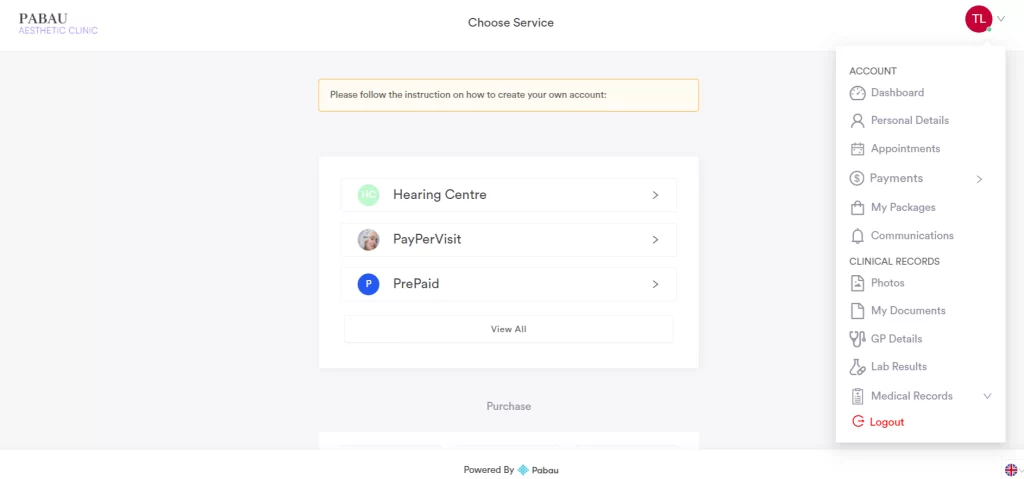
A portal earns its place when it does real work for the practice, not just for the patient:
Patient responsiveness climbs when the message names the treatment the patient actually had. Generic broadcasts train people to ignore you, and that habit is hard to reverse.
Timing matters as much as wording. Send a review request a week after lip filler, once swelling has settled and the patient likes what they see in the mirror.
For treatments with instant results, such as a Hydrafacial, ask the next day instead. The same message sent at the wrong moment reads as tone deaf.
Small gestures build the rapport that makes the rest land. A short welcome sequence when someone joins, a birthday voucher, a note that remembers which treatment they were nervous about.
Recalls prompt a patient to rebook at the point their result starts to fade. Patients rarely track that date themselves, especially when they are happy with how they look.
Tie the interval to the treatment. Anti-wrinkle injections sit at around 12 to 16 weeks, filler at roughly six months, and a course of peels at whatever your protocol says.
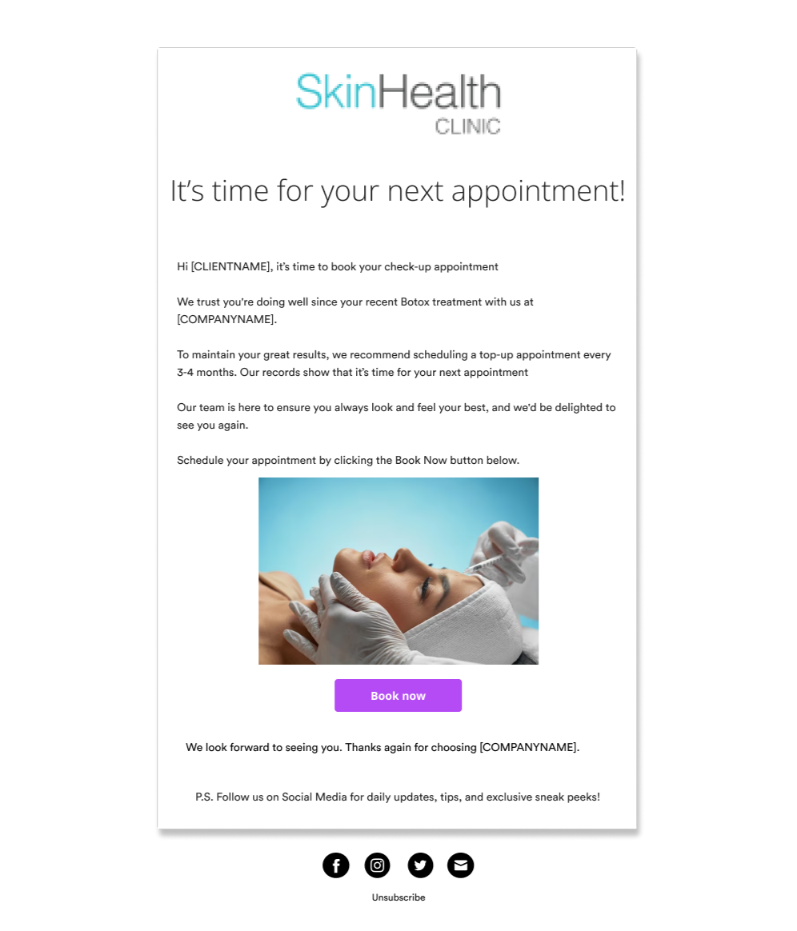
Recalls also protect outcomes, not just revenue. Hair transplant patients and post-surgical patients need a check at a set point, and a recall is the only thing that reliably brings them in.
This group is the machine work. Set it up once and it runs on every patient without anyone deciding to send anything.
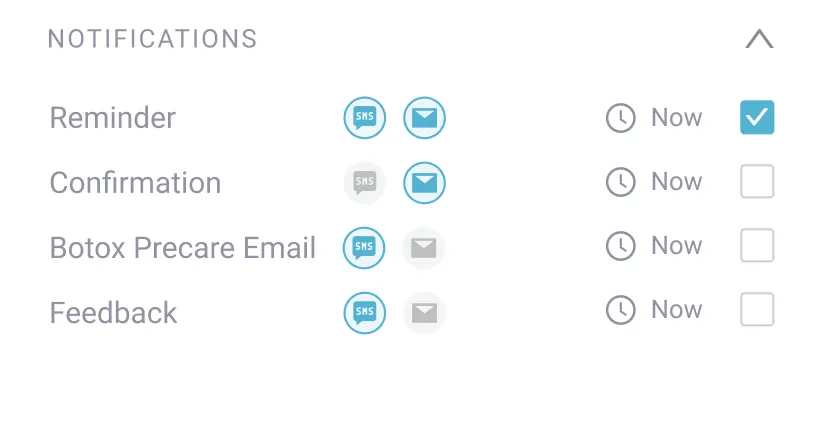
Standalone patient engagement software adds a seventh tool to a stack that already has six. The stronger move is engagement built into the system that holds the appointment.
Practice management software like Pabau runs messaging off the same record as the booking, the treatment note, and the invoice. A recall therefore knows what was treated, when, and by whom.
From there you can segment campaigns by treatment history rather than by mailing list. You can send gift vouchers to patients who have not been in for six months. And every message stays attached to the patient file.
The practical test is whether your marketing tool and your calendar ever disagree. If they do, you are maintaining two versions of the truth, and patients will eventually notice.
Online booking removes the biggest source of friction between wanting an appointment and having one. Patients book at the time that suits them, which is frequently outside your opening hours.
Owners asking how to increase patient bookings for my medical spa usually assume they have a marketing problem. More often it is a booking friction problem, and it is cheaper to fix.
Six changes move the number, in rough order of effort:
The last one is worth sitting with. Practices often lock rescheduling behind a phone call to protect the calendar, and the result is more no-shows, not fewer.
Automated precare and postcare instructions are the highest-return automation in a med spa, because they change clinical outcomes and admin load at the same time.
Handed out verbally or on a leaflet, instructions vary by whoever gave them and get lost by the weekend. Sent automatically against the booked treatment, they are identical every time.
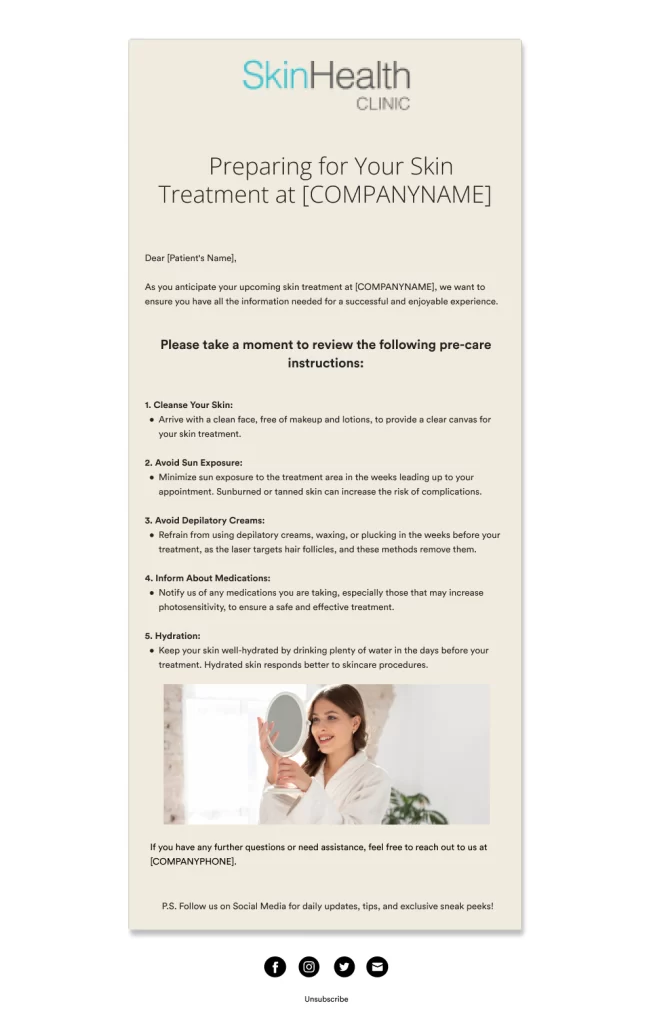
Keep the copy tailored rather than generic. A patient reads instructions that mention their own treatment by name, and skims anything that reads like a policy document.
This group is where the creative ways to increase patient satisfaction live. A points balance and an anniversary email get noticed, while a well-run reminder never does.
A loyalty program gives patients a reason to book their next treatment with you. That matters when a new practice opens down the road. New practices keep opening in this space, and state rules on who can open a medical spa decide who gets to run them.
Points for spending is the obvious version. The more useful version awards points for the behaviors you want more of, such as booking online, completing a form early, or leaving a review.
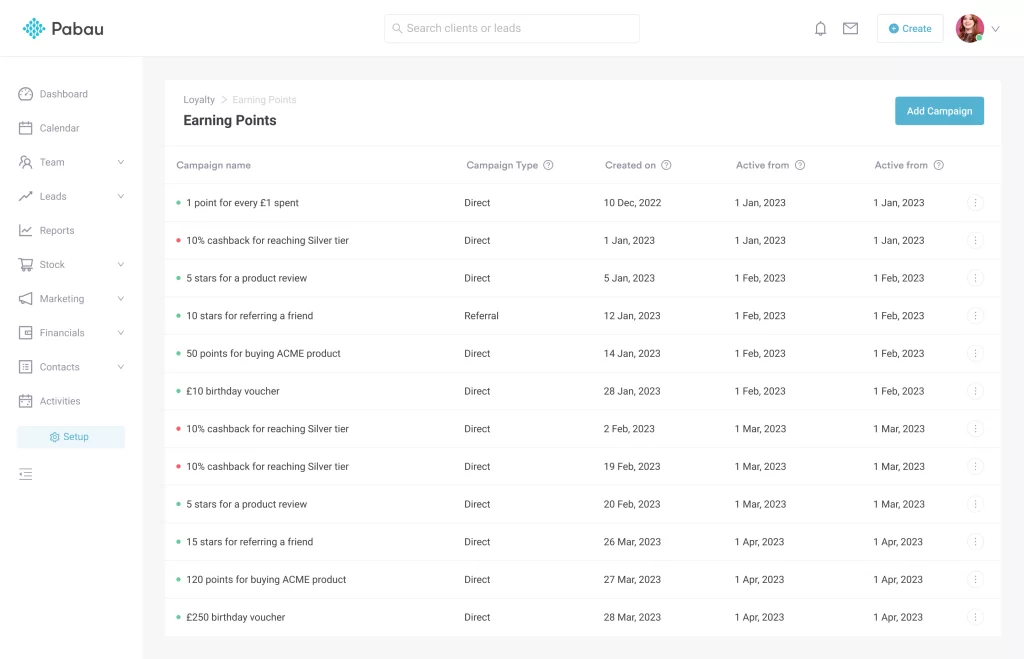
Set the earn rate so a reward is reachable within three or four visits. A points balance nobody can ever spend is worse than no program at all.
A newsletter keeps you in front of patients between appointments, which for filler patients can be six months of silence otherwise.
Segment it by treatment history and interest rather than sending one email to everyone. A retinol guide means something to a skin patient and nothing to a laser hair removal patient.
Mix the content too. If every send is a promotion, open rates fall and unsubscribes climb, and you lose the channel you spent two years building.
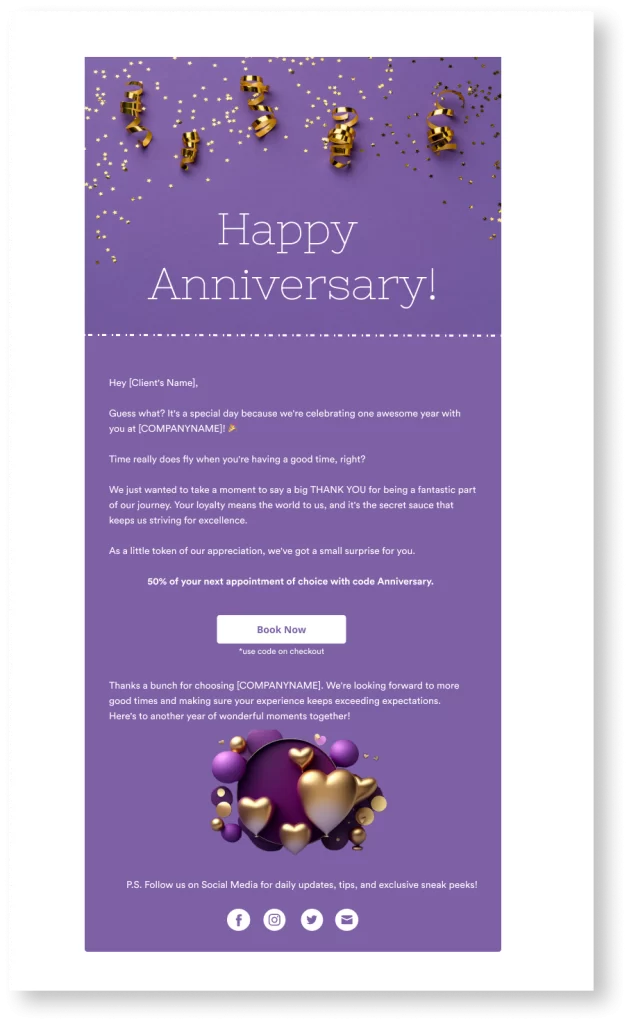
Most med spas run engagement across four or five disconnected places. Reminders come from the booking tool, newsletters from a separate email platform, precare from someone’s saved drafts, and recalls from a spreadsheet.
That setup breaks quietly. A patient reschedules, the reminder does not move, and the precare email arrives after the appointment has already happened.
Pabau is an all-in-one practice management system built for med spas, so all of it runs off one patient record. Reminders, recalls, precare, aftercare, review requests, loyalty points, and campaigns all read the same calendar.
Patients get a portal to rebook and complete forms themselves. Your team gets reporting on recall conversion and rebooking, so you can see which messages brought people back. And every subscription includes every feature, priced on users and locations.

Pabau runs reminders, recalls, precare, and review requests off the same patient record as your calendar. Messages stay accurate when appointments move, so patients rebook on time and your front desk stops chasing.

If you only change one thing this quarter, change the recall. It is the tactic with the shortest path from setup to rebooked appointments, and it needs nobody to remember anything.
The trade-off worth remembering is that automation buys you time, not affection. Patients notice the personal touches, so spend the hours you free up on the parts a system cannot fake.
And when you do go shopping, take the six criteria with you. A tool that cannot see your calendar will make your messages wrong, however good its templates look in the demo.
Book a demo to see how Pabau automates recalls, precare, and review requests from the same patient record your calendar already uses.

Wondering if your service menu is costing you bookings? Med spa service menu guide explains how pricing transparency and clear categories help clients go from curious to booked.
Considering memberships over a points-based program? Med spa membership program guide shows how memberships turn one-off visits into steady, recurring revenue.
Operating a med spa in the UAE? Medical spa software in the UAE compares platforms built for DHA regulations and mandatory NABIDH integration.
Adding Profhilo to your injectable menu? Profhilo injection protocol walks through the five injection points, technique, dosage, and post-treatment care.
Ready to add tiers to your membership plan? Med spa membership tiers guide shows how to structure pricing once one flat plan stops meeting client demand.
Patient engagement is a patient taking an active part in their own treatment decisions and following through on the plan. In a med spa that means understanding the treatment, completing precare, and returning at the right interval.
Follow up three times: a next-day check that aftercare is going well, a review request once results settle, and a recall timed to the treatment. Anti-wrinkle injections sit at 12 to 16 weeks, filler nearer six months.
Yes, and this is the criterion to test first. Without two-way sync, a rescheduled appointment leaves the old reminder in place. Patients then get messages that contradict their booking, which costs you more trust than sending nothing.
Track recall conversion rate, 90-day rebooking rate, and portal sign-up rate. Those three tie engagement work to revenue. Open and click rates are useful for tuning copy, but they say nothing about whether anyone came back.
Only through a system that logs messages against the patient record. Treatment names and photos count as protected health information, so a personal phone or a free texting app leaves you without an audit trail.