HIPAA compliant texting: What you can send patients & how to communicate securely
HIPAA compliant texting is possible when a text holds no protected health inform...

Last Updated: Oct 16, 2026
The best spa software depends on the kind of spa you run, and our pick for most is practice management software like Pabau. A solo treatment room and a five-location med spa need very different systems.
This guide compares seven genuine spa and salon management platforms. Each one gets a verdict, a price taken from the vendor’s own site, and an honest limitation.
We also do something the other guides on this page do not. We work out what each platform costs over twelve months, once per-user fees, per-location billing, and add-ons land.
Then we cover what spa owners report going wrong after a year of daily use, and what to export before you switch. The same friction comes up again and again in public discussions between owners.

1. Pabau — best all-in-one spa software, holding bookings, consent, notes, and payments in one client record.
2. Mangomint — best for the smoothest client booking, if your margin absorbs a base fee plus per-user pricing.
3. Vagaro — best on a tight budget, once you have priced the add-ons you actually need.
4. Zenoti — best for multi-location spas and larger med spa groups that can run a procurement process.
5. Boulevard — best for a premium front desk, billed per location rather than per user.
6. Fresha — best entry price, with a 20% commission on clients who find you through its marketplace.
7. Square Appointments — best for a solo therapist who keeps no consent records or treatment notes.
Pick the row that matches your spa, then read that review. Every price below came from the vendor’s own pricing page, checked in September 2026.
| Platform | Best for (spa type and size) | Starting price | Standout limitation | What owners report going wrong |
|---|---|---|---|---|
| Pabau | Spas and med spas of any size that want one system | $104 / month for one user | No free trial, so you start with structured onboarding | Not raised in the owner discussion we reviewed |
| Mangomint | Spas that want the smoothest client booking | $130 / month for one user | Costs more than budget tools at the same team size | Reports that export rather than display, and add-ons billed separately |
| Vagaro | A tight budget and the widest adoption | $23.99 / month for one calendar | Capabilities owners expect as standard are add-ons | Multi-room calendar clashes, and repeated add-on charges |
| Zenoti | Multi-location spas and larger med spa groups | Pricing on request | No published prices, so you cannot compare before a call | Cost only becomes clear inside a sales process |
| Boulevard | A premium front desk and checkout | $143 / month per location (billed annually) | Priced per location, so a one-room spa pays a lot | Commission not calculating on a zero-dollar membership visit |
| Fresha | Starting out on the lowest monthly subscription | $19.95 / month for one team member | A 20% commission on new marketplace clients | Marketplace commission and add-on costs that stack up |
| Square Appointments | A solo therapist or a single treatment room | $0 / month on the free plan | No consent records or treatment notes for clinical work | Service outages, including one lasting a full day |
That last column is the appointment software for spas comparison most round-ups leave out. It summarizes what owners raised in a public r/Esthetics discussion, not verified faults in any product.
The list is grouped by the kind of spa each platform fits, not by feature category. A platform built for ten locations is the wrong answer for one room.
If you’re still weighing your options, our guide explains what practice management software is and what an all-in-one system covers.
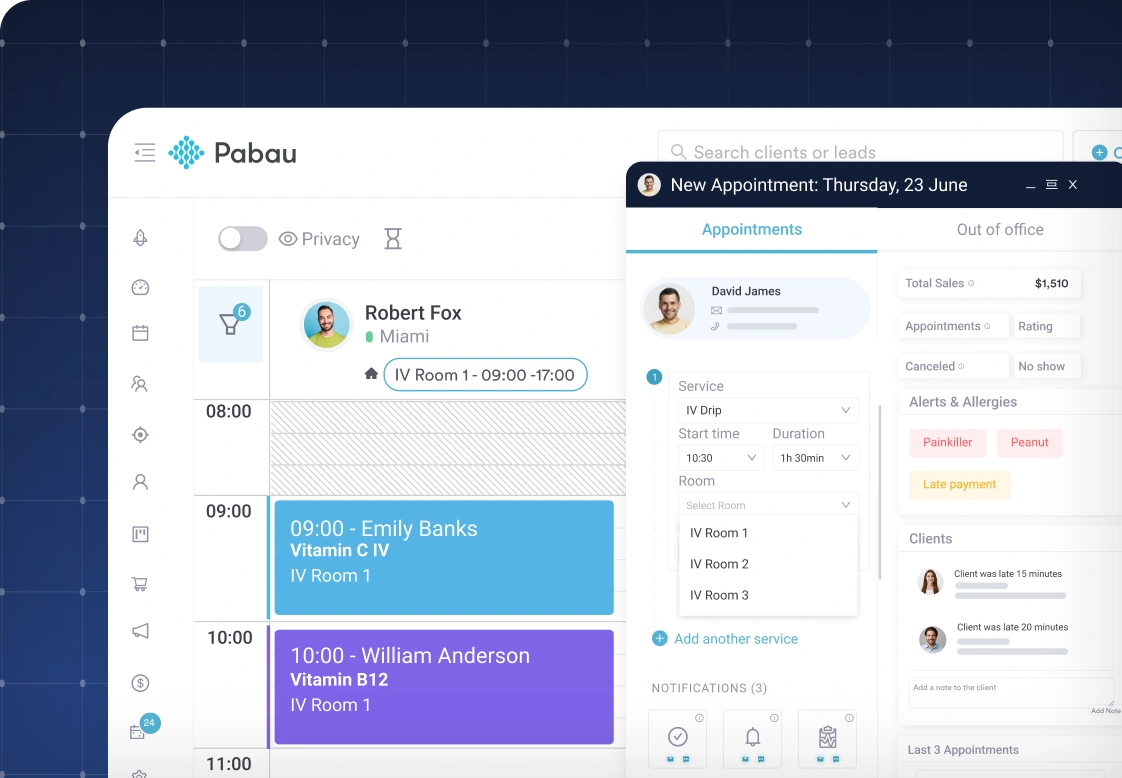
One record holds the booking, the consent form, the treatment note, and the invoice for each client.
Practice management software like Pabau is built for spas that treat, not just book. The client record carries the appointment, the consent form, the photos, and the treatment note together.
That matters the moment a client asks what you used on them last time. Nobody has to open a second system, a phone camera roll, or a paper folder to answer.
A solo aesthetics practice can run exactly this setup as a team of one, without hiring extra admin help.
| Plan | Price | Who it covers | Key inclusions |
|---|---|---|---|
| Solo | $104 / month | 1 user, unlimited clients | Full platform |
| Team | $187 / month | 2 to 3 users | Full platform |
| Medium | $271 / month | 4 to 5 users | Full platform |
| Group | $386 / month | 6 to 15 users | Full platform |
| Enterprise | Quoted on a demo | 16+ users, multiple sites | Full platform |
Plans differ by users and locations, never by features. Annual billing saves up to 20%, and you can see the full breakdown on Pabau’s pricing page.
The bottom lineOur pick for client booking
Clients book without creating an account, and non-technical staff pick it up in days.
Who it’s for
What works
What doesn’t
Mangomint sells one plan, and the client-facing booking flow is the reason owners pick it. A client picks a service and a time without setting up an account first.
Spa owners in a public r/Esthetics discussion named Mangomint more often than any other platform. The recurring praise was fast setup, responsive support, and reliable reminder texts.
| Plan | Price | Who it covers | Key inclusions |
|---|---|---|---|
| Base fee | $120 / month | One business | Full platform |
| Per user | $10 / month | Each user you add | Full platform |
| Extra location | $120 / month each | Each additional site | Full platform |
| Add-ons | From $30 / month | Phone, marketing, payroll | Optional, priced separately |
The bottom lineOur pick on price
The cheapest route into booking, payments, and marketing together, with trade-offs owners discuss openly.
Who it’s for
What works
What doesn’t
Vagaro is the platform most salons and spas have at least tried. You buy calendars rather than seats, so a one-room spa pays for one calendar.
It is also the platform the public r/Esthetics discussion was built around, and the criticism there was specific. Owners raised a clunky multi-room calendar, confusing front-desk checkout, and add-on fees.
One ten-year user in that same discussion reported few problems, although not while using Vagaro for payments. Treat both as demo questions rather than verdicts.
| Plan | Price | Who it covers | Key inclusions |
|---|---|---|---|
| One calendar | $23.99 / month | 1 bookable calendar | Booking, point of sale, marketing |
| One calendar, list price | $30.00 / month | 1 bookable calendar | Same, once the offer ends |
| Extra calendars | Rises per calendar | 2 to 7+ calendars | Same platform |
| Multiple locations | Quoted per location | Multi-site businesses | Same platform |
The bottom lineOur pick for multi-location
Built to run many sites from one place, and sold through a sales call rather than a price list.
Who it’s for
What works
What doesn’t
Zenoti is the enterprise answer on this list. It is aimed at groups where one manager needs to see ten locations, not at a spa with one treatment room.
Its strength is operational reporting. Room and resource management, payroll, commissions, and inventory sit in the same platform as booking and checkout.
| Plan | Price | Who it covers | Key inclusions |
|---|---|---|---|
| Zenoti OS | Pricing on request | Quoted per location | Operations, transactions, interactions |
| AI Workforce | Pricing on request | Quoted per location | Optional AI agents |
The bottom lineOur pick for the front desk
A polished front desk and checkout, priced per location rather than per user.
Who it’s for
What works
What doesn’t
Boulevard sells the client-facing experience. The booking flow, the arrival, and the checkout are the parts it invests in, and it shows at a busy desk.
Owners in that public discussion also called it complicated, and questioned the value at the price they were paying. One recurring detail is worth testing directly.
Commission did not compute on a zero-dollar membership visit, which forced manual tracking. Run that exact scenario in your demo and then open the commission report.
| Plan | Price | Who it covers | Key inclusions |
|---|---|---|---|
| Essentials | $143 / month per location (billed annually) | Up to 5 professionals | 100 texts, 500 email blasts, 25 GB storage |
| Premier | $234 / month per location | Unlimited professionals | 250 texts, 1,000 email blasts, 50 GB storage |
| Prestige | $328 / month per location | Unlimited professionals | Forms add-on, 2,500 texts, 100 GB storage |
See our Pabau and Boulevard comparison for the feature detail.
The bottom lineOur pick for starting out
The cheapest monthly subscription here, paid for with commission on new marketplace clients.
Who it’s for
What works
What doesn’t
Fresha used to be the free option. It now charges a monthly subscription as well as a commission, so the honest description is cheapest rather than free.
The marketplace is the trade. A client who discovers you through Fresha costs you a one-time 20% commission, with a $6 minimum. Your own returning clients are free.
| Plan | Price | Who it covers | Key inclusions |
|---|---|---|---|
| Independent | $19.95 / month | 1 bookable team member | Single calendar, 100 messages, 50 marketing emails |
| Team | $14.95 / month per member | Unlimited team members | Multiple calendars, phone support |
| Enterprise | Custom rates | Over 20 team members | Quoted by Fresha |
If the commission model concerns you, our Fresha alternatives and Fresha versus Timely pieces go deeper.
The bottom lineOur pick for solo therapists
Free to start, strong at taking payment, and light on clinical features.
Who it’s for
What works
What doesn’t
Square Appointments is the lowest-commitment option here. The free plan books clients, takes payment, and costs nothing monthly, which suits one therapist in one room.
What it does not do is clinical. There is no consent record, no treatment note, and no clinical photo tied to a client file. A med spa outgrows it quickly.
Owners in that public discussion also raised service outages, including a full day, and reminder texts that did not reach every client. One kept a paper book as a backup.
| Plan | Price | Who it covers | Key inclusions |
|---|---|---|---|
| Free | $0 / month per location | Solo and very small teams | Booking and payments, 2.6% plus 15¢ in person |
| Plus | $49 / month per location | Growing teams | 500 texts included, 2.5% plus 15¢ in person |
| Premium | $149 / month per location | Busier multi-site teams | 2,500 texts included, 2.4% plus 15¢ in person |
Spa software costs between $0 and about $3,900 a year per location at the entry tier, before card processing. The advertised monthly price is rarely what a spa ends up paying.
Every round-up on this topic lists a starting price. Almost none of them work out the annual number, or say what makes it climb. Here is both.
| Platform | Published entry price | 12 months at that tier | How the price scales | Billed on top |
|---|---|---|---|---|
| Square Appointments | $0 / month | $0 | $49 per location for Plus, $149 for Premium | 2.6% plus 15¢ per in-person card payment |
| Fresha | $19.95 / month | $239 | $14.95 per team member per month on Team | 20% commission on new marketplace clients, $6 minimum |
| Vagaro | $23.99 / month | $288 | About $10 per extra bookable calendar | Text marketing, forms, and a branded app are separate |
| Pabau | $104 / month | $744 | By team-size tier, not by bolt-on module | Card processing set with your payment provider |
| Mangomint | $130 / month | $1,560 | $120 base plus $10 per user per month | Phone $70 per line, marketing from $30, payroll $50 plus $8 per worker |
| Boulevard | $143 / month (billed annually) | $1,716 | Per location, up to 5 professionals on Essentials | Forms and photo storage from $65 per month per location |
| Zenoti | Pricing on request | No published figure | Quoted per location | Not published |
The 12-month column is simply the entry price multiplied by twelve. It is there because a $19.95 plan and a $143 plan feel closer together than $239 and $1,716 do.
Take one location, three bookable therapists, and no add-ons. The published rules give very different answers.
Boulevard looks expensive per month and lands mid-table at this size. Fresha looks cheapest until the marketplace commission on new clients arrives.
Pabau and Zenoti are quoted rather than listed at this size, so ask for the figure in writing before you compare. A tier-based quote is easier to forecast than a per-module bill.
Most spa software solutions price in one of two ways, and the difference matters more than the headline figure. Per-location pricing punishes a small single-room spa, and per-user pricing punishes a growing team.
Work out which one you are before you shortlist. Management software for spa groups is almost always billed per site, while a single-room business is better served by per-user pricing.
Add-ons move it again. Text marketing, client forms, payroll, accounting sync, and a branded app are separate monthly lines on several of these platforms.
Then there is processing. At 2.6% plus 15 cents, a spa taking $30,000 a month pays roughly $800 in fees, which dwarfs most subscriptions on this list.
Spa owners in a public r/Esthetics discussion raised the same problems repeatedly. These are patterns from that thread, not verified faults in any product.
Treat each row as a demo question. Ask the vendor to reproduce the scenario in front of you, using your own services and prices.
| Platform | What owners report | What to test in your demo |
|---|---|---|
| Pabau | Not raised in that discussion, so weigh our own claims the same way | Complete one client journey end to end, from booking to rebooking |
| Mangomint | Some reports export as a file instead of displaying, and it costs more than budget tools | Open the three reports you check weekly, on a phone |
| Vagaro | A clunky multi-room calendar led to double bookings, and add-ons kept appearing | Book two treatments into one room, then check out with a tip and a retail item |
| Zenoti | Cost only becomes clear inside a sales process | Ask for the per-location price in writing, including onboarding |
| Boulevard | Complexity, and commission not calculating on a zero-dollar membership visit | Run a membership visit that costs the client nothing, then open the commission report |
| Fresha | Marketplace commission on new clients, and add-on costs that stack up | Ask which of last month’s bookings would have counted as new marketplace clients |
| Square Appointments | Service outages, including a full day, and reminder texts not reaching everyone | Ask how you are notified during an incident, and what your fallback is |
Generic scheduling tools show up in those discussions too, which is why they are not picks here. Acuity Scheduling earns praise for value and reporting, but owners noted no built-in messaging and no waitlist.
The same logic rules out social scheduling tools and accounting packages. They are useful in a spa, but they do not run one.
Choose the best spa management software by matching it to the shape of your day, not to the length of its feature list. Spa software either fits how you book rooms, record treatments, and take payment, or it fights you daily.
Work through these six steps in order. Most shortlists collapse to two platforms by step four.
Steps four and five are the ones round-ups skip. They are also the two that spa owners raise most often after a year of daily use.
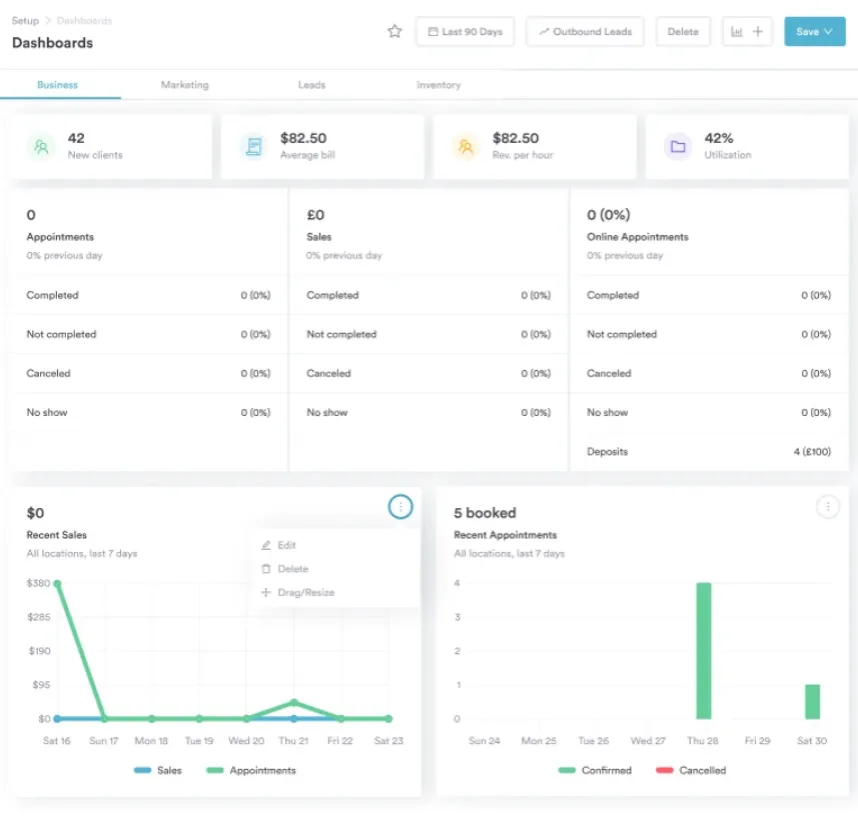
Spa management software is one system that handles bookings, client records, payments, and staff scheduling for a spa. It replaces the paper appointment book, the standalone card terminal, and the stock spreadsheet.
The useful version goes further than a calendar. It keeps one record per client, holding their history, their consent, their photos, and every payment they have made.
That single record is what separates a spa platform from a general booking tool. You can read our fuller explanation of practice management software.
The best spa booking software gives you room-level scheduling, deposits, a waitlist, and reminders whose timing you control. Spa booking software that schedules only people will double-book your treatment rooms.
An online booking system for spa treatments should also let a client rebook without creating an account. Forced sign-ups are a common reason a booking is abandoned.
Spa scheduling software has to book the room and the equipment alongside the therapist, or it will sell the same room twice. That single difference separates a spa platform from a salon calendar.
A facial ties up a room for the full hour. The therapist is free during the mask, and good spa online scheduling software lets you book another treatment into that window without releasing the room.
Ask how the platform models a treatment with processing time. Then ask what happens when two therapists are available and only one room is.
A spa management system should also handle point of sale, payroll and commissions, memberships, and reporting. Anything less leaves you running a second system alongside it.
You need day spa software if your treatments are non-medical. You need med spa software if anyone on your team injects, prescribes, or works under medical oversight. The dividing line is the clinical record, not the treatment menu.
A day spa runs on massage, facials, body treatments, and retail. Its software has to book rooms and therapists together, take payment, and keep a client history.
A med spa does all of that and then has to stand up to scrutiny. Consent forms, treatment notes, batch numbers, and before and after photos belong on one record, under HIPAA-grade handling.
Most platforms in this guide handle the day spa job well. Fewer handle the second list, which is why our top pick covers both.
If you are shopping specifically for a medical spa, we compare that shortlist separately in our guide to the best medical spa software. It weighs charting, e-consent, and compliance rather than retail and room turnover.
Spa software for small business owners should be something you can set up alone in a week and still afford in a quiet month. Depth matters less than getting booked and paid without help.
At one room and one pair of hands, three things decide it. What it costs in January, how long setup takes, and whether clients can book without creating an account.
Free spa software programs do exist, and they are funded by what you pay elsewhere. Square Appointments is genuinely free for one location, and you pay through card processing instead. Fresha starts at $19.95 a month and takes a 20% commission on clients who arrive through its marketplace.
That commission is the part people miss. It applies to new marketplace clients, so a strong month of new business raises the bill rather than lowering the cost per client.
Vagaro sits just above at $23.99 a month for one calendar. Its spa business software add-ons, including text marketing and forms, are billed separately.
The moment you offer a treatment that needs consent, a general booking tool stops being enough. There is nowhere to file the signed form or the photo that goes with it.
A simple spa CRM will hold a name, a phone number, and a visit history. It will not hold the record a regulator or an insurer would want to see.
If you plan to add peels, injectables, or anything clinical within the year, choose for that now. Migrating a client list is easy, and migrating three years of treatment notes is not.
Salon and spa management software makes sense when one business sells blow-dries and body treatments from the same calendar. It fails when the two sides need different records. The best salon software is built around a stylist and a chair, while a spa runs on rooms, equipment, and treatment notes.
Many of these platforms began life as nail salon software, tanning salon software, or barbershop management software. Those origins still shape the assumptions inside them.
A barber shop software calendar assumes one person, one chair, one short service. It has no concept of a room that stays occupied while the therapist steps out.
The best salon software for small salon owners is the one you can set up alone in a week and afford in a quiet month. Price and setup time matter more than depth at that size.
Square Appointments and Fresha both fit that description, and Vagaro is close behind. All three let you take bookings and payments without a consultant.
The trade is what happens next. If you start offering injectables or peels, a salon-first platform has nowhere to file the consent form.
A salon spa software package makes sense when one business sells blow-dries and body treatments from the same calendar. Splitting that across two systems creates double-booked staff and two client lists.
What you need is mixed service durations, shared resources, and a checkout that handles retail and treatments together. Vagaro, Mangomint, and Boulevard are all built for that blend.
Check one thing carefully. Ask how the platform reports on the two sides separately, because a combined revenue figure hides which half is actually profitable.
Get your export confirmed in writing before you sign anything, not after you give notice. The answer changes which platform you should choose.
Client names and appointments almost always move. Everything below is where switches actually go wrong, so check it before you commit.
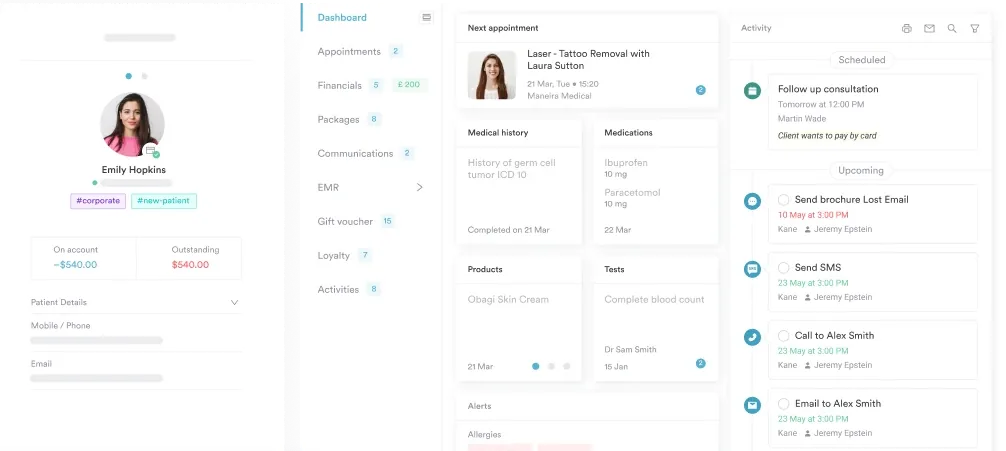
Ask four questions, and get the answers by email. Which fields does the export include? What format does it arrive in? Who does the import? And how long does it take?
A CSV of names is not a migration. If treatment notes arrive as one merged file per client, your therapists will be reading history in a viewer instead of a record.
Uptime belongs in the same conversation. Ask what happens to your bookings during an outage, and whether you can still see the day’s schedule.
A spa day has five moving parts, and most platforms cover two of them well. Pabau is built so the same client record carries all five.
It starts before the client arrives. They book themselves in through your online booking page, pay a deposit you set per service, and complete their forms on their own phone.
At the appointment, consent and treatment notes go on the same file as the photos. Pabau Scribe, our AI scribe, can draft the note so your therapist finishes the day on time.
Checkout, tipping, and retail run through the same record, so the invoice sits with the treatment. A client asking for a superbill to submit to their insurer gets it from the same file. Rebooking and memberships are handled at the desk, while the client is still in front of you.
By closing, your reporting already knows which treatments filled which rooms. Nobody exports a spreadsheet, and nobody reconciles two systems at 9pm.
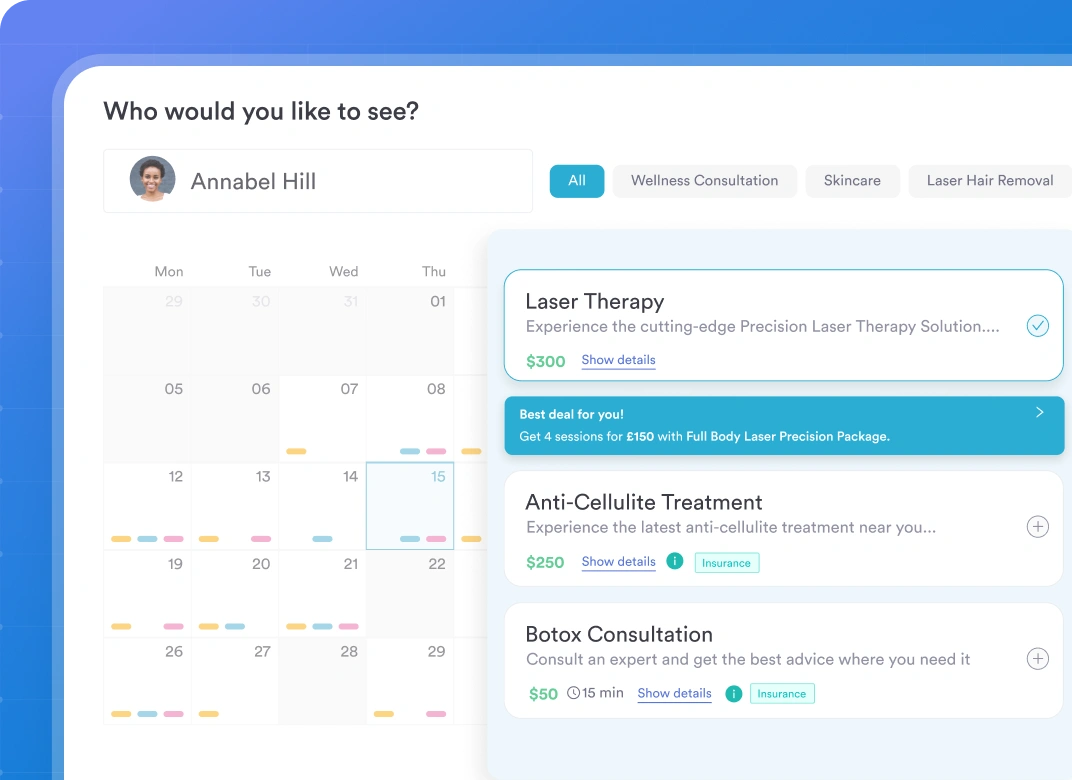
Every subscription includes every feature, so you are not choosing between consent forms and reporting. There is no free trial, because a spa gets value from Pabau once it is configured around its own workflow.

Pabau keeps online booking, consent, treatment notes, checkout, memberships, and reporting in one system, so your team stops copying data between tools. See the whole spa workflow in a demo built around your treatments.

The best spa software is the one that matches the spa you actually run. One treatment room does not need Zenoti, and a five-site med spa will outgrow Square Appointments inside a quarter.
Price it over twelve months before you decide. A platform that looks cheap per month can land mid-table once per-user fees and add-ons arrive, and the reverse is just as common.
If you run a med spa or an aesthetic clinic delivering medical treatments, the shortlist narrows fast. Consent, treatment notes, and photo storage are either in the client record or they are on somebody’s phone.
Settle the export question before you sign, whichever way you go. The platform that tells you plainly what you can take with you is the one that expects to keep you. Book a demo to see how Pabau runs a spa day from one record.

Shopping for a med spa specifically? Best medical spa software compares the platforms on charting, e-consent, and the compliance a clinical team needs.
Need the accounting side to match your booking system? Medical spa accounting software compares the tools that reconcile spa takings without a monthly spreadsheet.
Comparing booking tools rather than whole platforms? Beauty salon booking software in the US looks at the booking layer on its own, with US pricing.
Planning a second site before you commit to a platform? How to open a second med spa location covers the systems decisions that get expensive at two locations.
Want memberships to actually retain clients? How to build a med spa membership program covers pricing tiers, perks, and the billing rules that keep them profitable.
For a small spa, Square Appointments, Fresha, and Vagaro are the realistic options, because each lets one person get booked and paid without a consultant. Square is free for one location, Fresha starts at $19.95 a month, and Vagaro at $23.99. Move up to a full platform once you start recording consent.
The best booking software for spas books the room and the equipment alongside the therapist, not just the person. Look for deposits set per service, a waitlist that refills cancellations, and reminder timing you control. Booking software that only schedules staff will sell the same treatment room twice.
Compare them on four things. Total cost over twelve months, whether rooms are bookable resources, whether the client record holds consent, and what the export contains. Run the same busy-Saturday checkout in every demo. Feature lists look alike, and the checkout is where they stop being alike.
The best membership software for spas bills automatically, applies the member price at checkout, and still credits the therapist their commission. That last part is where several platforms fall down on a zero-dollar visit. Test a membership redemption in the demo, then open the commission report.
Mangomint and Boulevard are the two owners most often describe as easy to use day to day. Both put the calendar and the checkout within a click of each other. Judge it yourself by asking one therapist, not the owner, to rebook a client during the demo.
Zenoti and Boulevard are built for multi-site groups, and both bill per location rather than per user. The question that separates them is reporting: you need takings, stock, and commission per site and combined. Ask to see one report that splits revenue by location and by service type.
Spa software runs from $0 to about $330 per month per location, before card processing. Square Appointments has a free plan, Fresha starts at $19.95, and Vagaro at $23.99. Pabau starts at $104 and Boulevard at $143 per location. Mangomint charges $120 plus $10 per user, and Zenoti quotes on request.
Look for room and resource scheduling, online booking with deposits, and a client record that holds consent and treatment notes. Point of sale with tipping, memberships, and readable reporting matter next. For a med spa, add HIPAA handling and clinical photo storage.
Usually yes for client details and appointments, and often not for everything else. Treatment notes, before and after photos, consent forms, and gift-card balances are the fields that get left behind. Ask your current vendor in writing what it exports, and in what format, before you give notice.
Only some of it, and only if the vendor says so in writing. Platforms built for salons often store client notes without the safeguards a med spa needs. If you deliver medical treatments, ask for a business associate agreement and check how photos and consent forms are stored.