










Key takeaways
HCPCS Code A6234 covers a sterile hydrocolloid wound cover with no adhesive border, billed as each dressing.
The pad must measure 16 square inches or less, so measure the pad and not the whole dressing.
Medicare covers A6234 for qualifying wounds such as pressure injuries, venous ulcers, and diabetic foot ulcers, with a physician order on file.
Pad size and adhesive border status decide whether A6234, A6235, A6236, or another code in the family applies.
Practice management software like Pabau keeps wound records structured, which cuts transcription errors between the clinical note and the claim.
HCPCS Code A6234: official description and code category
HCPCS Code A6234 covers a sterile hydrocolloid dressing that is wound-cover only, with no adhesive border. The pad measures 16 square inches or less, and the code is billed as each individual dressing. Billers see it most often on claims for pressure injuries, venous stasis ulcers, and diabetic foot ulcers.
A6234 sits within HCPCS Level II, the CMS-maintained code set covering supplies, equipment, and services not captured by CPT. The A-codes within HCPCS Level II cover medical and surgical supplies. Accurate claims management for wound care supplies depends on picking the right code from the A6234-A6241 range every time.
What qualifies as an A6234 dressing?
A dressing qualifies for A6234 when it is a sterile hydrocolloid wound cover with no adhesive border. The pad must measure 16 square inches or less. Three product characteristics decide the code, and missing any one of them means a denial or a corrected claim.
- Pad size of 16 square inches or less. The pad is the absorbent wound-contact layer. Measure the pad, not the overall dressing footprint including any tape flange. Dressings with a pad size between 17 and 48 square inches move to A6235 (no adhesive border) or A6238 (with adhesive border). Pads larger than 48 square inches map to A6236 or A6239.
- Without adhesive border. Hydrocolloid dressings without a self-adhesive perimeter tape fall under A6234 (pad 16 sq in or less) or A6235 (pad 17-48 sq in). Dressings with a built-in adhesive border use codes A6237 through A6241.
- Sterile only. A6234 specifically requires sterile dressings. Non-sterile products are not covered under this code.
Wound cover dressings under A6234 are the outer-layer product only. When a hydrocolloid is used as a primary contact dressing and a secondary cover is applied, each layer bills with its own appropriate HCPCS code. Misapplying a single code to a two-layer dressing system is a common audit finding for wound care suppliers.
Medicare coverage criteria for HCPCS Code A6234
Medicare covers HCPCS Code A6234 when the dressing is medically necessary and ordered by a treating physician. The wound must also meet the qualifying clinical criteria under CMS Policy Article A54563. Coverage is administered through Medicare Administrative Contractors (MACs), and local coverage determinations (LCDs) may add conditions beyond the national policy. Always verify the applicable MAC LCD before billing.
Covered wound types
Medicare generally covers hydrocolloid wound cover dressings for the following wound diagnoses, provided medical necessity is documented:
- Pressure injuries (pressure ulcers), stages 2 through 4
- Venous stasis ulcers
- Diabetic foot ulcers and other neuropathic ulcers
- Arterial ulcers with documented clinical management plan
- Post-surgical wounds with documented complication (dehiscence, infection)
- Traumatic wounds healing by secondary intention
The wound must be deep enough, or draining enough, to need a wound cover product. Superficial abrasions and lacerations closed by primary intention do not qualify. Good wound assessment documentation decides whether the claim is covered or denied.
Non-covered indications
CMS explicitly excludes certain scenarios from coverage. Billing A6234 in these situations typically results in an automatic denial:
- Wounds with no clinical documentation of size, depth, or wound type
- Routine protective dressings on intact skin
- Wounds that have fully healed (documented closure without active tissue breakdown)
- Use as a preventive application on pressure-prone intact skin without active wound
- Quantities exceeding MAC-specified monthly limits without prior authorization
An inventory management tool flags when supply usage and supply billing drift apart.
A6234 fee schedule and reimbursement rates (2026)
Medicare reimbursement for A6234 is set annually through the CMS DMEPOS fee schedule. Rates vary by MAC locality and are updated each January. The table below sets out how the rate is built rather than a single national figure. Carrier-level amounts differ, so check current rates in your MAC’s fee schedule files before billing.
CMS updates the dollar amounts and they vary by locality, so pull current figures from your MAC’s published files. Third-party aggregator figures often lag behind official updates. Billing staff in dermatology practices and wound care centers should schedule a quarterly fee schedule audit as part of their standard practice documentation processes.
Pro Tip
Run a quarterly audit of your DMEPOS fee schedule file against the rates stored in your billing system. CMS publishes mid-year corrections that can shift A6234 payment amounts. Outdated fee schedule data leads to undercoding, collection shortfalls, or beneficiary billing errors. Set a calendar reminder each January and July.
Billing guidelines for A6234
Correct billing for A6234 turns on five operational details, each covered below. Any one of them can turn a clean claim into a denial or a post-payment audit finding.
- Bill each dressing as one unit. A6234 is billed „each dressing.“ If a patient receives three dressings in a month, submit three units. Do not bill by the box or package quantity.
- Apply MAC-specific quantity limits. Monthly unit limits for hydrocolloid dressings are set at the MAC level. Most MACs publish maximum units per wound per month in their LCD. Exceeding the limit without prior authorization triggers an automatic denial.
- Use the correct place of service code. A6234 is typically billed by DMEPOS suppliers (place of service 12 or 99 depending on delivery method) or by the treating facility when dispensing directly. Confirm which entity holds the DMEPOS number and is entitled to bill.
- Modifiers when applicable. Modifier KX (meets coverage criteria stated in LCD) is commonly required by MACs on DMEPOS claims to confirm medical necessity documentation is on file. Without KX where required, the claim may deny.
- Do not unbundle. When billing multiple wound dressing components (contact layer + cover layer), each component bills with its own HCPCS code. Do not combine two separate dressing layers under a single A6234 unit.
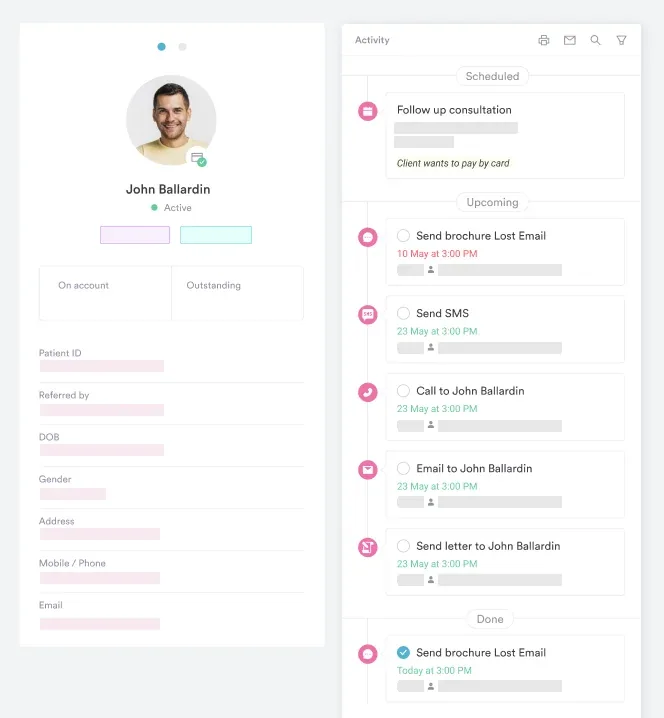
Practices using integrated patient records connect the wound assessment straight to the billing workflow. That link cuts transcription errors between the documented wound dimensions and the units submitted. When A6234 billing sits on a structured wound note, the biller never has to re-read handwritten dimensions.
Documentation requirements for A6234
Medicare requires specific documentation to support A6234 claims. Missing even one element is enough for a MAC to request a refund on a post-payment review. Maintaining complete records at the point of care protects the claim before it is ever submitted.
- Physician order. A written order from the treating physician (or allowed non-physician practitioner) specifying the wound dressing type, wound site, and estimated duration of use. Verbal orders must be followed by a written order within the timeframe required by the MAC.
- Wound assessment. A documented wound evaluation covering wound location and wound type, such as pressure, venous, or diabetic. It must also record wound dimensions in centimeters and the wound stage or severity.
- Medical necessity justification. Clinical notes explaining why a hydrocolloid wound cover is the appropriate product for this wound, including drainage level, wound bed characteristics, and prior treatments tried.
- Treatment plan. A documented plan of care including expected duration of treatment, dressing change frequency, and the care team responsible for wound management.
- Frequency of dressing changes. The physician order and treatment plan must specify how often the dressing is replaced. This determines the units billed and must align with the quantity submitted on the claim.
Practices that rely on paper wound logs struggle to produce this documentation quickly during a MAC audit. The clinical record should mirror the claim exactly, down to the wound, the dimensions, and the change frequency.

ICD-10 diagnosis codes commonly used with A6234
Every A6234 claim requires a supporting ICD-10-CM diagnosis code that establishes medical necessity. The diagnosis must reflect the active wound condition, not a historical or resolved diagnosis. The table below lists common ICD-10-CM codes linked to A6234 billing. All codes should be verified as current for the billing year against the CDC/NCHS ICD-10-CM web tool.
Code to the highest level of specificity available. An unspecified pressure ulcer code such as L89.90 is technically acceptable when a site-specific code exists. It also attracts extra scrutiny during an audit. Wound care teams that document laterality and wound stage at each assessment give their billers everything they need.
Practices carrying several wound care patients lean on patient care management workflows. These prompt clinicians to update wound staging and dimensions at every visit.
Related HCPCS codes: the A6234-A6241 hydrocolloid range
Hydrocolloid dressings span eight HCPCS codes. The code depends on whether the product is a wound cover or a filler, its size, and its adhesive border. Using the wrong code in this family is the leading cause of A6234 denials. The table below maps the full range.
How to choose between A6234 and related codes
Code selection in the A6234-A6241 range follows three questions in order:
- Is the product a wound cover or a wound filler? Paste and dry-form fillers use A6240 or A6241. Flat pad-style wound cover dressings use A6234 through A6239.
- Does the wound cover have an adhesive border? No border: A6234, A6235, or A6236 (by size). With border: A6237, A6238, or A6239 (by size).
- What is the pad size? 16 sq in or less, 17-48 sq in, or more than 48 sq in determines the final code within each border group.
The AAPC HCPCS code reference is worth checking when you code an unfamiliar product, because it confirms the description matches the dressing in hand. Billers in podiatry practices who also handle DMEPOS claims should keep a quick-reference card mapping product SKUs to HCPCS codes. Update it whenever a new dressing joins the formulary.
Code verification then takes seconds instead of a walk to the supply room.
Common billing errors and denial prevention
A6234 claims deny for predictable reasons. Understanding the most common errors lets billing teams build process checks that catch mistakes before submission rather than after a denial is received.
Practices that integrate billing and clinical documentation see fewer of these errors. The same structured entry that creates the clinical record also feeds the claim. When a wound note has dedicated fields for pad size, border type, and dressing frequency, the biller never has to interpret free text.
Teams handling high-volume DMEPOS billing benefit from automated billing workflows that flag incomplete documentation before a claim goes out. The same discipline applies to practices billing surgical preparation of the wound bed under 15005.
Pro Tip
Build a DMEPOS pre-submission checklist into your billing workflow. Check that the physician order is on file, the wound dimensions are documented, and the ICD-10 code matches the wound type. Confirm the quantity sits within MAC limits and that the KX modifier is applied. Running this checklist before every A6234 batch takes under five minutes.
Related HCPCS codes
- HCPCS code A9270 — Non-Covered Item or Service
- HCPCS Code A6242 — Hydrogel dressing
- HCPCS code A7003 — Disposable Nebulizer Administration Set
- HCPCS code A7005 — Non-disposable nebulizer set
How Pabau connects wound notes to A6234 claims
Plenty of wound care teams document the same visit twice. The clinician writes the wound assessment on paper or in a separate record. The biller then re-types the dimensions, wound type, and dressing frequency into the claim. Every hand-off is a chance for the two versions to drift apart.
Pabau, an all-in-one practice management system, keeps both in one place. Wound dimensions, wound type, stage, and dressing change frequency are captured on a structured form at the point of care. That record is what your biller reads when coding, so nothing has to be transcribed from a handwritten note.
The coder still picks the code. What changes is the source they work from, and how quickly an audit response comes together. When a MAC asks for the order, the assessment, and the change frequency behind a batch of A6234 units, all three sit on one record.

Keep wound records and claims in step
Pabau captures wound dimensions, wound type, and dressing change frequency at the point of care. Your biller works from that structured record instead of re-typing a handwritten note, so the claim matches the chart.

Conclusion
A6234 rewards a boring, repeatable habit. Measure the pad, check the border, and write the wound down the same way every time. Practices that do that stop treating denials as a billing problem, because most of them start in the exam room.
The trade-off worth remembering is time. Structured records cost a few extra seconds at the point of care and save hours when a MAC asks for proof. Book a demo to see how Pabau keeps wound documentation and claim preparation in one workflow.

Continue your research
Billing debridement alongside the dressing? CPT code 97597 sets out how a selective debridement session is documented and billed.
Moving a wound onto a skin substitute? HCPCS code Q4101 covers the sizing and documentation behind a skin substitute application.
Supplying durable equipment to a bedbound patient? HCPCS code E0275 shows the order and documentation trail a routine DME claim needs.
Coding a traumatic wound instead? ICD-10 code S41.021A explains what an initial-encounter laceration claim has to show.
Wound care continuing at home? The caregiver care plan template records who changes the dressing, how often, and what to escalate.
Frequently asked questions
What is HCPCS Code A6234 used for?
HCPCS Code A6234 bills a sterile hydrocolloid wound cover dressing with no adhesive border. The pad must measure 16 square inches or less. Clinicians and DMEPOS suppliers use it for qualifying wounds such as pressure injuries, venous ulcers, and diabetic foot ulcers.
What size wound dressing qualifies for A6234?
A6234 applies when the pad (wound-contact layer) measures 16 square inches or less. Pads measuring 17 to 48 square inches without an adhesive border use A6235, and pads larger than 48 square inches use A6236. Always measure the pad itself, not the overall dressing footprint including any surrounding tape flange.
What documentation is required to bill A6234?
You need a signed physician order naming the dressing type and wound site. You also need a wound assessment with dimensions and wound type, plus a medical necessity justification. The treatment plan must state the expected duration and the dressing change frequency. All records must be available for MAC review on request.
Is A6234 covered by Medicare?
Yes. Medicare covers A6234 when the dressing is medically necessary and ordered by a treating physician. The wound must be a qualifying type, such as a pressure injury, venous ulcer, or diabetic foot ulcer. Coverage is subject to MAC-level LCD requirements, which may include quantity limits and modifiers such as KX.
How does A6234 differ from A6235?
Both A6234 and A6235 cover sterile hydrocolloid wound covers without an adhesive border. The difference is pad size. A6234 applies to pads of 16 square inches or less, and A6235 covers pads from 17 to 48 square inches. Billing A6234 for a larger pad is a code error that leads to denial.
What are the billing units for HCPCS Code A6234?
A6234 is billed as „each dressing,“ meaning one unit equals one individual dressing applied. If a patient receives three dressings in a month, submit three units. Do not bill by package or box quantity. Monthly unit limits are set by the applicable MAC and must be observed to avoid quantity-related denials.