



HCPCS code E0198: Water pressure pad billing guide
HCPCS code E0198 is a water pad for a standard mattress HCPCS code E0198 is the ...

Last Updated: Oct 13, 2026

CPT Code 97597 describes selective debridement without anesthesia for wounds 20 sq cm or less, billed per session.
Medical necessity requires documented necrotic or devitalized tissue – billing for simple wound cleaning without necrotic tissue will be denied.
Missing wound measurements are the leading denial cause; document dimensions, tissue type, and clinical necessity at every encounter.
Pabau’s claims management software links wound care CPT codes directly to clinical records, reducing transcription errors and denial risk.
CPT Code 97597 is the billing code for active wound care management: selective debridement of a wound 20 sq cm or less, performed without anesthesia. The Centers for Medicare & Medicaid Services (CMS) requires wound dimensions, tissue type removed, and a clear medical necessity statement for every encounter billed under this code, and a single missing measurement in the clinical note can result in a rejected claim.
This reference guide covers the official code description, clinical indications, billing rules, reimbursement rates, ICD-10 crosswalks, documentation requirements, and the most common denial patterns for CPT Code 97597. Whether you manage wound care billing in a physician office, outpatient clinic, or therapy practice, understanding these rules will protect your revenue cycle.
CPT Code 97597 describes active wound care management. This means selective debridement without anesthesia, including topical application(s), wound assessment, and instructions for ongoing care, per session, for the first 20 sq cm or less.
The American Medical Association (AMA), which owns and maintains the CPT code set, classifies 97597 under the Active Wound Care Management category of Physical Medicine and Rehabilitation codes. The code captures the full encounter: debridement, topical treatment, wound evaluation, and patient education in a single billable unit.
Three clinical criteria define a valid 97597 encounter:
This distinguishes 97597 from simple wound care or dressing changes precisely because of the necrotic tissue removal component. Without documented debridement of devitalized tissue, the encounter does not meet the code’s clinical threshold.
CPT Code 97597 applies when a clinician removes necrotic, devitalized, or infected tissue from a wound without anesthesia. The wound type matters: CMS coverage criteria under CMS Article A58565 (Billing and Coding: Wound and Ulcer Care) specify that medical necessity is established when the wound contains non-viable tissue requiring removal to promote healing.
Wound types that support 97597 billing:
When NOT to use CPT Code 97597: simple wound cleaning, irrigation, or dressing changes without removal of necrotic tissue do not meet the threshold. If the wound is clean, granulating, and free of devitalized tissue, billing 97597 will not meet medical necessity criteria and will be denied. Practices managing physical therapy practice management should note that physical and occupational therapists may both bill this code, but the modifier differs: physical therapists use modifier GP.
CPT Code 97597 is billed per session, not per wound. If a provider treats multiple wounds in a single session, the total wound surface area treated is added together to determine whether 97598 is also required. Per-session billing means the code is reported once regardless of how many qualifying wounds are debrided in the same encounter, as long as total area stays at or below 20 sq cm. Professional claims are submitted on the CMS-1500 form, with the debrided wound linked to its supporting diagnosis pointer.
CPT Code 97597 covers the first 20 sq cm. When the total wound surface area debrided in a session exceeds 20 sq cm, add CPT 97598 for each additional 20 sq cm. CPT 97598 cannot be billed without 97597 as the primary code.
Example: a provider debrids a 35 sq cm diabetic foot ulcer in a single session. Bill 97597 (first 20 sq cm) plus one unit of 97598 (additional 15 sq cm, which rounds to the next 20 sq cm increment). Payers apply the add-on rule strictly. Billing two units of 97597 for the same session is an unbundling error that triggers automatic denial. Review IVF CPT codes for a similar per-session versus per-unit distinction in another specialty.
Correct modifier application is critical for CPT Code 97597 reimbursement, particularly under Medicare. Using the wrong modifier or omitting a required one are among the top denial triggers.
Note: modifier usage constitutes a compliance decision. Incorrect modifier application can constitute fraudulent billing. Consult a certified professional coder (CPC) if modifier rules for your specific payer or MAC are unclear.
Well-chosen primary care practice tools keep these everyday services documented consistently across the whole team.
The most clinically significant coding decision for wound care is whether to bill CPT Code 97597 (active wound care management) or CPT 11042 (debridement, subcutaneous tissue). These codes are not interchangeable. The selection depends on four clinical and procedural factors.
The 11042-11047 surgical debridement family requires documentation of tissue depth (subcutaneous, muscle fascia, or bone) and is typically performed in an operative or procedure setting. If tissue removal extends below the skin surface into subcutaneous tissue, CPT Code 97597 is no longer the correct code. Use CPT 11042 for subcutaneous tissue debridement and CPT 11043 for muscle/fascia involvement. See the AAPC CPT code lookup for the full 11042-11047 code family descriptors.
Medicare reimburses CPT Code 97597 at different rates depending on the place of service. Non-facility settings (physician offices, outpatient wound care clinics) typically yield higher reimbursement than facility settings (hospital outpatient departments) because the provider incurs practice costs directly. Rates are set annually through the Medicare Physician Fee Schedule (MPFS) and vary by geographic locality.
These figures are calculated from the CY2026 Medicare Physician Fee Schedule relative value file: 3.04 total RVUs for non-facility and 0.93 for facility, multiplied by the 2026 conversion factor of approximately $33.40-$33.57. Actual payment varies by geographic practice cost index (GPCI). Use the CMS Physician Fee Schedule Look-Up Tool to calculate the exact reimbursement for your locality.
Commercial payers set their own fee schedules. Rates typically range from 100% to 140% of Medicare rates depending on the payer and contract. Always verify current rates against your specific payer contracts and your MAC’s published fee schedule.
Always check your Medicare Administrative Contractor (MAC) local coverage determination (LCD) before billing CPT Code 97597. LCD policies vary between MACs – Noridian (JF/JE), Novitas (JH/JL), and NGS each publish separate wound care coverage articles that may impose additional documentation requirements beyond the national standard.
Every CPT Code 97597 claim requires a supporting ICD-10-CM diagnosis code that establishes medical necessity. The diagnosis code must reflect a wound type that requires debridement. Submitting 97597 against an ICD-10 code that describes a healed wound, a simple laceration, or a condition not requiring debridement is a leading cause of automatic denial. Use the AAPC CPT-to-ICD-10 crosswalk to verify code pairs before submission.
Code specificity matters. CMS and most commercial payers require the most specific ICD-10-CM code available, including laterality (right vs left), stage or severity (for pressure ulcers), and anatomical site. Vague codes such as L97.909 (non-pressure chronic ulcer of unspecified part of unspecified lower leg) will trigger additional documentation requests. The same specificity principle governs unrelated code sets: Consult your MAC’s wound care LCD for the full list of covered and non-covered ICD-10 codes. Diabetic foot ulcer claims carry an added requirement:
Documentation failures account for a substantial portion of CPT Code 97597 denials. CMS and MAC-level LCDs require specific data elements to be present in the clinical note for every billed encounter. Checklist compliance at the point of care is far more effective than retrospective documentation review. Claim accuracy built at intake avoids the slower work of appealing a denial later.
Mandatory documentation elements for every 97597 encounter:
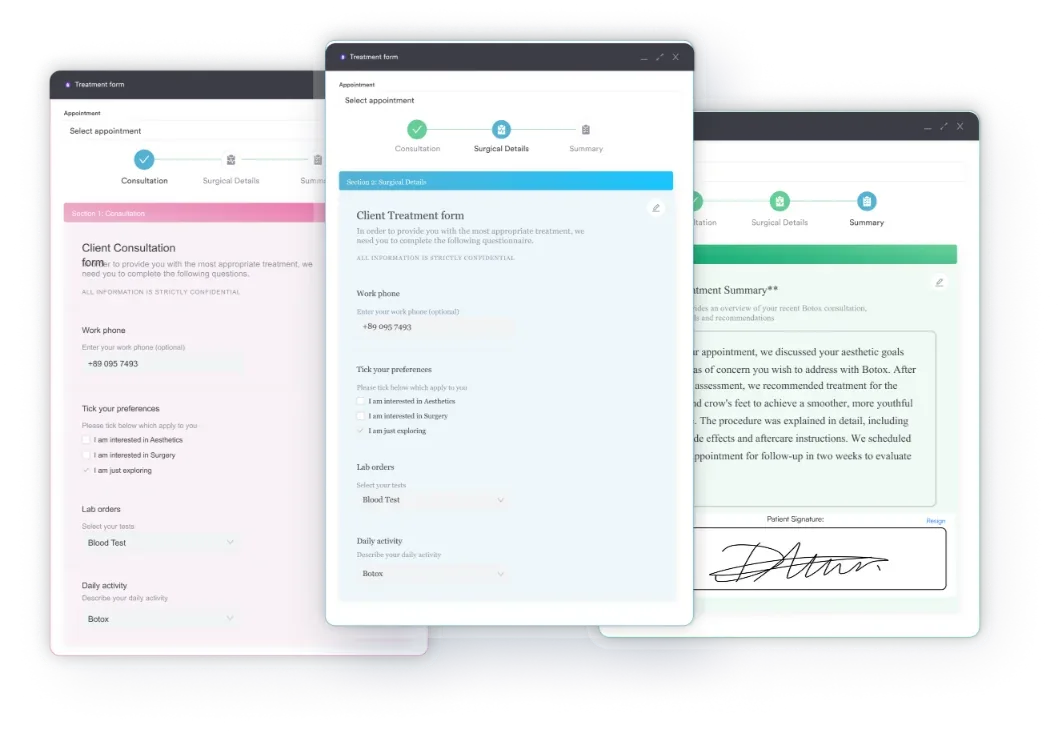
Using digital intake forms with structured wound care templates captures all required fields at the point of care, reducing the risk of missing data. Practices relying on free-text notes routinely omit wound dimensions. This is the most common single documentation failure.
Structured clinical documentation tools that enforce required field completion before a note is finalized have measurably lower denial rates for wound care codes. The same structured approach applies to codes like the ADHD screening CPT code across other specialties.
CPT Code 97597 denials follow predictable patterns. Understanding the most frequent causes allows billing teams to implement upstream fixes rather than spending time on appeals. Supply codes face the same problem:
When a denial does occur, appeal with the complete clinical note, wound measurement documentation, and a medical necessity letter from the treating provider. Most payers accept appeals within 60-180 days of the denial date. Check payer-specific timelines. Maintaining HIPAA compliance includes proper documentation practices that also serve as your first line of denial defense.
Medicare coverage for wound care CPT codes operates at two levels: national CMS policy and MAC-level local coverage determinations (LCDs). Most wound care billing is governed by MAC LCDs, which means coverage criteria vary by geographic region. LCD L34587 (Wound Care) is the primary coverage document for many MACs, but its specific requirements for 97597 differ by jurisdiction.
Commercial payer variation: Aetna, UnitedHealthcare, and BCBS plans typically follow Medicare’s coverage criteria as a baseline but may impose additional requirements, including prior authorization for wound care beyond a set number of visits. Some commercial plans require a treating physician’s order before a therapist can bill 97597. Always verify your specific plan’s medical policy before assuming Medicare rules apply.
Prior authorization: Medicare generally does not require prior authorization for CPT Code 97597, but commercial plans increasingly do for chronic wound management beyond the initial treatment period. Check payer eligibility and authorization requirements before the patient’s first wound care visit. Practices using automated clinical workflows can build authorization check triggers directly into the scheduling and intake process, reducing the risk of billing for services that required pre-approval.
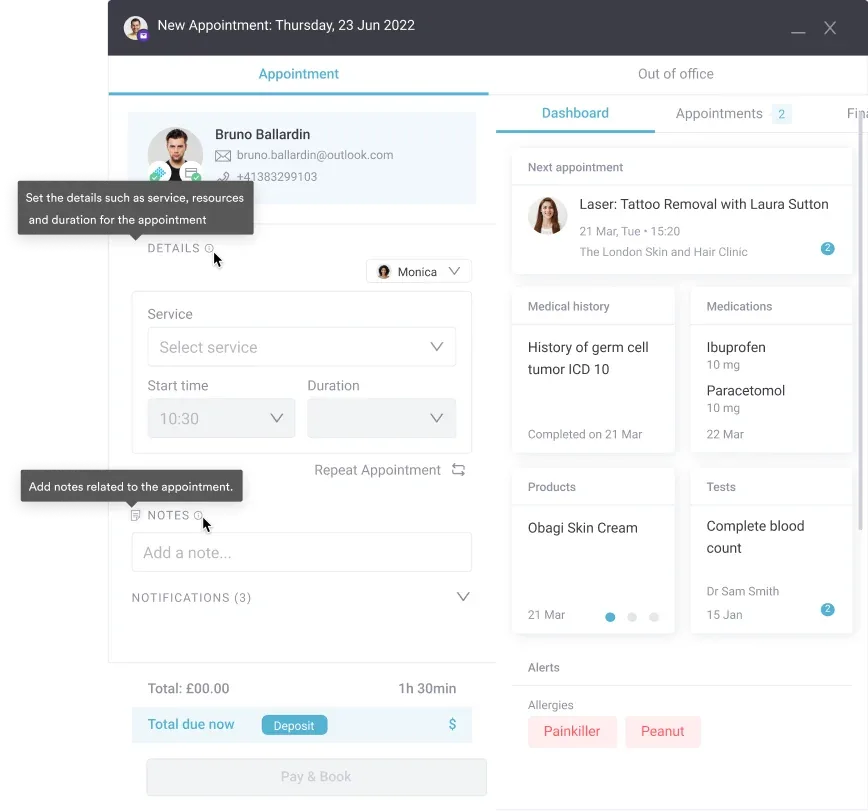

Pabau’s claims management software links CPT codes directly to clinical records, enforces structured documentation templates, and surfaces denial patterns by code. See how it works for wound care practices.

The documentation requirements for CPT Code 97597 are specific enough that manual, free-text note-taking consistently produces claims that fail at the payer level. Three recurring problems drive most 97597 denials: missing wound measurements, absent medical necessity language, and code selection errors at claim submission.
Practice management platforms that integrate clinical documentation with billing workflows fix all three problems. With Pabau’s claims management software, wound care CPT codes attach directly to the clinical record at the point of care. The system supports structured wound documentation templates that require wound dimensions, tissue type, and clinical necessity before a note can be signed. This removes the most common single-field omission that triggers denials.
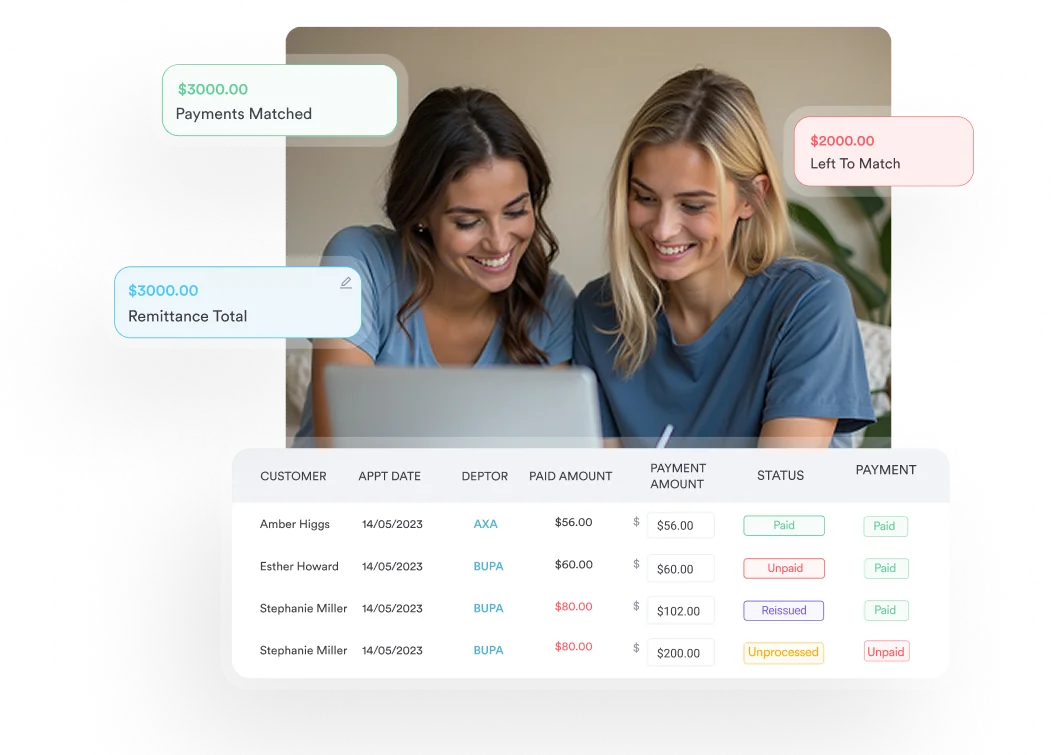
For practices that want to go further, Pabau’s Insights Plus add-on can surface denial patterns by CPT code, allowing practice managers to identify whether 97597 claims are failing at a higher-than-expected rate, isolate the cause (missing modifier, wrong ICD-10 pair, frequency limit), and implement corrections before patterns become systemic. This shifts wound care billing from reactive denial management to proactive claim integrity.
CPT Code 97597 has a narrow clinical threshold: necrotic tissue, no anesthesia, surface area at or below 20 sq cm, and documentation that proves it. Most denials trace back to documentation failures rather than clinical disputes, and those failures can be prevented at the point of care.
Pabau’s integrated wound care documentation and claims management tools give practices a systematic way to capture the required fields, apply correct modifiers, and monitor denial patterns before they compound. To see how Pabau supports billing workflows for wound care and other specialty codes, book a demo.

Billing for an ostomy supply too? urinary ostomy pouch billing guide covers the two-piece urostomy pouch system and its monthly Medicare coverage limit.
Need the code for wound care tape? non-waterproof tape billing guide covers the medical and surgical supply code billed per 18 square inches of tape.
Need the code for waterproof tape? waterproof tape billing guide covers the modifier and unit-count errors that most often trigger waterproof tape denials.
CPT Code 97597 is the active wound care management code describing selective debridement without anesthesia, including topical application, wound assessment, and patient care instructions, per session, for wounds 20 sq cm or less. It covers removal of necrotic or devitalized tissue using sharp instruments and is billed once per treatment session regardless of the number of qualifying wounds treated.
Use CPT 97597 when debridement is performed without anesthesia at the wound surface level in an outpatient or clinic setting. Use CPT 11042 when debridement reaches subcutaneous tissue, requires anesthesia, or is performed in an operative setting. The tissue depth and anesthesia requirement are the primary decision factors. When in doubt, consult a certified professional coder.
The clinical note must include wound dimensions in centimeters, a description of the necrotic or devitalized tissue removed, a medical necessity statement, wound assessment findings (bed, exudate, margins), any topical treatments applied, and documentation that patient care instructions were provided. Missing wound measurements are the most common documentation failure that triggers denial.
Yes. Bill CPT 97597 for the first 20 sq cm of wound surface area debrided in a session, then add CPT 97598 for each additional 20 sq cm beyond that. CPT 97598 is an add-on code and cannot be billed without 97597 as the primary code. Billing two units of 97597 for the same session is an unbundling error.
The leading denial causes are missing wound measurements (no documented sq cm dimensions), lack of medical necessity documentation, incorrect or non-covered ICD-10 diagnosis code, unbundling errors (billing 97597 twice instead of adding 97598), and a missing GP (physical therapy) or GO (occupational therapy) modifier when a therapist performs the service under Medicare. Most denials are preventable with structured documentation at the point of care.
Modifier GP is required under Medicare when a physical therapist provides or supervises the service, while modifier GO applies when an occupational therapist does. Modifier 59 (or XS) applies when 97597 is billed on the same day as another wound care or therapy service to indicate a distinct procedural encounter. Modifier GY is used when the service is known to be non-covered under Medicare and an advance beneficiary notice has been issued. Verify modifier requirements with your specific MAC before applying.



