





Pabau GO app

The new Pabau GO is heredownload on the App Store

Download on the App Store
Book a demo Book a demo
Compare

The best software for spas: 7 platforms compared for 2026

Ivana Karafiloska
Last Updated: August 19, 2026
Reviewed by: Avatar photo Lucy Galloway
Key takeaways

Key takeaways

There is no single best software for spas, so the right pick follows your spa type, your size, and how you take payment.

Practice management software like Pabau is our pick for an all-in-one spa and med spa platform, holding client records, consent, and payments in one system.

Mangomint suits the smoothest client booking, Vagaro suits a tight budget, and Square Appointments suits a solo treatment room.

Zenoti fits multi-location groups, Boulevard fits a premium front desk, and Fresha fits the lowest monthly subscription.

Confirm you can export client records, treatment notes, photos, and gift-card balances before you sign anything.

The best software for spas depends on the kind of spa you run. A solo treatment room and a five-location med spa need very different systems.

This guide compares seven genuine spa and salon management platforms. Each one gets a verdict, a price taken from the vendor’s own site, and an honest limitation.

We also cover what spa owners report going wrong after a year of daily use. The same friction comes up again and again in public discussions between owners.

We finish by covering what to export before you switch software. You need to know which of your data you can take with you before you sign anything.

The best software for spas at a glance

Pick the row that matches your spa, then read that review. Every price below came from the vendor’s own pricing page, checked in August 2026.

PlatformBest for (spa type and size)Starting priceStandout limitation
PabauSpas and med spas of any size that want one system$62 / month for one userNo free trial, so you start with structured onboarding
MangomintSpas that want the smoothest client booking$120 / month base plus $10 per userCosts more than budget tools at the same team size
VagaroA tight budget and the widest adoption$23.99 / month for one calendarCapabilities owners expect as standard are add-ons
ZenotiMulti-location spas and larger med spa groupsPricing on requestNo published prices, so you cannot compare before a call
BoulevardA premium front desk and checkout$140 / month per location, billed annuallyPriced per location, so a one-room spa pays a lot
FreshaStarting out on the lowest monthly subscription$19.95 / month for one team memberA 20% one-time commission on new marketplace clients
Square AppointmentsA solo therapist or a single treatment room$0 / month on the free planNo consent records or treatment notes for clinical work

The list is grouped by the kind of spa each platform fits, not by feature category. A platform built for ten locations is the wrong answer for one room. If you’re still weighing options, our guide to what practice management software is explains what an all-in-one system covers.

1. Pabau — best all-in-one software for spas and med spas

The bottom lineTop pick

One record holds the booking, the consent form, the treatment note, and the invoice for each client.

Who it’s for
  • Spas and med spas that want one system
  • Practices recording consent and treatment notes
  • Multi-location groups standardizing how the day runs
  • Owners who need HIPAA handled inside the platform
PricingFrom $62/monthone user, full platform
What works
  • Records, consent, photos, and payments in one place
  • Built for aesthetics, wellness, and allied health
  • Every subscription includes every feature
What doesn’t
  • No free trial, so onboarding is structured instead
  • SMS and telehealth usage run on top-up credits

Practice management software like Pabau is built for spas that treat, not just book. The client record carries the appointment, the consent form, the photos, and the treatment note together.

That matters the moment a client asks what you used on them last time. Nobody has to open a second system, a phone camera roll, or a paper folder to answer.

A solo aesthetics practice, Kingswood Aesthetics, runs exactly this setup as a team of one, without hiring extra admin help.
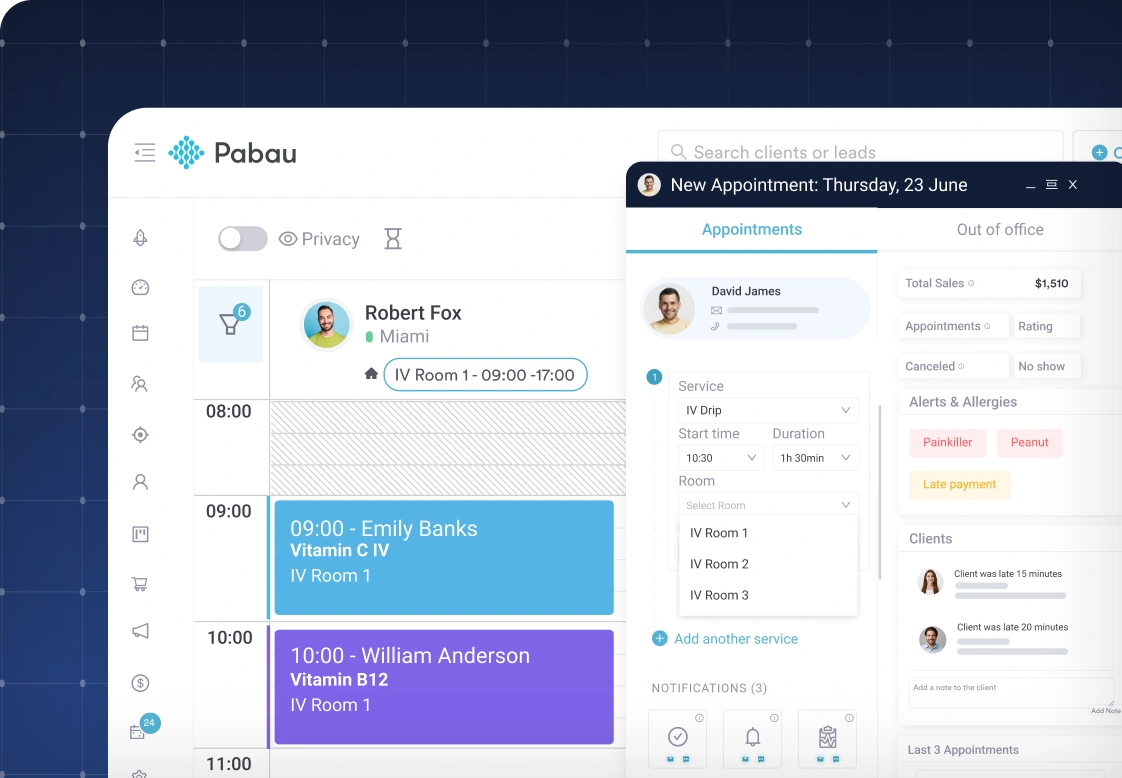
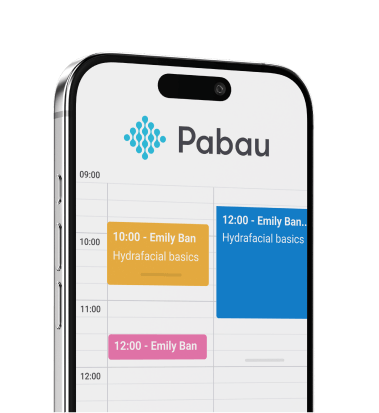
Pabau calendar showing spa appointments booked across staff and treatment rooms
Pabau schedules by room and equipment as well as by therapist, so a double-booked treatment room stops being the thing that breaks your Saturday.

Key features

  • Room and resource scheduling: book the therapist, the room, and the machine as one appointment
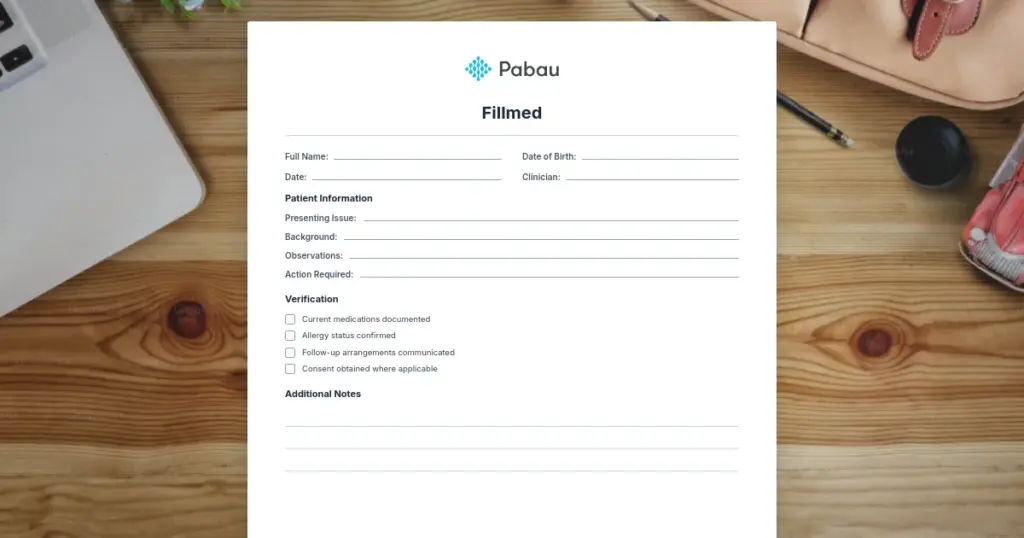
  • Client records and consent: intake forms, consent, before and after photos, and treatment notes on one file
  • Online booking and deposits: clients book themselves in, with a deposit rule you set per service
  • Memberships and packages: recurring billing, balances, and redemptions tracked against the client
  • Payments and point of sale: checkout, tipping, retail, and invoices inside the same record
  • Reporting: revenue, rebooking, and stock reporting on screen, not only as an export

Where Pabau shines

  • Clinical detail a beauty-first platform does not carry, including consent and charting
  • Every plan includes every feature, so growth costs users rather than unlocks
  • Onboarding runs with a dedicated coordinator, plus documented setup guidance
  • Over 30 native integrations are included, with Zapier, Make, and an open API behind them

What to watch

  • There is no free trial, so you commit to structured onboarding first
  • Setup takes real time, because the system is configured around your workflow
  • SMS and telehealth run on credits you top up, rather than sitting inside the subscription

Pricing

PlanPriceWho it coversKey inclusions
Starter$62 / month1 user, up to 100 clientsFull platform
SoloQuoted on a demo1 user, unlimited clientsFull platform
Team, Medium, GroupQuoted on a demo2 to 15 usersFull platform
EnterpriseQuoted on a demo16+ users, multiple sitesFull platform

Plans differ by users and locations, never by features. Annual billing saves up to 20%, and you can see the full breakdown on Pabau’s pricing page.

2. Mangomint — best for the smoothest client booking experience

The bottom lineOur pick for client booking

Clients book without creating an account, and non-technical staff pick it up in days.

Who it’s for

  • Spas that want booking friction gone
  • Small teams without a technical administrator
  • Owners replacing a calendar their staff avoid
  • Salons and spas selling retail alongside treatments
PricingFrom $130/month$120 base plus $10 per user

What works

  • Express Booking needs no client account
  • One plan carries the whole platform
  • Onboarding and data transfer are free

What doesn’t

  • Costs more than budget tools at the same team size
  • Phone, marketing, and payroll are paid add-ons

Mangomint sells one plan, and the client-facing booking flow is the reason owners pick it. A client picks a service and a time without setting up an account first.

Spa owners in a public r/Esthetics discussion named Mangomint more often than any other platform. The recurring praise was fast setup, responsive support, and reliable reminder texts.

Key features

  • Express Booking: clients book with no account and no password to forget
  • Forms and charting: intake and treatment notes attached to the client
  • Memberships and packages: recurring plans, balances, and gift cards
  • Virtual waiting room: arrivals handled without a queue at the desk
  • Multi-location: extra sites added at a flat monthly rate each

Where Mangomint shines

  • The booking experience clients actually complete on a phone
  • One plan means no feature hunting between tiers
  • Free onboarding and data transfer take the sting out of switching

What to watch

  • Owners in that discussion noted some reports arrive as a file rather than on screen
  • It costs more than Vagaro or Fresha at the same head count
  • Phone, marketing, and payroll each add a monthly line to the bill

Pricing

Plan Price Who it covers Key inclusions
Base fee $120 / month One business Full platform
Per user $10 / month Each user you add Full platform
Extra location $120 / month each Each additional site Full platform
Add-ons From $30 / month Phone, marketing, payroll Optional, priced separately

3. Vagaro — best for a tight budget and the widest adoption

The bottom lineOur pick on price

The cheapest route into booking, payments, and marketing together, with trade-offs owners discuss openly.

Who it’s for

  • Spas watching every dollar of overhead
  • Single-room studios adding online booking
  • Blended salon and spa businesses
  • Owners who want a marketplace listing
PricingFrom $23.99/monthone calendar, promotional rate

What works

  • Lowest paid entry price of the platforms here
  • Booking, point of sale, and marketing in one subscription
  • A 30-day free trial before you commit

What doesn’t

  • Capabilities owners expect as standard are paid add-ons
  • Multi-room calendars need careful setup to avoid double bookings

Vagaro is the platform most salons and spas have at least tried. You buy calendars rather than seats, so a one-room spa pays for one calendar.

It is also the platform the public r/Esthetics discussion was built around, and the criticism there was specific. Owners raised a clunky multi-room calendar, confusing front-desk checkout, and add-on fees.

One ten-year user in that same discussion reported few problems, although not while using Vagaro for payments. Treat both as demo questions rather than verdicts.

Key features

  • Calendar-based pricing: pay per bookable calendar, from one upwards
  • Point of sale: checkout, retail, and a free card reader with merchant services
  • Marketplace listing: exposure to clients browsing for a treatment nearby
  • Marketing tools: 1,000 emails a month included, with text marketing sold separately
  • Branded app: your own app listing, charged as an add-on

Where Vagaro shines

  • Price, plainly, for a spa that needs booking and checkout to work
  • Breadth of capability for the money, including memberships and gift certificates
  • A 30-day trial that lets you test the calendar before paying

What to watch

  • Owners reported repeated paid add-ons for capabilities they expected as standard
  • Room-level scheduling needs configuring before you trust it with two rooms
  • A one-time 20% fee applies to a first appointment booked through the marketplace

Pricing

Plan Price Who it covers Key inclusions
One calendar $23.99 / month 1 bookable calendar Booking, point of sale, marketing
One calendar, list price $30.00 / month 1 bookable calendar Same, once the offer ends
Extra calendars Rises per calendar 2 to 7+ calendars Same platform
Multiple locations Quoted per location Multi-site businesses Same platform

4. Zenoti — best for multi-location spas and larger med spa groups

The bottom lineOur pick for multi-location

Built to run many sites from one place, and sold through a sales call rather than a price list.

Who it’s for

  • Groups running several spa locations
  • Larger med spas with complex operations
  • Franchise networks standardizing on one system
  • Owners who need reporting across sites
PricingPricing on requestquoted per location

What works

  • Multi-location operations, payroll, and inventory together
  • Reporting and dashboards designed for groups
  • Memberships, packages, and loyalty built in

What doesn’t

  • No published prices, so budgeting needs a sales call
  • Heavier than a single-room spa will ever need

Zenoti is the enterprise answer on this list. It is aimed at groups where one manager needs to see ten locations, not at a spa with one treatment room.

Its strength is operational reporting. Room and resource management, payroll, commissions, and inventory sit in the same platform as booking and checkout.

Key features

  • Multi-location and franchise management: one system across sites
  • Room and resource management: treatment rooms and equipment booked as resources
  • Payroll and commissions: therapist payout calculated from the same data
  • Memberships and packages: recurring revenue tracked per location
  • Business intelligence: dashboards across the group, with optional AI agents

Where Zenoti shines

  • Group-level reporting that smaller platforms cannot match
  • Depth in operations, from stock to staff performance
  • A genuine fit for a med spa chain rather than a single site

What to watch

  • No public pricing, so comparison shopping means a sales process
  • Implementation is a project, not an afternoon
  • The breadth is wasted on a small independent spa

Pricing

Plan Price Who it covers Key inclusions
Zenoti OS Pricing on request Quoted per location Operations, transactions, interactions
AI Workforce Pricing on request Quoted per location Optional AI agents

5. Boulevard — best for a premium front-desk experience

The bottom lineOur pick for the front desk

A polished front desk and checkout, priced per location rather than per user.

Who it’s for

  • Spas where the front desk is the experience
  • Teams up to five providers on the entry plan
  • Businesses selling memberships and packages
  • Med spas that want e-prescribing as an add-on
PricingFrom $140/monthper location, billed annually

What works

  • Self-booking that allocates time intelligently
  • Front-desk and checkout flow built for a premium feel
  • Medspa bundles aimed at aesthetics workflows

What doesn’t

  • Priced per location, so a one-room spa pays a lot
  • Forms, accounting sync, and prescribing cost extra

Boulevard sells the client-facing experience. The booking flow, the arrival, and the checkout are the parts it invests in, and it shows at a busy desk.

Owners in that public discussion also called it complicated, and questioned the value at the price they were paying. One recurring detail is worth testing directly.

Commission did not compute on a zero-dollar membership visit, which forced manual tracking. Run that exact scenario in your demo and then open the commission report.

Key features

  • Intelligent self-booking: service duration allocated from client history
  • Front-desk workflow: arrivals, checkout, and tipping designed as one flow
  • Memberships and packages: recurring plans with balances at the desk
  • Client messaging: two-way texting from the dashboard
  • Medspa bundles: aesthetics-specific packages, with e-prescribing sold per prescriber

Where Boulevard shines

  • A front desk that feels considered rather than transactional
  • Booking that protects your calendar shape instead of fragmenting it
  • Membership handling that suits a spa selling monthly plans

What to watch

  • Per-location pricing is unkind to a single-room business
  • Client forms and photo storage start at $65 per month per location
  • Owners described a learning curve steeper than they expected

Pricing

Plan Price Who it covers Key inclusions
Essentials $140 / month per location Up to 5 professionals 100 texts, 500 email blasts, 25 GB storage
Premier $234 / month per location Unlimited professionals 250 texts, 1,000 email blasts, 50 GB storage
Prestige $328 / month per location Unlimited professionals Forms add-on, 2,500 texts, 100 GB storage

See our Pabau and Boulevard comparison for the feature detail.

6. Fresha — best for starting out on the lowest monthly subscription

The bottom lineOur pick for starting out

The cheapest monthly subscription here, paid for with commission on new marketplace clients.

Who it’s for

  • Solo therapists starting out
  • Spas that want marketplace exposure
  • Teams paying per bookable member
  • Owners who want a short trial first
PricingFrom $19.95/monthone bookable team member

What works

  • Lowest monthly subscription of the platforms here
  • Calendar, point of sale, and client management on the entry plan
  • No fee on your own returning clients

What doesn’t

  • A 20% one-time commission on new marketplace clients
  • Loyalty, insights, and accounting sync are paid add-ons

Fresha used to be the free option. It now charges a monthly subscription as well as a commission, so the honest description is cheapest rather than free.

The marketplace is the trade. A client who discovers you through Fresha costs you a one-time 20% commission, with a $6 minimum. Your own returning clients are free.

Key features

  • Marketplace bookings: exposure to clients searching for a treatment near them
  • Inventory and retail: stock levels, reorder points, and an online product store
  • Consultation forms: forms and patch-test records attached to the client
  • Payments: deposits, no-show fees, and terminals free above processing volume
  • Certifications: Fresha states HIPAA, ISO 27001, and GDPR compliance

Where Fresha shines

  • The lowest monthly outlay of any paid platform on this list
  • Marketplace exposure that a new spa cannot buy cheaply elsewhere
  • Competitive card processing at 2.29% plus $0.20 in person

What to watch

  • The marketplace can show a competitor to a client who came looking for you
  • Listings are templated, so your brand sits inside Fresha’s
  • Login permissions, commissions, and pay runs need the Team plan

Pricing

Plan Price Who it covers Key inclusions
Independent $19.95 / month 1 bookable team member Single calendar, 100 messages, 50 marketing emails
Team $14.95 / month per member Unlimited team members Multiple calendars, phone support
Enterprise Custom rates Over 20 team members Quoted by Fresha

If the commission model concerns you, our Fresha alternatives and Fresha versus Timely pieces go deeper.

7. Square Appointments — best for a solo therapist or a single treatment room

The bottom lineOur pick for solo therapists

Free to start, strong at taking payment, and light on anything clinical.

Who it’s for

  • Solo therapists and single treatment rooms
  • Spas already taking payment with Square
  • Owners who want no monthly fee
  • Retail-led businesses selling products
PricingFrom $0/monthfree plan, one location

What works

  • A genuinely free plan with booking and payments
  • Booking and card processing from one vendor
  • A 30-day trial on both paid plans

What doesn’t

  • No treatment notes or consent records for medical work
  • Paid tiers are charged per location

Square Appointments is the lowest-commitment option here. The free plan books clients, takes payment, and costs nothing monthly, which suits one therapist in one room.

What it does not do is clinical. There is no consent record, no treatment note, and no clinical photo tied to a client file. A med spa outgrows it quickly.

Owners in that public discussion also raised service outages, including a full day, and reminder texts that did not reach every client. One kept a paper book as a backup.

Key features

  • Free plan: online booking, calendar, and payments at no monthly cost
  • Integrated payments: one vendor for booking and card processing
  • Mobile apps: run the day from a phone or tablet
  • Retail and invoices: product sales and invoicing in the same account
  • Text marketing: included allowances on the paid tiers

Where Square Appointments shines

  • No monthly cost while you are proving the business works
  • Payment hardware and processing that need no separate contract
  • Setup you can finish yourself in an afternoon

What to watch

  • Nothing here supports consent, charting, or clinical photography
  • Owners reported outages, so ask how you are told during an incident
  • The $49 and $149 tiers are charged for every location you run

Pricing

Plan Price Who it covers Key inclusions
Free $0 / month per location Solo and very small teams Booking and payments, 2.6% plus 15¢ in person
Plus $49 / month per location Growing teams 500 texts included, 2.5% plus 15¢ in person
Premium $149 / month per location Busier multi-site teams 2,500 texts included, 2.4% plus 15¢ in person

What spa owners say goes wrong after a year

Spa owners in a public r/Esthetics discussion raised the same problems repeatedly. These are patterns from that thread, not verified faults in any product.

Treat each row as a demo question. Ask the vendor to reproduce the scenario in front of you, using your own services and prices.

PlatformWhat owners reportWhat to test in your demo
PabauNot raised in that discussion, so weigh our own claims the same wayComplete one client journey end to end, from booking to rebooking
MangomintSome reports export as a file instead of displaying, and it costs more than budget toolsOpen the three reports you check weekly, on a phone
VagaroA clunky multi-room calendar led to double bookings, and add-ons kept appearingBook two treatments into one room, then check out with a tip and a retail item
ZenotiCost only becomes clear inside a sales processAsk for the per-location price in writing, including onboarding
BoulevardComplexity, and commission not calculating on a zero-dollar membership visitRun a membership visit that costs the client nothing, then open the commission report
FreshaMarketplace commission on new clients, and add-on costs that stack upAsk which of last month’s bookings would have counted as new marketplace clients
Square AppointmentsService outages, including a full day, and reminder texts not reaching everyoneAsk how you are notified during an incident, and what your fallback is

Generic scheduling tools show up in those discussions too, which is why they are not picks here. Acuity Scheduling earns praise for value and reporting, but owners noted no built-in messaging and no waitlist.

The same logic rules out social scheduling tools and accounting packages. They are useful in a spa, but they do not run one.

How to choose spa software that fits how your practice works

Choose on the shape of your day, not the length of the feature list. Spa software either matches how you book rooms, record treatments, and take payment, or it fights you daily.

Three questions settle most decisions. Do you book rooms and machines as well as people? Do you record consent and treatment notes? And do you sell memberships?

What is spa management software?

Spa management software is one system that handles bookings, client records, payments, and staff scheduling for a spa. It replaces the paper appointment book, the standalone card terminal, and the stock spreadsheet.

The useful version goes further than a calendar. It keeps one record per client, holding their history, their consent, their photos, and every payment they have made.

That single record is what separates a spa platform from a general booking tool. You can read our fuller explanation of practice management software.

What to look for in spa booking software

Look for room-level scheduling, deposits, a waitlist, and reminders you control the timing of. Spa booking software that schedules only people will double-book your treatment rooms.

  • Rooms and equipment as resources: one appointment holds the therapist, the room, and the machine
  • Deposits and card on file: set per service, so a 90-minute treatment is protected differently
  • Waitlist: a cancellation refills itself instead of costing you the slot
  • Reminder timing you set: 48 hours out gives a client time to rebook, not just to cancel
  • Processing and finishing times: a therapist freed during a mask’s dwell time
  • Calendar sync: personal calendars visible without leaving the booking system

What salon and spa management software should include

Salon and spa management software should include point of sale, payroll and commissions, memberships, reporting, and a client record that holds consent. Anything less leaves you running a second system.

Compliance matters as much as any feature on this list. If you deliver medical treatments, your platform handles protected health information, known as PHI, and needs to say so in writing.
  • HIPAA: ask for a business associate agreement, not a marketing claim on a feature page
  • PCI: confirm card data never lands in a note field or an email thread
  • Consent and photos: signed forms and clinical images stored against the client, not on a phone
  • Access control: a front-desk login should not open a treatment note
  • Audit trail: who viewed or changed a record, and when
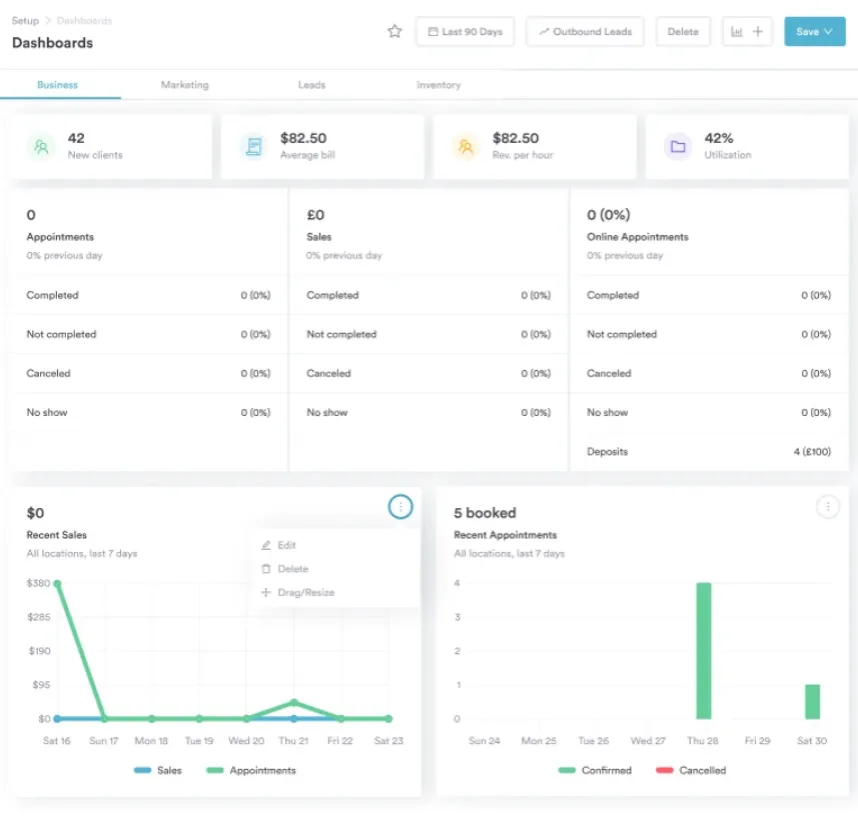
Reporting dashboard showing spa revenue, rebooking, and staff performance figures
Reporting you can read on screen tells you which treatments refill your rooms, which is the number that decides next month’s schedule.

Our guide to HIPAA compliance covers what a med spa has to document. It is worth reading before a sales call, not after. Billing accuracy matters too, since even a single filler injection carries its own procedure code, like CPT 11951.

Why the best salon software isn’t always right for a spa

The best salon software is built around a stylist and a chair, while a spa runs on rooms, equipment, and treatment records. That difference decides whether a platform helps or hinders.

Many of these platforms began life as nail salon software, tanning salon software, or barbershop management software. Those origins still shape the assumptions inside them.

A barber shop software calendar assumes one person, one chair, one short service. It has no concept of a room that stays occupied while the therapist steps out.

  • Chair instead of room: availability tracks staff, so two therapists can be sold the same room
  • Retail-first checkout: tipping and product sales are polished, treatment notes are not
  • Fixed service lengths: no processing time, so a peel and a blow-dry are modeled the same way
  • No consent handling: nowhere to store a signed form or a before and after photo
  • Chair rental logic: built for renters, which complicates commission for employed therapists

The best salon software for small salon owners

The best salon software for small salon owners is the one you can set up alone in a week and afford in a quiet month. Price and setup time matter more than depth at that size.

Square Appointments and Fresha both fit that description, and Vagaro is close behind. All three let you take bookings and payments without a consultant.

The trade is what happens next. If you start offering injectables or peels, a salon-first platform has nowhere to file the consent form.

When a salon spa software package makes sense

A salon spa software package makes sense when one business sells blow-dries and body treatments from the same calendar. Splitting that across two systems creates double-booked staff and two client lists.

What you need is mixed service durations, shared resources, and a checkout that handles retail and treatments together. Vagaro, Mangomint, and Boulevard are all built for that blend.

Check one thing carefully. Ask how the platform reports on the two sides separately, because a combined revenue figure hides which half is actually profitable.

How much does spa and salon management software cost?

Spa and salon management software costs between $0 and about $330 per month per location, before card processing fees. Free plans exist, and enterprise platforms quote rather than publish.

PlatformEntry priceWhat the entry tier coversPayment-processing fee
Fresha$19.95 / monthOne bookable team member2.29% plus $0.20 in person
Vagaro$23.99 / monthOne bookable calendarNot published on its pricing page
Pabau$62 / monthOne user, up to 100 clients, full platformSet with your payment provider
Mangomint$130 / month$120 base plus one user2.45% plus 15¢ in person
Boulevard$140 / monthUp to five professionals, one locationNot published on its pricing page
Square Appointments$0 / monthOne location, booking and payments2.6% plus 15¢ in person
ZenotiPricing on requestQuoted per locationNot published

Two things move the real number. Per-location pricing punishes a small single-room spa, and per-user pricing punishes a growing team.

Add-ons move it again. Text marketing, client forms, payroll, accounting sync, and a branded app are separate monthly lines on several of these platforms.

Then there is processing. At 2.6% plus 15 cents, a spa taking $30,000 a month pays roughly $800 in fees, which dwarfs most subscriptions on this list.

Before you switch: What to export from your current system

Get your export confirmed in writing before you sign anything, not after you give notice. The answer changes which platform you should choose.

Client names and appointments almost always move. Everything below is where switches actually go wrong, so check it before you commit.
  • Client records and contact details: including marketing consent and communication preferences
  • Treatment notes: as structured data, not a single flattened PDF per client
  • Before and after photos: still linked to the right client and the right date
  • Consent forms: signed copies, like an authorization for disclosure, with their timestamps intact
  • Gift-card and package balances: the outstanding value you are legally on the hook for
  • Membership plans: the plan, the price, and the next billing date for each client
  • Future appointments: everything already in the diary, with its room and therapist
  • Product and stock data: supplier details, cost prices, and current levels
  • Staff commission history: enough to answer a therapist’s query about last quarter
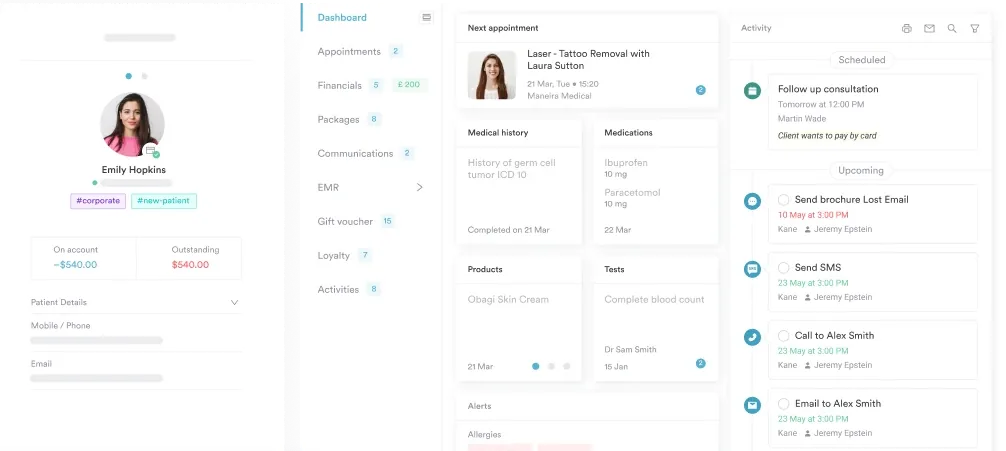
Detailed spa client record showing treatment history, notes, and consent forms in one file
Ask to see one client record on screen during the demo, because a record holding consent and notes together also exports cleanly.

Ask four questions, and get the answers by email. Which fields does the export include? What format does it arrive in? Who does the import? And how long does it take?

A CSV of names is not a migration. If treatment notes arrive as one merged file per client, your therapists will be reading history in a viewer instead of a record.

Uptime belongs in the same conversation. Ask what happens to your bookings during an outage, and whether you can still see the day’s schedule.

How Pabau runs a spa’s whole day from one system

A spa day has five moving parts, and most platforms cover two of them well. Pabau is built so the same client record carries all five.

It starts before the client arrives. They book themselves in through your online booking page, pay a deposit you set per service, and complete their forms on their own phone.

At the appointment, consent and treatment notes go on the same file as the photos. Pabau Scribe, our AI scribe, can draft the note so your therapist finishes the day on time.

Checkout, tipping, and retail run through the same record, so the invoice sits with the treatment. A client asking for a superbill to submit to their insurer gets it from the same file. Rebooking and memberships are handled at the desk, while the client is still in front of you.

By closing, your reporting already knows which treatments filled which rooms. Nobody exports anything, and nobody reconciles two systems at 9pm.
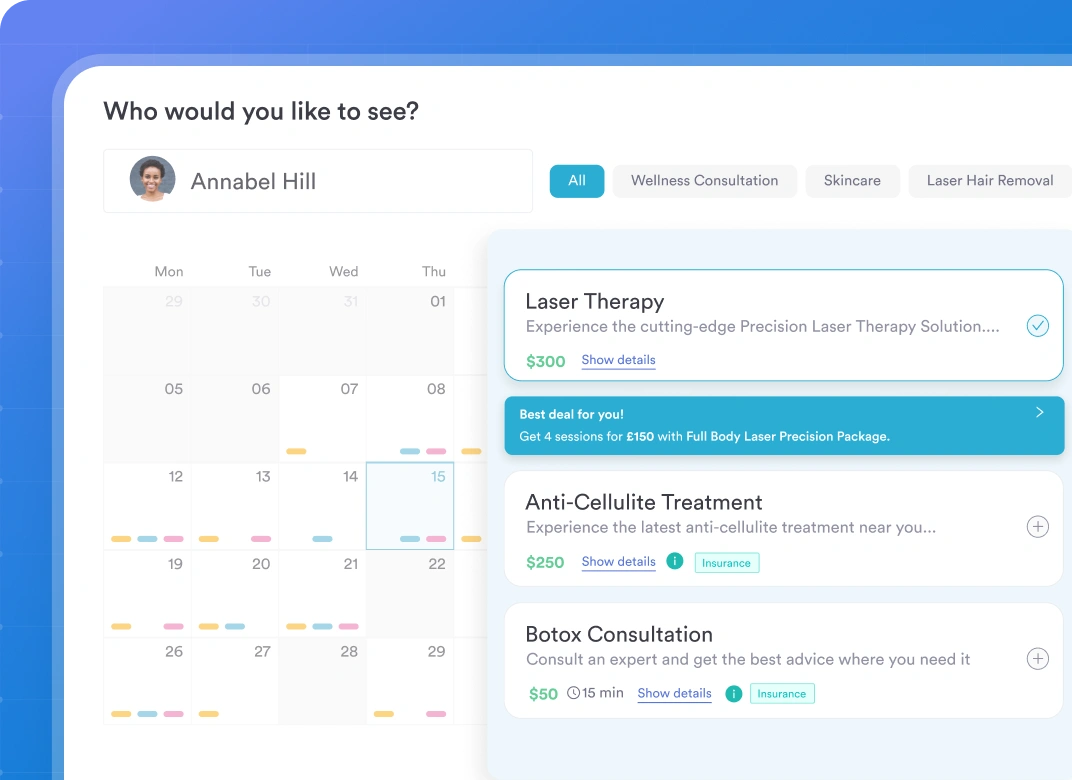
Pabau online booking page showing spa treatments and available appointment times
Pabau’s online booking collects the deposit and the intake form up front, so a Saturday slot is held by a committed client.

Every subscription includes every feature, so you are not choosing between consent forms and reporting. There is no free trial, because a spa gets value from Pabau once it is configured around its own workflow.

Run your spa’s whole day from one client record

Pabau keeps online booking, consent, treatment notes, checkout, memberships, and reporting in one system, so your team stops copying data between tools. See the whole spa workflow in a demo built around your treatments.

Pabau practice management dashboard

Conclusion

Match the platform to the spa you actually run. One treatment room does not need Zenoti, and a five-site med spa will outgrow Square Appointments inside a quarter.

If you run a med spa or an aesthetic clinic delivering medical treatments, the shortlist narrows fast. Consent, treatment notes, and photo storage are either in the client record or they are on somebody’s phone.

Settle the export question before you sign, whichever way you go. The platform that tells you plainly what you can take with you is the one that expects to keep you. Book a demo to see how Pabau runs a spa day from one record.

Continue your research

Continue your research

Not sure whether you are running a spa or a med spa? What is a med spa sets out the treatments, licensing, and oversight that change which software you need.

Need the accounting side to match your booking system? Medical spa accounting software compares the tools that reconcile spa takings without a monthly spreadsheet.

Comparing booking tools rather than whole platforms? Beauty salon booking software in the US looks at the booking layer on its own, with US pricing.

Planning a second site before you commit to a platform? How to open a second med spa location covers the systems decisions that get expensive at two locations.

Want memberships to actually retain clients? How to build a med spa membership program covers pricing tiers, perks, and the billing rules that keep them profitable.

Frequently asked questions

What makes all-in-one software better for spa management than using multiple tools?

All-in-one spa software keeps bookings, client records, payments, and marketing in one system, so nothing has to be copied between tools. That removes the export step, the duplicate client list, and the integration bill. It also means one support line when something breaks on a busy Saturday.

How does spa software improve the client experience from the start?

Good spa software lets clients book themselves in at any hour, then sends the intake form and pre-care instructions automatically. The client arrives prepared and your therapist already has the notes. Reminders and deposits cut the no-shows that leave a room empty.

What key features should I look for in the best software for spas?

Look for room and resource scheduling, online booking with deposits, and a client record that holds consent and treatment notes. Point of sale with tipping, memberships, and readable reporting matter next. For a med spa, add HIPAA handling and clinical photo storage.

Why is choosing the right spa software important for my business?

Your software decides how much admin your team does after closing and how easily a client rebooks. The wrong pick shows up as double-booked rooms, missing consent forms, and manual commission spreadsheets. Switching later costs you a migration and two weeks of retraining.

How much does spa software cost per month?

Spa software runs from $0 to about $330 per month per location, before card processing. Square Appointments has a free plan, Fresha starts at $19.95, and Vagaro at $23.99. Pabau starts at $62 and Boulevard at $140 billed annually. Mangomint charges $120 plus $10 per user, and Zenoti quotes on request.

Can I move my client data to a new spa platform?

Usually yes for client details and appointments, and often not for everything else. Treatment notes, before and after photos, consent forms, and gift-card balances are the fields that get left behind. Ask your current vendor in writing what it exports, and in what format, before you give notice.

Is spa software HIPAA compliant?

Only some of it, and only if the vendor says so in writing. Platforms built for salons often store client notes without the safeguards a med spa needs. If you deliver medical treatments, ask for a business associate agreement and check how photos and consent forms are stored.

×