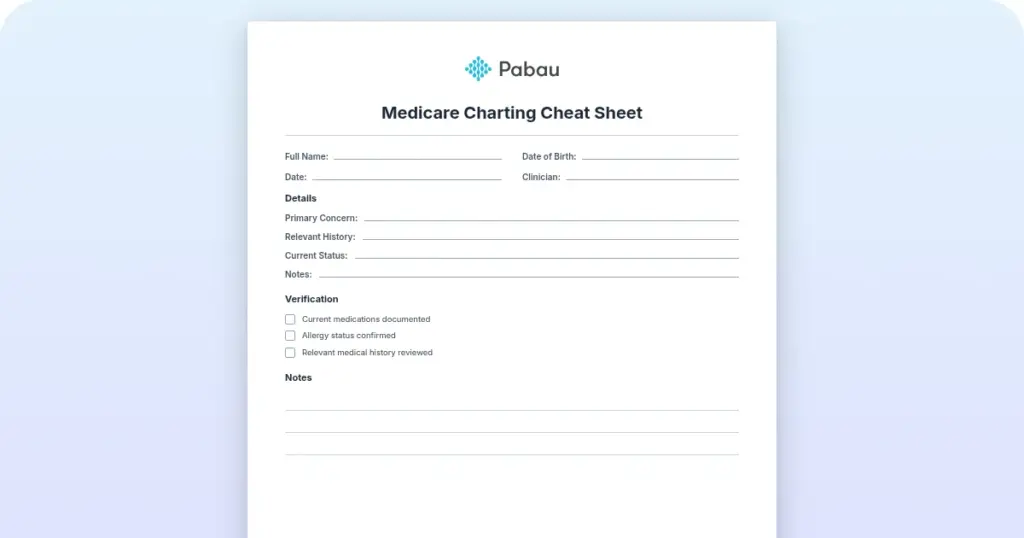
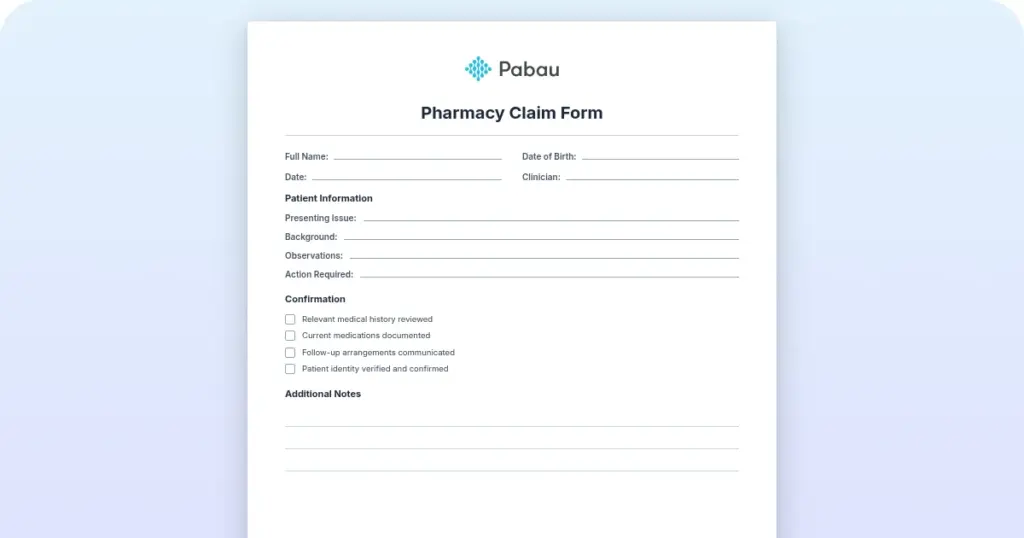
Medicare charting cheat sheet
A Medicare charting cheat sheet is a one-page reference that lists what Medicare...

6
Last Updated: Oct 21, 2026
Med spa payment processing has a shortlist of nine tools, and your average ticket decides which one is cheapest. Pabau is our top pick, and it is practice management software with the card terminal built in rather than a standalone processor. Square suits a practice that takes most payment at the front desk, and Stripe suits one that books through its own website. Payments are one area in our wider ranking of medical spa systems, alongside scheduling, charting and marketing.
Every other guide to spa payment processing ranks processors at retail ticket sizes. A coffee shop rings up $15. A med spa rings up $350 for filler, or $800 for a course of six. That difference changes which processor is cheaper, and it changes it by thousands of dollars a year.
We read every rate below on the provider’s own pricing page. Two of them publish no figure we could use, and we say so rather than filling the space with a guess.
The nine are ordered by fit for an aesthetic practice rather than by general popularity, which is why the running order differs from most round-ups. Each card carries a med spa fit score out of five. That score is our own judgment, not an average of user reviews.

1. Pabau — our top pick, because the card terminal and the practice record are one system.
2. Square — strongest all-rounder for a med spa that takes most payment at the front desk.
3. Stripe — best fit when booking and checkout run through your own website.
4. Helcim — interchange-plus pricing that starts to beat a flat rate at high card volume.
5. Stax — a subscription that replaces the percentage markup once volume clears the break-even point.
6. Clover — the strongest in-person POS hardware, with the least med spa functionality.
7. Braintree — best for a med spa selling online, where patients pay through digital wallets.
8. Elavon — a dedicated merchant account with bank backing, suited to multi-location practices.
9. Shopify — makes sense only for a med spa that also sells retail skincare.
| Tool | Pricing model | In-person rate | Online rate | Best for a med spa that… |
|---|---|---|---|---|
| Pabau | Software subscription, processing quoted | Pabau Pay rate quoted per practice | Quoted per practice | wants payments, bookings and patient records in one system |
| Square | Flat rate, free plan available | 2.6% + 15¢ on Square Free | 3.3% + 30¢ on Square Free | takes most of its money at the front desk |
| Stripe | Flat rate, developer-first | 2.7% + 5¢ via Stripe Terminal | 2.9% + 30¢ on domestic cards | runs booking and checkout on its own website |
| Helcim | Interchange-plus, no monthly fee | Interchange plus Helcim’s margin | Interchange plus Helcim’s margin | has grown past flat-rate pricing on card volume |
| Stax | Monthly subscription, 0% markup | Interchange plus a per-item fee | Interchange plus a per-item fee | clears high card volume every month |
| Clover | Plan plus reseller quote | Quoted by plan and reseller | Quoted by plan and reseller | wants retail-grade POS hardware and stock tracking |
| Braintree | Flat rate, no monthly fee | Online-first, no POS hardware | 2.89% + $0.29 on cards and wallets | sells online with heavy digital wallet use |
| Elavon | Dedicated merchant account, starting rates published | 2.60% + 12¢ starting | 3.30% + 30¢ starting | needs one merchant account across several sites |
| Shopify | Plan plus flat rate | 2.6% + 10¢ on Basic | 2.9% + 30¢ on Basic | sells retail skincare alongside treatments |
Pabau is the only tool here where the card terminal and the practice management system are one product.
Practice management software like Pabau runs the schedule, the patient record and the payment in one system. That is what separates it from the rest of this list. Every other tool here is a payment layer you bolt onto whatever software you already run.
Pabau Pay, our card terminals, takes the money at the front desk, and the transaction posts straight to the appointment it belongs to. Tap to pay, chip and pin, and digital wallets all work. So do tips, partial payments and account credit.
Online, the same system takes a deposit when a patient books and keeps a card on file for the no-show fee. It sends a payment link for a balance. Memberships and prepaid packages bill on a schedule. Gift cards and self-pay checkout sit in the same ledger.
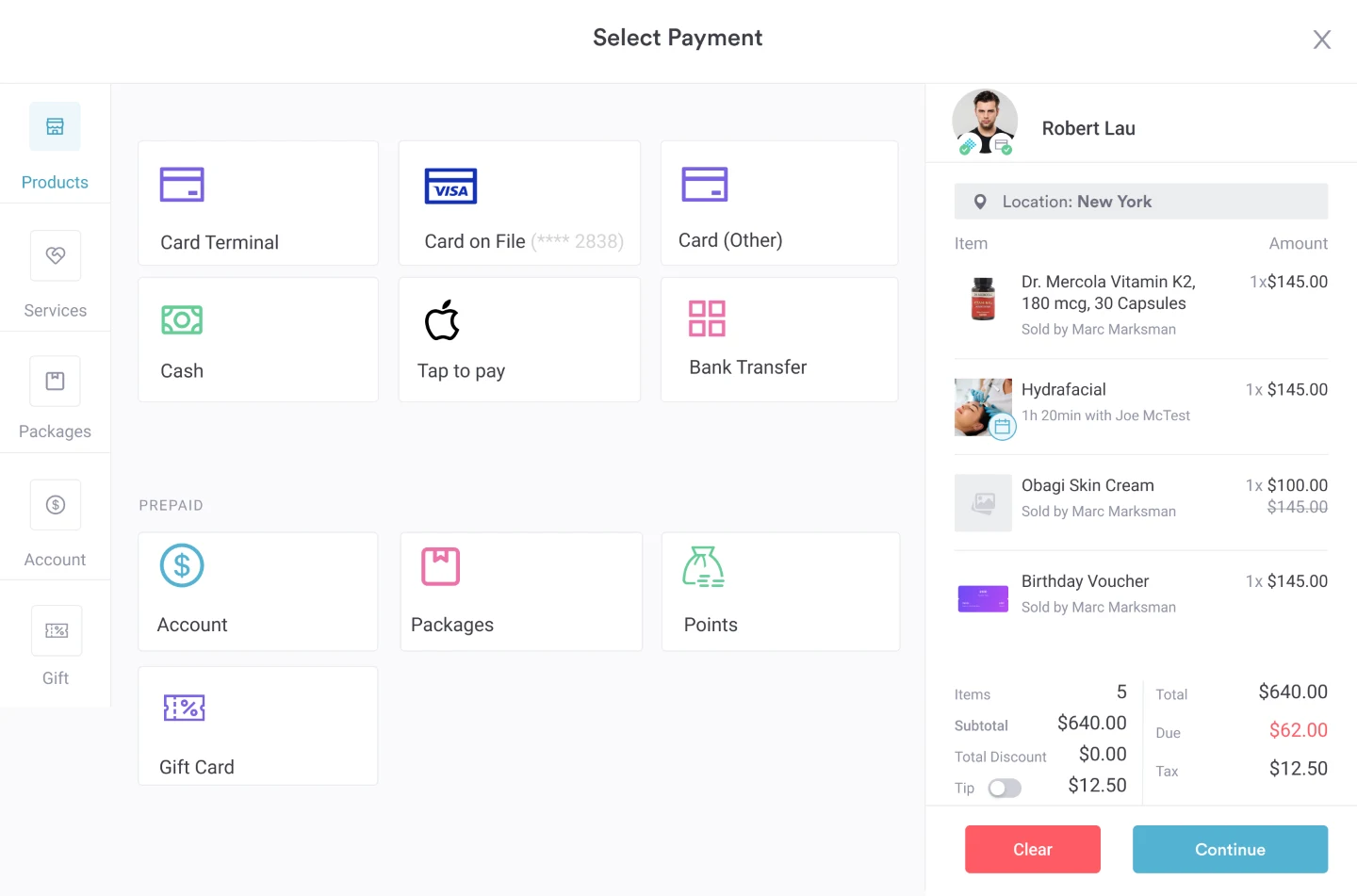
There is no reconciliation step at the end of the week, because the sales report and the calendar read from the same records. Pabau has no free trial. Setup runs through structured onboarding instead, which is what a payment workflow this connected needs to be worth having.
| Plan | Price | In-person rate | Online rate |
|---|---|---|---|
| Pabau subscription | From $104 / month, one user | Quoted per practice | Quoted per practice |
| Pabau Pay terminals | No monthly fee | Quoted per practice | Quoted per practice |
Pabau publishes the software price and quotes Pabau Pay processing during onboarding, because the rate depends on your card mix and volume. You can see the full breakdown on Pabau’s pricing page.
Square is the strongest all-rounder for a med spa that takes most of its money at the front desk.
Square gives a med spa a working point of sale on day one. There is no monthly software fee, and the hardware starts at a phone reader. For a practice where most treatments are paid for at the desk, that combination is hard to beat on setup effort.
The weakness shows up away from the desk. Square’s POS was built for retail and hospitality, so it holds no treatment notes, no consent forms and no clinical history. Square payment processing sits beside your patient records rather than inside them.
Two rates matter more to a med spa than the headline one. A stored card or a manually keyed payment costs 3.5% + 15¢, which is the rate a no-show fee or a membership charge is billed at. Invoices and online sales on the free plan cost 3.3% + 30¢.
Both of those have moved since most round-ups were written. Older guides quote Square at 2.6% + 10¢ in person and 2.9% + 30¢ online. The in-person fixed fee is 15¢ today, and 2.9% + 30¢ online needs the Plus plan or better.
| Plan | Price | In-person rate | Online rate |
|---|---|---|---|
| Square Free | $0 / month | 2.6% + 15¢ | 3.3% + 30¢ |
| Square Plus | Paid monthly plan | 2.5% + 15¢ | 2.9% + 30¢ |
| Square Premium | Paid monthly plan | 2.4% + 15¢ | 2.9% + 30¢ |
| Stored or keyed card | Any plan | 3.5% + 15¢ | 3.5% + 15¢ |
| Afterpay | Any plan | 6% + 30¢ | 6% + 30¢ |
Square publishes these processing rates on its own site, but sets the Plus and Premium subscription prices by industry. Check squareup.com for the plan fee that applies to a med spa.
Stripe is the best fit when your booking and checkout flow lives on your own website.
Stripe is the processor to pick when the booking journey runs through your own website rather than a vendor’s app. Deposits, saved cards and recurring membership charges are all first-class in the API, so a developer can build the exact flow you want.
In person, Stripe Terminal charges 2.7% + 5¢, the lowest fixed fee on this list. Those 5¢ barely register on a $350 treatment. On a $40 brow appointment they still cost less than Square’s 15¢.
The surcharges are what bite. Manually keyed cards add 0.5%. International cards add 1.5%, and currency conversion adds another 1% on top. Tap to Pay on a phone adds 10¢ per authorization.
Stripe payment processing is often quoted at 2.7% + 30¢ for online sales. That figure is out of date. Domestic online cards cost 2.9% + 30¢, and 2.7% is the in-person Terminal rate.
| Plan | Price | In-person rate | Online rate |
|---|---|---|---|
| Standard pricing | No monthly fee | 2.7% + 5¢ via Terminal | 2.9% + 30¢ |
| Surcharges | Added to the rates above | +0.5% keyed, +$0.10 Tap to Pay | +1.5% international, +1% conversion |
| Stripe Reader M2 | $59 one-off | — | — |
| Reader S700 or S710 | $299 each, plus $10 / month cellular | — | — |
Stripe lists all of the above on its own site, surcharges included. The headline 2.9% is rarely what an overseas patient paying by phone ends up costing you.
Helcim's interchange-plus pricing starts to beat a flat rate once a med spa's card volume climbs.
Helcim prices on interchange-plus, so you pay the card networks’ own rate plus Helcim’s margin, itemized separately. That model wins at high ticket and high volume, and a med spa reaches both far sooner than a retailer does.
This is the practical form of the ticket-size point below. A flat 2.6% is a good deal on a $15 sale and a poor one on an $800 package. Interchange on that package is nowhere near 2.6%, and interchange-plus passes the difference back to you.
The surrounding terms are unusually clean. There is no monthly account fee, no contract and no cancellation fee. Deposits land the next business morning, PCI compliance carries no extra charge, and the built-in card vault stores cards for memberships and no-show fees.
Hardware pricing, including any per-transaction terminal fee, is published on helcim.com and varies by device. Helcim reduces its margin as your monthly volume grows, so the rate you are quoted at signup is a starting point.
| Plan | Price | In-person rate | Online rate |
|---|---|---|---|
| Helcim account | No monthly fee, no contract | Interchange plus Helcim’s margin | Interchange plus Helcim’s margin |
| Card terminal | Published on helcim.com | Published on helcim.com | — |
| PCI compliance | Included at no extra charge | — | — |
Helcim publishes its margin and hardware pricing on its own site, and that page did not load for us when this guide was updated. Read the live figures on helcim.com before you model a saving.
Stax swaps the percentage markup for a monthly subscription, which only pays off above a volume threshold.
Stax charges a flat monthly subscription and adds 0% markup to interchange, so growing your card volume does not grow your processor’s cut. For a busy med spa that is the most direct answer to a percentage fee.
The arithmetic only works in one direction. Below a certain monthly card volume the subscription costs more than the markup it replaces, and the model loses to a flat rate. Above that point, every extra dollar you process costs close to interchange.
Work out your own break-even before you sign. Take your monthly card volume, multiply it by the markup your current processor charges, and compare that figure with the subscription Stax quotes you. Ask for the quote in writing first, because Stax sets the subscription by volume rather than publishing a rate card.
| Plan | Price | In-person rate | Online rate |
|---|---|---|---|
| Stax subscription | Quoted by monthly card volume | Interchange plus a per-item fee | Interchange plus a per-item fee |
| Contract | None | — | — |
Stax’s site did not return a rate card we could read when this guide was updated. Treat any per-transaction figure in an older round-up as unconfirmed, and ask for a written quote.
Clover has the best in-person hardware on this list and the least med spa functionality.
Clover is a point-of-sale system first and a payment processor second, and the hardware is the reason to consider it. Countertop stations, handhelds and card readers cover a busy front desk well, and the stock tracking suits a practice with a retail shelf.
What it will not do is run a med spa. There are no customizable deposits, no membership or package billing, and no clinical records or consent forms. A practice on Clover ends up running a second system for the patient side of the business.
Pricing is the other complication. Fiserv owns Clover, and plans are sold through resellers, so two med spas can pay different rates for identical hardware. Older round-ups quote $14.95 a month with 2.3% + 10¢ in person. Get a written quote for your own plan instead.
| Plan | Price | In-person rate | Online rate |
|---|---|---|---|
| Clover software plan | Quoted by plan and reseller | Quoted | Quoted |
| POS hardware | Quoted by reseller | — | — |
Clover’s pricing page returned no figures we could read when this guide was updated. The reseller model means a published rate would not apply to every practice anyway.
Braintree suits a med spa selling online, where patients pay through digital wallets.
Braintree is PayPal’s payment platform, and its strength is the wallet coverage a website checkout needs. PayPal, Venmo, Apple Pay, Google Pay and Samsung Pay all work without separate integrations, which matters when package sales convert on a phone.
Bank debit is the underrated part for a med spa. An ACH payment is an electronic bank-to-bank transfer through the Automated Clearing House network, the same rails as a direct deposit. Braintree charges 0.75% for one, capped at $5.00, against 2.89% + $0.29 on a card.
On an $800 package that is $23.41 on a card against $5.00 by bank debit, a difference of $18.41 per sale. Same-day ACH costs 1.5% + $0.10 when the patient cannot wait for standard settlement.
Braintree’s card rate has moved too. Older guides quote 2.59% + $0.49. PayPal’s published rate today is 2.89% + $0.29, with 1% added for non-USD presentment and another 1% for cards issued outside the US.
| Plan | Price | In-person rate | Online rate |
|---|---|---|---|
| Cards and digital wallets | No monthly fee | Online-first, no POS hardware | 2.89% + $0.29 |
| Venmo (US only) | No monthly fee | — | 3.49% + $0.49 |
| ACH direct debit | No monthly fee | — | 0.75%, capped at $5.00 |
| Same-day ACH | No monthly fee | — | 1.5% + $0.10 |
| Chargeback protection | From 0.4% per transaction | — | Chargebacks cost $15.00 |
PayPal lists all of these on its own site, in a schedule stated as last updated on May 7, 2026. The two 1% surcharges apply on top of the card rate.
Elavon publishes starting rates, but a med spa's dedicated-account pricing is still quote-driven, not self-serve.
Elavon sells a dedicated merchant account rather than a share of an aggregated one, and as a US Bank subsidiary it underwrites in-house. For a multi-location practice, or one taking payment in several currencies, that structure is worth something.
Elavon publishes starting rates on its own site: 2.60% + 12¢ in person and 3.30% + 30¢ online, both for qualified transactions. It also lists $0 annual, batch, and cancellation fees, plus an Interchange Plus option that itemizes the network rate separately. Full dedicated-account pricing is still quote-driven, and Elavon does not state when money reaches your account.
Quote-driven pricing is common at the merchant-account end of the market, which is why this guide leads with published rates wherever they exist. Elavon’s starting rates give you a benchmark, but the quote you receive decides what your practice pays.
| Plan | Price | In-person rate | Online rate |
|---|---|---|---|
| Merchant account | Starting rates published, full pricing quoted | 2.60% + 12¢ starting | 3.30% + 30¢ starting |
Elavon publishes starting rates for qualified transactions, but full dedicated-account pricing is still quote-driven. Ask for the complete schedule in writing, including the monthly minimum, the PCI fee, and the payout timing.
Shopify only makes sense for a med spa that sells retail skincare, because it cannot run a practice.
Shopify cannot run a med spa, so read this entry only if you sell retail skincare alongside treatments. There is no appointment book, no consent form and no patient record anywhere in the product.
As an online store it is strong, and Shopify Payments is built in. Products, gift cards and prepaid vouchers sell through a storefront that matches your brand. In person, Shopify POS handles the retail shelf at 2.6% + 10¢ on the Basic plan.
Two costs catch people out. Using an outside payment gateway instead of Shopify Payments adds a platform fee on top of the card rate, at 2% on Basic. And the POS Pro features most retail counters want cost $89 a month for every location.
Older round-ups also say Shopify starts at $15 a month on a Starter plan. The entry plan today is Basic at $39 a month, or $29 a month paid annually.
| Plan | Price | In-person rate | Online rate |
|---|---|---|---|
| Basic | $39 / month, or $29 billed annually | 2.6% + 10¢ | 2.9% + 30¢ |
| Grow | $105 / month, or $79 billed annually | 2.5% + 10¢ | 2.7% + 30¢ |
| Advanced | $399 / month, or $299 billed annually | 2.4% + 10¢ | 2.5% + 30¢ |
| Plus | From $2,300 / month | 2.3% + 10¢ | 2.25% + 30¢ |
Shopify publishes these plan prices and card rates on its own site. Processing through another gateway adds a platform fee of 2% on Basic, 1% on Grow and 0.6% on Advanced.
Ticket size, not the headline rate, decides what a med spa pays to process cards. A fixed per-transaction fee is a percentage in disguise, and it shrinks as the ticket grows.
Watch what a 15¢ fixed fee is worth across four sale values.
| Sale value | What a 15¢ fixed fee costs |
|---|---|
| $15 coffee-shop sale | 1.000% |
| $40 brow appointment | 0.375% |
| $350 filler treatment | 0.043% |
| $800 course of six | 0.019% |
So the per-transaction cents that every round-up leads with barely touch a med spa’s bill. The percentage rate, and the pricing model behind it, carry almost all of it.
Now hold monthly card volume constant at $52,500 and change only the average ticket. Square charges 2.6% + 15¢ in person on its free plan. Stripe Terminal charges 2.7% + 5¢. On the headline numbers Square looks cheaper, because 2.6% beats 2.7%.
| Average ticket | Transactions per month | Square at 2.6% + 15¢ | Stripe Terminal at 2.7% + 5¢ |
|---|---|---|---|
| $40 | 1,312 | $1,561.88 — effective 2.975% | $1,483.12 — effective 2.825% |
| $350 | 150 | $1,387.50 — effective 2.643% | $1,425.00 — effective 2.714% |
At a $40 ticket Stripe is cheaper. At a $350 ticket Square is cheaper. The ranking inverts on identical monthly volume, purely because of ticket size.
Check it one transaction at a time. On a $40 sale Square takes $1.19 and Stripe takes $1.13. On a $350 sale Square takes $9.25 and Stripe takes $9.50.
Scale that across a year. Every 0.10 percentage points on $52,500 a month is $52.50 a month, or $630 a year. Spa credit card processing quotes are usually modeled on a retail ticket, so the comparison you are handed is the wrong one.
This is also why interchange-plus from Helcim and flat-subscription pricing from Stax turn up in med spa comparisons at all. Both win at high ticket and high volume, which is the med spa profile. Both lose at coffee-shop ticket sizes.
The practical rule for credit card payment processing at a med spa is short. Work out your own average ticket first. Then compare processors at that ticket rather than at their advertised rate.
The best payment processor for spas is the one that costs least at your average ticket and still handles deposits, stored cards and package billing. Those two tests remove most of the market before you even look at hardware.
Work down this list with each vendor, and ask for a demo rather than a data sheet.
Most payment solutions for wellness centers are sold on the flat rate and a photo of the hardware. The items above are what separates them once money is moving. A round-up of the best payment processing for small business ranks on rate alone. A retailer has no deposit and no course of six to bill.
The best payment gateways for wellness studios also have to cope with a booking calendar. If you are weighing payment gateway options for wellness businesses, ask for one demonstration. Take a deposit at booking, then redeem it against the final invoice. Most credit card processing companies cannot.
Some processors underwrite med spas as higher-risk because prepaid packages and memberships take money now for treatments delivered over the following months. Underwriters read that as future-delivery liability, closer to an airline ticket than a haircut.
If a practice closes, or a course is abandoned halfway, the processor can be left funding the refunds. Large average tickets and elective, non-refundable medical treatments raise the dispute exposure on top of that.
When the classification lands, these are the consequences a practice feels:
Three habits keep it manageable. Disclose your package and membership volume during the application rather than letting underwriting discover it later. Keep the chargeback ratio down with written consent and clear cancellation terms at the point of booking. And keep the treatment record attached to the transaction, so a disputed charge can be answered with a signed form and a dated note.
This is not a universal rule, and plenty of med spas are boarded as ordinary retail merchants. But a whole tier of providers now advertises spas merchant services aimed at exactly this profile. The classification happens often enough to plan around.
Integrated payment processing for healthcare clinics means the payment records itself into the system that already holds the appointment and the patient file. A standalone terminal leaves a receipt to reconcile by hand instead.
A connected processor takes cards, digital wallets and bank debits without a third-party tool or a second round of data entry. It is the bridge between the checkout and the practice management system.
Here is what changes in a practice that has one:
The integrated payment processing solutions online and in-person that serve a practice well share one property. The payment writes back. Spa payment processors differ most in how card payments, online booking and the POS sync with each other. Ask to see all three moving in a single demo.
One line on compliance. A payment processor handles cardholder data and your PCI scope, which is a separate question from protected health information, known as PHI. If your payment flow touches PHI, read our guide to HIPAA compliant payment processing before you choose.
Payment processing for med spas works best when the money and the appointment never leave each other. Here is that workflow inside Pabau, from the booking page to the bank.
A patient books a filler appointment online and pays a deposit to hold the slot. The deposit attaches to that appointment. Their card is stored for the no-show fee under the cancellation terms they accepted at booking.
They arrive, are treated, and pay the balance on a Pabau Pay terminal at the desk, with a tip prompt on screen. The payment posts to the invoice, the invoice posts to their record, and the day’s takings match the calendar without anyone exporting a file.
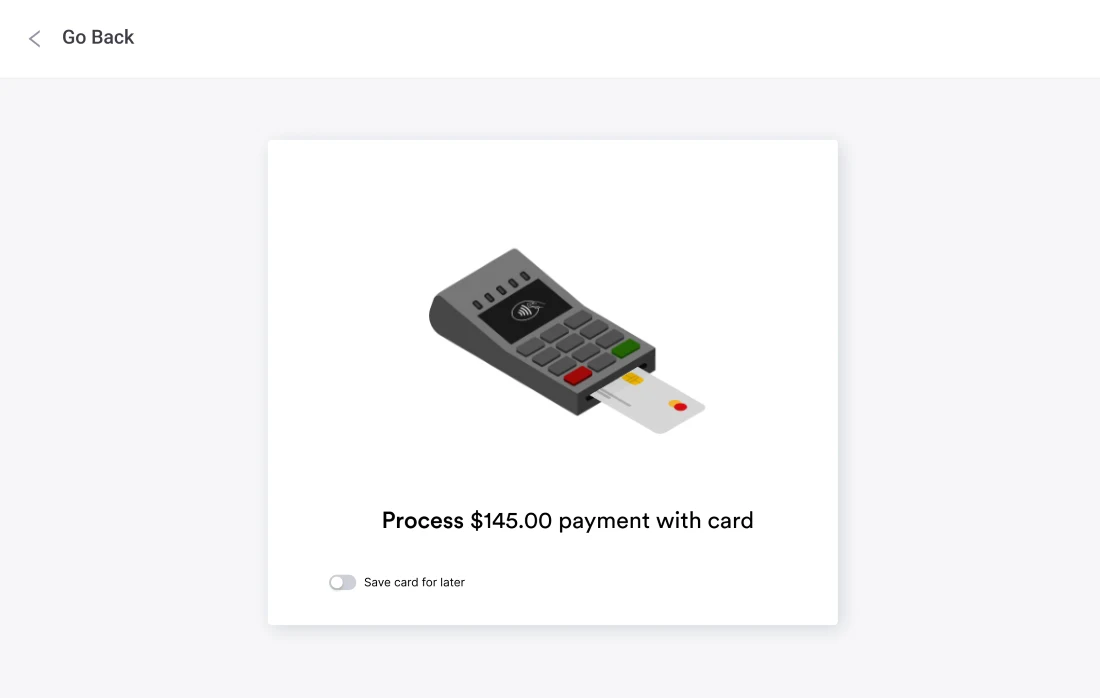
If they buy a course of six, the package bills on a schedule and each session draws down against it. Every Pabau subscription includes every feature, so deposits, memberships and stored cards are never a higher tier. There is no free trial, because a payment workflow this connected is worth configuring properly during onboarding.

Pabau takes the deposit at online booking and keeps the card on file for the no-show fee. The balance goes through the Pabau Pay terminal and posts to the patient’s invoice. Every payment lands against the appointment it belongs to.

Work out your average ticket before you compare rates. At $40 a fixed per-transaction fee is a live cost, and at $350 the percentage rate is nearly the whole bill. The processor that wins one of those is often the wrong answer for the other.
Then ask how each provider treats prepaid packages and memberships, before you apply rather than after. A rolling reserve discovered in month two is a cash flow problem you could have negotiated in month zero.
And prefer the processor that writes back to your patient record. A cheaper rate on a terminal you reconcile by hand stops being cheaper once you price the hour a week it takes. Book a demo to see Pabau take the deposit, the no-show fee and the balance against one appointment.

Not sure what to charge to hold a slot? Aesthetic clinic deposit policy: How much to charge sets out deposit levels by treatment value and how to word the terms.
Losing slots to no-shows? How to calculate and reduce your patient no-show rate shows how to measure the rate before you try to fix it.
Worried your payment flow touches patient data? HIPAA compliant payment processing: A practice guide separates PCI scope from protected health information.
Thinking about recurring revenue? How to Build a Profitable Med Spa Membership Program covers pricing tiers, billing cadence and retention.
Patients asking to spread the cost? How to set up patient payment plans (and stay TILA compliant) explains the disclosure rules before you offer installments.
Use a processor that already carries a split-payment option instead of bolting on a separate provider. Square includes Afterpay at 6% + 30¢ per transaction, and Braintree carries PayPal’s pay-later products through the integration you already run for cards. The cost is the trade-off, because a lender charges the merchant more than a card network does. Weigh it against an installment plan you run yourself, with the card on file and the balance billed in stages.
Yes, in three ways that change the bill. Average tickets are far larger, so fixed per-transaction fees stop mattering and the percentage rate takes over. Prepaid packages and memberships create future-delivery liability that underwriters price for. And the payment usually needs to attach to an appointment and a treatment record, which a retail point of sale has no field for.
Merchant services is the umbrella term for the tools that let a business take payment. It covers the merchant account, the gateway, terminals, virtual terminals and online checkout. Your practice already uses them, whether you think of it that way or not. The question worth asking is which kind you hold. Elavon and Helcim provide a dedicated merchant account, while Square and Stripe provide an aggregated one. A dedicated account is harder to open and harder to close without warning.
Yes, but check two points before you rely on it. The processor has to store a card securely under your own cancellation terms, and the stored-card rate is usually higher than the counter rate. Square charges 3.5% + 15¢ for a card on file against 2.6% + 15¢ at the terminal. The second is whether the deposit attaches to the appointment, so it redeems against the final invoice instead of sitting as unallocated credit.
Usually because of prepaid packages, memberships and large average tickets. An underwriter reads money taken now for treatments delivered later as a liability they may have to refund. Elective, non-refundable medical treatments add dispute exposure on top. Applications move faster when you disclose package volume up front, supply your cancellation terms and consent process, and show a low chargeback history.
It depends on your average ticket and your monthly card volume, and the honest answer changes as both grow. At a small ticket and modest volume, a flat rate from Square or Stripe is usually cheapest and simplest to run. As ticket size and volume climb, interchange-plus from Helcim or a subscription from Stax starts to compete. Neither takes a percentage markup on the way up. Model both against your own numbers before you switch.