Patient reported outcome measures
Patient reported outcome measures (PROMs) are validated questionnaires that reco...

Last Updated: Oct 13, 2026
A GLP-1 diet plan is a structured eating framework for patients taking semaglutide (Ozempic, Wegovy) or tirzepatide (Mounjaro, Zepbound). It works around the appetite suppression and slower gastric emptying these medications cause. The job of the plan is to protect protein intake, hydration and micronutrient status while total calories fall.
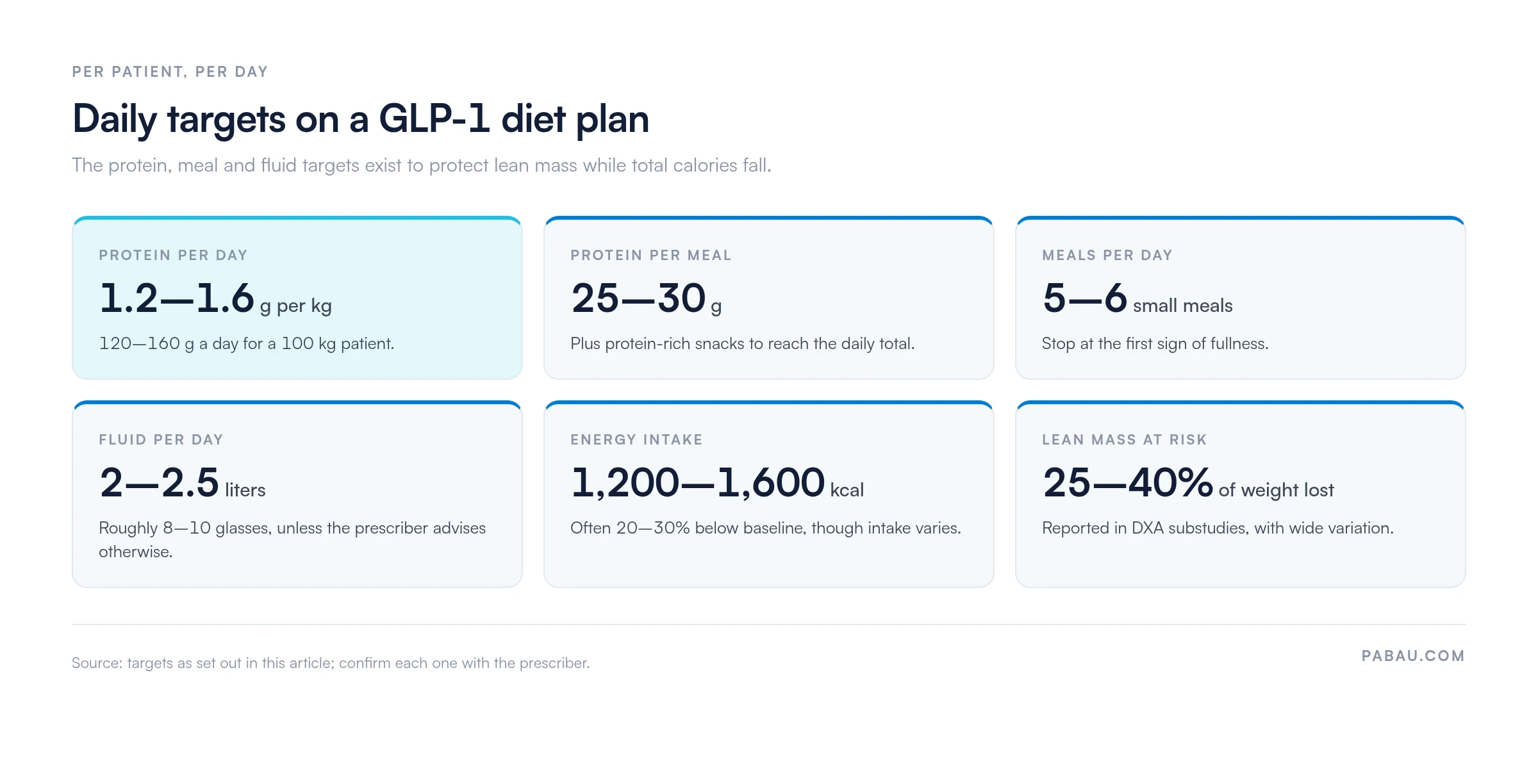
The targets are the same whichever agent the patient takes. Aim for 1.2 to 1.6 g of protein per kilogram of body weight each day. Spread it across five or six small meals at roughly 25 to 30 g each, plus protein-rich snacks. Fluid runs to about 2 to 2.5 liters daily unless the prescriber advises otherwise.
Below you will find each target explained, the foods that help, the foods that trigger nausea, and a sample week. The downloadable template turns all of it into a form your practice completes with the patient and stores on their record.
A practitioner-ready dietary planning form for patients starting GLP-1 therapy. It records baseline appetite and tolerance, daily protein and fluid targets, food lists, a seven-day sample week, side-effect triggers, and review dates.
Download template
A GLP-1 diet plan is built around appetite suppression and slower gastric emptying, which a standard weight-loss diet ignores.
Protein comes first, at 1.2 to 1.6 g per kilogram of body weight daily, spread across five or six small meals.
About 2 to 2.5 liters of fluid a day, plus soluble fiber, keeps constipation manageable.
Resistance training two or three times a week protects lean mass during rapid weight loss.
Storing the completed plan on the patient record keeps targets, triggers and review dates in one place.
A GLP-1 diet plan is a personalized framework that accounts for the appetite and gastric changes caused by GLP-1 receptor agonist therapy. These medications are FDA-approved for type 2 diabetes and for chronic weight management. They slow gastric emptying and strengthen satiety signaling, so patients feel full on much less food.
Without structured guidance, patients run into predictable problems. They take in too few calories and lose muscle, skip protein, or choose foods their stomach no longer tolerates. Practices running these programs at scale keep the protocol inside their weight loss clinic software, so targets and review dates sit on one record.
The first three months on GLP-1 therapy reset how hunger works. Appetite signals that once drove a second helping fade away. Portions shrink from a full dinner plate to a side serving.
Foods that used to feel comforting often turn unpleasant. Fried food, fatty meat and sugary desserts are the usual culprits, and many patients feel queasy after a few bites. Practitioners can help by reframing this early. The medication has changed the patient’s hunger signals, so eating well now takes planning rather than willpower.
These effects apply across the drug class. Our GLP-1 medication list sets out which brands are approved for diabetes and which are approved for weight management.
GLP-1 nutrition centers on nutrient density and tolerance. Every calorie has to carry protein, fiber or micronutrients, because there are far fewer of them. The targets below are what the rest of the plan is built around.
The table below sorts the foods that make those numbers reachable.
Few foods are banned outright, but some reliably trigger side effects or stall progress. Patients find their own triggers by trial and observation, and the template gives the practice somewhere to record them.
This week shows how small-volume meals fit around GLP-1 appetite suppression. As written, the days land near the lower end of the protein target. Most patients will need larger portions or an extra protein snack to reach 1.2 to 1.6 g per kilogram, so adjust it with them.
Weight lost on GLP-1 therapy is not all fat. DXA substudies from semaglutide and tirzepatide trials have reported lean mass at roughly 25% to 40% of the total lost, with wide variation between patients. Nutrition and training decide how much of that a patient keeps.
Protein targets: patients should take in 1.2 to 1.6 g of protein per kilogram of body weight daily. For a 100 kg patient, that is 120 to 160 g a day. Aim for roughly 25 to 30 g per meal, plus protein-rich snacks, to reach the daily total. A high-protein diet plan gives patients a starting structure when they fall short.
Resistance exercise: two or three strength sessions a week preserve muscle during weight loss. A patient portal can carry exercise guides and check-ins between appointments.
Micronutrient monitoring: very low intake risks deficiency in iron, B12, vitamin D and folate. Arrange periodic bloodwork, at least annually and sooner if intake is very low or symptoms appear. Supplementation such as B12 injections may be needed.
Most GLP-1 side effects ease within weeks, but they derail adherence while they last. Diet and hydration handle the majority of them without touching the dose.
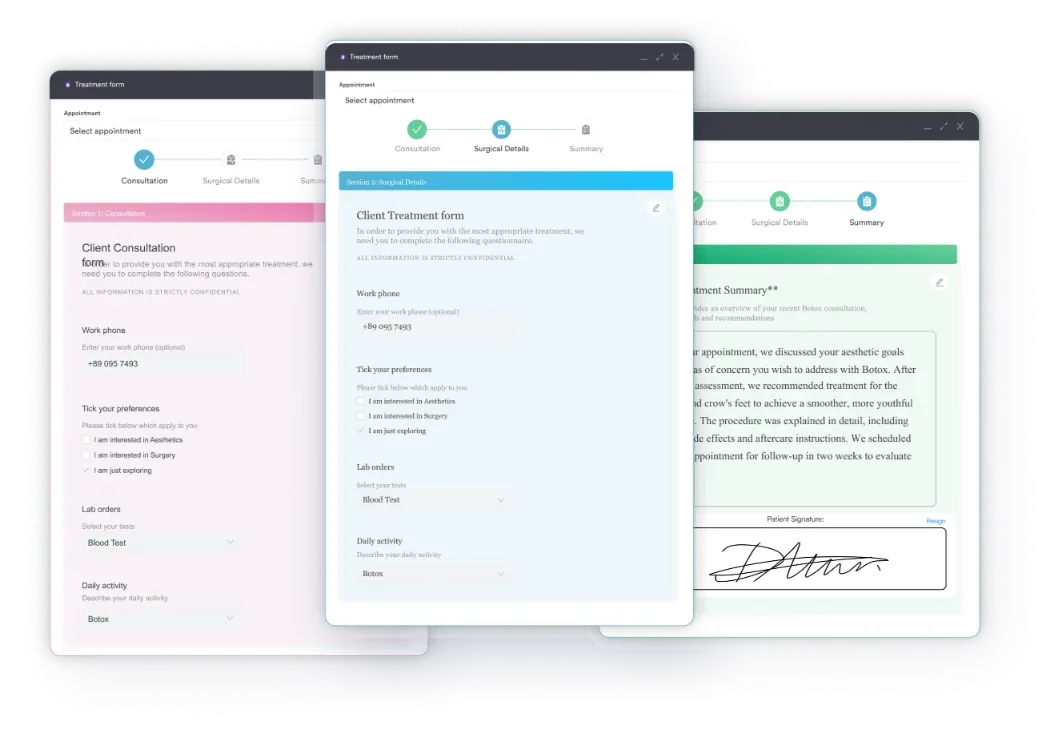
Pabau, the practice management platform we build, keeps those notes on the patient record. Its digital intake forms let practitioners log side-effect patterns, adjust the plan, and escalate to the prescriber when symptoms persist.
GLP-1 medications reach beyond weight management. PCOS and NAFLD/MASLD are often treated off-label, while type 2 diabetes is an approved indication. The core dietary principles hold in each case, with a few condition-specific adjustments.
The American Diabetes Association Standards of Care recommends GLP-1 receptor agonists with proven cardiovascular benefit for adults with type 2 diabetes. That applies where cardiovascular disease is established or risk is high, or where obesity is present, independent of baseline HbA1c. A dietitian-led plan keeps medication and nutrition aligned with the indication being treated.
A registered dietitian adds structured accountability, condition-specific expertise and problem-solving between appointments. Dietitian support is associated with better adherence and better nutritional adequacy than a generic meal plan on its own.
Practices that build dietitian reviews into the program close the loop. An initial assessment leads to a personalized plan, then check-ins every week or two, progress tracking, and adjustment as tolerance changes.
Recommend dietitian involvement when the patient has type 2 diabetes, PCOS or liver disease. The same applies to very low appetite, a history of eating disorders, or side effects severe enough to need the meals redesigned.
The downloadable plan is built for use from the first GLP-1 consultation onward. The workflow runs like this.
Automated reminders and portal access keep the patient moving between reviews, so a missed follow-up gets picked up rather than forgotten.
Most practices hand the diet plan over on paper and hope it comes back. The protein target ends up in a consultation note, the review dates sit in a diary, and the side-effect history lives in the patient’s memory.
In Pabau, the plan is a form. The practitioner completes it on the patient record, so the targets stay visible at every review. Automated reminders book the follow-up appointments, and measurements chart against the baseline captured on day one.
The result is a GLP-1 program you can audit. You can see which patients missed a review, which ones are under their protein target, and which ones stopped the medication. That is the difference between running a weight-loss service and tracking one.

Pabau schedules dietitian follow-ups, stores each patient’s diet plan on their record, and tracks weight and measurements over time. Your GLP-1 program stays documented from the first consultation to the last review.

A GLP-1 prescription without a diet plan leaves the hardest part to the patient. The medication decides how much they eat. The plan decides what those smaller meals contain.
Hit the protein target, keep fluid up, and add two or three strength sessions a week. Patients who manage that lose weight with less muscle loss and fewer side effects along the way. The ones who do not tend to stall around month four and blame the drug.
Hand every patient the template at the first consultation, then set the review dates before they leave the room. Book a demo to see how Pabau keeps GLP-1 diet plans, reviews and measurements on one patient record.

Screening a patient before you prescribe? Ozempic questionnaire walks through the history, contraindications and goals worth capturing at the first visit.
Need consent paperwork for tirzepatide? Informed consent for tirzepatide treatment covers the risks, side effects and monitoring a patient has to acknowledge.
Treating patients with very small stomach capacity? Bariatric food list groups foods by stage and texture, which transfers well to GLP-1 patients who cannot finish a meal.
Building a case for a GLP-1 service? GLP-1 statistics collects the prescribing, adherence and outcome figures behind the demand.
Want something practical to send home? Grocery list for weight loss turns the food categories above into a shopping list patients can use straight away.
Prioritize lean protein, non-starchy vegetables, low-glycemic carbohydrates and healthy fats, in small portions. Avoid fried food, high-sugar items and carbonated drinks, which trigger nausea. Aim for about 2 to 2.5 liters of fluid daily, roughly 8 to 10 glasses, unless your prescriber advises otherwise.
Most patients take in 1,200 to 1,600 kcal a day because of appetite suppression. The right range varies with body weight, activity level and tolerance. A dietitian can set a target that prevents muscle loss and nutritional deficiency.
Yes. The template works for semaglutide (Ozempic, Wegovy) and for tirzepatide (Mounjaro, Zepbound). Appetite suppression and slower gastric emptying behave similarly across the class, so the dietary principles apply to both.
Fried and greasy foods, high-sugar items, carbonated drinks, alcohol and very large meals cause the most problems. They worsen nausea, cause discomfort and stall weight loss. Many patients develop an aversion to sugary and fatty food on their own while taking GLP-1 medication.
Some lean mass loss is likely during rapid weight loss, but it can be limited. Take in 1.2 to 1.6 g of protein per kilogram of body weight daily. Train with resistance two or three times a week, and work with a dietitian.
It helps, especially with type 2 diabetes, PCOS, fatty liver disease or severe side effects. A registered dietitian provides personalized guidance, monitors nutrient intake, and adjusts the plan as tolerance and weight loss change.