Mental Health & Therapy Speech Therapy
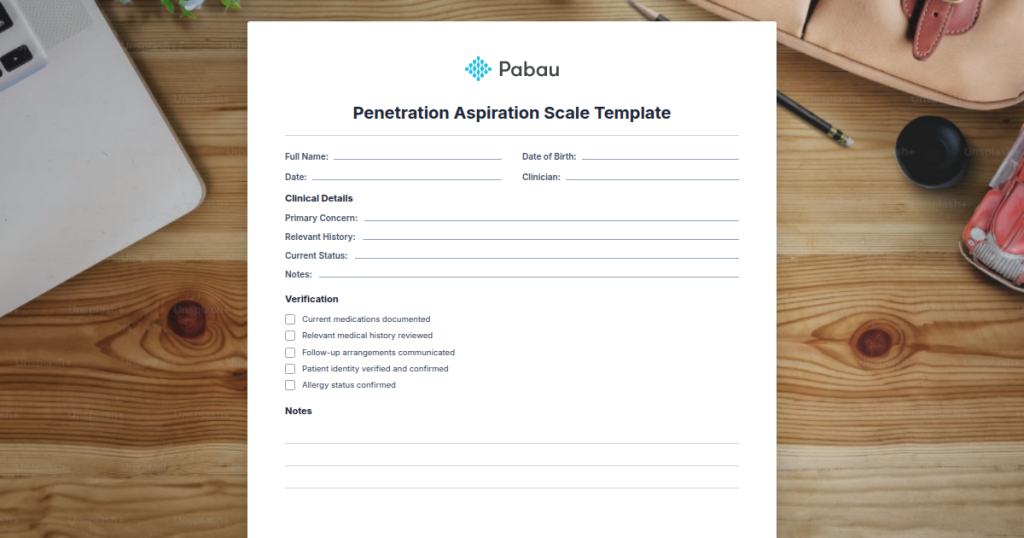
Penetration Aspiration Scale Template
Penetration Aspiration Scale Template Overview The Penetration Aspiration Scale ...

March 17, 2026


Buy now, pay later is now available in Pabau
In mental health care, crisis intervention is one of the most time-sensitive and emotionally charged responsibilities clinicians face.
Whether it’s a client experiencing acute anxiety, suicidal ideation, or a psychotic episode, knowing how to respond effectively can mean the difference between escalation and stabilization.
This guide explores practical de-escalation techniques and immediate support strategies clinicians can apply to manage high-risk situations with confidence and compassion.
From communication skills to structured response frameworks, it provides evidence-based approaches to help practitioners maintain safety, build rapport, and foster recovery.
Crisis intervention refers to the short-term, focused support given to individuals in severe distress to prevent further psychological deterioration or harm. It is designed to stabilize emotional, cognitive, and behavioral functioning until longer-term solutions can be implemented.
Clinicians often encounter crises in varied contexts—emergency departments, therapy sessions, telehealth consults, or even wellness clinics.
Regardless of setting, the goal remains the same: reduce immediate distress and restore a sense of control.

The framework for effective intervention generally includes:
Modern digital systems, such as client management software, can support these steps by allowing clinicians to document risk levels, track communications, and set automated follow-ups to ensure continuity of care.
For example, systems like Pabau offer digital forms and real-time updates that help mental health teams stay coordinated and compliant when documenting high-risk encounters.
De-escalation begins with human connection. Clients in crisis often experience intense fear, confusion, or hopelessness.
Empathy allows clinicians to validate these feelings while maintaining professional boundaries.
Active listening techniques—such as reflecting emotions, summarizing key points, and asking open-ended questions—help clients feel heard without reinforcing maladaptive behavior.
For example:
| Technique | Purpose | Example |
|---|---|---|
| Reflective listening | Show understanding of emotions | “It sounds like you feel overwhelmed right now.” |
| Verbal pacing | Match speech rhythm to client’s tone, then gradually slow | Lower your tone and speak calmly to model regulation. |
| Non-judgmental inquiry | Gather context without confrontation | “Can you tell me what was happening before you felt this way?” |
When clinicians pair empathy with structured dialogue, they create psychological safety—a state that allows clients to self-regulate and participate in problem-solving.
Research shows that structured de-escalation approaches significantly reduce incidents of aggression, self-harm, or hospitalization.
Below are several key techniques widely endorsed across mental health disciplines:
Your demeanor directly influences the client’s emotional state.
Keep your tone soft, maintain non-threatening body language, and give clients physical space.
Avoid sudden movements or excessive eye contact, which can heighten anxiety.
Instead of issuing commands, invite the client into shared decision-making.
Use phrases such as “Let’s work together to figure this out” or “Can we take a short break to breathe?” to promote autonomy while maintaining safety.
De-escalation works best when warning signs are recognized promptly.
Subtle cues like a patient clenching their fists, pacing nervously, or showing escalating verbal agitation can signal rising tension before it becomes a crisis.
Clinicians should carefully document these behaviors in the patient’s record, both to understand patterns and to inform future prevention strategies.
With a modern software solution, like Pabau, these observations can be tracked over time, so that clinicians reviewing a patient’s record during their next visit are aware of past warning signs and can monitor improvements.
Modify the setting to reduce sensory overload—dim lighting, quiet background, and minimal observers.
This environmental awareness demonstrates respect and can prevent escalation.
Statements such as “I understand you’re angry” acknowledge emotion while avoiding reinforcement of harmful actions.
The balance between validation and boundaries is crucial in therapeutic crisis response.
Once a client is de-escalated, the next phase involves stabilizing and ensuring continuity of care.
Immediate support strategies aim to transition the individual from acute distress to structured follow-up.
Here are the key stages:
Assess the risk of harm to themselves or others, their level of insight into the situation, and the strength of their support system.
Using standardized assessment tools or structured forms helps ensure that these observations are recorded accurately and consistently.
Recording this information in practice management software not only promotes clear communication among care teams but also supports transparency, accountability, and continuity of care for future visits.
Involving a patient’s supportive network can play a key role in preventing relapse.
Open, collaborative communication with trusted family members or caregivers—always with the patient’s consent—helps ensure consistent support and reinforces coping strategies.
Help the client develop practical, immediate coping strategies such as breathing techniques, grounding exercises, or sensory modulation.
These strategies can be documented in the care plan and shared with the client as after-care instructions, so they always have it on hand.
Automated reminders or digital appointment systems ensure clients receive consistent follow-up.
For example, automated workflows can send SMS or email reminders to encourage attendance at follow-up sessions and reduce drop-off rates.
In a study of psychiatric inpatients, 20 out of 855 patients were responsible for about 67 % of all aggressive incidents, suggesting that a minority of patients can drive the majority of behaviours requiring intervention.
Technology plays an increasingly vital role in mental health crisis management.
Features like Pabau’s client record and digital communication modules provide clinicians with secure, centralized access to client information.
Also, with client portals and automation features, teams can manage communications, share safety plans, and track adherence without risking data breaches. These tools are also compliant with HIPAA and GDPR standards, ensuring confidentiality and trust.
Moreover, real-time notes and audit logs help ensure every action—from de-escalation steps to referrals—is securely documented and accessible for review during audits or multidisciplinary meetings.
Working in crisis care can take an emotional toll on clinicians. To remain effective, practitioners must maintain their own psychological resilience.
Regular supervision, debrief sessions, and access to wellness programs are crucial.
Clinics should encourage self-care as part of professional development and establish clear boundaries to avoid burnout.

In addition, using integrated practice management tools can reduce administrative burdens—allowing clinicians to focus on therapeutic relationships rather than paperwork.
For instance, digital progress notes, automated alerts, and synchronized scheduling features can collectively reduce stress and enhance operational efficiency.
Crisis intervention is about preventing harm, but also about restoring hope. Clinicians who master de-escalation techniques and immediate support strategies can transform moments of chaos into opportunities for recovery.
Combining empathy, structure, and digital support ensures that both clients and clinicians navigate crises safely and effectively.
As mental health continues to evolve, the integration of compassionate communication and compliant technology will remain central to quality care.
In the end, every successful de-escalation is more than a clinical achievement—it’s a reaffirmation of human connection in the face of distress.