

HCPCS code E0198: Water pressure pad billing guide
HCPCS code E0198 is a water pad for a standard mattress HCPCS code E0198 is the ...

Last Updated: Oct 13, 2026
44160 is the CPT code for colectomy, partial, with removal of terminal ileum with ileocolostomy.
It covers right-sided colon resections where the surgeon removes a segment of the right colon plus the distal small bowel. Continuity is restored by joining the ileum to the remaining colon.
The most common coding error is confusing 44160 with 44140, which does not include terminal ileum removal. Another is applying it to laparoscopic cases, which use 44205 instead. Getting the distinction right on the operative report is the difference between a clean claim and a denial.
Let Pabau's smart automation suggest the right codes, reduce claim denials, and keep your practice compliant—effortlessly.
Automate repetitive tasks and focus on what matters most—your patients.
Reduce coding errors and ensure compliance with the latest regulations.
Clean claims, fewer denials, and faster reimbursements.
Powerful insights and reporting to help your practice thrive.
HIPAA compliant SOC 2 certified GDPR-compliant Trusted by 4,000+ clinics worldwide

CPT 44160 is open-approach only: partial colectomy with terminal ileum removal and ileocolostomy creation
Key differentiator from 44140: 44160 requires terminal ileum resection; 44140 does not
90-day global period applies; modifier -22 is the most common add-on for documented complexity
Pabau’s claims management software helps surgical billing teams catch code-selection errors before submission
CPT code 44160 is defined by the American Medical Association (AMA) as: Colectomy, partial, with removal of terminal ileum with ileocolostomy. Three anatomical components justify the code. They are a partial colon resection, removal of the terminal ileum, and creation of an ileocolostomy anastomosis. All three are required. A procedure missing any element falls to a different code.
The procedure is most often performed as a right hemicolectomy, where the ascending colon, hepatic flexure, and terminal ileum are removed en bloc. The surgeon then creates an end-to-end or side-to-side anastomosis between the cut end of the ileum and the transverse colon. The “open” requirement is absolute: if the surgeon uses a laparoscope throughout, CPT 44160 does not apply.
The single most common miscoding error on colorectal claims is swapping 44160 and 44140. The deciding factor is one anatomical structure: the terminal ileum.
The operative report must document the extent of bowel resected. If it confirms terminal ileum removal and ileocolostomy creation, the procedure is 44160. If the colon is rejoined to colon and the terminal ileum is not removed, 44140 applies. An end colostomy is a different code (44141 or 44143).
CPT 44205 is the direct laparoscopic equivalent of 44160: Laparoscopy, surgical; colectomy, partial, with removal of terminal ileum with ileocolostomy. Assign 44205 when the surgeon completes the resection entirely laparoscopically, including the anastomosis, without converting to open. CPT 44204 is a different code: laparoscopic partial colectomy with anastomosis, with no terminal ileum removed.
Lap-to-open conversion: when a surgeon begins laparoscopically but converts to open, assign the open code (44160). The operative report must document the reason for conversion and confirm that the open phase completed the procedure. Do not split the work between 44160 and 44205 for a single operative session.
Modifier selection for CPT 44160 follows standard major-surgery rules from the AAPC CPT coding guidelines. The table below lists modifiers commonly appended and the documentation each requires.
Note on -LT/-RT: site-specific laterality modifiers do not apply to abdominal intestinal procedures. The colon has no bilateral equivalent, so -LT and -RT are not used with 44160.
Every 44160 claim requires a diagnosis code that establishes medical necessity for the right-sided resection. Payers use ICD-10-CM pairing to determine whether the procedure was clinically appropriate. The table below covers the most common diagnoses billed alongside this code.
Select the most specific available ICD-10-CM code. For cancer cases, code the primary neoplasm site first, then any relevant secondary sites or metastatic involvement. Vague codes like K92.1 (melena) alone will not establish medical necessity for a bowel resection.
The CMS Medicare Physician Fee Schedule (MPFS) sets payment rates for CPT 44160 using relative value units (RVUs). Rates below reflect national averages and are adjusted by geographic practice cost index (GPCI) for each locality. Always verify current rates directly in the MPFS lookup tool, as they update annually on January 1.
Verify current RVU values using the FastRVU 2026 lookup tool before quoting reimbursement to surgeons or revenue cycle teams. Commercial payers (Aetna, BCBS, Cigna, UnitedHealthcare) negotiate their rates contract by contract, and those rates vary widely.
Submitting claims through electronic claims via Claim.MD, Pabau’s integrated clearinghouse, enables real-time eligibility verification and tracks ERA remittance data. Your team can then catch underpayments before the 90-day global window closes. Pabau’s claims management software connects directly to Claim.MD to validate CPT-ICD-10 pairing before the claim leaves the practice.
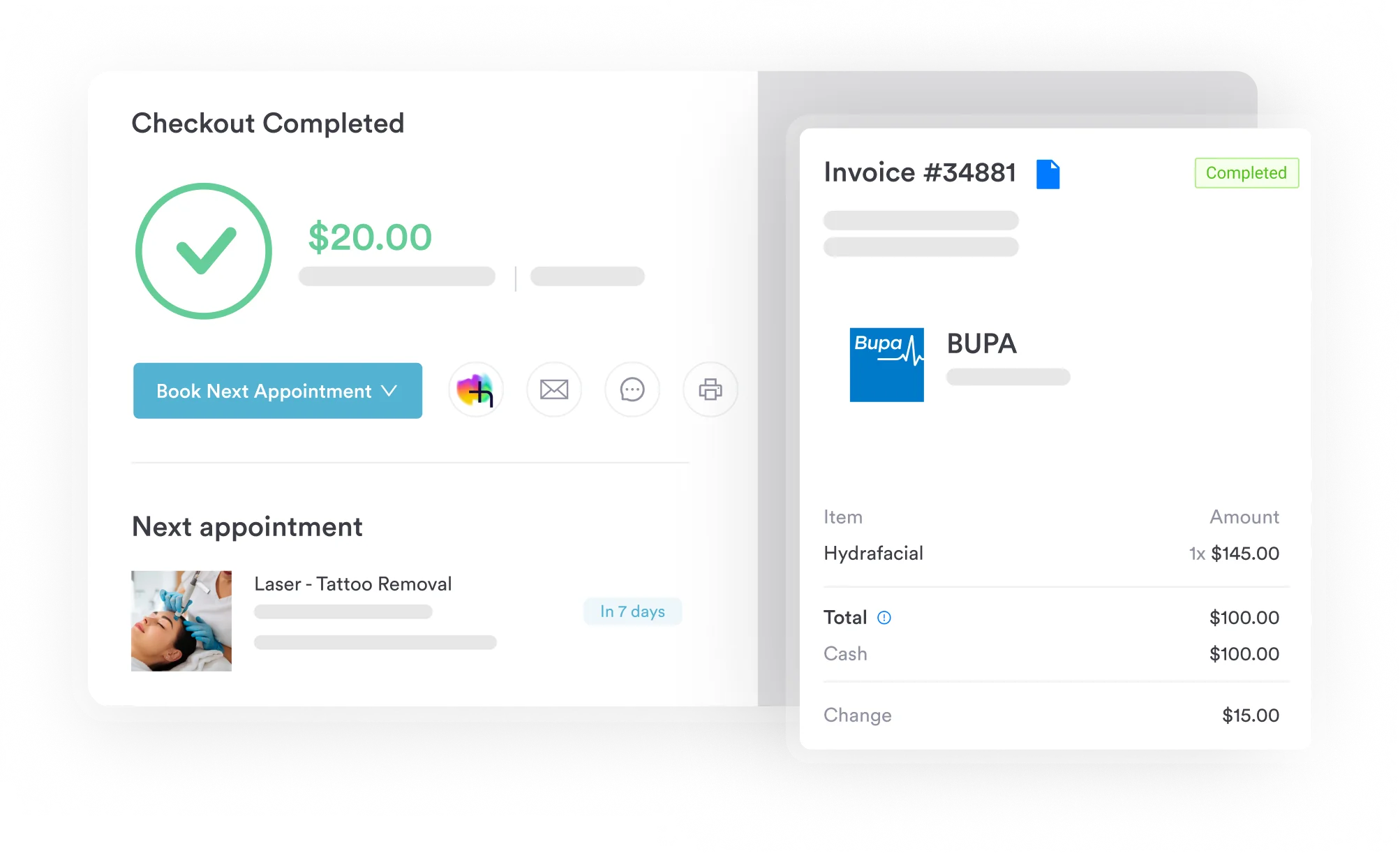

Pabau’s integrated claims workflow validates CPT code selection, ICD-10 pairing, and modifier requirements before submission, so 44160 claims reach payers clean the first time.

Medicare does not require prior authorization for CPT 44160 in most circumstances, but major commercial payers typically do. Requirements vary by plan and state, so verify with each payer before scheduling elective cases.
The clinical documentation package most payers require for prior authorization includes:
Emergency cases presenting with obstruction, perforation, or volvulus are typically exempt from prior authorization requirements. Document the emergent nature explicitly in the operative record and in the authorization request if the payer requires retrospective authorization.
Tracking prior authorization status against scheduled surgical dates is where practices most often lose revenue. Audit open authorizations against the surgical schedule each week. Cases booked more than 30 days out need the closest watch, because the payer’s authorization window may expire before the procedure date. Consistent medical billing compliance processes at the scheduling stage prevent the most common post-surgical authorization denials.
Most 44160 denials fall into five categories. Each has a specific prevention step that can be built into a pre-submission workflow.
Building a structured denial management workflow for colorectal cases catches the 44140/44160 confusion at the coding audit stage. That happens before the claim reaches the payer, not after. Reviewing common denial codes in medical billing alongside your remittance reports helps identify patterns across the surgical schedule, not just individual claims.
CPT 44160 cannot be supported without a complete operative report. Auditors and payers review these elements to confirm the code is justified.
A superbill documentation workflow has the surgeon confirm approach, resection extent, and anastomosis type before the case is closed. That cuts the chart-chasing after the operative note is dictated. Building this into the post-op sign-off checklist means billing teams receive the information they need on the same day as the procedure.
Audit your 44160 operative reports for the phrase ‘terminal ileum.’ If that phrase is absent, the code cannot be supported. Build a short post-op dictation checklist that prompts surgeons to confirm the three elements: approach (open), extent (including terminal ileum), and anastomosis (ileocolostomy). One sentence confirming each element is all the coder needs.
CMS National Correct Coding Initiative (NCCI) edits define which procedures the 44160 payment already includes. Those procedures cannot be billed separately without a modifier exception. Violating these rules triggers automatic bundling denials.
Always verify NCCI edits against the current CMS quarterly update before billing secondary codes with 44160. The NCCI Policy Manual is updated quarterly and edits can change between fiscal years. An effective revenue cycle management process for surgical specialties includes a scheduled NCCI edit review each quarter alongside the CPT code update cycle. A clean claim submission checklist built into the billing workflow is the fastest way to catch bundling issues before they reach the payer.
CPT code 44160 requires precise operative documentation: open approach confirmed, terminal ileum resection measured, and ileocolostomy creation stated. Three failure points come up most often. Coders confuse it with 44140, apply it to laparoscopic cases, or submit secondary codes that NCCI bundles into the primary payment.
Pabau’s integrated claims workflow validates CPT and ICD-10 pairing before claims leave the practice and flags modifier requirements. It also tracks ERA remittance data through the 90-day global period. To see how Pabau handles colorectal and surgical billing workflows, book a demo with the team.

Need to understand how clearinghouse submission works? Medical claims clearinghouse guide covers how 837P claims reach payers and how ERA responses flow back into your billing system.
Want to reduce the time spent chasing remittances? Electronic remittance advice (ERA) explained breaks down how to read and reconcile 835 files automatically.
Preparing for insurance credentialing on your surgical team? How to get credentialed with insurance companies walks through the payer enrollment process step by step.
CPT code 44160 covers an open partial colectomy that includes removal of the terminal ileum and creation of an ileocolostomy anastomosis. All three elements must be present and documented: the open surgical approach, terminal ileum resection, and ileocolostomy formation. It does not cover laparoscopic resections or colectomies that do not include terminal ileum removal.
CPT 44140 is a partial colectomy with anastomosis that does not include terminal ileum removal. CPT 44160 adds removal of the terminal ileum and creation of an ileocolostomy. The operative report must confirm whether the terminal ileum was resected and joined to the colon before assigning either code.
CPT 44160 is for open surgery only. The laparoscopic equivalent is CPT 44205. If the surgeon begins laparoscopically and converts to open, assign 44160 with documentation of the conversion and the reason for it. Do not split billing between 44160 and 44205 for a single procedure.
CPT 44160 carries a 90-day global surgical period under Medicare. All routine post-operative care within those 90 days is included in the surgical payment and cannot be billed separately. Unrelated new problems or complications requiring a separate, distinctly documented encounter may be billed with modifier -24 (unrelated E&M during the global period).
Small bowel resection is typically coded with CPT 44120 (enterectomy, resection of small intestine, single resection and anastomosis) or CPT 44121 (each additional resection). CPT 44160 includes small bowel (terminal ileum) removal, but only as part of a right-sided colectomy with ileocolostomy creation. It is not used for isolated small bowel resections.
The most commonly paired ICD-10-CM codes are Crohn’s disease categories (K50.10, K50.80), right-sided colorectal cancers (C18.0, C18.2), intestinal obstruction (K56.609), and cecal volvulus (K56.2). The diagnosis must establish medical necessity for the specific right-sided resection; use the most specific available code rather than a broad symptom code.



