Antipsychotic medication list
An antipsychotic medication list is a structured reference that organizes psychi...

2
Last Updated: Oct 13, 2026

A counseling theories chart compares major therapeutic frameworks side by side. It sets out founders, core beliefs, techniques, and the clients each approach suits.
The 10 most-used counseling theories are CBT, psychodynamic, humanistic, behavioral, Adlerian, existential, gestalt, SFBT, REBT, and DBT. Each carries its own assumptions about how people change.
Theory selection depends on the client’s presenting issue, your setting, your training, and the evidence base. No single theory fits every presentation.
The framework you choose changes what belongs in the progress note, from thought records in CBT to skills practice in DBT.
Practice management software like Pabau keeps session notes customizable, so your documentation matches whichever framework you practice.
A one-page visual reference comparing 10 counseling theories by founder, core assumption, key techniques, therapeutic goal, and best-fit client population. Built for therapists and counselors in session planning, and for graduate students revising for licensing exams.
Download templateA counseling theories chart organizes the major therapeutic frameworks side by side. You can compare their core concepts, techniques, and best-fit client populations without opening five textbooks.
This guide walks through the most influential theories and shows how to use the chart when you plan treatment. It also covers what each framework changes in your progress note. Software for mental health practice management can then hold that documentation in one client record.
A counseling theories chart is a structured reference table that compares therapeutic frameworks across the dimensions that drive clinical choices. Each row covers one theory, and each column covers one point of comparison.
Therapists, counselors, psychiatrists, and graduate students use these charts to ground clinical decisions in theory and evidence. A good chart compares five things:
Laid out that way, the chart helps you ask sharper questions. Does this client’s presentation match what CBT was designed for? Would psychodynamic work suit a trauma survivor who isn’t ready for deep insight work? Which techniques fit your practice’s specialization?
Start with your client’s primary presenting issue, such as depression, anxiety, relationship conflict, or identity exploration. Scan the “Best used for” column to see which theories have evidence behind them for that concern.
Then weigh your setting. Brief work points to SFBT, long-term depth work to psychodynamic therapy, and structured skill-building to CBT or DBT. Finally, cross-reference your own training, because your scope of practice matters as much as theoretical fit.
The table below compares the 10 most-used counseling theories in clinical practice. It is the core reference for choosing and implementing theory-driven treatment.
Each theory above carries its own worldview and toolkit. The summaries below show how the most-used frameworks play out once a client is in the room.
CBT assumes that thoughts shape emotions, and that emotions drive behavior. A client with social anxiety might think, “I’ll say something stupid and everyone will judge me.” Fear follows the thought, then avoidance follows the fear.
The therapist helps the client catch that thought, test how true it is, and gather evidence against it. Common techniques include thought records, behavioral activation, and graded exposure to feared situations.
A negative self-talk worksheet gives clients a structure for the same work between sessions. A motivational worksheet helps when someone agrees with the plan but stalls on the homework. CBT suits clients who respond to structured, goal-oriented treatment.
Psychodynamic therapy explores unconscious conflicts and patterns rooted in childhood. A therapist might ask how a client’s relationship with a parent shows up in their romantic relationships.
The therapist also listens for transference, where the client projects an old relationship onto the therapist, then interprets the pattern out loud. Sessions run deeper and longer than a course of CBT.
This work suits clients examining recurring life patterns, trauma, or identity, provided they are willing to look beneath the surface. A disciplined SOAP note format captures insight work without turning the record into a transcript.
Carl Rogers built person-centered therapy on the belief that people carry an innate drive toward growth and healing. The therapist’s job is to supply three conditions: Empathy, unconditional positive regard, and congruence.
The therapist doesn’t diagnose or prescribe. They create enough safety for the client to reach their own answers. That suits clients who need validation, are exploring identity, or are grieving. It also fits general life counseling, where the client wants a sounding board rather than a problem-solver.
Strengths-based homework suits that stance. A strengths and qualities worksheet asks the person to list what they already do well, which reinforces their own resources.
Many therapists don’t stay inside one theory. Integrative and eclectic practice blends techniques from several frameworks in the same course of treatment.
A therapist might pair CBT structure with humanistic warmth and existential meaning-work, depending on what the client brings that week. Few clients fit neatly into one diagnostic box, or respond to one method alone.
Postmodern approaches, including narrative therapy and constructivist models, question the idea of a single objective truth. Client and therapist co-create meaning and new stories instead.
A narrative therapist might ask how a life story changes when a struggle becomes something the client survived. These approaches put weight on client agency and cultural context, which makes them useful with diverse populations.
Choosing a framework is not a one-time decision. Work through these six checks for each client on your caseload.
The theory you pick changes what belongs in the note, not only what happens in the room. Supervisors, auditors, and payers read the note for that clinical reasoning.
Naming the framework in the note protects you as well. It shows a reviewer that the session followed a recognized model, and it tells the next clinician where to pick up.
Plenty of practices keep intake forms in one tool, consent in another, and progress notes on paper. Pulling a client’s history together before a session then means opening three systems.
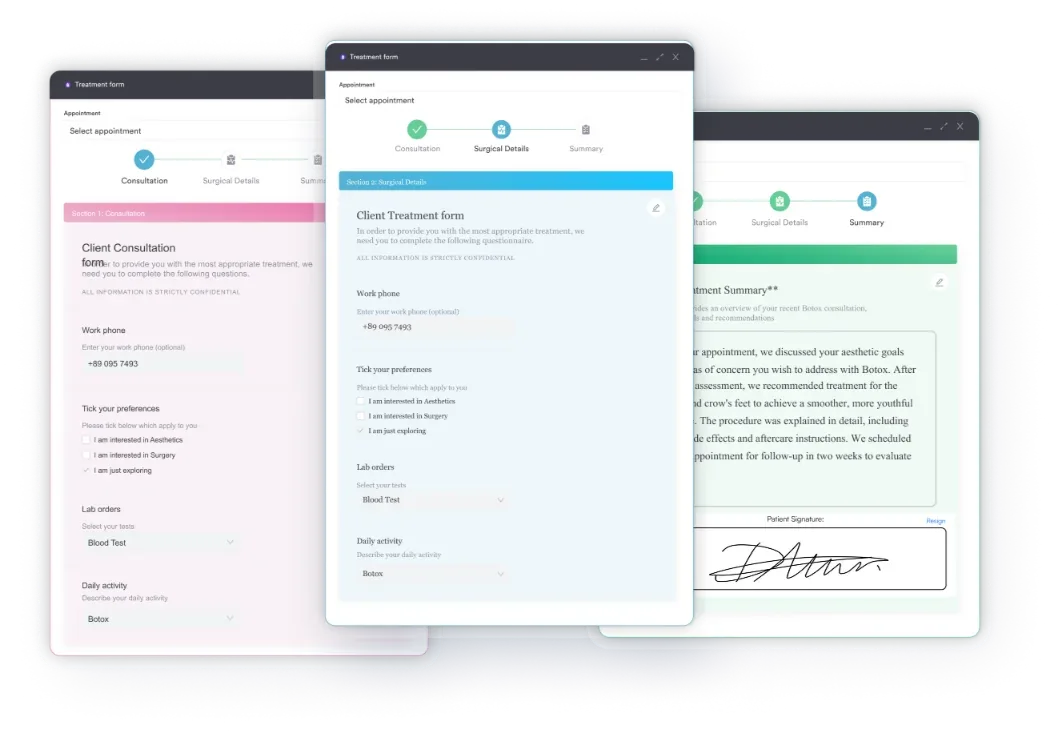
Practice management software like Pabau holds all of it in one client record.
A CBT therapist logs thought records and homework. A psychodynamic therapist notes transference and moments of insight. A person-centered therapist tracks presence and self-discovery. One note template can carry all three.
You spend less of the evening writing up and more of it away from the desk.
Shared client records also keep continuity when two practitioners see the same person. If you work psychodynamically while a colleague runs CBT skills, you both read one treatment plan and one progress history.
Practices built around talk therapy can see the whole setup in our psychology practice software.
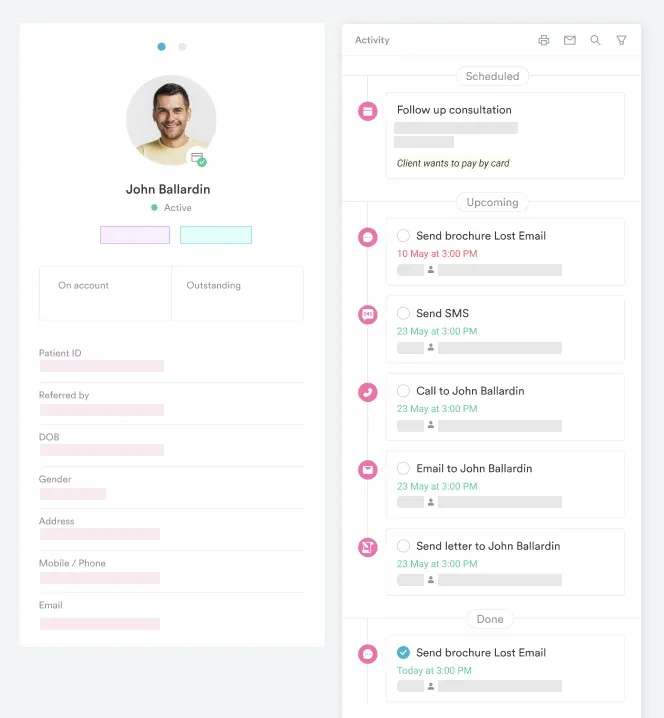

Pabau keeps intake forms, consent, and progress notes in a single client record. Customizable note templates and Pabau Scribe, our AI scribe, shape each write-up around the framework you practice.

Treat the chart as a decision aid rather than a ranking. No framework on it outperforms the others across every presentation, and the evidence base only narrows the field.
Pick the approach your client, your setting, and your training can all support. Then write the note so your reasoning is visible to whoever opens the file next, including you in six months.
Therapists who work across frameworks feel the admin most, because every model asks for a slightly different note. Book a demo to see how Pabau shapes session notes around the theory you practice.

Need a between-session tool for CBT thought work? Negative self-talk worksheet walks clients through catching and reframing an unhelpful thought.
Working with an adult client on self-worth? Self-esteem worksheet for adults gives person-centered and CBT work a shared starting point.
Teaching DBT-style skills between sessions? Self-control worksheet helps clients track triggers, urges, and the skill they used instead.
Need a baseline when anger is the presenting problem? Clinical anger scale scores severity so you can show change across a course of treatment.
Want to track mood changes between sessions? Daily mood chart template provides structured rating scales for mood, energy, and sleep quality.
The 10 most-used are CBT, psychodynamic, humanistic, behavioral, Adlerian, existential, gestalt, SFBT, REBT, and DBT. Each has distinct assumptions about human change and uses different techniques.
CBT focuses on changing thoughts and behaviors in the present. Psychodynamic therapy explores unconscious patterns from the past. CBT is brief and structured, while psychodynamic work is longer-term and introspective.
Counselors weigh the client’s presenting issue, treatment setting, available time, their own training, and research evidence. A client with a specific phobia might benefit from behavioral exposure. A client exploring identity might prefer humanistic or existential work.
No. DBT was developed for borderline personality disorder and chronic suicidality. Its four skill modules are mindfulness, distress tolerance, emotion regulation, and interpersonal effectiveness. Those skills also help clients with anxiety, depression, and emotional dysregulation.
CBT and REBT have the strongest research support for depression. Behavioral activation, cognitive restructuring, and psychodynamic insight work can all help. The best fit depends on the client’s needs and preferences.