ADHD Cleaning Checklist
An ADHD cleaning checklist is a cleaning list built for adults with ADHD. In oth...

3
Last Updated: Oct 12, 2026
An antipsychotic medication list is a structured reference that organizes psychiatric drugs by generation, mechanism, FDA-approved indication, and monitoring requirement. Antipsychotics work by modulating dopamine and serotonin pathways in the brain, which reduces hallucinations, delusions, and disorganized thinking. The list below covers both generations, their usual daily doses, and the checks each one needs.
The split between first-generation (typical) and second-generation (atypical) agents drives most prescribing decisions. First-generation drugs carry a higher risk of extrapyramidal side effects, such as tardive dyskinesia and akathisia. Second-generation drugs carry more metabolic risk, including weight gain, dyslipidemia, and hyperglycemia.
This template gives psychiatrists, primary care physicians, and nursing staff one standard place to document and review antipsychotic prescriptions. Psychiatry practice software keeps those records inside the patient chart, and a printed reference keeps the team aligned on dosing, monitoring intervals, and contraindications.
Each row captures the generic and brand name, strength, route, daily dose, FDA-approved indication, and the date of the last review. Monitoring fields sit alongside, so weight, glucose, lipid, and ANC results stay with the prescription.
Download template
Antipsychotics are dopamine antagonists used to treat schizophrenia, bipolar disorder, and schizoaffective disorder.
First-generation agents cause more extrapyramidal side effects, while second-generation agents carry more metabolic risk, so each needs its own monitoring priorities.
Clozapine carries a boxed warning for severe neutropenia and needs absolute neutrophil count monitoring on a fixed schedule.
Every antipsychotic needs baseline metabolic screening, a repeat check at 12 weeks, and an EPS assessment at review.
The downloadable template standardizes medication documentation, side-effect tracking, and review schedules across your practice team.
Antipsychotics are a class of psychiatric medications that block dopamine receptors in the brain, and second-generation agents block serotonin receptors as well. They manage psychotic symptoms such as hallucinations, delusions, and disorganized thought and speech. They also stabilize mood in bipolar disorder.
Three major clinical indications guide prescribing:
The National Institute of Mental Health describes antipsychotics as the cornerstone of pharmacotherapy for schizophrenia and acute psychotic episodes. Bipolar regimens often pair one with lithium or another agent, so keep a mood stabilizer medication list next to this one.
Off-label use extends to treatment-resistant depression as an adjunct, severe anxiety disorders, and dementia-related agitation, though the evidence varies. Any off-label prescription needs a documented clinical rationale and patient consent.
The two generations differ in their side-effect profiles and in how they are used:
Second-generation agents are now first-line for most newly diagnosed patients, mainly because they are better tolerated. First-generation drugs remain in use for cost, availability, and specific patient populations. Clozapine, the standard for treatment-resistant schizophrenia, sits apart due to its agranulocytosis and severe neutropenia risk and mandatory absolute neutrophil count (ANC) monitoring.
First-generation antipsychotics remain clinically important despite the higher EPS burden. The table below summarizes the agents prescribed most often.
Second-generation antipsychotics dominate modern psychiatric practice. Each agent has its own FDA-approved indications and metabolic risk profile.
Clozapine carries a boxed warning for severe neutropenia. ANC monitoring is required under the prescribing information, and the result belongs in the patient record at every check.
Injectable formulations release medication over weeks or months, which improves adherence during maintenance therapy. Long-acting injectables are offered for haloperidol and fluphenazine (decanoate), risperidone, paliperidone, aripiprazole, and olanzapine. Dosing intervals run from 2 weeks to every 3 months, and paliperidone extends to every 6 months.
Clinicians reach for these formulations when a patient has relapsed after stopping oral treatment.
All antipsychotics carry risks, and knowing them guides both prescribing and patient counseling:
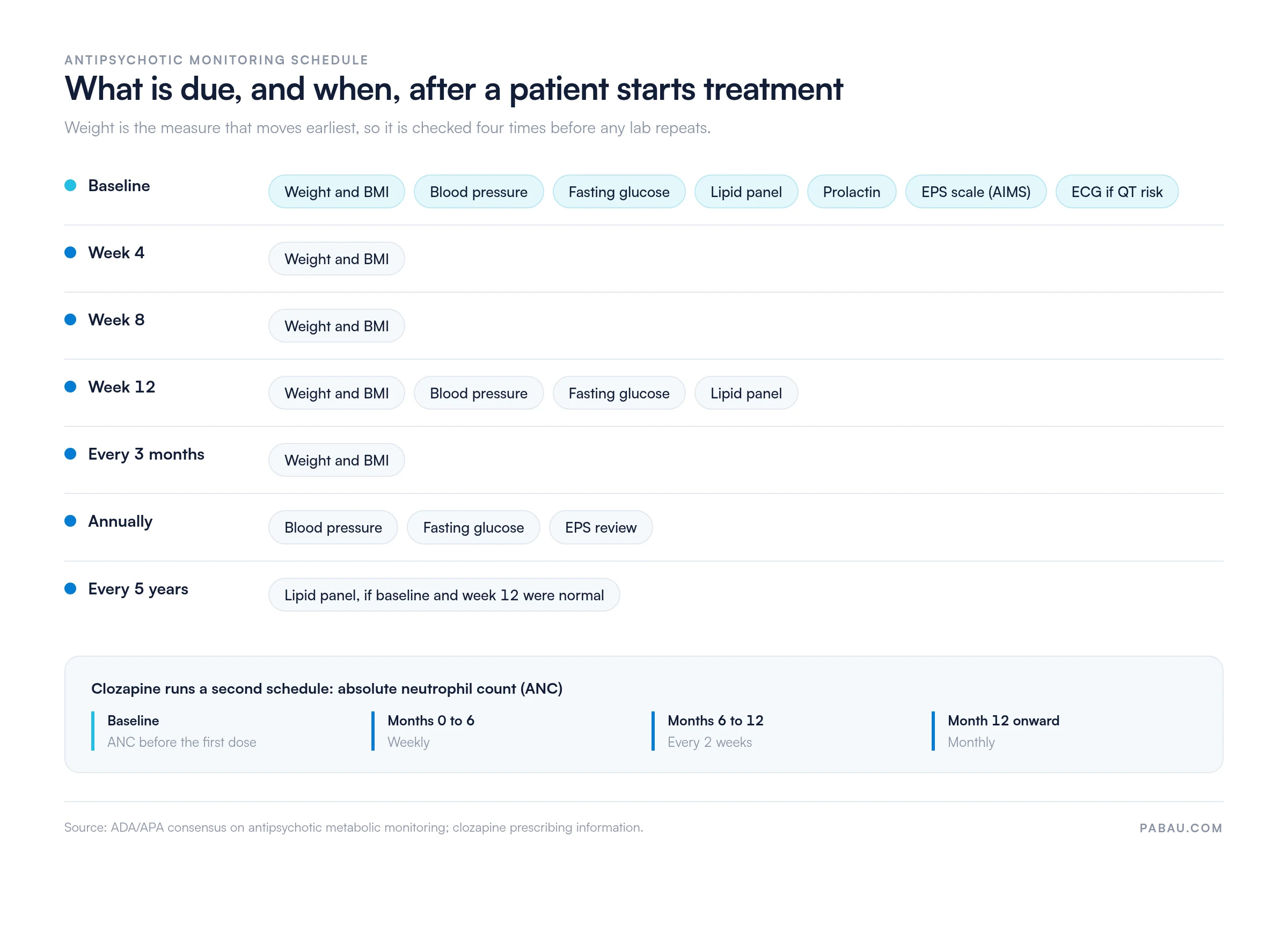
Monitoring follows the ADA/APA consensus on metabolic risk in patients taking antipsychotics. Track the following at baseline and at the intervals below.
Read down that schedule and one pattern stands out. Weight is checked four times before any laboratory test repeats, because it moves first.
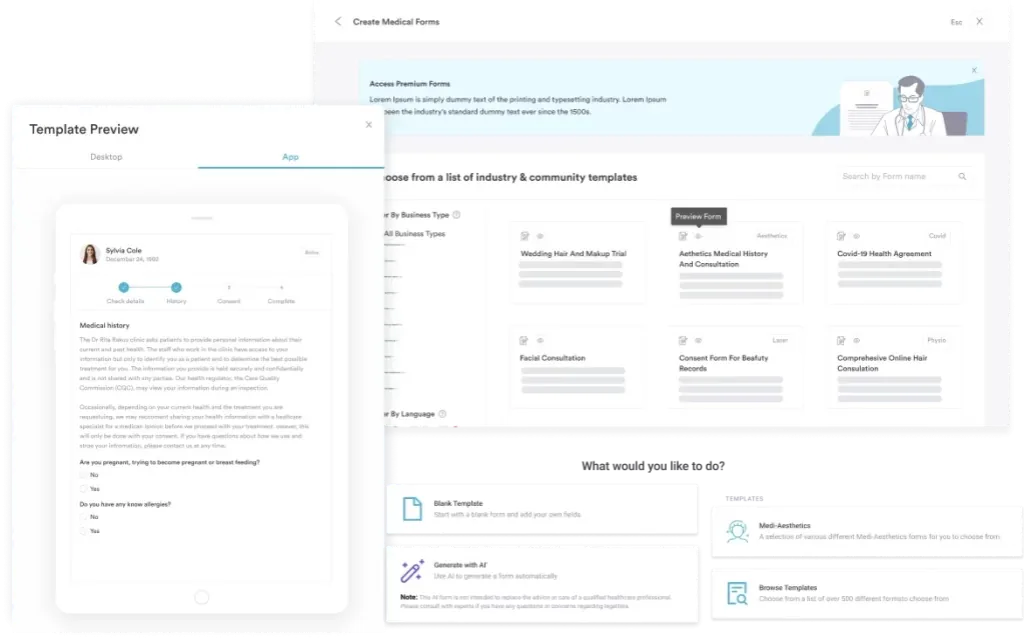
Digital intake forms turn that schedule into fields staff actually complete. In Pabau, the practice management platform we build, each result is dated and attached to the patient record.
Dated, auditable monitoring records protect the patient and the prescriber. A missed interval is easier to catch when the last result is visible on the chart.
The template is structured around five practical steps:
An AI medical scribe can capture medication review findings during the visit. The note is written as the conversation happens, so the prescriber is not typing it up afterward.
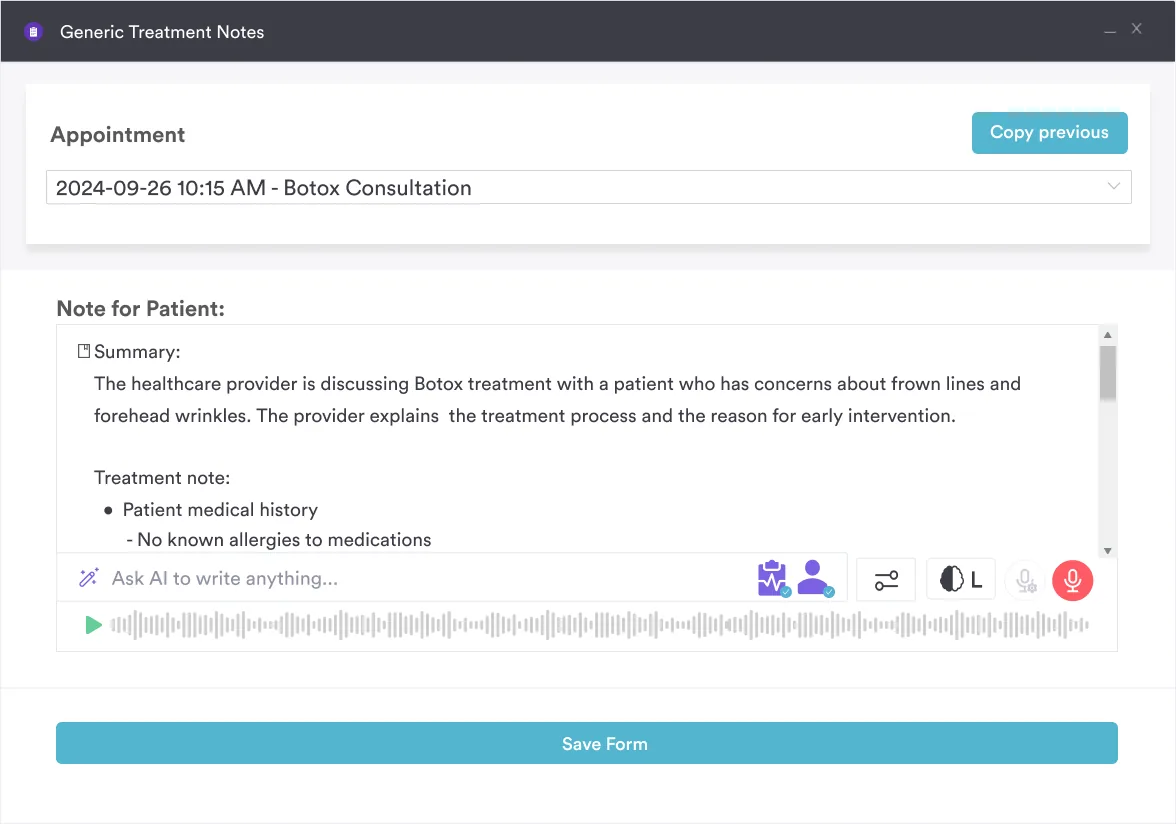
The template serves several roles in a practice. Psychiatrists use it for schizophrenia and bipolar mania management. Primary care physicians reference it when they co-manage a psychotic or mood disorder with a specialist.
Nursing staff, physician assistants, and nurse practitioners use it during intake and at follow-up medication review. Ward teams often pair it with a schizophrenia nursing care plan. A mental health EMR holds the same fields in the chart, so the printed copy and the record agree.
Practice administrators use it to audit medication management and confirm that high-risk monitoring was completed on time.
Standardized documentation: A uniform structure means no medication or monitoring requirement is overlooked. Consistency across prescribers reduces errors and supports safe transitions of care.
Regulatory compliance: The monitoring intervals follow the American Psychiatric Association and ADA consensus on metabolic monitoring in patients taking antipsychotics. Dated records demonstrate due diligence during an audit or a malpractice review.
Patient safety: Early detection of metabolic change, emerging EPS, or QT prolongation prevents serious adverse events. An organized schedule reduces missed assessments.
Workflow efficiency: Pre-built fields speed up charting, and connected practice management keeps the same data in the appointment, the prescription, and the recall.
Antipsychotic monitoring is usually tracked in two places at once. The prescription sits in the chart, and the recall for the 12-week bloods sits in a diary or a spreadsheet. When the patient reschedules, the recall rarely moves with them.
In Pabau, the medication record and the recall are the same object. A custom form holds the drug, the dose, and each monitoring result. The review date drives an automated reminder to the patient and a task for the prescriber.
Each result is timestamped as it is entered, so the next due date updates without anyone maintaining a separate tracker. Pabau Scribe writes the medication review straight into the note, and reporting lists every patient whose 12-week bloods are overdue.
The result is one record per patient holding the prescription, the monitoring history, and the next due date. Staff no longer reconcile a chart against a spreadsheet at the end of the month.

Pabau stores the prescription, the monitoring results, and the review date in one patient record. Automated recalls bring patients back for the checks their medication needs.

Choosing an antipsychotic is the shorter half of the job. The longer half is proving, months later, that the weight checks and the bloods happened on time.
Download the template and keep it where prescriptions are written, rather than in a shared drive. A reference that sits beside the chart gets filled in. The trade-off worth remembering is that paper records a decision but will not chase it, so the review date still needs an owner.
Book a demo to see how Pabau turns that review date into a recall your team does not have to remember.

Need the full first-visit assessment? Psychiatric evaluation template covers the mental status examination and treatment planning in one document.
Prescribing for bipolar disorder too? Manic depression medication list sets out the agents used across manic and depressive phases.
Managing a schizophrenia admission? Schizophrenia system disorder template structures the nursing assessment and the care priorities.
Tracking stimulant side effects as well? ADHD medication side effects monitoring sheet records appetite, sleep, and growth at each review.
Need a structured first appointment? Psychiatry intake form gathers history, risk, and current medication before the consultation.
Quetiapine (Seroquel), aripiprazole (Abilify), olanzapine (Zyprexa), and risperidone (Risperdal) are the second-generation agents prescribed most often in the United States. All four hold broad FDA approval across schizophrenia, bipolar disorder, and maintenance therapy. Haloperidol (Haldol) remains common as a first-generation option for acute agitation in emergency settings.
First-generation (typical) antipsychotics like haloperidol work via D2 dopamine receptor blockade alone and carry a high extrapyramidal side effect (EPS) risk, including tardive dyskinesia. Second-generation (atypical) antipsychotics like quetiapine add serotonin (5-HT2A) antagonism, which lowers EPS risk but raises metabolic effects such as weight gain and dyslipidemia. Atypical agents are now first-line for new-onset psychosis.
Quetiapine, aripiprazole, olanzapine, and risperidone are FDA-approved for bipolar I mania. Quetiapine and lurasidone are approved for bipolar depression. Maintenance antipsychotics prevent mood episode recurrence. Lithium is a mood stabilizer rather than an antipsychotic, and the two are often prescribed together depending on symptom severity.
Common side effects include metabolic effects (weight gain, hyperglycemia, dyslipidemia), extrapyramidal symptoms (tremor, stiffness, akathisia), prolactin elevation (sexual dysfunction, amenorrhea), sedation, and orthostatic hypotension. First-generation agents carry more EPS risk. Second-generation agents carry more metabolic and prolactin risk. Baseline and periodic metabolic screening are standard clinical practice.
Both first- and second-generation agents treat schizophrenia, and second-generation antipsychotics are now first-line because they are better tolerated. Clozapine is reserved for treatment-resistant schizophrenia, meaning a lack of response to at least two antipsychotics. It requires regular ANC monitoring due to the risk of severe neutropenia.
Schizoaffective disorder combines psychotic and mood symptoms, and antipsychotics address the psychotic component. Paliperidone is the only FDA-approved agent for schizoaffective disorder. Others, including risperidone, olanzapine, quetiapine, and clozapine, are used off-label. Depending on mood polarity, clinicians may add a mood stabilizer or an antidepressant.
No. Antipsychotics work via dopamine and serotonin antagonism to reduce hallucinations, delusions, and psychotic symptoms. Antidepressants (SSRIs, SNRIs) inhibit serotonin or norepinephrine reuptake to treat depression and anxiety. Some second-generation antipsychotics are approved as adjuncts to antidepressants for treatment-resistant depression, but the two classes target different conditions.
Safety depends on individual patient factors: age, metabolic status, cardiac history, and prior side effects. Aripiprazole and lurasidone carry lower metabolic and EPS risk. Individual variation is wide, so an agent that suits one patient may be intolerable for another. Baseline and ongoing monitoring, combined with shared decision-making, determine the safest choice.