



CCSD code G5100: Bypass of duodenum billing guide
CCSD code G5100 bills a bypass that leaves the duodenum in place CCSD code G5100...

Last Updated: Oct 16, 2026

CPT Code 12002 describes simple repair of superficial lacerations measuring 2.6 cm to 7.5 cm on the scalp, neck, axillae, trunk, and extremities.
Simple repair means single-layer closure only – layered closure escalates to intermediate repair codes (12031-12057).
Multiple same-site, same-complexity wounds are coded by adding lengths together; different sites or complexity levels require separate codes.
Practice management software like Pabau supports CPT 12002 documentation with structured procedure templates that capture wound length, site, and repair type at the point of care.
CPT Code 12002, as defined by the CPT code set, reads: Simple repair of superficial wounds of scalp, neck, axillae, external genitalia, trunk and/or extremities (including hands and feet); 2.6 cm to 7.5 cm. The short descriptor is “Simple repair, 2.6-7.5 cm.”
Three elements determine whether 12002 is the correct code: the repair type must be simple, the wound must fall within the 2.6-7.5 cm length range, and the anatomical site must be one of the listed body regions.
Simple vs. intermediate repair: The single most common miscoding error is billing 12002 when an intermediate repair code (12031-12057) applies. Simple repair involves only a single-layer closure – no undermining, no layered suturing, no extensive subcutaneous work.
The moment a provider performs a layered closure of deeper structures, the repair escalates to intermediate regardless of wound length.
Not all body regions use the same laceration repair code series. CPT 12002 applies to a defined set of anatomical sites – and billing the wrong site-specific code series is one of the cleaner ways to trigger a denial. Planned excision of vulvar tissue is not a repair, and a simple partial vulvectomy is reported with CPT 56620 instead.
The facial exclusion catches many coders off guard. A laceration repaired on the cheek, even if identical in length and technique to a trunk repair, belongs in the 12011 series (simple repair, face/ears/eyelids/nose/lips/mucous membranes).
Facial repairs carry separate reimbursement rates reflecting the added precision required. For practices managing dermatology EMR workflows or running a busy plastic surgery practice, site-specific code mapping is an essential configuration step.
Selecting the right code requires matching wound length, site, and complexity against the full laceration repair series. The table below covers the codes most frequently compared with CPT Code 12002.
The boundary between 12001 and 12002 is the most commonly queried: a wound measuring exactly 2.5 cm falls under 12001; a wound of 2.6 cm moves to 12002. Measurement at the time of repair is the determining factor – estimate-based documentation creates audit exposure.
Note that the exclusion of hands and feet in 12031 carries through the entire 12031-12037 series. Intermediate repairs on the neck, hands, feet, or external genitalia use the 12041-12047 series instead.
Claim submission for CPT Code 12002 requires a supporting ICD-10-CM diagnosis code that establishes medical necessity. A forearm repair might sit beside S52.511R when the record documents a styloid fracture as well. The most common pairings draw from the S-series (injury codes) by anatomical site, per the CDC/NCHS ICD-10-CM lookup tool.
Use the seventh-character extension to capture encounter type: “A” for the initial encounter (active treatment), “D” for subsequent encounter, and “S” for sequela. Most 12002 claims submit under the “A” encounter. Payers may reject a claim pairing an “S” sequela code with an active surgical repair. A healing character raises the same problem, since S52.231J describes a later visit.
Modifiers affect reimbursement, claim processing, and audit risk for CPT Code 12002. Applying the wrong modifier – or omitting one when required – is a direct path to denial. Review applicable primary care billing compliance policies before submitting claims with modifier 25.
Modifier -25 is the most scrutinized. Payers require that the E/M service be documented separately from the laceration repair note – the repair’s pre-procedure assessment does not constitute a separately identifiable E/M.
Payer-specific policies vary; blanket application of modifier -25 to all same-day E/M and repair claims creates audit exposure.
Medicare reimbursement for CPT Code 12002 varies by geographic locality and facility setting. The Physician Fee Schedule tool provides current payment amounts by code, locality, and year. Rates below reflect national averages for 2025 and should be verified against your practice’s specific locality file.
Work RVU data above should be verified against the current CMS MPFS file, as values are subject to annual adjustment. Commercial payers typically reimburse at a percentage of the Medicare fee schedule or their own contracted rates, which may differ substantially by payer and geographic region.
Track your CPT 12002 claim outcomes by payer. If denials cluster around one payer, review their LCD (Local Coverage Determination) for wound repair – some carriers have site-specific or modifier-specific rules that differ from Medicare’s national policy.
Audit-ready documentation for CPT Code 12002 must demonstrate all three qualifying elements: wound length in centimeters, anatomical site, and repair type. Missing any one of these weakens the claim under audit. A concurrent fracture code such as S52.236N has to match the note in the same way.
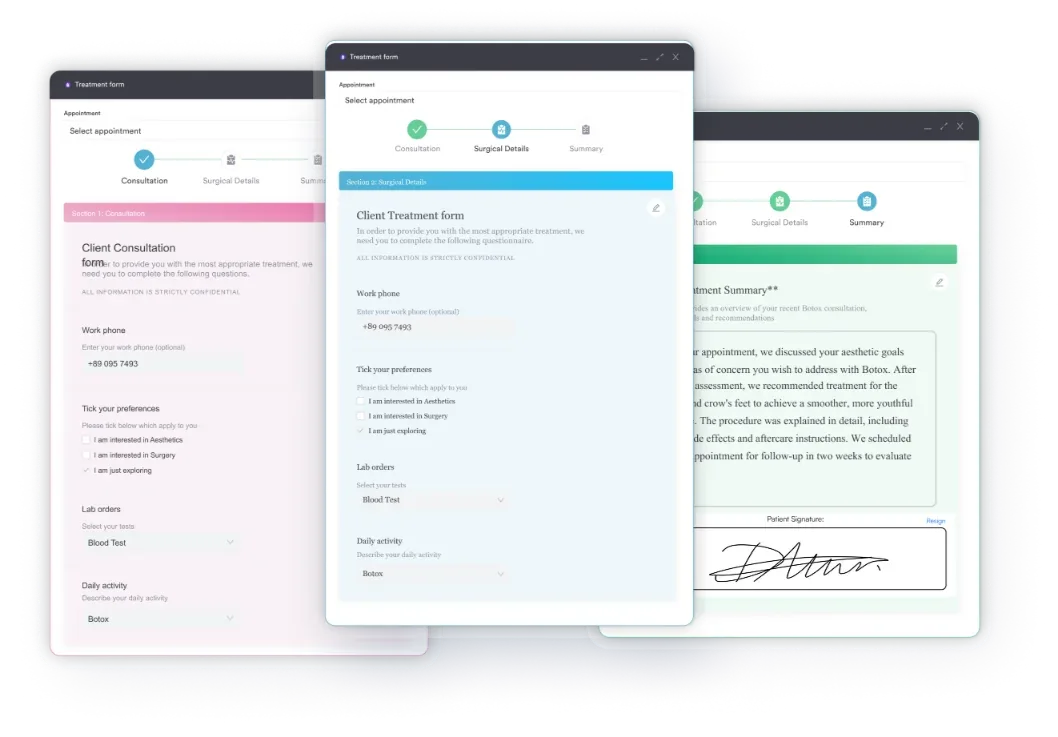
Using digital intake forms pre-configured with these fields reduces the risk of missing data at the point of care. For context on how procedure documentation links to billing compliance.
When billing a separate E/M with modifier -25, the E/M note must be independently documented – typically addressing a problem or complaint distinct from the wound management itself. Auditors look for whether the E/M could stand alone as a billable visit; a note that only describes the laceration and its repair does not meet that standard.
CPT Code 12002 carries a 10-day global period as confirmed by CMS MPFS data. This means the surgical package includes all routine postoperative care within 10 days of the procedure date – no separate billing for follow-up wound checks, suture removal, or dressing changes within that window. Care aimed at an underlying injury sits outside it, which is where S52.326K is reported.
Services bundled into the global period for 12002 include: the procedure itself, local anesthesia, routine follow-up visits, and suture/staple removal. Understanding medical office compliance requirements around surgical global periods helps practices avoid inadvertent overbilling on follow-up encounters.
The National Correct Coding Initiative (NCCI) defines which codes are bundled with CPT Code 12002 and when unbundling is permitted. NCCI edits are updated quarterly by CMS – always verify current edit pairs against the CMS ICD-10 resources page before billing specific code combinations. Diagnosis choice sits apart from those edits, though S52.591C still has to support the repair billed.
Maintaining HIPAA-compliant claim submission practices means staying current with NCCI updates.
Multiple lacerations on the same date follow a specific coding logic that differs depending on site and complexity.
The AMA CPT surgery guidelines establish the additive-length rule: when multiple wounds of the same repair complexity are treated at the same anatomical grouping, their lengths are added together to determine the correct code.
This is one of the most frequently misunderstood rules in wound repair coding. The table below maps the four key decision points for multi-wound encounters.
Practices that see a high volume of trauma or ED-referred patients benefit most from getting this rule right. Incorrectly separating addable lengths inflates the claim count. Incorrectly adding non-addable lengths (different sites or complexity) triggers medical necessity and unbundling concerns. A malunion code like S52.333R raises necessity questions of its own on a repair claim.

Pabau connects clinical documentation directly to billing, with structured procedure templates and validation checks that catch missing details before a claim goes out. See how practices reduce denial rates by connecting charting directly to claim submission.

Most laceration repair coding errors start with a disconnect between the clinical note and the claim. The provider documents a 4.5 cm trunk repair, but the billing team receives an encounter form that says “laceration repair, trunk” with no length, and has to guess or follow up before submitting. That delay is where denials and undercoding accumulate.
Pabau’s claims management software connects clinical documentation directly to billing. Procedure note templates can be pre-configured with the required fields for CPT Code 12002 – wound length in centimeters, anatomical site, repair type, and closure method – so the billing data is captured at the point of care instead of being reconstructed after the fact. First-pass rate measures how often a claim is paid without anyone touching it again. Benefit verification tells the practice what the plan covers, which is a separate question from whether the patient is active.
For practices with high wound repair volume, that consistency also feeds into Pabau’s built-in reporting on procedure and billing trends over time. The same documentation-first approach carries across other procedure billing workflows Pabau supports.
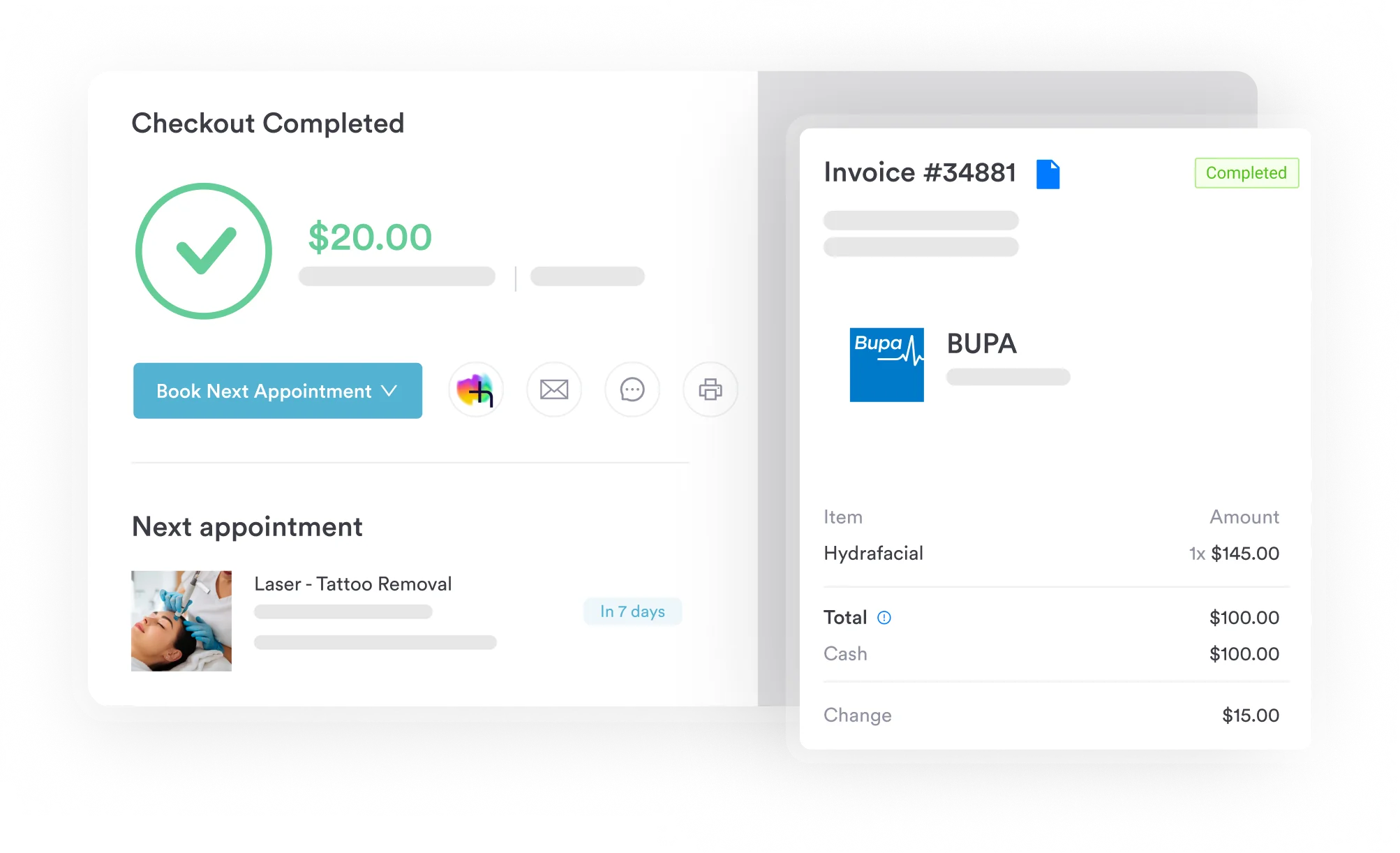
Pabau also supports the practice management workflows that sit around billing – scheduling, pre-visit documentation capture, and post-visit follow-up. For practices where wound repair is a consistent volume driver, having the charting and billing in the same platform removes the transcription step that introduces most 12002 errors.
Configure your 12002 procedure template to auto-prompt for wound length before the note can be saved. This single workflow change eliminates the most common documentation problem – length not recorded in centimeters – without adding time to the encounter.
CPT Code 12002 denials cluster around three avoidable errors: wound length not documented in centimeters, the site miscoded or left ambiguous, and a layered closure billed as simple repair. Every one of these is a documentation problem, not a clinical one.
Pabau’s built-in procedure templates enforce the required documentation fields at the point of care, so your billing team receives complete information every time and spends less time chasing missing details before submission.
If you want to see how that works for your wound repair volume, book a demo and we’ll walk through the workflow.

Coding a localized fat pad diagnosis? ICD-10 code E65 coding guide covers localized adiposity, the fat pad code that coders often confuse with the E66 obesity codes.
Billing an E/M visit alongside a procedure? 99204 covers the new-patient E/M level that most often pairs with modifier -25.
Coding a facial injury alongside a laceration? S02.642A covers a mandible fracture commonly documented alongside facial wound repairs.
Coding morbid obesity correctly? ICD-10 code E66.01 coding guide covers morbid obesity due to excess calories and why it must match the diagnosis on the chart, not E66.9.
CPT Code 12002 is a billing code for simple repair of superficial lacerations measuring 2.6 cm to 7.5 cm on the scalp, neck, axillae, external genitalia, trunk, and extremities (including hands and feet). Simple repair means a single-layer closure using sutures, staples, or tissue adhesive, involving only the epidermis, dermis, or subcutaneous tissue.
CPT 12001 covers simple repair of wounds measuring 2.5 cm or less on the same anatomical sites as 12002. CPT 12002 applies when the wound measures between 2.6 cm and 7.5 cm. Both apply to the same body regions; the sole distinguishing factor is wound length measured in centimeters at the time of repair.
Yes, but only when the E/M service is separately identifiable and documented independently from the laceration repair encounter. Append modifier -25 to the E/M code and ensure the E/M note addresses a medical decision that extends beyond the pre-procedure assessment. Payer-specific policies vary; confirm your payer’s modifier -25 requirements before submitting.
When multiple simple lacerations are repaired at the same anatomical site grouping, add their lengths together and select the single code matching the combined length. Do not add lengths across different code series (for example, a trunk wound and a facial wound use separate code series and are billed separately). Different complexity levels are also billed separately, not combined.
CPT 12002 carries a 10-day global period. All routine postoperative care – including follow-up visits, suture/staple removal, and dressing changes – is bundled into the procedure payment for 10 days following the repair date. Billing a separate E/M within the global window requires modifier -24 and documentation that the visit addresses an unrelated condition.
Required elements include: wound length in centimeters (measured, not estimated), specific anatomical location, confirmation that simple single-layer closure was performed, closure method (sutures, staples, or tissue adhesive), anesthesia type, and pre- and post-repair wound description. Missing wound length in centimeters is the most common audit finding for denied 12002 claims.



