ICD-10 code S61.201A: Open wound of left index finger without nail damage
ICD-10 code S61.201A covers a left index finger wound of unstated type ICD-10 co...

Last Updated: Oct 16, 2026
Billable Code Specific Code
S02.642A is the billable ICD-10-CM code for fracture of ramus of left mandible, initial encounter for closed fracture.
Oral and maxillofacial surgical practices and emergency departments use this code to document mandibular ramus fractures, recording the laterality, encounter type, and fracture classification directly from the clinical note.
Let Pabau's smart automation suggest the right codes, reduce claim denials, and keep your practice compliant—effortlessly.
Automate repetitive tasks and focus on what matters most—your patients.
Reduce coding errors and ensure compliance with the latest regulations.
Clean claims, fewer denials, and faster reimbursements.
Powerful insights and reporting to help your practice thrive.
HIPAA compliant SOC 2 certified GDPR-compliant Trusted by 4,000+ clinics worldwide

ICD-10 Code S02.642A describes a fracture of the ramus of the left mandible, initial encounter for a closed fracture.
S02.642A is a billable, specific ICD-10-CM code valid for FY2026 claims (effective October 1, 2025).
The 7th character sets the encounter type: ‘A’ for initial encounter with a closed fracture, ‘B’ for open fracture, and ‘S’ for sequela. Selecting the wrong one is a common audit trigger.
Pabau’s claims management software supports accurate ICD-10 diagnosis coding workflows, helping practices catch missing documentation before claims go out.
ICD-10 Code S02.642A is a billable, specific ICD-10-CM code that can be used to indicate a diagnosis for reimbursement purposes.
The complete clinical description is: Fracture of ramus of left mandible, initial encounter for closed fracture. Every element of that description carries a coding implication:
The 2026 edition of ICD-10-CM S02.642A became effective on October 1, 2025, under the standard CMS annual update cycle. According to the CMS ICD-10 codes page, this code remains in the S02 category covering fractures of skull and facial bones.
The mandible has two main structural regions. The body is the horizontal portion that bears the lower teeth. The ramus is the vertical portion that rises from each end of the body, connecting the lower jaw to the skull via the temporomandibular joint (TMJ).
A ramus fracture disrupts this vertical strut. Clinically, that means restricted jaw opening, malocclusion, and in more severe cases, instability of the TMJ articulation.
Ramus fractures are less common than condylar or symphyseal mandibular fractures, which is one reason accurate sub-site coding matters: billing a generic mandible fracture code rather than S02.642A misses the laterality and anatomical specificity that payers and clinical records require.
The next sub-site up the ramus is the subcondylar process, the neck below the condyle. An open fracture there at the initial encounter, with no side documented, takes ICD-10 S02.620B.
The 7th character is what separates S02.642A from its sibling codes within the same anatomical sub-site. Per ICD-10-CM Official Guidelines Section I.C.19, fracture codes require a 7th character to specify the encounter type. For S02.642, the valid 7th characters are A, B, D, G, K, and S.
Applying the wrong character is one of the most common audit findings in trauma coding.
A key clarification: “initial encounter” does not mean the patient’s first-ever medical visit. It refers to the period during which the patient is receiving active treatment for the injury. A patient who had emergency surgery and is returning three weeks later for a wound check is still in the initial encounter phase if active fracture management is ongoing.
Most S-code injuries end up in rehab, where a physical therapy EMR tracks recovery from intake to discharge.
Understanding where ICD-10 Code S02.642A sits in the classification tree helps coders navigate related codes and apply parent-level coding guidelines correctly. The full hierarchy is:
You can verify the current code hierarchy and any FY2026 updates using the CDC/NCHS ICD-10-CM web tool, the official U.S. government lookup for the tabular list and alphabetic index. This is also where coders can confirm applicable-to notes and excludes-1 or excludes-2 annotations at each level.
S02.642A sits within a family of codes covering the mandibular ramus by laterality and encounter type. Knowing the sibling codes helps coders select the right one when documentation specifies a different side, encounter stage, or fracture type.
A thorough head and neck assessment at intake helps confirm which of these related codes actually applies before the claim goes out.
ICD-10-CM coding indexes map a range of clinical phrases to S02.642A. Knowing these synonyms helps coders match the diagnosis correctly when the operative report or ED note uses different phrasing than the tabular descriptor.
Where the note describes surgical excision of the mandible rather than a simple fracture, the diagnosis code sits alongside a separate procedure code.
Clinical notes may also use “mandibular ramus fracture, left” or simply document “closed left ramus fracture.” All of these map to S02.642A when the encounter is initial and no open wound is present.
The AAPC’s ICD-10-CM code lookup includes an alphabetic index search that is useful for finding the tabular listing from narrative documentation phrases.
Clean claim submission for ICD-10 Code S02.642A depends on five documentation elements being clearly recorded. Missing any one of them creates grounds for a coding query or payer denial. Good claims management software flags incomplete diagnosis linkages before submission, but the clinical record itself must supply the source data.
Maintaining HIPAA-compliant clinical documentation practices ensures that the diagnosis detail needed for coding is captured consistently at the point of care, not reconstructed after the fact.
Flag laterality and open/closed status as structured fields in your encounter form template. When clinicians check a box rather than write free text, coding queries for missing laterality drop sharply. Structured capture at the point of care is more reliable than retrospective chart review.
Ramus fractures rarely present in isolation. Most arise from high-energy trauma such as motor vehicle collisions, assaults.
Coding only S02.642A when the patient also has dental injuries, a concussion, or soft tissue involvement leaves clinical complexity unreported and can affect DRG assignment and case mix index. Accurate patient data security practices also require that every documented diagnosis is captured correctly in the permanent record.
A concurrent neck laceration, for example. Use the ICD List code lookup tool to cross-reference associated diagnosis codes and verify they remain valid and billable for FY2026.
For surgical cases.
Practices managing maxillofacial trauma cases benefit from structured clinical documentation workflows that prompt clinicians for each required field at the point of care. A standardized dental treatment consent form at intake is one place to capture mechanism of injury alongside consent.
Pabau’s practice management platform supports customizable clinical encounter templates that can be configured to capture laterality, fracture type, and associated injury fields as structured data rather than free text, reducing the coding queries that follow incomplete documentation at billing time.
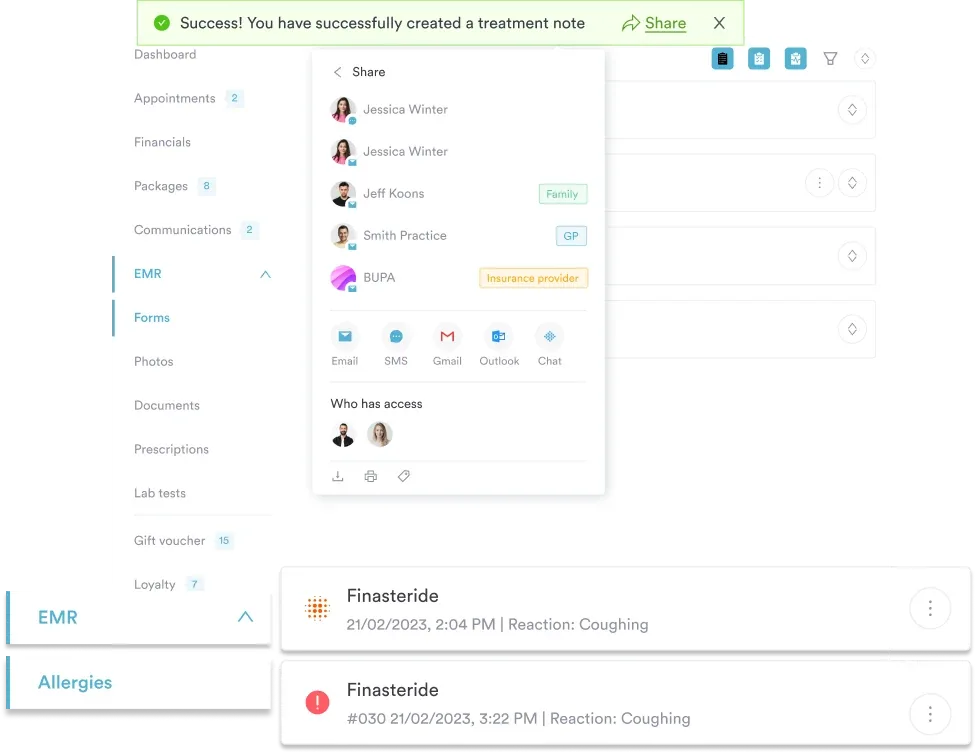

Pabau helps maxillofacial and surgical practices capture structured clinical data at the point of care, reducing coding queries and claim denials. See how structured encounter templates can support clean ICD-10 documentation.

Run a monthly audit of S02.xxx claims submitted without an external cause code. Motor vehicle and assault-related ramus fractures almost always need a V-code or Y-code for workers’ comp and auto payer adjudication. Missing external cause codes delay payment and can result in claim recoupment requests.
Ramus fractures are anatomically specific injuries that require equally specific coding. ICD-10 Code S02.642A covers exactly one clinical scenario: a closed fracture of the left mandibular ramus at the initial treatment encounter. Get the laterality wrong, misassign the 7th character, or omit associated injury codes, and the claim faces denial or audit exposure. A retroactive authorization is rarely granted, so the check belongs before the appointment. Revenue cycle management reporting separates claims that were denied from claims nobody submitted.
Practices that capture laterality, fracture type, and encounter stage as structured fields at the point of care dramatically reduce downstream coding queries. Pabau’s AI-assisted clinical documentation helps clinicians structure notes that contain the precise detail coders need, without adding time to the encounter.
To see how structured documentation workflows can support cleaner ICD-10 coding across your practice, book a demo.

Handling arthrocentesis or joint procedures alongside a jaw fracture? CPT code 20605 guide covers billing for TMJ arthrocentesis and injection procedures.
ICD-10 Code S02.642A is a billable ICD-10-CM diagnosis code describing a fracture of the ramus of the left mandible, initial encounter for a closed fracture. It is used to report this specific injury for reimbursement and clinical documentation purposes and is valid for FY2026 (effective October 1, 2025).
Yes. S02.642A is a billable, specific ICD-10-CM code that can be submitted on claims to indicate a diagnosis for reimbursement. It is not a header or non-billable category code.
All three codes describe a fracture of the ramus of the left mandible, but they differ by encounter type and fracture classification. S02.642A is initial encounter for a closed fracture. S02.642B is initial encounter for an open fracture (bone through skin or mucosa). S02.642S is sequela, covering late effects such as chronic malocclusion or TMJ dysfunction that develop after the original fracture has healed.
Initial encounter (7th character A or B) applies while the patient is receiving active treatment for the fracture, not just the first-ever visit. A patient still under active surgical management at their third clinic visit is still in the initial encounter phase. Once active treatment is complete and the patient is in follow-up, use 7th character D (routine healing) or G (delayed healing).
S02.642A is the correct ICD-10-CM code for a closed fracture of the left mandibular ramus at initial encounter. If the fracture is open rather than closed, use S02.642B instead.
The closest sibling codes are S02.641A (right ramus, closed, initial), S02.642B (left ramus, open, initial), S02.642D (left ramus, subsequent routine healing), S02.642G (left ramus, subsequent delayed healing), S02.642S (left ramus, sequela), and S02.649A (unspecified ramus, closed, initial). For broader mandibular fractures, the S02.60x-S02.69x family covers all mandible sub-sites.