



CCSD code G5100: Bypass of duodenum billing guide
CCSD code G5100 bills a bypass that leaves the duodenum in place CCSD code G5100...

Last Updated: Oct 16, 2026

CPT Code 99204 is a level 4 new patient office visit requiring moderate complexity MDM or 45-59 minutes of total time on the date of the encounter.
Two of three MDM elements must reach moderate complexity: number and complexity of problems, amount and complexity of data reviewed, and risk of complications.
Prescription drug management is the single most common qualifier for the risk element, and missing it is a leading cause of downcoding from 99204 to 99203.
Pabau’s practice management software automates MDM documentation prompts and claim scrubbing, cutting 99204 denials before submission.
CPT Code 99204 is the level 4 new patient office or outpatient visit code in the evaluation and management (E/M) family. You report it when a new patient encounter requires moderate complexity medical decision making (MDM) or 45 to 59 minutes of total time on the date of the visit.
Physicians, nurse practitioners, and physician assistants can all bill 99204 when the documentation supports one of those two pathways.
This guide covers the official American Medical Association (AMA) CPT code set descriptor for 99204, the MDM and time-based billing criteria, documentation requirements, 2026 Medicare reimbursement rates, code-level comparisons, and the most common billing mistakes that generate denials. Whether you’re a physician, coder, or practice manager, you’ll leave with a clear, actionable checklist for every 99204 claim.
The 99204 CPT code description defines it as a new patient office or outpatient E/M visit of moderate complexity. Also written as procedure code 99204, it sits in the new patient evaluation and management family, which spans codes 99202 through 99205.
Each level is determined by MDM complexity or total time. The AMA’s E/M coding resources define 99204 with this official descriptor:
The 2021 AMA E/M revisions eliminated the history and physical exam as required elements for level selection. Level is now determined solely by MDM or time. For a deeper reference on how these codes relate to other office visit types.
Referrals do not change which code family applies. Medicare stopped recognizing office consultation codes in 2010, so a referred new patient stays in the 99202 to 99205 range. A referral matters more on the ordering side, where an abdominal MRI billed as 74183 needs a documented order.
A new patient is someone who has not received any professional services from the physician, or any other physician of the same specialty in the same group practice, within the past three years. The AMA and CMS share this definition, and getting it wrong is one of the most audited billing errors in E/M coding.
Misclassifying an established patient as new, or vice versa, creates both overpayment and underpayment exposure. OIG audits consistently flag this as a high-risk area.
Split or shared visit rules and incident-to billing decide whose NPI carries the E/M charge. Imaging has no parallel pathway. A CT of the abdomen and pelvis reported as 74176 is attributed to the physician who supervised and interpreted it.
MDM is the more commonly used qualifying pathway. For CPT Code 99204, two of the three MDM elements must reach moderate complexity. Reaching moderate on only one element drops the visit to 99203. The three elements are:
Moderate complexity requires at least one of the following:
A patient presenting with type 2 diabetes and hypertension, both stable, meets the two-or-more-chronic-illnesses threshold. A patient with a new unexplained 15-pound weight loss meets the undiagnosed-new-problem threshold. See how ADHD screening CPT codes handle problem complexity for new psychiatric evaluations as a comparable example.
Moderate complexity requires meeting at least one of these three categories:
Ordering three labs counts as ordering one unique test (labs are a single unique source). Ordering labs and a chest X-ray, by contrast, counts as two unique sources. Accuracy here matters more than most coders realize.
Counting a test for MDM data is separate from coding the imaging study itself. Contrast phases drive that second choice. An abdominal CT done without contrast and then repeated with contrast is reported as 74170.
Moderate risk is the element most often underdocumented. It requires at least one of the following:
Prescription drug management is the single most powerful lever for hitting moderate risk. If a clinician starts, changes, or monitors a prescription drug during the visit, that alone qualifies. Document it explicitly: “Initiated metformin 500mg twice daily; discussed risks, benefits, and alternatives.” Vague notes like “medications reviewed” do not meet the bar.
Minor in-office procedures can satisfy the risk element on their own, too. A same-visit procedure billed under 20605 qualifies when identified patient or procedure risk factors are documented alongside it.
Document the specific prescription drug decision using this pattern: [Drug name + dose + frequency] + [decision type: initiated/changed/discontinued/monitored] + [alternatives discussed]. This single sentence can be the difference between a supported 99204 claim and a downcoded 99203.
Choosing software for a primary care practice around your visit mix makes E/M documentation faster and cleaner.
Time is the alternative qualifying pathway. For CPT Code 99204, total time must fall between 45 and 59 minutes on the date of the encounter. Falling below 45 minutes drops the claim to 99203; reaching 60 minutes qualifies for 99205.
Since the 2021 AMA E/M revisions, total time includes both face-to-face and non-face-to-face work performed on the same calendar day. The following activities count:
Time spent by other clinical staff does not count toward the physician’s total time. If a nurse takes the history, only the physician’s direct time with that history (reviewing it) counts. Document start and stop times, or total time with a summary: “Total time spent on this encounter: 52 minutes.”
Documentation for CPT Code 99204 must support whichever qualifying pathway the clinician uses. Under AMA guidelines, a medically appropriate history and/or examination should still be performed and documented, even though they no longer determine the code level. What determines level is MDM or time.
For MDM-based billing, the note must clearly document:
For time-based billing, the note must state the total time or start/stop time, and the activities performed during that time. Use digital intake forms to capture structured patient history before the visit, reducing documentation time during the encounter. Pairing pre-visit digital intake with consistent HIPAA-compliant documentation practices protects both the claim and the patient record.
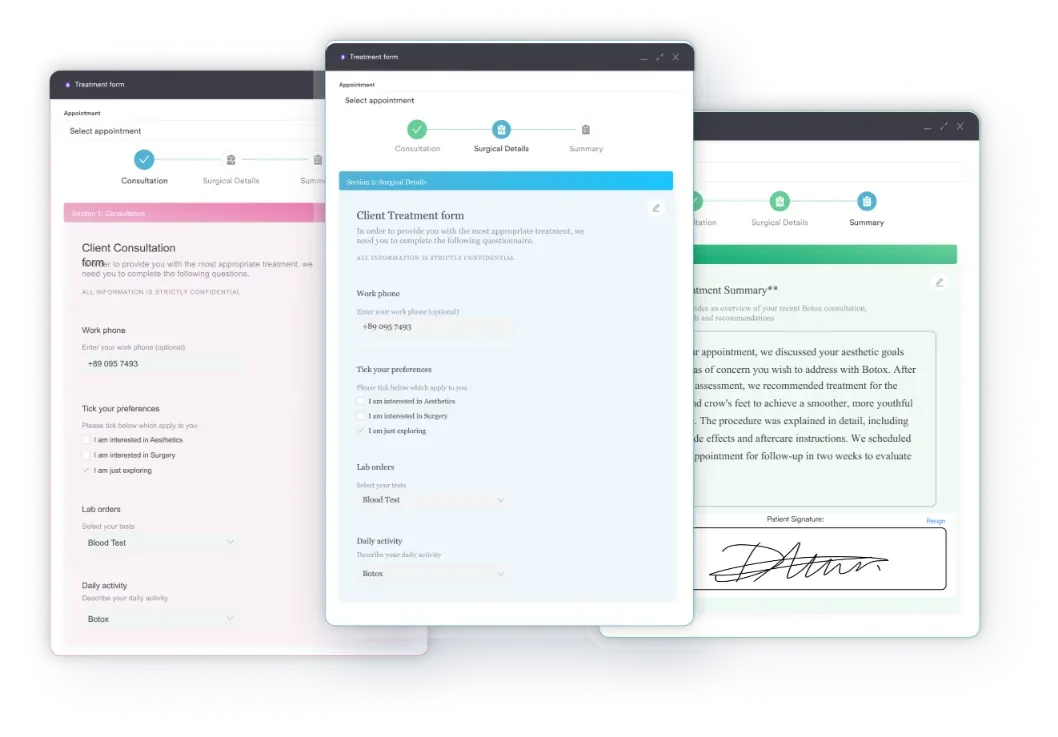
A complete primary care HIPAA compliance checklist covers documentation standards that apply directly to E/M visit notes. Also note: electronic health records that auto-populate or clone prior visit notes without editing create audit risk. Each 99204 note must reflect the specific encounter.

Pabau’s claims management tools prompt clinicians to document MDM elements at the point of care, reducing the leading cause of 99204 denials before the claim is ever submitted.

Medicare reimburses CPT Code 99204 based on the CMS Physician Fee Schedule (MPFS). Rates vary by geographic locality (the Medicare Administrative Contractor jurisdiction) and by service setting (facility vs. non-facility).
Under the 2026 CMS Physician Fee Schedule, approximate Medicare reimbursement for 99204 in a non-facility setting (office) ranges between $170 and $190 nationally, depending on the geographic practice cost index applied to your MAC jurisdiction. Facility rates (hospital outpatient, ASC) are lower, at roughly $110 to $120 nationally in 2026, because the facility bears the practice expense component.
Use the FastRVU RVU lookup tool to see exact Work RVU, Practice Expense RVU, and Malpractice RVU values with your local conversion factor applied.
Private payer contracts often reference a percentage of the Medicare fee schedule. A contract at 130% of Medicare in a major metropolitan area will pay notably more than a rural Medicare rate. Review contracts annually when CMS updates the MPFS conversion factor, which changes every January 1.
Nothing in an E/M payment splits into professional and technical components. Imaging does split. A CTA of the abdomen billed as 74175 pays under modifier 26 for the interpretation and TC for the equipment.
Choose the level by the MDM complexity that two of the three elements reach, or by total time: 99203 is low complexity or 30 to 44 minutes, 99204 is moderate complexity or 45 to 59 minutes, and 99205 is high complexity or 60 to 74 minutes. Here is the side-by-side comparison:
You can only qualify a 99204 on one pathway per encounter, so pick the one the documentation already supports at the higher level. Use this decision aid on every new patient visit:
One more comparison trips up front-desk and coding teams: 99204 vs 99214. Both are level 4 office visits, but 99204 is for new patients and 99214 is the established patient equivalent. If the patient has been seen by the physician, or another provider of the same specialty in the same group, within the past three years, the correct level 4 code is 99214, not 99204.
Consistent medical practice scheduling software that flags new versus established status at booking keeps this distinction accurate before the visit is ever coded.
Modifiers signal to payers that a service was performed under special circumstances. These are the most relevant modifiers for CPT Code 99204:
CMS discontinued modifier GT for Medicare professional telehealth claims on January 1, 2018, replacing it with place-of-service code 02 (telehealth) or 10 (patient’s home). GT now survives only on institutional claims from Critical Access Hospitals billing under Method II. Commercial payers commonly use modifier 95 instead.
For example. Modifier 57 works the same way when the visit leads to a decision for major surgery billed under 00932.
Modifier rules are payer-specific. Always verify modifier requirements with the specific payer before submission, and append modifiers in the order the payer’s claim edit system processes them.
Medical necessity alignment between the ICD-10 diagnosis code and CPT Code 99204 is required for claim approval. The diagnosis must justify the level of service. Common ICD-10 codes submitted with 99204 include:
No diagnosis code automatically justifies 99204 without supporting documentation. The note must show how the diagnoses contributed to the MDM complexity or time spent. Diagnosis pointers on the claim form link each service line to the diagnosis that justifies it.
Ordered imaging carries the same requirement on its own claim line. An esophagram reported as 74220 draws a medical necessity denial when its pointer names an unrelated diagnosis.
For mental health encounters. When managing fertility-related new patient visits, IVF CPT codes often appear alongside E/M codes and affect how data complexity is counted.
Claim denials for CPT Code 99204 cluster around a handful of recurring errors. Knowing them in advance is the cheapest audit you can run.
The upcoding/downcoding compliance risk runs in both directions. Downcoding 99204 to 99203 out of fear of audit also costs the practice revenue on every qualifying visit. Use the AAPC Codify CPT lookup to cross-check code definitions and verify your selection against the official descriptor before submitting.
Frequency edits hit repeat studies harder than repeat visits. A modified barium swallow repeated under 74230 needs a note stating what changed clinically since the prior study.
Billing software helps by embedding MDM documentation prompts directly into the clinical note, so the elements that support a 99204 are captured at the point of care instead of reconstructed after the visit. Manual workflows leave those elements to memory, which is why the risk element in particular gets skipped across a busy new patient schedule.
Practice management software like Pabau ties documentation structure directly to claim submission, so the fields that support an MDM-based 99204 are prompted at the point of care, not reconstructed post-visit. This is particularly valuable for multi-provider practices where coding consistency across clinicians directly affects revenue cycle performance.
Structured intake also reduces the time spent on pre-visit data gathering, which matters when time-based billing is the qualifying pathway. For broader context on how technology supports E/M workflows.
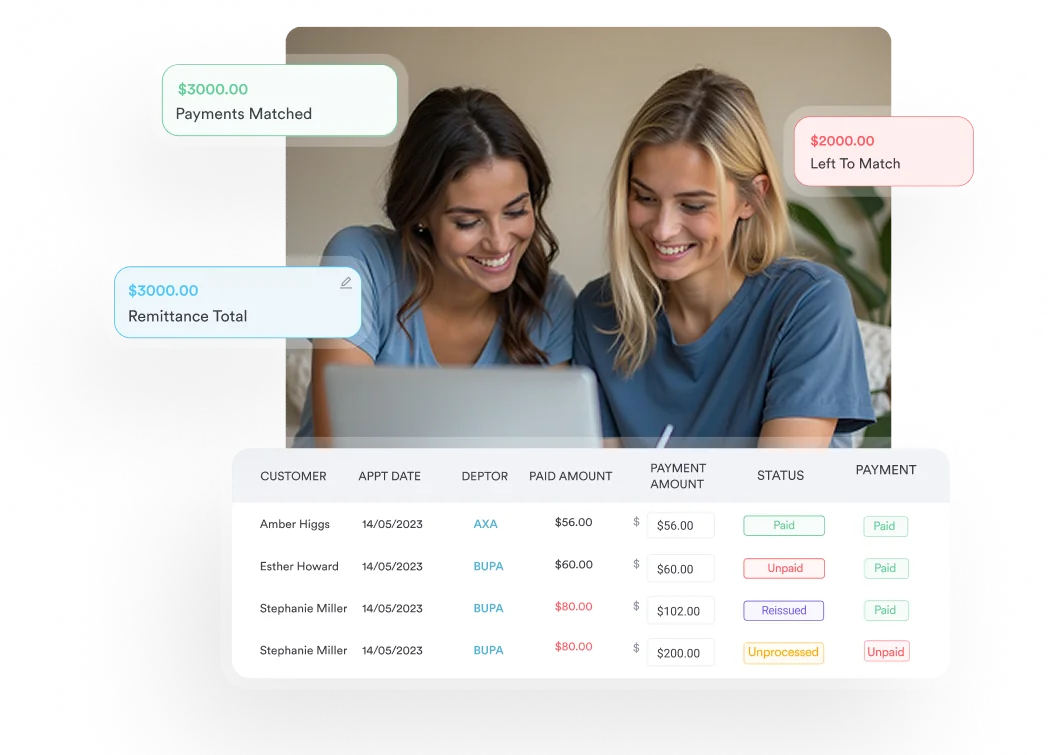
Features that directly support 99204 compliance include MDM element checklists within the clinical note template, automated claim scrubbing against payer-specific edits before submission, and audit trail documentation that supports medical record review if a payer requests it. These tools don’t replace coder judgment; they make sure the clinical record contains what the coder needs to support the code.
Run a quarterly internal audit on a random sample of 99204 claims. Pull 20 charts, verify MDM element documentation for each, and calculate the percentage that fully support the billed level. A rate below 90% signals a documentation training issue that costs more to fix after a payer audit than before one.
CPT Code 99204 is one of the highest-volume E/M codes in new patient billing, and getting it wrong in either direction costs practices money. The fix is systematic: document all three MDM elements explicitly, state prescription drug decisions in specific terms, and choose between MDM and time pathways deliberately for each encounter.
Pabau’s claims management tools embed these documentation prompts into the clinical workflow, reducing the mismatch between what clinicians document and what coders need to support the claim. To see how this works in practice, book a demo and walk through the E/M documentation workflow with your team.

Coding a visit for an older patient with a bone health diagnosis? M83.1 covers documentation requirements for senile osteomalacia claims.
Billing durable medical equipment alongside an office visit? A4425 explains how to bill drainable ostomy pouches correctly.
Billing for a dialysis anesthetic too? topical anesthetic billing guide covers the payment rules behind most denials for this dialysis numbing cream code.
CPT Code 99204 is used for new patient office or outpatient visits requiring moderate complexity medical decision making, or a total encounter time of 45-59 minutes on the date of the visit. It is the level 4 code in the new patient E/M family (99202-99205) and is appropriate for visits involving two or more stable chronic conditions, undiagnosed new problems with uncertain prognosis, or prescription drug management decisions.
The 2026 Medicare non-facility reimbursement rate for CPT 99204 is approximately $170-$190 depending on geographic locality. Facility rates (hospital outpatient) are lower, typically $110-$120. Verify the exact rate for your MAC jurisdiction using the CMS Physician Fee Schedule Look-Up Tool, since the conversion factor and locality adjustments change annually.
99205 requires high complexity MDM or 60-74 minutes of total time, while 99204 requires moderate complexity MDM or 45-59 minutes. High complexity MDM means at least two of three elements reach high complexity, which includes problems that represent a threat to life or bodily function, extensive data review with an independent historian, or prescription drug management requiring intensive monitoring such as warfarin or chemotherapy agents.
Yes. If total time spent on the date of the encounter (including pre-visit preparation, face-to-face time, and post-visit documentation) falls between 45 and 59 minutes, you may use time as the qualifying basis regardless of MDM complexity. Document total time or start/stop times in the note, and list the activities performed during that time.
Common pairings include E11.9 (type 2 diabetes without complications) and I10 (essential hypertension) together, which meet the two-stable-chronic-conditions threshold for moderate problem complexity. F32.1 (major depressive disorder, moderate) pairs well when antidepressant initiation is the risk element. The diagnosis must document medical necessity for the level of service billed; a code alone does not justify 99204 without supporting documentation.
The most common modifiers are: modifier 25 (significant, separately identifiable E/M on the same day as a procedure), modifier 57 (decision for major surgery made at this encounter), and modifier 95 (synchronous telemedicine via audio/video). Modifier GT is largely obsolete for professional claims since CMS replaced it with place-of-service code 02 or 10 in 2018; it now applies only to institutional Critical Access Hospital claims billed under Method II. Modifier applicability is payer-specific; verify requirements with each payer before submission.
99204 is the level 4 code for a new patient office visit, while 99214 is the level 4 code for an established patient. Both require moderate complexity MDM or a comparable time band, but the choice depends entirely on patient status. If the patient has been seen by the physician, or another provider of the same specialty in the same group, within the past three years, the correct level 4 code is 99214. There is no established patient version of 99204 itself; 99214 is its established patient counterpart.
Yes. Medicare covers CPT Code 99204 as a new patient office or outpatient visit and reimburses it through the CMS Physician Fee Schedule, at roughly $170 to $190 in a non-facility setting depending on your MAC locality. Coverage requires documentation that supports moderate complexity MDM or 45 to 59 minutes of total time, plus a diagnosis that establishes medical necessity for the level billed.
No, CPT Code 99204 does not require a modifier on a standard new patient visit. A modifier is added only when a specific circumstance applies, such as modifier 25 for a significant, separately identifiable service on the same day as a procedure, modifier 57 for a decision for major surgery, or modifier 95 for a synchronous telehealth encounter. Append one only when the documentation supports that situation.



