

ICD-10 code S61.201A: Open wound of left index finger without nail damage
ICD-10 code S61.201A covers a left index finger wound of unstated type ICD-10 co...

Last Updated: Oct 16, 2026
Billable Code Specific Code
H54.3 is the billable ICD-10-CM code for unqualified visual loss, both eyes.
Let Pabau's smart automation suggest the right codes, reduce claim denials, and keep your practice compliant—effortlessly.
Automate repetitive tasks and focus on what matters most—your patients.
Reduce coding errors and ensure compliance with the latest regulations.
Clean claims, fewer denials, and faster reimbursements.
Powerful insights and reporting to help your practice thrive.
HIPAA compliant SOC 2 certified GDPR-compliant Trusted by 4,000+ clinics worldwide

ICD-10 Code H54.3 describes unqualified visual loss affecting both eyes and is billable for HIPAA-covered transactions in the 2026 edition (effective October 1, 2025).
Use H54.3 only when clinical documentation does not support a more specific H54.0 or H54.2 code. Specificity-first coding is a CMS compliance requirement.
H54.3 has no child codes or seventh-character extension – always report the complete 5-character code. That’s different from siblings H54.0, H54.1, and H54.2, which do carry WHO-category child codes.
Practice management software like Pabau helps ophthalmology and optometry practices capture accurate ICD-10 diagnosis codes alongside CPT procedure codes in the patient record, supporting clean documentation at the point of care.
ICD-10 Code H54.3 is a billable ICD-10-CM diagnosis code for unqualified visual loss affecting both eyes. Coders use it when documentation confirms bilateral visual loss but doesn’t support the specific WHO severity grade needed to assign H54.0 (blindness) or H54.2 (low vision) instead.
The official descriptor is “Unqualified visual loss, both eyes.” The 2026 edition of ICD-10-CM H54.3 became effective on October 1, 2025, and it remains valid for submission on all HIPAA-covered transactions. According to the CDC/NCHS ICD-10-CM lookup tool, H54.3 sits under the H53-H54 block (Visual disturbances and blindness) within the H00-H59 chapter covering diseases of the eye and adnexa.
This reference covers the code’s billable status, its parent category, WHO grading context, child codes, documentation requirements, related code comparisons, and ophthalmology billing considerations.
H54.3 belongs to the H54 parent category, which covers all gradations of blindness and low vision as defined by the WHO’s ICD-10 browser. The category spans from mild low vision through to complete blindness, affecting one or both eyes.
For ophthalmology practices and skin clinic software users alike, understanding where H54.3 sits within the full hierarchy prevents both under-coding and over-coding.
The subcategories within H54 reflect the WHO visual impairment classification framework, where severity and laterality together determine the correct code. H54.3 is the code reserved specifically for cases that present bilaterally but without enough documentation to satisfy the specificity of H54.0, H54.1, or H54.2.
The WHO grades visual impairment on a scale of 0 to 5, with grade 9 reserved for unqualified or unspecified cases. Grades 1 and 2 map to low vision (H54.2 and H54.5), grades 3 through 5 map to blindness (H54.0 and H54.4), and grade 9 is the clinical trigger for unqualified codes including H54.3.
When a provider’s documentation records vision loss in both eyes but cannot reliably place the patient at a specific WHO severity grade, ICD-10 Code H54.3 reflects that grade-9 status in a bilateral presentation.
This distinction matters for audits. Assigning H54.0 (bilateral blindness) when the note only documents “visual loss both eyes, severity unclear” is upcoding. H54.3 is the compliant choice in that scenario.
H54.3 is a complete, standalone code. Per the AAPC Codify lookup, it has no further subdivision and no seventh-character extension. Coders always report the full five-character code, regardless of how much detail is documented for either eye.
That’s different from its siblings. H54.0 (blindness, both eyes), H54.1 (blindness one eye, low vision other eye), and H54.2 (low vision, both eyes) each carry X-extended child codes that record the WHO category for each eye separately.
H54.0X33, for example, reports blindness category 3 in both eyes, and H54.2X11 reports low vision category 1 in both eyes. H54.1 splits further, into separate right-eye-blind and left-eye-blind branches, before adding a category digit for each eye. Coders working within H54.0 through H54.2 should select the matching child code whenever both eyes’ WHO categories are documented. That extra digit specificity simply doesn’t exist for H54.3.
H54.3 applies only when three conditions are simultaneously true:
The ICD-10-CM Official Guidelines for Coding and Reporting require coders to assign the most specific code the documentation will support, which means H54.3 is appropriate only after ruling out H54.0 and H54.2.
Common clinical scenarios where ICD-10 coding blindness documentation supports H54.3 include:
What the provider note must include to support H54.3: explicit reference to bilateral involvement (“both eyes” or “bilateral”), an absence of documented visual acuity values that would permit WHO grade assignment, and a clinical context explaining why specificity is not yet available. Notes that simply omit visual acuity data without explanation are vulnerable to audit.
Document why specificity is unavailable, not just that it is. A note reading ‘visual acuity not testable due to patient non-cooperation’ gives auditors the context they need to accept H54.3. A note that is simply silent on severity invites a query.
The most common confusion in ICD-10 blindness coding involves choosing between H54.3, H54.0, and H54.2. The table below clarifies the decision boundary. The same specificity-first logic applies across other ICD-10-CM chapters.
The Excludes1 note for ICD-10 Code H54.3 is amaurosis fugax (G45.3), a transient vision-loss condition classified under the nervous system chapter rather than the eye chapter. H54.3 also carries a “Code first” instruction: report the underlying cause of the blindness, such as diabetic retinopathy or glaucoma, ahead of H54.3 on the claim. The real differential coders need to work through is against H54.0 and H54.2. If documentation supports either of those, it replaces H54.3 entirely. Secondary payers often allow a shorter window than the primary, so the filing deadline differs by claim. A quick reference sheet cuts lookup time on codes a practice bills every week.
There are no Excludes2 conditions listed directly at the H54.3 code level, but coders should review the parent H54 category for any applicable instructional notes before finalizing the encounter.
Four error patterns account for the majority of H54.3 claim queries in ophthalmology practices. The same pattern shows up in codes like M88.9: coders either stop at the first plausible code or fail to reconcile what the clinical note actually says.

Pabau helps ophthalmology practices capture the right diagnosis codes at every encounter and pair them with matching CPT procedure codes in the patient record. See how the documentation workflow works in a live demo.

A defensible H54.3 claim usually comes down to one line in the provider note. Specialty EMR platforms.
The following checklist reflects the minimum documentation standard for a compliant H54.3 assignment.
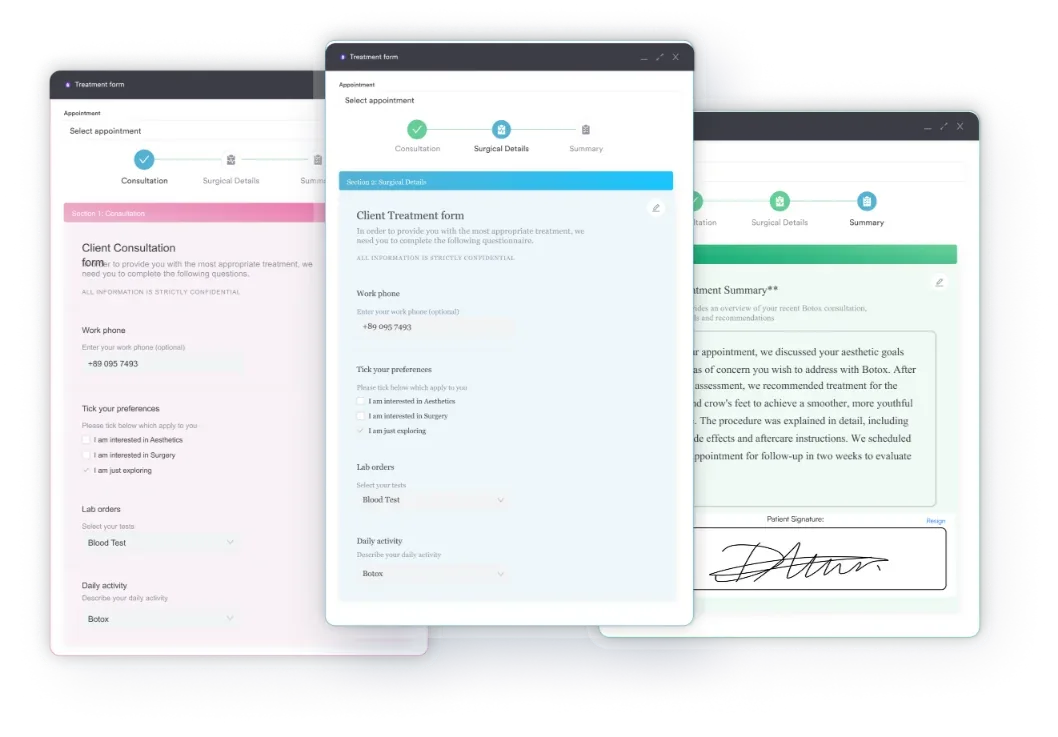
Maintaining structured clinical documentation workflows makes it easier to capture this level of detail at every encounter without slowing down the clinical team. Practices that standardize their encounter note template for ophthalmology visits see fewer H54-related coding queries on second review.
The patient data security considerations around retaining historical acuity records also support richer longitudinal coding when severity does eventually get graded.
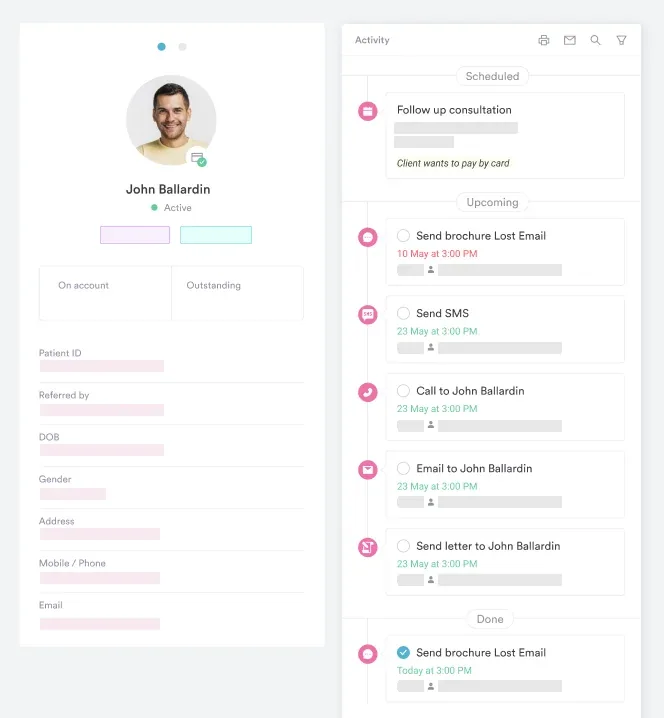
ICD-10 Code H54.3 is accepted by CMS billing guidance as a valid diagnosis code for the 2026 code year. However, the diagnosis code itself does not drive reimbursement. Payment flows through the paired CPT procedure code, which must be medically necessary for the documented diagnosis.
H54.3 commonly pairs with ophthalmology examination CPT codes such as 92002, 92004, 92012, and 92014 (office or other outpatient ophthalmological services), as well as with 92015 (refraction) and 92060 (special ophthalmological services, sensorimotor examination) when clinically appropriate.
One revenue cycle implication worth noting: payers increasingly prefer specific diagnosis codes and may apply additional review to claims carrying unqualified codes. This does not mean H54.3 claims will be denied, but it does mean the supporting documentation should be especially clear.
Practices that systematically use unqualified codes as a default rather than a last resort tend to see higher rates of additional documentation requests on ophthalmology claims.
Using claims management software that keeps ICD-10 and CPT codes attached to the same encounter record reduces the chance of a mismatch reaching a claim in the first place. For practices managing HIPAA-covered electronic transactions, understanding HIPAA compliance software requirements and how diagnosis codes flow through the 837P transaction format is also relevant when onboarding or auditing a billing system.
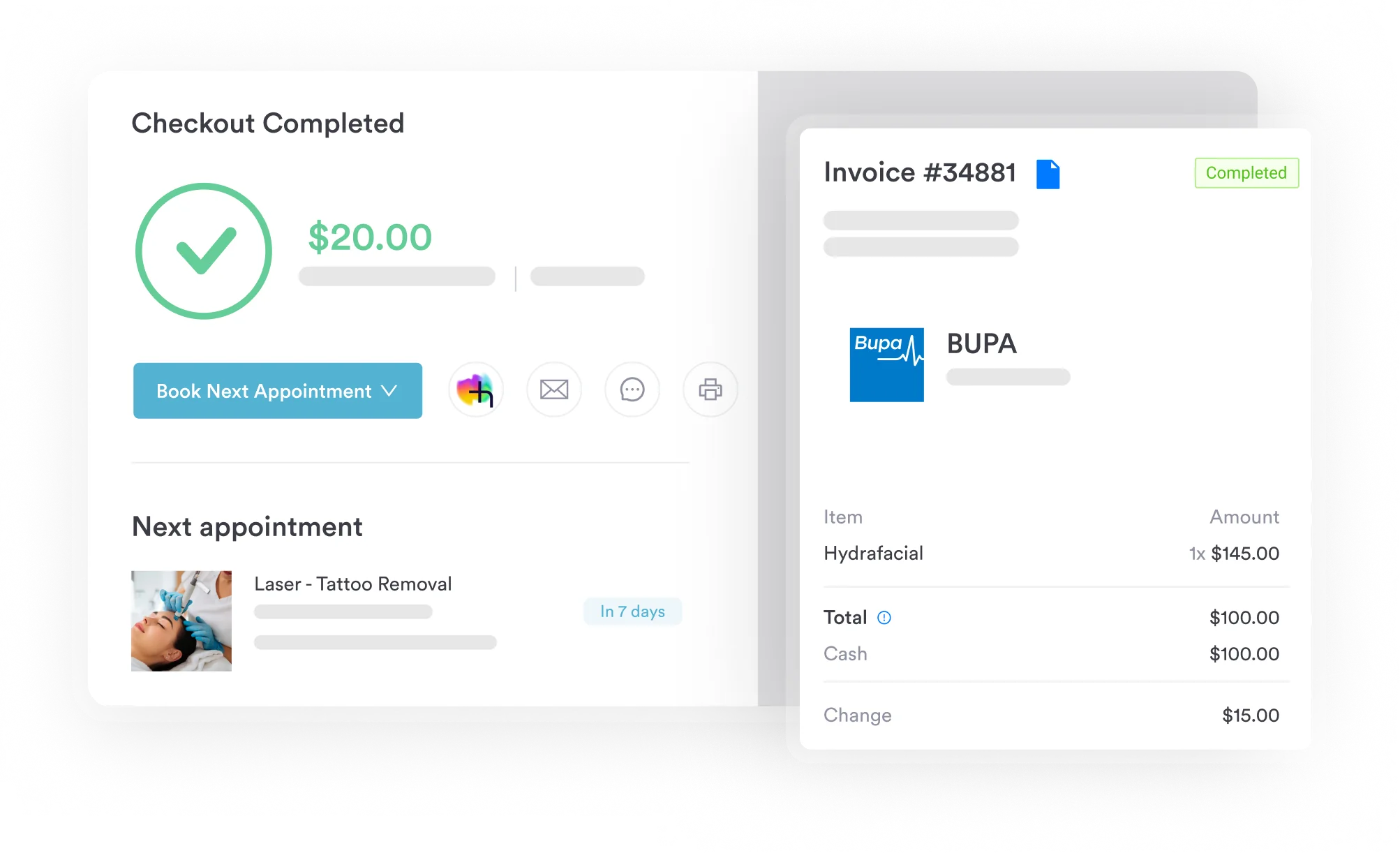
Practices should also review the ICD List lookup tool for current code edit information, particularly when combining H54.3 with other eye-chapter codes in the same claim. Some payers apply Medically Unlikely Edits (MUEs) or National Correct Coding Initiative (NCCI) edits to H54 codes bundled with certain procedure codes.
Confirming these edits before submission prevents avoidable denials. For reference on the underlying HIPAA-covered transaction requirements that govern diagnosis code submission, the HHS guidance is the authoritative source.
When H54.3 appears on a claim alongside a primary etiology code (such as macular degeneration or glaucoma), sequence the etiology first and H54.3 as secondary. CMS sequencing rules for manifestation codes require the underlying condition to lead the claim.
Unqualified visual loss in both eyes happens in real clinical encounters where testing is incomplete, documentation is pending, or severity cannot yet be graded. ICD-10 Code H54.3 exists for exactly those cases. The compliance obligation is to use it as the most specific code available given the documentation, not as a permanent placeholder.
Practice management software like Pabau helps ophthalmology and optometry teams capture diagnosis codes accurately in the patient record and pair them with the correct procedure codes for billing. To see how Pabau supports documentation and billing workflows for ophthalmic encounters, book a demo.

Need a structured framework for another complex diagnosis family? S06.6X0A covers sequencing and documentation requirements for intracranial injury coding.
Coding a POTS diagnosis? ICD-10 code for POTS explains when to assign G90.A and the CPT codes it pairs with.
Coding a brain complication from another disease? ICD-10 code G94 guide covers the single billable code for brain complications tied to another disease.
ICD-10 Code H54.3 is a billable diagnosis code meaning “Unqualified visual loss, both eyes.” It is used when a patient has documented visual loss affecting both eyes but the clinical record does not provide sufficient detail to assign a more specific code such as H54.0 (blindness, both eyes) or H54.2 (low vision, both eyes).
Yes. H54.3 is a billable, specific ICD-10-CM code valid for the 2026 code year. It became effective October 1, 2025, and is accepted on all HIPAA-covered electronic transactions including the 837P professional claim. Confirm current validity annually via the CDC/NCHS ICD-10-CM lookup tool before the start of each fiscal year.
H54.0 (blindness, both eyes) requires documented visual acuity values placing both eyes within the WHO grades 3, 4, or 5 blindness threshold. H54.3 is used when both eyes are affected but the severity cannot be graded from the documentation, making the presentation “unqualified.” If acuity data is available in the note, H54.0 is the more specific and therefore preferred code.
The provider note must confirm bilateral involvement (“both eyes” or “bilateral”), explain why visual acuity grading is not available (e.g., patient unable to cooperate, testing deferred pending specialist), and not contain acuity values that would support a more specific H54 code. Notes that omit severity data without explanation are vulnerable to payer audit.
H54.3 covers bilateral visual loss only (both eyes). For unilateral unqualified visual loss, the correct code is H54.6. For completely unspecified laterality where the note does not indicate which eye or eyes are involved, H54.7 applies.



