

CCSD code G5100: Bypass of duodenum billing guide
CCSD code G5100 bills a bypass that leaves the duodenum in place CCSD code G5100...

Last Updated: Oct 16, 2026
A4425 is the HCPCS Level II code for ostomy pouch, drainable; for use on barrier with non-locking flange, with filter (2 piece system), each.
It sits in a family of nearly identical A4xxx codes, and mixing up the flange type, the filter, or the piece count is one of the most common reasons ostomy claims get denied.
Let Pabau's smart automation suggest the right codes, reduce claim denials, and keep your practice compliant—effortlessly.
Automate repetitive tasks and focus on what matters most—your patients.
Reduce coding errors and ensure compliance with the latest regulations.
Clean claims, fewer denials, and faster reimbursements.
Powerful insights and reporting to help your practice thrive.
HIPAA compliant SOC 2 certified GDPR-compliant Trusted by 4,000+ clinics worldwide

HCPCS code A4425 describes a drainable ostomy pouch for use on a barrier with non-locking flange, with filter, 2-piece system, billed per unit (each).
A4425 is covered under Medicare Part B as a DMEPOS-processed prosthetic device supply, governed by Local Coverage Determination (LCD) L33828.
Common denial causes include missing ICD-10 diagnosis codes (Z43.3, Z93.2, Z93.3) and exceeding monthly quantity limits without documentation.
Pabau’s claims management tools keep claims documentation and status in one place, so missing information surfaces before you submit.
HCPCS code A4425 has the following official long descriptor, as maintained by CMS under the HCPCS Level II code set:
Every word in the long descriptor is a billing qualifier. “Drainable” distinguishes this pouch from a closed-end pouch, which is discarded after a single use. “Non-locking flange” distinguishes it from locking-flange variants like A4427.
“With filter” confirms the built-in gas-release filter, a feature both A4425 and A4427 include. “2-piece system” confirms the pouch couples to a separately worn barrier wafer, not an all-in-one unit. Misidentifying any of these attributes selects the wrong code.
Medicare reimbursement for HCPCS code A4425 is set annually through the CMS DMEPOS fee schedule. Rates vary by locality and are updated each January.
Use the CMS DMEPOS fee schedule to confirm current allowed amounts for your Medicare Administrative Contractor (MAC) jurisdiction. The table below reflects 2026 national average benchmark figures, so verify against the current CMS fee schedule before submitting claims.
Allowed amounts differ by payer type, so review CMS’s annual DMEPOS update documentation each year. Commercial payer rates for A4425 are typically negotiated separately and may differ materially from Medicare allowed amounts.
Coverage for HCPCS code A4425 is governed by Local Coverage Determination (LCD) L33828 (Ostomy Supplies), administered by the four DME MAC jurisdictions. Failing to meet LCD L33828 criteria is the primary reason ostomy supply claims are denied or subjected to pre-payment review.
Key coverage requirements include:
Prior authorization requirements vary by MAC jurisdiction and can change. Confirm current PA rules with your specific MAC before submitting high-volume claims. Good healthcare compliance documentation practices reduce audit exposure for ostomy supply billing.
Document the stoma type (colostomy, ileostomy, or urostomy) and the date of surgical creation in every claim file. LCD L33828 reviewers frequently flag claims where the operative note or physician order is absent from the billing record. A complete file at submission time is faster than a reconsideration request.
Supply billing leaks revenue quietly, and medical practice management software catches unbilled items before they’re written off.
Beyond LCD L33828 eligibility, several billing mechanics govern how HCPCS code A4425 is submitted correctly.
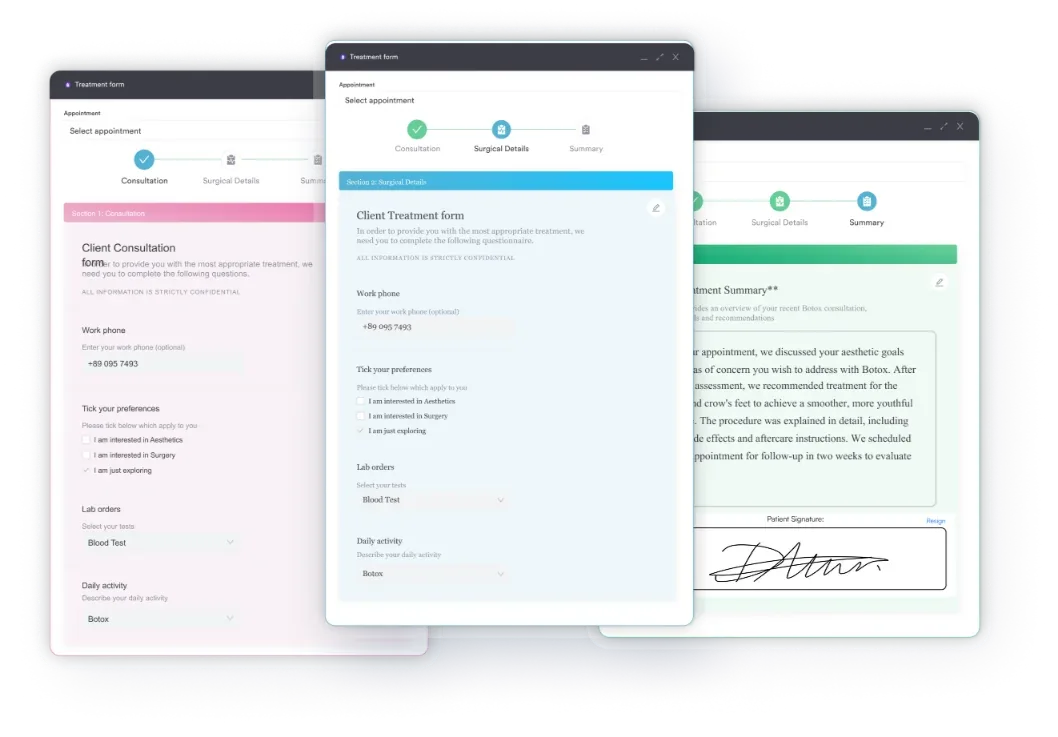
Keeping claims documentation and status in one place, the way practice management software like Pabau does, helps billing teams catch an incomplete claim file before it goes out the door, reducing denial rates on DME supply codes including HCPCS code A4425.
The same documentation habits carry over at a GP practice, where physicians order ostomy supplies alongside dozens of other HCPCS and CPT codes.
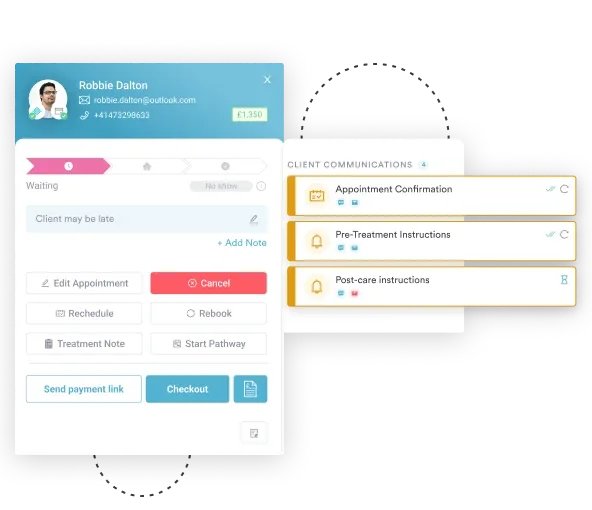

Pabau’s claims management software keeps your claims documentation and status together, so your team spends less time chasing paperwork and more time with patients.

Every HCPCS code A4425 claim must carry at least one covered ICD-10 diagnosis code establishing that the beneficiary has a stoma.
The following codes are commonly accepted under LCD L33828 as supporting medical necessity for ostomy supply billing. Verify the current covered diagnosis list against your MAC’s LCD policy, as coverage indications can be updated between annual cycles.
Status codes (Z93.x) are used for routine supply claims. Attention codes (Z43.x) apply when the claim involves an encounter focused on ostomy care.
Using the wrong Z-code type for the claim context is a common documentation error that does not always trigger an automatic denial but can create audit exposure. Confirm the appropriate code with the ordering physician’s documentation.
HCPCS code A4425 sits within a family of A4xxx ostomy supply codes. Selecting among them requires matching each descriptor attribute to the exact product being dispensed. A closely related code.
The table below covers the most commonly cross-referenced codes:
The A4425 vs A4427 distinction is the most common coding error in this code family. Both are drainable, 2-piece systems with a built-in filter. The difference is the flange type: A4425 has a non-locking flange, and A4427 has a locking flange. Confirm with the dispensing clinician which flange type the specific product uses before selecting the code. Self-pay does not mean uninsured, and many patients recover part of the fee with a superbill. Denial codes in medical billing group the reasons a payer refuses, and the group decides the fix.
Consistent documentation at the point of care is the most reliable way to prevent this error. The AAPC HCPCS code lookup and PGM Billing’s lookup tool both provide current descriptor text for cross-referencing adjacent codes.
A descriptor can also name the substitute code outright. The long descriptor for S0174 routes circumstances falling under the Medicare statute to Q0180 instead.
The 2-piece designation in HCPCS code A4425 is not incidental. It drives which codes can be billed together on the same claim. In a 2-piece system, the barrier wafer and the pouch are separate supplies, each with their own HCPCS code.
Both components can be billed on the same claim. In a 1-piece system, the barrier and pouch are integrated and billed as a single unit under a single code.
Getting the system type wrong is the second most common denial trigger for ostomy claims after missing ICD-10 codes.
This same matching discipline runs across CPT and HCPCS families more broadly. Base units on anesthesia code 01924 and complexity qualifiers on 10081 hinge on the same kind of descriptor precision as the flange type on A4425.
When a patient transitions from a 1-piece to a 2-piece ostomy system, update both the physician order and the billing record to reflect the new system type. Continuing to bill 1-piece codes after a product change is a documentation error that becomes an overpayment during post-payment review. Flag system changes in the patient file with the transition date.
Most claim errors for ostomy supplies start upstream, in how supply orders are captured and matched to the right code at the point of care.
Pabau’s claims management software keeps the physician order, the procedure code, and the claim status together in one record. A missing piece of documentation surfaces before the claim goes out, rather than after a denial comes back.
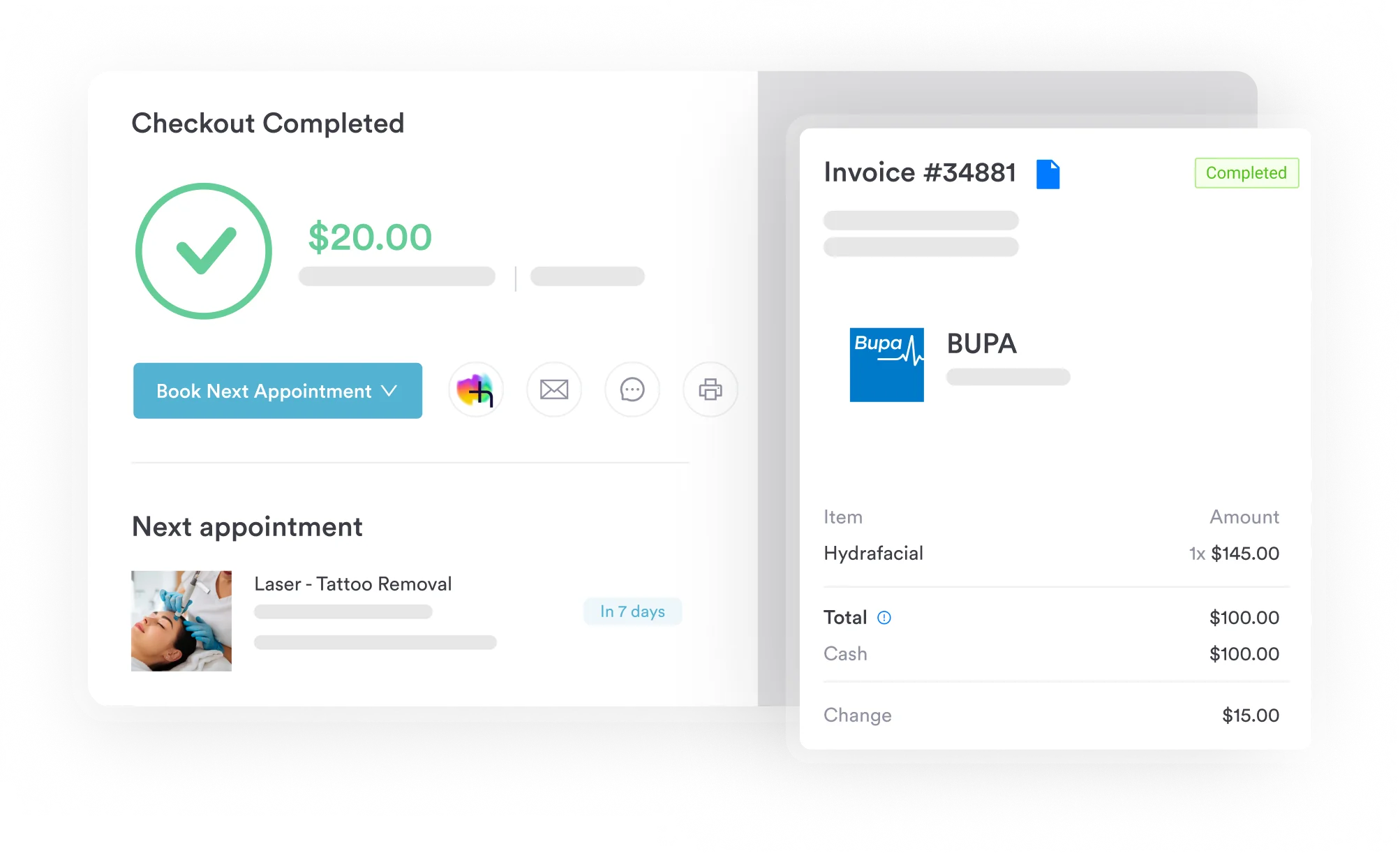
For suppliers managing recurring monthly ostomy orders. That single view makes it easier to catch a stale order or an outdated diagnosis code before it holds up a batch of claims.
HCPCS code A4425 covers a specific, narrow product type: a drainable ostomy pouch, with filter, for use on a non-locking flange barrier, in a 2-piece system, billed per unit. Each of those attributes independently determines whether A4425 is the correct code or whether an adjacent code applies.
The most common denial causes are missing ICD-10 diagnosis codes, exceeding monthly quantity limits without modifier documentation, and confusing A4425 with A4427 by mixing up the flange type.
Accurate billing starts with a complete file at the time of submission. Pabau’s claims management software helps billing teams keep supply orders, physician notes, and claim status together in one place, so a missing piece surfaces before it turns into a denial.
If you’d like to see how Pabau keeps claims documentation organized, book a demo with the team.

Billing a Parkinson’s rescue injection? Apomorphine hydrochloride billing guide covers Apokyn injections for Parkinson’s off episodes, billed at one unit per milligram.
Billing an arbutamine hydrochloride injection? Arbutamine HCl injection billing covers J0395, billed to Medicare Part B and most commercial payers.
Billing a baclofen injection claim? Baclofen injection billing guide covers the unit count, wastage modifier, and NDC that avoid denials.
HCPCS code A4425 is a drainable ostomy pouch for use on a barrier with a non-locking flange, with a filter, in a 2-piece system, billed per unit (each). It is a HCPCS Level II supply code maintained by CMS and covered under Medicare Part B’s prosthetic device benefit when medical necessity is established.
Both A4425 and A4427 are drainable, 2-piece ostomy pouches with a built-in filter. The difference is the flange: A4425 has a non-locking flange, while A4427 has a locking flange. Bill the code that matches the flange type on the barrier the patient actually wears.
Yes. Medicare Part B covers A4425 under its prosthetic device benefit (processed via the DME MAC) when LCD L33828 is met: a surgically created stoma, a valid ICD-10 code on the claim, and an enrolled DMEPOS supplier. Medicare pays 80% of the allowed amount after the deductible.
Prior authorization requirements for A4425 vary by MAC jurisdiction. Some regions require it for quantities exceeding the standard monthly limit. Confirm current requirements with your MAC before submitting claims above the LCD threshold.
No. Ostomy supplies are not separately billable to the DME MAC when the patient is under a covered home health episode; they are bundled into the home health agency’s payment. The same exclusion can apply during a covered inpatient hospital or skilled nursing stay.
Not exactly. Medicaid coverage for ostomy supplies varies by state, including different quantity limits, prior authorization rules, and covered brands. Check your state Medicaid program’s durable medical equipment or medical supply policy before billing A4425 under Medicaid rather than Medicare.



