

ICD-10 code S61.201A: Open wound of left index finger without nail damage
ICD-10 code S61.201A covers a left index finger wound of unstated type ICD-10 co...

Last Updated: Oct 16, 2026
Billable Code Specific Code
Q75.8 is the billable ICD-10-CM code for other specified congenital malformations of skull and face bones.
Let Pabau's smart automation suggest the right codes, reduce claim denials, and keep your practice compliant—effortlessly.
Automate repetitive tasks and focus on what matters most—your patients.
Reduce coding errors and ensure compliance with the latest regulations.
Clean claims, fewer denials, and faster reimbursements.
Powerful insights and reporting to help your practice thrive.
HIPAA compliant SOC 2 certified GDPR-compliant Trusted by 4,000+ clinics worldwide

Q75.8 is a billable ICD-10-CM code for other specified congenital malformations of skull and face bones, valid for FY2026 claim submission.
As a leaf-level NEC code, Q75.8 applies only when the documented condition does not map to a more specific Q75.x sibling code such as Q75.0 (craniosynostosis) or Q75.1 (craniofacial dysostosis).
Documentation must confirm a congenital origin. Q75.8 is not appropriate for acquired skull or facial bone abnormalities.
Pabau’s claims management software links ICD-10 diagnostic codes directly to claim generation, reducing manual transfer errors between clinical documentation and billing workflows.
ICD-10 code Q75.8 is the diagnosis code for other specified congenital malformations of skull and face bones. It belongs to Chapter 17 of the ICD-10-CM classification system, which covers congenital malformations, deformations, and chromosomal abnormalities (Q00-Q99). Q75.8 is a billable, specific code accepted for claim submission in the current fiscal year.
The “other specified” designation places Q75.8 in the NEC (not elsewhere classified) category within the Q75 block. Coders reach this code when a documented craniofacial anomaly of congenital origin does not match any of the more specific sibling codes between Q75.0 and Q75.5, or the unspecified residual code Q75.9.
Q75.8 captures congenital anomalies of the skull and facial bones that are documented and clinically significant but do not fit neatly into the named conditions Q75.0 through Q75.5. The “other specified” language tells both payers and auditors that the clinician reviewed the available specific codes and determined none was a precise match.
According to the WHO ICD-10 classification framework, congenital malformations of skull and face bones are structural anomalies present from birth, arising from disruptions in embryological development. The Q75 block groups them together regardless of specific anatomical site within the craniofacial skeleton.
Many of these anomalies are first flagged prenatally or at delivery, which puts OB/GYN practices in the initial documentation chain before a craniofacial specialist confirms and codes the condition.
The following craniofacial conditions may be assigned Q75.8 when they are confirmed congenital and do not meet the criteria for a more specific Q75.x code. Coders should verify each case against the current ICD-10-CM tabular list and their institution’s coding guidelines before assigning.
This list reflects conditions commonly cited in clinical coding references. Always confirm against the official tabular list for the current fiscal year, as inclusion and exclusion terms can be updated annually by CMS and NCHS.
Yes. Q75.8 is a billable, leaf-level ICD-10-CM code, valid for FY2026 (October 1, 2025 through September 30, 2026) claim submission. It is not a header or non-billable parent code. No additional digit is required to make it specific enough for submission.
Coders should confirm validity for each fiscal year through the official CDC/NCHS ICD-10-CM web tool, which publishes the authoritative tabular list for each FY release. Q75.8 has remained a stable, billable code across recent fiscal years, with no reclassification or retirement noted in current FY releases.
Before submitting Q75.8 on a claim, verify that no more specific Q75.x code covers the documented condition. Payers conducting post-payment audits may challenge NEC code use when a more specific sibling code exists in the Q75 block.
Q75.8 sits within the Q75 code block, which groups all congenital malformations of skull and face bones. Understanding the full block helps coders confirm that Q75.8 is the correct choice and not a shortcut around a more specific available code.
Coding patterns within the Q75 block mirror those used across other congenital anomaly chapters: The principle is always to code to the highest level of specificity before reaching an NEC residual.
Q75.8 and Q75.9 serve different purposes. Q75.8 means the clinician has identified and documented a specific condition that simply has no dedicated code. Q75.9 means the condition is genuinely unspecified or insufficiently documented. Using Q75.9 when a specific (if unnamed) condition has been documented is a coding error that can trigger query or denial.
The Q75 block carries excludes and use-additional-code instructions that apply across all Q75.x codes, including Q75.8. Coders must review these before finalizing any claim carrying a Q75 diagnosis.
Supporting accurate clinical documentation workflows at point of care is critical for Q75.8 claims. The excludes notes are only useful if the clinician’s note clearly records whether the condition is congenital or acquired, and whether a broader syndrome is present.

Pabau links ICD-10 diagnostic codes directly to claim generation inside your clinical workflow. No switching systems, no manual transfer errors, and full audit trails for every code selection.

A patient management system keeps a child’s congenital diagnosis connected to every appointment that follows it.
Claims carrying Q75.8 appear primarily in craniofacial surgery, pediatric surgery, neurosurgery, and plastic surgery settings. The diagnosis supports medical necessity for reconstructive procedures involving the skull vault, orbital bones, and facial skeleton when the patient has a documented congenital anomaly.
Practices using claims management software that links ICD-10 codes to procedure claims at the point of documentation see fewer denials tied to medical necessity mismatches. Manual transfer of codes from clinical notes to billing systems is where Q75.8 is most likely to be dropped, miskeyed, or substituted with Q75.9. Broader AI practice management tools cut down that manual re-entry across the billing cycle. Out-of-network practices hand reimbursement to the patient, and the superbill format is what makes that possible.
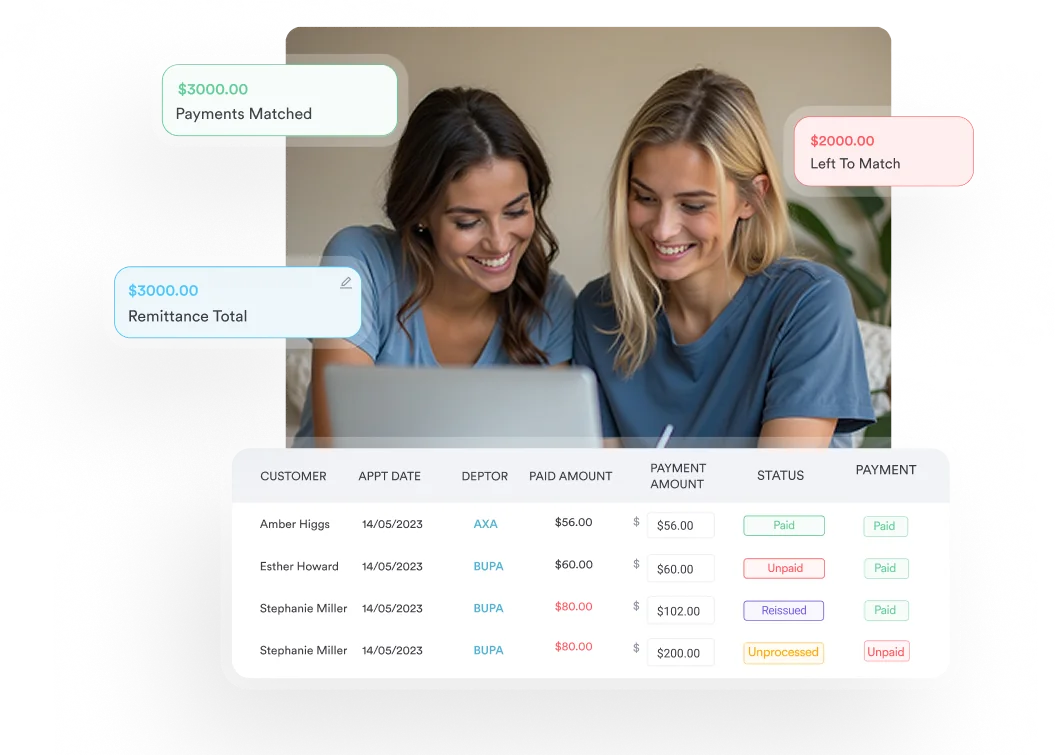
The following CPT procedure codes are frequently associated with Q75.8 diagnoses in craniofacial and reconstructive surgical settings. Specific pairings depend on payer LCD/NCD policies and the clinical indication documented. Verify each pairing against the AAPC CPT-to-ICD-10 crosswalk before submission.
Procedures on plastic surgery EMR workflows need the diagnosis code attached at the point the procedure order is created, not retrospectively during billing. This reduces the risk of payer denials citing inadequate medical necessity documentation.
Craniofacial anomaly coding extends well beyond the Q75 block. Clinicians and coders working in craniofacial, pediatric, or reconstructive specialties encounter multiple ICD-10-CM chapters when documenting these patients fully. Understanding where Q75.8 fits in that broader landscape reduces the chance of incomplete or mismatched claim sets.
For complex craniofacial cases, the clinical record often supports multiple diagnosis codes across several chapters, the same way a congenital anomaly like Q42.0 pairs with additional codes for associated findings. Coding accuracy depends on documentation quality at the clinical encounter level, not just at the billing stage. Practices that capture structured diagnosis data during consultation reduce coding queries.
Sequencing multiple diagnosis codes follows the same logic across congenital anomaly chapters: The primary condition drives the principal diagnosis, and associated malformations or chromosomal findings such as Q93.1 are coded as additional diagnoses. Getting this sequencing right matters for DRG assignment on inpatient claims.
Practices managing craniofacial and congenital diagnosis cases face a specific workflow challenge: The clinician documents the condition in a clinical note, the coder selects the appropriate ICD-10-CM code, and the biller submits it alongside a procedure code. Each handoff introduces an opportunity for the code to be dropped, changed, or mismatch the documented diagnosis.
Pabau embeds ICD-10 code selection within the clinical record itself, so the diagnosis flows directly into the claim without manual re-entry. This links the diagnosis to the procedure at the point of documentation, creating an audit trail that supports both HIPAA-compliant record-keeping and payer review.
Practices that have moved to integrated practice management software report fewer billing denials tied to diagnosis-procedure mismatches.
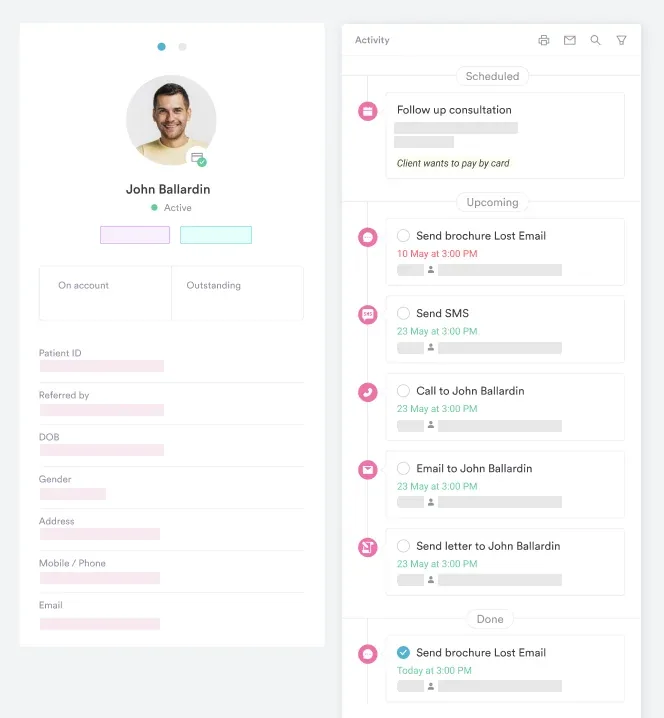
For practices operating under HIPAA-compliant practice software requirements, the audit trail embedded in Pabau’s workflow means every code selection is timestamped and associated with the clinical note that supports it. That documentation trail is what protects practices during post-payment reviews.
For craniofacial surgical cases using Q75.8, attach the supporting clinical note to the claim at submission. Payers reviewing NEC code usage routinely request documentation to confirm that a more specific Q75.x code was considered and ruled out.
Q75.8 is the correct ICD-10-CM code when a documented congenital malformation of the skull or facial bones does not fit a named condition within Q75.0 through Q75.5. Using it correctly requires two things: Confirming the condition is genuinely congenital, and verifying no more specific Q75.x code applies.
Pabau’s integrated clinical and billing workflow helps practices capture the diagnosis at point of care, attach it directly to the claim, and maintain the documentation trail that supports NEC code use during payer review. To see how Pabau handles ICD-10 coding workflows for surgical and specialist practices, book a demo.

Billing a pathology test next? MAI Complex RNA test billing guide walks through verifying the code and confirming this pathology test’s place in the schedule.
Billing a haemoglobinopathy blood test? Haemoglobin F blood test billing guide covers what the test investigates and how to submit a compliant claim through Healthcode.
Coding a new patient’s first visit? Initial outpatient consultation billing guide explains when this foundational code applies to a new patient’s first face-to-face assessment.
ICD-10 code Q75.8 is the diagnosis code for other specified congenital malformations of skull and face bones, classified under Chapter 17 (Congenital malformations, Q00-Q99) of ICD-10-CM. It is an NEC (not elsewhere classified) code used when a documented congenital craniofacial bone anomaly does not match any of the named specific codes in the Q75.0-Q75.5 range.
Yes. Q75.8 is a billable, leaf-level ICD-10-CM code valid for FY2026 claim submission. No additional digit is required. Confirm current fiscal year validity through the official CDC/NCHS ICD-10-CM tool before submission.
Q75.8 captures documented congenital anomalies of the skull or facial bones that do not have a dedicated code in Q75.0-Q75.5 — for example, congenital orbital deformities, platybasia, congenital nasal bone anomalies, and accessory skull sutures of congenital origin. Always verify against the current ICD-10-CM tabular list, as inclusion terms are updated annually.
Q75.8 (other specified) means a specific condition has been identified and documented but has no dedicated ICD-10 code. Q75.9 (unspecified) means the condition is genuinely not documented with enough specificity to assign any code. Using Q75.9 when the clinician has documented a named or described condition is a coding error.
Common CPT pairings include craniofacial reconstruction codes (CPT 21175, 21182) and unlisted craniofacial procedures (CPT 21299). Specific pairings depend on the procedure performed and payer LCD/NCD policies. Always verify the CPT-to-ICD-10 crosswalk before submission to confirm medical necessity documentation requirements.
When the craniofacial anomaly is part of a broader chromosomal syndrome (Q90-Q99), code also the underlying chromosomal condition per ICD-10-CM sequencing guidelines. If a Q75.8 diagnosis is associated with a neural tube defect or other malformation in a separate chapter, code both as appropriate per the applicable includes and excludes notes in the tabular list.



