

HCPCS code E0198: Water pressure pad billing guide
HCPCS code E0198 is a water pad for a standard mattress HCPCS code E0198 is the ...

Last Updated: Oct 13, 2026
Billable Code Specific Code
Q13.1 is the billable ICD-10-CM code for absence of iris.
Let Pabau's smart automation suggest the right codes, reduce claim denials, and keep your practice compliant—effortlessly.
Automate repetitive tasks and focus on what matters most—your patients.
Reduce coding errors and ensure compliance with the latest regulations.
Clean claims, fewer denials, and faster reimbursements.
Powerful insights and reporting to help your practice thrive.
HIPAA compliant SOC 2 certified GDPR-compliant Trusted by 4,000+ clinics worldwide

ICD-10 Code Q13.1 is the billable diagnosis code for aniridia, the congenital absence or underdevelopment of the iris.
Q13.1 has no laterality subcodes, so one code covers unilateral and bilateral aniridia alike.
Aniridia usually stems from a PAX6 gene mutation, and it rarely turns up as an isolated finding.
Glaucoma, foveal hypoplasia, and nystagmus each need their own ICD-10-CM code when the record documents them.
Practice management software like Pabau keeps the clinical note and the claim in step, so every comorbidity code has documentation behind it.
ICD-10 Code Q13.1 is the billable ICD-10-CM diagnosis code for aniridia, the congenital absence or severe underdevelopment of the iris. It sits in Chapter 17 and carries no laterality subcodes, so the same code applies whether one eye or both are affected. The quick reference below covers its placement, billability, and validity period.
Per the CMS ICD-10 codes reference, Q13.1 carries no Excludes1 or Excludes2 notation that would block its use alongside related ocular codes. It does carry a “use additional code” instruction for any associated glaucoma, which is the detail most coders overlook. Check the current fiscal year’s tabular before you submit.
Aniridia is a congenital malformation in which the iris is either completely absent or severely underdeveloped. The name means “without iris,” though most patients retain a rudimentary iris stump. The condition affects both eyes in the majority of cases.
PAX6 gene mutations account for most cases. PAX6, or paired box gene 6, is the master regulator of eye development. A mutation disrupts the formation of several ocular structures at once, which is why aniridia rarely shows up on its own. Some cases arise sporadically with no detectable PAX6 variant, so record genetic testing findings separately rather than assuming them. Accounts receivable aging shows which codes are slow to pay long before anyone calls it a denial problem. Patients who claim reimbursement themselves need an itemized receipt, which is what a superbill template sets out.
The absent iris is visible at birth. Aniridia is often flagged at an infant check by primary care practices, well before the child reaches an ophthalmologist. The referral note that follows is frequently the earliest documentation supporting Q13.1.
The clinical picture of aniridia extends well beyond the absent iris. Ophthalmologists will typically encounter several associated findings, and each one earns its own ICD-10-CM code once the record documents it.
Capture each of these features in the note whenever you observe them. Each one is separately billable, and each supports medical necessity for the management that follows.
ICD-10 Code Q13.1 sits inside a well-defined hierarchy. Knowing where it falls helps coders pick the most specific code. It also stops them defaulting to the parent code Q13, which is not billable on its own.
Q13.1 is the only code in the Q13 block that names aniridia. Q13.2 is a residual code for iris malformations that have no code of their own, so using it for aniridia understates the diagnosis. The CDC/NCHS ICD-10-CM web tool confirms Q13.1’s placement and billability for the current fiscal year.
An EMR built for OB-GYN practices carries perinatal diagnoses through delivery records and newborn follow-up.
Yes. ICD-10 Code Q13.1 is a fully billable ICD-10-CM diagnosis code, confirmed valid for submission in FY2026. The CMS tabular attaches no parenthetical notation, dagger symbol, or non-billable marker to it. Practices can put Q13.1 straight on a claim without coding to a deeper level of specificity.
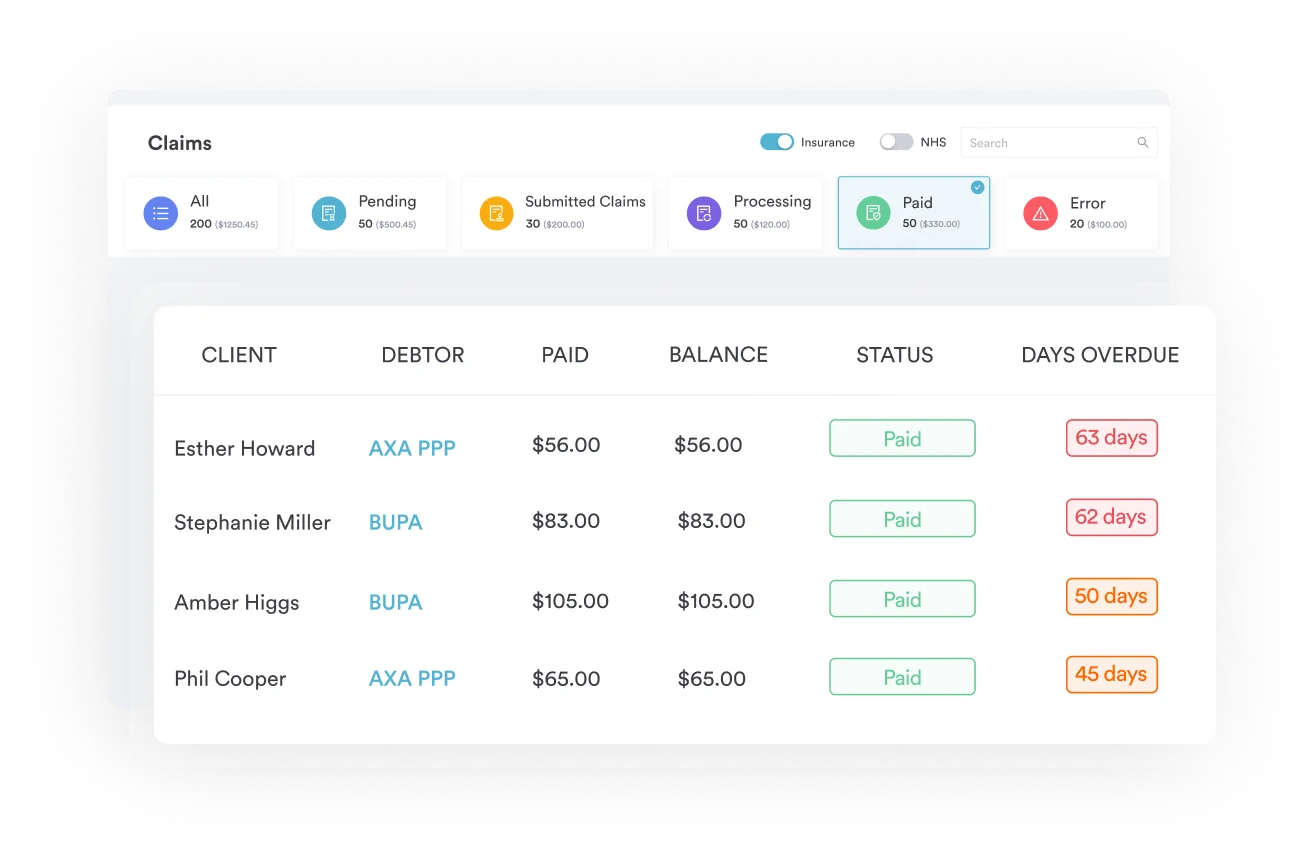
Efficient claims management software helps ophthalmology practices track Q13.1 submissions alongside the comorbidity codes that usually travel with them. That cuts the manual entry errors that creep in when a patient presents with several documented conditions.
Structured medical forms matter here too. Without structured intake and clinical note capture, the comorbidities that justify additional codes often go unrecorded, which leaves valid billing on the table.
Document every clinical feature of aniridia observed at the encounter, not just the primary diagnosis. Foveal hypoplasia, nystagmus, and glaucoma each have their own billable ICD-10-CM codes. Leaving them off the claim understates the complexity of care and may affect reimbursement for the level of evaluation and management provided.
The absent iris is the most visible feature, but aniridia is a pan-ocular condition. Coordinating care across several documented findings also depends on patient compliance, since families need to keep monitoring appointments for years.
Severity varies considerably. Some patients keep near-normal vision for years before complications accumulate. Others present with profound visual impairment in infancy. The table below summarizes the key associated features and their clinical significance.
The glaucoma row is where claims most often come apart. Q13.1’s tabular carries a “use additional code” note. Foveal hypoplasia has no dedicated code of its own.
The keratopathy row needs a sixth character. H18.89 is a parent code. Pick H18.891 for the right eye, H18.892 for the left, H18.893 for bilateral, or H18.899 when laterality is unstated. These codes are not exhaustive, and clinical presentation still drives selection, so verify current descriptions with the AAPC ICD-10-CM code lookup.
Aniridia’s most significant systemic association is WAGR syndrome. WAGR stands for Wilms tumor, aniridia, genitourinary anomalies, and intellectual disability. The R historically stood for “retardation,” and intellectual disability is the preferred term now.
Not every patient with Q13.1 has WAGR syndrome. The association shows up in a subset of cases involving a deletion on chromosome 11p13 that takes out both PAX6 and the neighboring WT1 gene. Assign the extra codes only once genetic and clinical evidence supports them.
One principle runs through the whole of Chapter 17. When an associated condition is documented and clinically managed, code it separately rather than assuming the primary diagnosis already covers it.
Each WAGR component gets its own most specific code, because ICD-10-CM has no combination code for the syndrome. The ophthalmologist codes the aniridia. Oncology and genetics code their own findings. The Wilms tumor component comes from the C64 series, which does carry laterality.
The intellectual disability component needs a neuropsychological assessment behind it. That report usually lives in psychology practice software rather than the eye record, so request it before you assign a severity code.
Documentation rules for Q13.1 are the same as for any diagnosis code. The diagnosis must be documented, clinically supported, and coded to the highest available specificity. For Q13.1 that ceiling is built into the code itself, because no laterality subcodes exist.
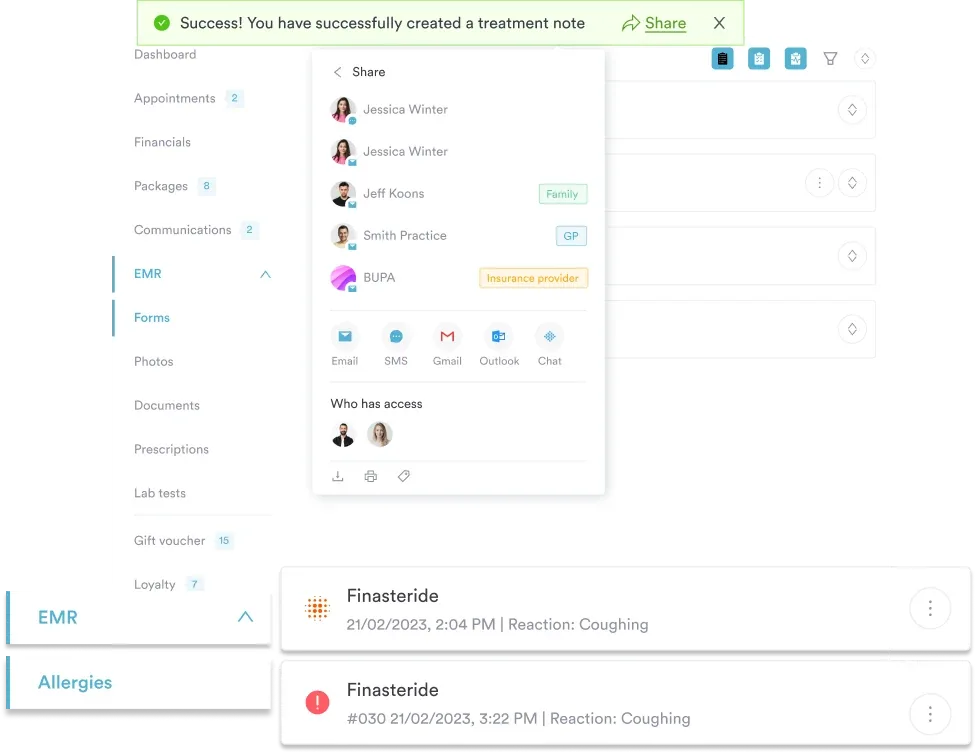
Use patient record documentation tools that let ophthalmologists capture every comorbid finding in a structured format. Coding staff can then see at a glance which additional ICD-10-CM codes the clinical note actually supports.
ICD-10 Code Q13.1 carries no laterality distinction. A single code covers both eyes, whether the condition is bilateral or unilateral. Do not append laterality modifiers that the tabular does not offer. If the record documents unilateral aniridia, Q13.1 is still the correct and complete code.
Q13.1 may serve as either the principal or a secondary diagnosis, depending on the focus of the encounter. At a follow-up visit to monitor aniridia progression, Q13.1 is the principal diagnosis. At a visit that mainly manages glaucoma in a known aniridia patient, the glaucoma code leads and Q13.1 follows.
Pulling digital intake forms into the pre-visit workflow helps the ophthalmologist’s note carry every element each submitted code needs. It does that without adding to the clinician’s workload during the encounter.

Four errors account for most Q13.1 claim problems. Knowing them in advance heads off the denial before it happens.
The WHO ICD-10 browser is useful for comparing the international classification against the US-specific ICD-10-CM version. That comparison earns its keep when a patient arrives with medical records from overseas.
Applying the separate-code principle consistently across Chapter 17 is what keeps ophthalmology billing clean. Coding shortcuts that fold every finding into Q13.1 invite the denials this section is trying to prevent.
In most ophthalmology practices the aniridia comorbidities live in three places at once. Slit-lamp findings sit in the clinical note. The genetics report arrives as a scanned letter. The coder works from whichever of the two they happen to see. Codes get dropped, and the claim understates the visit.
Practice management software like Pabau puts all of it in one client record. Custom clinical forms prompt for foveal hypoplasia, nystagmus, glaucoma, and corneal status at every review. The findings that justify H42 or H35.89 land as structured fields, instead of free text buried in a paragraph.
Claims then draw on the same record. Your coder can see which comorbidities were documented and managed at that encounter. They can sequence H42 behind Q13.1 and send the claim without chasing a missing letter. Fewer denials come back, and the ones that do are quicker to answer.

Pabau helps ophthalmology and specialist practices capture structured clinical notes, document comorbidities, and submit accurate ICD-10 claims without switching between systems.

Q13.1 itself is easy. Assign it once aniridia is documented and move on, because there is no laterality decision and no deeper level to code to. The work sits in everything that travels with it.
So treat the “use additional code” note as the real instruction on this code. Sequence H42 behind Q13.1 for associated glaucoma, take H18.89 down to its sixth character, and keep WAGR components with the specialists who documented them. Do that consistently and the denials stop being a monthly surprise.
The trade-off worth remembering is time. Capturing comorbidities properly takes a few extra seconds in the note. Those seconds are what separate a complex encounter from an underpaid claim. Book a demo to see how Pabau keeps ophthalmology documentation and coding in step.

Need the rules for seventh-character extensions? ICD-10 code S39.93XS shows how character-level specificity decides whether a code is billable.
Searched for a code that turned out US-only? why CCSD code 0142T does not exist explains why 0142T is a retired US CPT code, not a UK CCSD billing code.
Billing a coagulation screening test? CCSD code 0153B for kaolin clotting time covers the billing code for the coagulation test used to detect a lupus anticoagulant.
Billing for glaucoma monitoring in a high-risk patient? HCPCS code G0118 covers the screening service and the frequency limits that apply to it.
Coding a different chromosomal abnormality? ICD-10 code Q93.1 walks through the Q93 block and the genetics documentation each code needs.
ICD-10 Code Q13.1 is the diagnosis code for aniridia, a congenital malformation in which the iris is absent or severely underdeveloped. It falls under Chapter 17 of ICD-10-CM, which covers congenital malformations, deformations and chromosomal abnormalities. Within that chapter it sits in the Q10-Q18 block for the eye, ear, face and neck.
Yes, Q13.1 is a fully billable ICD-10-CM diagnosis code, valid for direct claim submission in FY2026. No non-billable markers, Excludes1, or Excludes2 annotations prevent its use alongside related ocular codes.
Q13.1 covers both bilateral and unilateral aniridia. The code carries no laterality distinction, so you use the same code whether one eye or both are affected. No laterality modifier is required or available in the current tabular.
Aniridia-associated glaucoma is reported with H42, glaucoma in diseases classified elsewhere. Q13.1’s tabular carries a use additional code note for it, so H42 is sequenced after Q13.1 rather than replacing it. Do not reach for a congenital glaucoma code unless the record documents the glaucoma as congenital.
Common companion codes include H42 for associated glaucoma, H55.00 for nystagmus, H35.89 for foveal hypoplasia, and Q12.0 for congenital cataract. Aniridia-related keratopathy is coded to H18.891, H18.892, H18.893, or H18.899, depending on laterality. Each code needs documentation showing the condition was observed and managed at the encounter.
No. Q13.1 specifically identifies aniridia only. Other congenital iris malformations need a different code. Use Q13.0 for coloboma of iris, or Q13.2 for other congenital malformations of iris, depending on what the record documents.



