

ICD-10 Code S42.444P: Medial epicondyle fracture, right humerus
ICD-10 Code S42.444P: full descriptor and code validity ICD-10 Code S42.444P car...

Last Updated: Oct 13, 2026
Billable Code Specific Code
Q20.0 is the billable ICD-10-CM code for common arterial trunk.
Coders most often misassign this code by confusing it with aortic septal defect (Q21.4), a distinct anomaly that ICD-10-CM explicitly excludes from Q20.0.
Let Pabau's smart automation suggest the right codes, reduce claim denials, and keep your practice compliant—effortlessly.
Automate repetitive tasks and focus on what matters most—your patients.
Reduce coding errors and ensure compliance with the latest regulations.
Clean claims, fewer denials, and faster reimbursements.
Powerful insights and reporting to help your practice thrive.
HIPAA compliant SOC 2 certified GDPR-compliant Trusted by 4,000+ clinics worldwide

ICD-10 Code Q20.0 (common arterial trunk, also called common truncus) has been a billable ICD-10-CM code since October 1, 2015, and remains unchanged in the current FY2026 edition, effective October 1, 2025.
The code covers common arterial trunk and persistent truncus arteriosus; aortic septal defect (Q21.4) is explicitly excluded.
A large ventricular septal defect almost always accompanies common arterial trunk and must typically be coded separately.
Pabau’s claims management software and Pabau Scribe, its AI-assisted documentation tool, help pediatric cardiology practices assign and document congenital heart codes accurately.
ICD-10 Code Q20.0 is a billable, specific ICD-10-CM diagnosis code. It has been billable since October 1, 2015, and remains unchanged and unrevised in the current FY2026 ICD-10-CM edition, effective October 1, 2025. It can be used for reimbursement and reporting purposes in US clinical settings.
“Common arterial trunk” is the official ICD-10-CM and WHO ICD-10 title for Q20.0. “Common truncus” is a widely used alternate term for the same condition. Coders working from surgical or echocardiography reports may encounter either term and should map both to Q20.0.
Common arterial trunk, also known as common truncus, truncus arteriosus, or persistent truncus arteriosus, is a rare congenital heart defect in which a single great vessel arises from the base of the heart, overriding the ventricular septum.
According to the CDC/NCHS ICD-10-CM coding system and the CDC National Center on Birth Defects and Developmental Disabilities (NCBDDD), the condition typically includes a large ventricular septal defect (VSD).
In a normal heart, two separate vessels arise from the ventricles. The aorta arises from the left ventricle, and the pulmonary artery from the right. In common arterial trunk, these two vessels fail to separate during fetal development. A single arterial trunk carries blood to both the systemic and pulmonary circulations, creating significant hemodynamic stress from birth.
The condition requires surgical correction in the neonatal period, typically involving separation of the pulmonary arteries, closure of the VSD, and reconstruction of the right ventricular outflow tract. Documentation of this anatomy in operative and echocardiographic reports is what drives accurate Q20.0 assignment.
Assigning ICD-10 Code Q20.0 requires clinical and imaging evidence consistent with the condition. Coders should look for explicit documentation of the following criteria, per CDC NCBDDD surveillance guidelines.
Coders should not assign Q20.0 based solely on the presence of a VSD or a single outflow vessel without explicit physician confirmation of the full anatomical pattern. Ambiguous documentation warrants a query to the treating cardiologist before code assignment.
Highly specific codes carry the same requirement outside congenital cardiology.
Flag any report that mentions ‘single outflow tract’ or ‘truncal valve’ without explicitly stating truncus arteriosus. Query the cardiologist before assigning Q20.0 – related codes like Q20.1 (double outlet right ventricle) or Q25.4 (other congenital malformations of aorta) may be more appropriate depending on the full anatomical picture.
The official includes and excludes notes for ICD-10 Code Q20.0 directly affect which conditions can and cannot be coded here. Getting these right prevents the most common Q20.0 claim errors.
Q20.0 officially includes “persistent truncus arteriosus” and “common truncus” as clinical synonyms of common arterial trunk. The WHO ICD-10 browser lists these terms explicitly in the code’s includes note. Coders may assign Q20.0 whenever the physician documents any of these terms:
This is the most critical coding error point for Q20.0. Aortic septal defect, also called aortopulmonary septal defect or aortopulmonary window, is coded Q21.4 and is explicitly excluded from Q20.0.
Aortopulmonary window involves a communication between the ascending aorta and the main pulmonary artery, with both vessels remaining separate. Truncus arteriosus involves a single vessel replacing both. A coder who misreads an operative note describing aortopulmonary window as a “single outflow tract” could incorrectly assign Q20.0.
When the report confirms separate aortic and pulmonary roots with an abnormal connection between them, Q21.4 is the correct code, not Q20.0. The same anatomical precision matters for codes like S12.230B, where small differences in the imaging report determine which code applies.
Q20.0 sits within the Q20 subcategory covering congenital malformations of cardiac chambers and connexions, itself part of the broader Q20-Q28 block for congenital malformations of the circulatory system. Understanding the full Q20 subcategory helps coders select the most specific code when reports describe related but distinct cardiac anatomy.
CMS ICD-10-CM guidelines require coders to select the most specific available code, making familiarity with the entire Q20 range essential.
Q20.9 (unspecified) should only be used when documentation genuinely does not confirm the specific type of malformation. Payers may scrutinize unspecified congenital heart codes more closely on high-cost neonatal claims, making physician query the better path when documentation is incomplete.
Several congenital heart conditions can resemble common arterial trunk on initial clinical presentation. Coders working from admission diagnoses rather than confirmed post-operative or post-echocardiography documentation are most at risk for misassignment.
The same risk applies outside cardiology.
The Q21.4 exclusion warrants extra attention. Both conditions can present with cyanosis and a large VSD, and operative notes for aortopulmonary window repair may use language that sounds similar to truncus repair. Coders unfamiliar with the anatomical distinction should review the echocardiography report or cardiac catheterization data, not the admission note alone.
According to the CMS ICD-10-CM coding guidance, congenital anomaly codes should be assigned at every visit when they affect patient care, not just on the initial diagnosis encounter. For Q20.0 specifically, this means the code follows the patient through surgical repair, post-operative care, and subsequent cardiac follow-up as long as clinical management is influenced by the malformation.
Q20.0 is frequently the principal diagnosis for neonatal surgical admissions. When an associated VSD is documented and managed separately, coders should also assign Q21.0 (ventricular septal defect) in addition to Q20.0.
The ICD-10-CM Tabular List does not prohibit this dual coding, and the VSD is a distinct anatomical defect that affects the surgical approach and clinical management. Practices using claims management software should ensure their billing workflows flag congenital heart encounters for secondary code review.
A Q20.0 claim submitted without the associated Q21.0 when both are documented may underrepresent the severity of the case for DRG grouping purposes.


Pabau helps pediatric cardiology and specialty practices manage complex ICD-10 documentation, multi-code claims, and billing workflows in one place. See how it works for your team.

Common arterial trunk is a nationally reportable congenital condition in most US states. The CDC National Center on Birth Defects and Developmental Disabilities (NCBDDD) maintains the Birth Defects Surveillance Manual, which provides case definition guidance for Q20.0 that goes beyond standard clinical coding.
State birth defect registries use ICD-10-CM codes to identify cases for population-level surveillance, making accurate code assignment relevant beyond the individual claim. Many cases are first suspected on a prenatal ultrasound.
For surveillance purposes, the NCBDDD requires that Q20.0 be assigned only when the full anatomical pattern of common arterial trunk is confirmed, not just a single outflow tract anomaly. Facilities serving as birth defect surveillance sites should ensure their coding workflows align with both CMS ICD-10-CM guidelines and state registry reporting requirements.

The ResDAC ICD codes in Medicare files guidance provides additional context for researchers and facilities using ICD-10-CM codes in Medicare claims data analysis, including how congenital codes like Q20.0 appear in secondary diagnosis fields across long-term patient encounters.
Pediatric cardiology and neonatology practices managing complex congenital diagnoses face a documentation burden that general-purpose EHRs often cannot address. Practice management software like Pabau uses Pabau Scribe, our AI scribe, to help practitioners structure consultation notes and discharge summaries in a way that surfaces the specific anatomical language coders need.
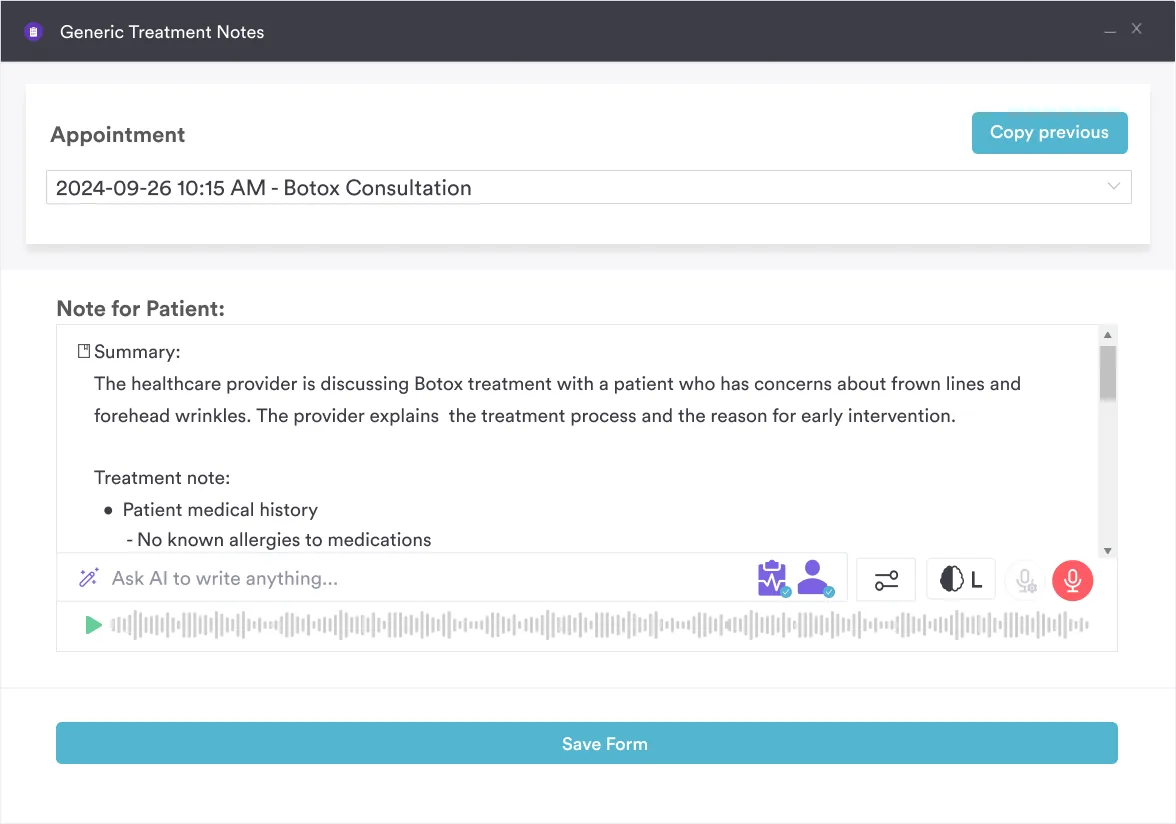
The platform’s clinical documentation tools support structured problem lists, diagnosis tracking, and multi-encounter record continuity. For Q20.0 cases that follow patients from neonatal diagnosis through staged surgical repairs and long-term cardiology follow-up, maintaining a coded diagnosis across the entire care record helps ensure coding consistency at every encounter.
As patients transition from pediatric cardiology into long-term follow-up with a family physician.
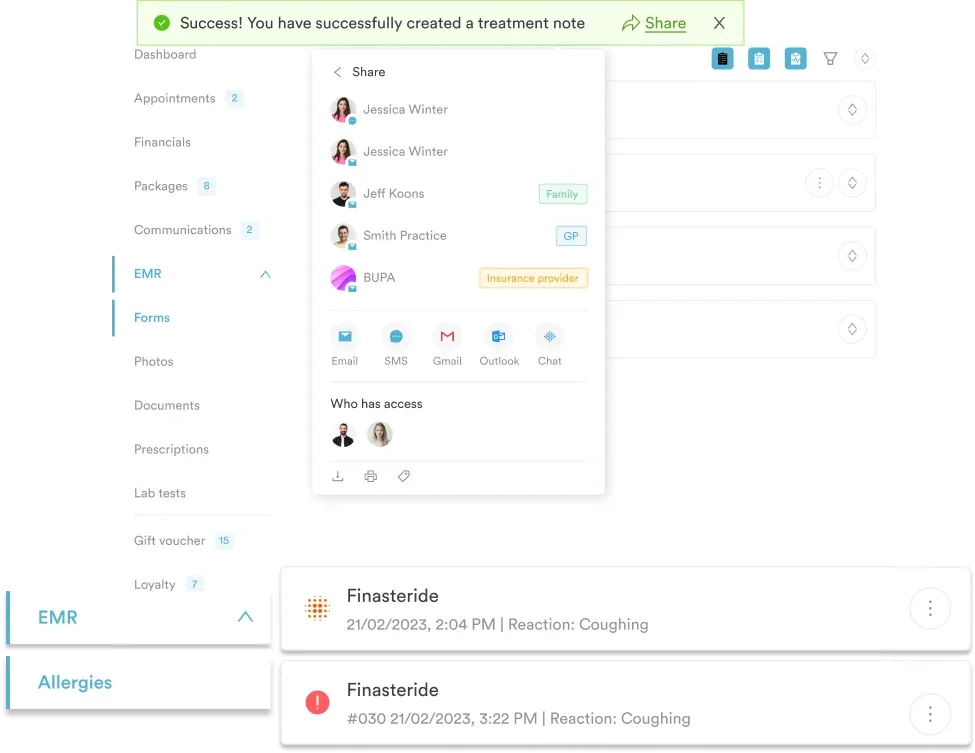
Practices looking for digital intake and consent forms specific to complex cardiac patients, or time-saving features for private practices handling high-acuity congenital cases, can explore how Pabau reduces administrative overhead without compromising documentation quality.
ICD-10 Code Q20.0 captures a rare but high-stakes diagnosis. The most common coding risk is the Q21.4 exclusion: coders who confuse aortopulmonary window with true truncus arteriosus will misassign the code.
Requiring echocardiography confirmation and explicit physician language before assigning Q20.0 is the single most effective safeguard. When a VSD is separately documented and managed, add Q21.0 alongside Q20.0 to fully represent the clinical picture.
Pabau’s clinical documentation and claims management workflows help specialty practices maintain the documentation standards these complex cases demand. To see how it works for your team, book a demo.

Billing an injectable medication administered in your practice? S0166 walks through how to report an olanzapine injection alongside the visit’s E/M code.
Need a refresher on coding an initial-encounter injury? S90.519A covers documentation and encounter-type modifiers for an unspecified ankle abrasion.
Looking for guidance on a common injection billing scenario? J3420 breaks down how practices report vitamin B-12 injections for reimbursement.
ICD-10 Code Q20.0 is a billable ICD-10-CM diagnosis code for common arterial trunk, also called common truncus or persistent truncus arteriosus. It is a rare congenital heart defect in which a single arterial vessel replaces the normal separate aorta and pulmonary artery, typically accompanied by a large ventricular septal defect. The code has been billable since October 1, 2015, and remains unchanged in the current FY2026 ICD-10-CM edition, effective October 1, 2025.
Yes, Q20.0 is a billable, specific ICD-10-CM code that can be used for reimbursement and reporting in US clinical settings. It is a terminal code with no further subdivision, and it has remained billable and unrevised since October 1, 2015, including in the current FY2026 edition effective October 1, 2025.
Q20.0 is the correct ICD-10-CM code for persistent truncus arteriosus. The WHO ICD-10 includes note for Q20.0 explicitly lists “persistent truncus arteriosus” as a synonym for common arterial trunk. Coders may assign Q20.0 whenever the physician documents this term in the medical record.
Aortic septal defect, coded Q21.4, is excluded from Q20.0. Aortic septal defect (aortopulmonary window) involves a communication between separate aortic and pulmonary trunks and is a distinct condition from common arterial trunk. Coders must confirm from echocardiography or operative reports whether separate great vessels are present before selecting Q21.4 over Q20.0.
The Q20 category covers congenital malformations of cardiac chambers and connexions and includes Q20.0 (common arterial trunk), Q20.1 (double outlet right ventricle), Q20.2 (double outlet left ventricle), Q20.3 (discordant ventriculoarterial connection), Q20.4 (double inlet ventricle), Q20.5 (discordant atrioventricular connection), Q20.6 (isomerism of atrial appendages), Q20.8 (other specified), and Q20.9 (unspecified). All subcodes are billable.
Common arterial trunk is diagnosed through echocardiography confirming a single arterial trunk overriding the ventricular septum, supported by cardiac catheterization or surgical findings. Coding Q20.0 requires explicit physician documentation of the condition by name. Most cases also warrant an additional code for the associated ventricular septal defect (Q21.0) when documented and managed separately.




