CRM for chiropractors: how to manage patients, bookings and marketing
A CRM for chiropractors is a patient relationship management system built around...

Last Updated: Oct 13, 2026

CO2 laser aftercare is a structured plan for the hours, days, and weeks after ablative resurfacing, covering wound care, product restrictions, sun protection, and the warning signs a practice needs to catch early.
Fully ablative CO2 treatments generally take about one to two weeks to re-epithelialize, with redness fading over weeks to months. Fractional CO2 heals faster because it leaves untreated skin between treatment columns.
Patients with higher Fitzpatrick skin types (IV-VI) face a heightened risk of post-inflammatory hyperpigmentation, so sun protection and product restrictions matter even more for them.
Practice management software like Pabau can send this aftercare template automatically after the appointment and log that the patient received it, so recovery guidance never depends on staff remembering a printout.
A ready-to-use patient handout covering immediate post-treatment care, the first 48 hours, the first week, common side effects, when to contact your practice, and long-term sun protection, plus a confirmation section for the patient’s file.
Download templateA CO2 laser doesn’t just redden the skin. It vaporizes the outer layers to trigger fresh collagen, so your patient goes home with an open wound, not a sunburn. Get the aftercare wrong, and you risk infection, scarring, or blotchy pigment that undoes weeks of careful downtime. Once the skin heals, bringing patients back falls under marketing and retention, an area compared in our roundup of the best med spa software.
This template gives your practice one consistent, evidence-informed handout for every CO2 laser patient. Below, you’ll find what belongs in it, why the recovery timeline matters, and how automated delivery stops patients guessing at 11pm.
CO2 laser aftercare is the plan a patient follows from the moment they leave the treatment chair until their skin fully recovers. For an ablative laser, that plan is part of the treatment itself, not a courtesy. The laser removes the epidermis and some of the upper dermis, so the skin needs genuine wound care, not just a moisturizer recommendation.
Fully ablative CO2 resurfacing generally takes about one to two weeks for the surface to re-epithelialize. The exact timing depends on depth and your protocol. Fractional CO2, which leaves untreated skin between thousands of tiny treatment columns, usually heals faster. Many fractional patients are back to wearing makeup within about five to seven days.
Either way, visible redness sticks around much longer than the wound itself. Erythema often fades gradually over several weeks, sometimes months, as new collagen remodels underneath. That difference between “the skin looks healed” and “the skin has fully recovered” is where most patient confusion, and most support calls, come from.
A generic printout invites generic questions. Treat the download as a starting point, then open it in your practice’s document editor and add these details before it reaches a patient:

Most complications trace back to what happens, or doesn’t happen, on day one. Walk patients through this before they leave:
Patients on prescribed pain relief or an antiviral should take it exactly as directed, not just when they remember.
A skin clinic platform stores completed forms alongside consents and before-and-after photos.
Share a realistic timeline up front, and patients stop panicking at every stage. Treat these as ranges, not promises. Depth and your own protocol shift the exact days.
Fractional CO2 moves through this timeline noticeably faster than a fully ablative pass, since untreated skin between the treatment columns speeds the surface repair.
The goal is a moist wound, never a dry or waterlogged one. Keep the routine boring and repeatable:
Vague advice like “avoid harsh products” gets ignored. Give patients specifics instead:
If a patient can’t commit to these restrictions for even a week, it’s worth asking whether they’re ready for the procedure at all.
Once the skin has closed over, broad-spectrum SPF 30 or higher becomes a daily habit, not an occasional one. The American Society of Plastic Surgeons puts it simply: apply sunscreen every day, no exceptions, while new skin heals. Post-laser skin is unusually prone to post-inflammatory hyperpigmentation, and that risk climbs for patients with higher Fitzpatrick skin types (IV to VI).
Direct sun exposure before the skin has fully healed can cause lasting discoloration. It often takes far longer to treat than the original signs of aging. A wide-brimmed hat and physical shade matter just as much as the sunscreen itself.
Herpes simplex reactivation is a documented risk of CO2 laser resurfacing, particularly around the mouth, and it can delay healing or trigger scarring if it’s missed. Ask about cold sore history at intake, every time, not just when a patient mentions it themselves.
For patients with a history of cold sores, or whenever a practice treats the full face, prophylactic antiviral medication is standard practice. Start it before the procedure and continue it through healing. Published dermatologic surgery research backs this approach. Confirm the patient filled the prescription before treatment day, not just that you wrote it.
Give patients a short, memorable list of red flags rather than a wall of symptoms:
Any one of these deserves a same-day call, not a message left for the morning.
Ask about pain, not just appearance, at the first follow-up call. Itching alone is almost always normal healing. New or worsening pain after day 3 or 4 is the symptom that most reliably flags a problem worth seeing in person.
Handing over a printout isn’t the same as delivering aftercare. Run through this before anyone walks out the door:
The same handful of errors show up again and again, on both sides of the counter:
Practices running more than one laser device need a separate handout for each modality. A laser tattoo removal aftercare template covers a different healing pattern, with blistering and pigment clearance between sessions.
Handing over CO2 laser aftercare instructions is good patient care, and it’s also a compliance expectation. In the UK, the Care Quality Commission’s Safe Care and Treatment standard expects providers to assess recovery risks and confirm patients understand post-procedure guidance. In the US, a documented record that a patient received and understood their aftercare instructions strengthens the medical record and supports the practice’s informed-consent process. A med spa running injectable treatments needs batch and lot detail attached to the note, not to a separate log.
Store a signed or digital acknowledgment in the patient’s file, not just a copy of the handout itself. If a complication is ever disputed later, a dated delivery record is the practice’s strongest evidence that the patient was properly informed.
Most practices still rely on a printed handout at checkout, a process that depends entirely on a busy front desk remembering to hand it over. Practice management software like Pabau can send this CO2 laser aftercare template automatically by text or email within minutes of the appointment ending. Delivery never rests on memory.
The same instructions also live in the patient’s portal, so they can check the timeline or the warning signs at midnight without calling the practice. Automated appointment reminders then cover the follow-up visits from this template’s timeline, cutting down on the missed day-7 or week-2 check-ins that let complications go unnoticed.
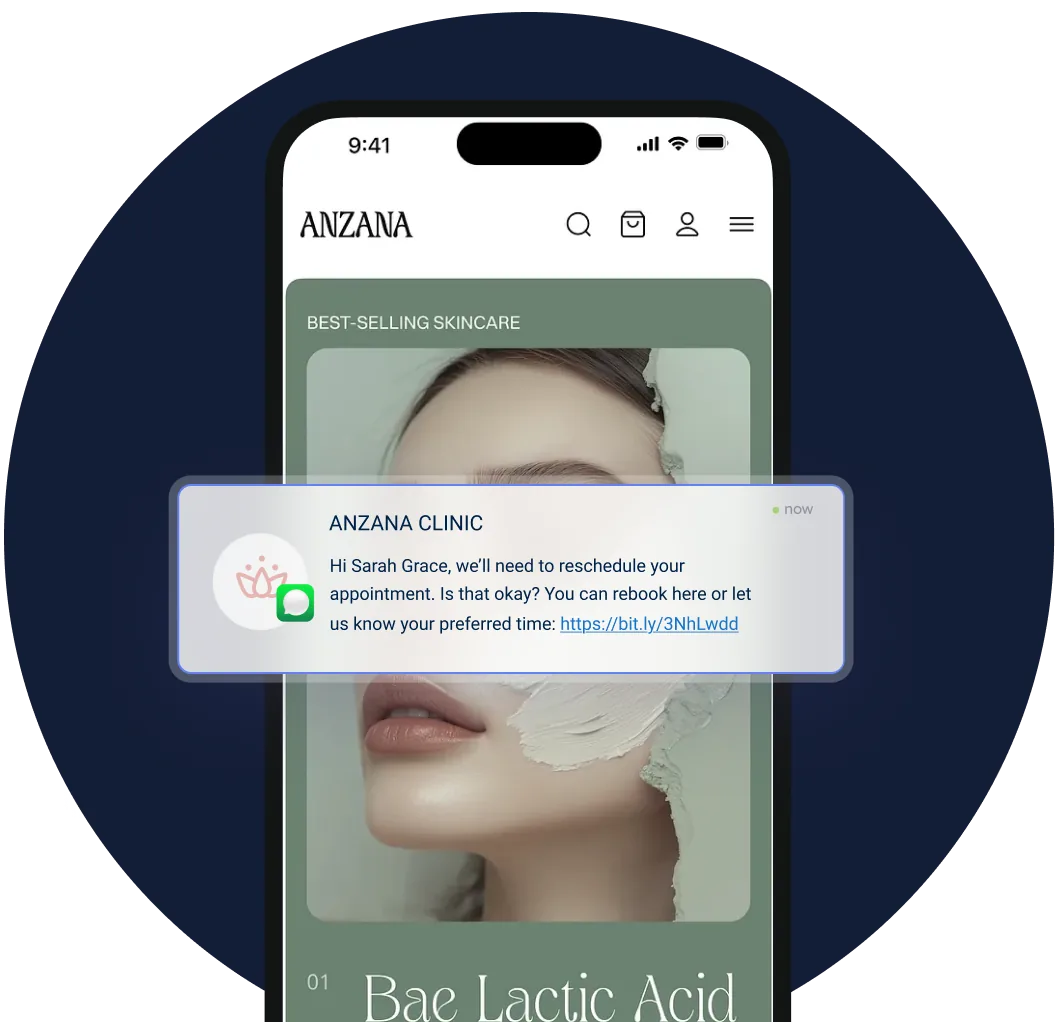

Pabau sends customized aftercare instructions automatically after the appointment, tracks that patients received them, and reminds patients about follow-up visits, so recovery guidance never depends on a staff member remembering a printout.

Good CO2 laser aftercare isn’t complicated. It’s specific: a moist wound, a realistic timeline, sun protection from the day the skin closes, and a short list of warning signs everyone on staff can recite from memory. Get those pieces right, and most complications simply don’t happen.
Download the template above, then customize it for your practice’s depths and protocols. After that, book a demo to see how Pabau can send it automatically, track delivery, and remind patients about the follow-up visits that catch problems early.

Treating a different resurfacing modality? Dermabrasion aftercare instructions covers a mechanical resurfacing protocol with its own timeline and wound-care specifics.
Want the lighter end of the resurfacing spectrum? Dermaplaning aftercare walks through a same-day-recovery treatment many practices offer alongside CO2 laser.
Looking to automate the handoff itself? Pre- and post-care software shows how automated delivery works across every treatment your practice offers, not just laser resurfacing.
No. A chemical peel uses an acid to remove skin layers, while a CO2 laser uses focused light energy to vaporize tissue and heat the surrounding dermis. Both trigger new collagen, but they heal differently and carry different aftercare needs.
Cost varies widely by treatment depth, area covered, and location, so there’s no single figure that applies everywhere. Ask the treating practice for a quote based on the specific protocol planned.
Most practices use topical or local anesthetic during treatment, so discomfort is usually mild during the procedure itself. Afterward, patients typically describe a sunburn-like sting for the first day or two.
It depends on the individual. Fully ablative CO2 carries a higher pigmentation risk for Fitzpatrick IV to VI skin. Many providers favor fractional settings, or an alternative treatment, after a careful consultation.
Fully ablative CO2 is often a single session. Fractional CO2 usually needs two to four sessions spaced several weeks apart to reach a similar result with less downtime per visit.