Fair fighting rules worksheet
A fair fighting rules worksheet is a therapy handout that sets out ground rules ...

3
Last Updated: Oct 21, 2026

A couples therapy worksheet turns vague relationship complaints into structured clinical data you can assess and act on.
Worksheets work as in-session exercises and as between-session homework, which keeps couples engaged with therapy at home.
Frameworks like the Gottman method, Emotionally Focused Therapy (EFT), and love languages give each worksheet its clinical structure.
A completed worksheet belongs in the client record, where it documents the presenting problem and supports your treatment plan.
Practice management software like Pabau lets you send the worksheet, store the answers, and reference them in your notes.
A structured assessment covering relationship dynamics, conflict patterns, communication barriers, trust, and intimacy. It includes separate sections for each partner’s self-assessment and for therapist-guided exploration of the presenting problem.
Download templateCouples often arrive at a first session unable to name what is wrong. A structured couples therapy worksheet gives both partners a frame for their communication patterns, conflict triggers, trust concerns, and intimacy needs. For you, that turns a vague complaint into assessment data you can work with.
This guide covers what the worksheet does, how to assign it, and what to do with the answers. It also shows how to run the process through digital intake forms rather than paper handouts.
A couples therapy worksheet is a structured exercise that guides two partners through reflection on their relationship. Clinical versions sit inside an evidence-based framework and are built for use with a practitioner, rather than as standalone self-help.
Most worksheets ask open-ended questions about communication, conflict triggers, emotional validation, trust, intimacy, and relationship goals. Partners answer individually or together, then talk the answers through with you in session. The completed sheet then joins the clinical record as baseline assessment data.
A worksheet is not the same thing as a workbook. A couples therapy workbook runs as a multi-week program with sequential exercises. A worksheet targets one skill or one assessment area at a time.
Delivery has moved on from printed handouts. Sending the sheet through a secure client portal lets you see who completed it and pull the answers straight into your note.
Worksheets do several clinical jobs at once. They normalize reflection on hard subjects, collect assessment data before the first appointment, and give an avoidant partner a low-pressure way to speak up.
Research on psychotherapy homework links completed between-session tasks to faster symptom reduction. In couples work, the sheet keeps therapeutic ideas in play during the six days you do not see them. That steady client compliance is what moves the work forward.
Communication is the most-cited focus across every couples framework. Active listening, non-blaming language, and emotional validation sit underneath all of them. A general communication worksheet covers the same ground for individual clients.
An active listening exercise teaches each partner to reflect the other’s emotion back without judgment or problem-solving. The sheet presents a scenario and asks the listening partner to write a reflective response. In session, you compare which responses showed understanding and which slid into defense.
Partners practice swapping blame for ownership. The sheet sets blame language beside I-statement language, then asks each partner to reframe a recent conflict line. They work from a single formula. I feel [emotion] when [behavior], because [impact], and I need [request].
Validation worksheets separate acknowledging a feeling from agreeing with it. The exercise gives statements of hurt or frustration and asks the other partner to respond without dismissing them. Words like irrational and overreacting are the ones to catch.
Conflict itself is healthy. What predicts stability is the pattern each couple falls into when resolving or avoiding it. Conflict worksheets teach de-escalation and repair, often through the Gottman method.
A typical sheet walks a couple through five steps. It names the triggering event, each partner’s emotional response, the unhelpful pattern that followed, what each partner needed, and one repair attempt. Homework then asks them to try a single repair technique that week and write down what changed. A printable conflict resolution worksheet can structure those same five steps for couples to complete before the session.
Where one partner shuts down or deflects every time, a defense mechanisms worksheet makes the pattern visible before you try to change it.
The Gottman method names four behaviors that predict breakdown: criticism, contempt, defensiveness, and stonewalling. Worksheets help a couple spot which ones show up in their arguments and practice the antidote. Criticism becomes a gentle start, contempt becomes stated appreciation, and defensiveness becomes shared responsibility.
Two Gottman templates get used more than any others. Love Maps asks each partner to map the other’s dreams, fears, and daily stressors. Bids for Connection tracks the small moments where one partner reaches out and the other responds.
Both work well as recurring homework, which is easier to run inside a single therapy practice management system than across email and paper.
Gary Chapman’s five love languages give partners plain words for how they each give and receive affection. The five are:
The worksheet asks each partner to rank the five, then guess how their partner would rank them. The mismatch is usually the whole complaint. Once it has a name, the difference becomes a preference you can work with.
Couples preparing to marry have their own set of subjects. Money, family-of-origin patterns, intimacy expectations, and conflict style all need airing before the wedding, not after it.
Good prompts are direct. What did your parents’ marriage teach you about partnership? Which values would your partner have to share? Premarital preparation is consistently linked to higher marital satisfaction and lower divorce risk.
A circle of influence worksheet works well here, since so much premarital anxiety attaches to things neither partner controls.
Presenting problems vary, and so should the sheet you reach for. Infidelity recovery needs structured work on disclosure, accountability, and rebuilding trust. Long-distance couples need prompts about contact frequency and visit planning.
LGBTQ+ couples may need material that addresses minority stress and family acceptance. A sexless marriage calls for questions about desire, medical factors, and what each partner has stopped asking for.
That saves you rebuilding a sheet from scratch on a Monday morning.
Homework only helps if the assignment is clear. Say what the sheet is for, whether partners fill it in together or apart, when it is due, and how you will use it.
Partners often say the sheet feels safer than another argument at the kitchen table. Writing slows the reaction down and leaves a record both can point to.
If a partner will not do it, treat that as clinical material. Ask whether the obstacle is time, discomfort, or a dynamic where one partner decides everything.
Licensed therapists, psychologists, counselors, and social workers all use structured couples material. Marriage and family therapists use it most, across both individual and joint sessions.
It also earns its place in psychology practices, coaching work on relational goals, and community centers running low-cost couples counseling. Structured tools cut preparation time.
Primary care physicians who screen for relationship strain can also hand the sheet over as a referral aid.
Documentation. A completed sheet records baseline functioning, the presenting problem, and the goals you agreed. That supports insurance billing, audits, and any handover to another provider.
Workflow. Pre-session answers compress intake into minutes instead of half an appointment. You get that time back for the therapeutic work.
Credibility. Using the Gottman method, Emotionally Focused Therapy (EFT), or love languages material tells a couple your approach rests on research. That builds hope early, which is often what keeps them coming back.
Progress tracking. Repeat the same baseline sheet mid-treatment and again at discharge. The change is visible to the couple, which justifies the sessions still to come.
Completed sheets hold sensitive relationship and mental health detail. Store them in encrypted client records rather than email threads or a shared drive. Send them through a secure portal, never by text message.
Get informed consent before you assign anything, especially where one partner is uneasy about disclosure. Document that conversation in the progress note.
If answers surface a safety concern such as financial control or coercion, record it and change the plan. A psychiatric evaluation template is often the right next step for the partner at risk.
Most therapy practices still run worksheets by hand. You print the sheet, hand it over, wait for it to come back, scan it, then retype the useful parts into a note. The sheet ends up in one system and the clinical record in another.
Practice management software like Pabau keeps both in the same place. You build the worksheet once as a reusable template. Answers land straight on the couple’s record, and reminders chase anyone who has not finished.
In session, you open the answers beside your notes rather than shuffling paper. Pabau Scribe, our AI scribe, drafts the note while you talk, so the worksheet discussion is captured without typing.
Every subscription includes the full platform, so forms, records, and reporting are all there from day one.

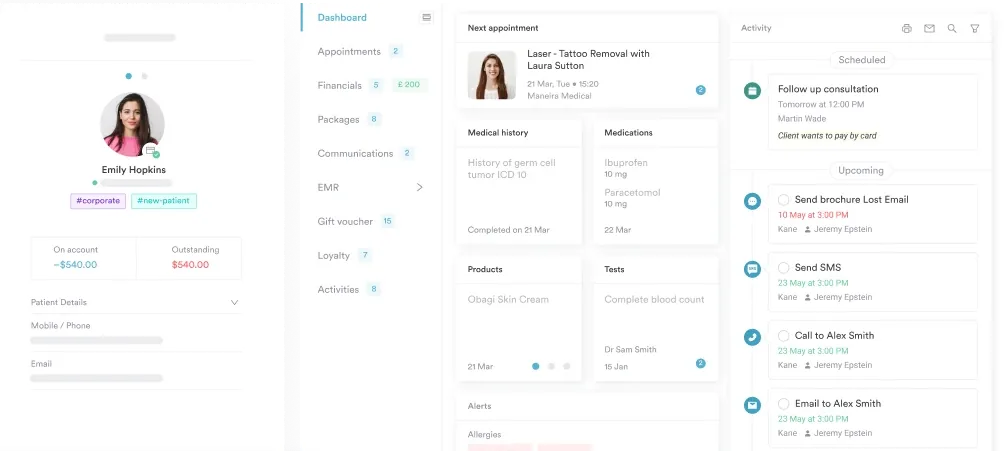
Send the worksheet from the client’s file, collect answers in the portal, and keep them beside your session notes. Reminders handle the chasing.

The worksheet is only as useful as what you do with the answers. File it away unread and you have simply added admin. Read it back to the couple in session and it becomes the assessment.
So pick one framework and stay with it long enough to see the pattern repeat. A couple who fills in the same sheet at intake, mid-treatment, and discharge gives you evidence conversation alone cannot.
The trade-off worth remembering is friction. Every extra step between you and a completed sheet costs you completions. Book a demo to see how Pabau sends couples worksheets, collects the answers, and files them against the record.

Need a sheet for individual clients too? Communication worksheet covers the same listening and I-statement skills outside couples work.
Want a multi-week program instead of one exercise? Couples therapy workbook sequences the exercises across a full course of treatment.
One partner deflects every difficult question? Defense mechanisms worksheet helps both partners name the pattern before you try to shift it.
Bringing DBT skills into couples sessions? DBT therapy worksheet guides clients through mindfulness, emotion regulation, distress tolerance, and interpersonal effectiveness skills.
Looking for a strengths-based opening exercise? Character strengths assessment gives couples something to build on rather than only problems to fix.
A worksheet is a single, focused exercise targeting one skill, such as active listening or identifying conflict triggers. A workbook is a multi-week program with sequential worksheets, psychoeducation, and a progression from basic to advanced skills. Worksheets are used in session or as a single homework assignment. Workbooks run as longer self-guided or therapist-led programs.
Self-guided sheets can raise awareness, and a love languages inventory does help partners understand each other better. What they lack is clinical guidance. Without a clinician to normalize difficult emotions and redirect defensiveness, the exercise can start an argument instead of resolving one. Worksheets work best when a therapist introduces them, explains the reasoning, and processes the answers with both partners.
Yes. Research on therapy homework consistently shows faster symptom reduction and higher client satisfaction than talk therapy alone. For couples, sheets grounded in the Gottman method, EFT, or cognitive behavioral therapy work best when reviewed in session. Outcomes show up in communication, conflict resolution, and relationship satisfaction.
Treat the refusal as clinical data. It may signal avoidance, a lack of safety, a dynamic where one partner makes every decision, or simple time pressure. Explore it without judgment in session, then adjust the assignment. Offer a shorter version, allow completion in the room, or pause worksheets while you address the resistance.
Store them in an encrypted, password-protected client record system rather than email or personal cloud storage. Use a forms platform that keeps audit logs of when each sheet was sent, completed, and opened. Tell clients not to return them over insecure channels. Keep them on the client’s file for your required retention period.