Anja Dodevska

Hand profile template: Free PRWHE wrist and hand form (PDF)
What is a hand profile template? A hand profile template is a questionnaire the ...

1
Last Updated: Nov 10, 2026
Free PDF 4 pages, print-ready Clinician-reviewed
Emotional eating worksheets are structured self-reflection tools that help patients see when they eat for reasons other than physical hunger. Emotional eating is usually linked to stress, boredom or low mood. A worksheet gives patients a repeatable way to notice the pattern and practice another response. This free four-page pack screens for emotional eating, locates where hunger is felt, lists triggers and builds a 10-step habit-change plan. Therapists, dietitians and weight management practitioners use it between sessions to turn insight into action.
A four-page pack with an 11-question emotional eating screener, a hunger-type identification exercise and a triggers-and-strategies worksheet. It closes with a 10-step plan for changing eating habits.
Start from scratch, or upload this PDF or any form you already use, and Pabau's AI Form rebuilds it with tick boxes, text fields and a signature. Attach it to the treatment once, and every patient gets it on time.
AI Form rebuilds the consent, history and aftercare forms you already use. You review each one, then publish.
Patients complete forms on their phone before they arrive, so the front desk stops retyping paper.
Every signed form is versioned and attached to the treatment record, ready when you need it.
Set how long a consent stays valid. Returning patients skip forms they have already signed.
Supports HIPAA and GDPR compliance AES-256 encryption 4.8 on G2 4.7 on Capterra Trusted by 4,000+ practices worldwide

An emotional eating worksheet helps a patient spot eating that starts from a feeling rather than physical hunger.
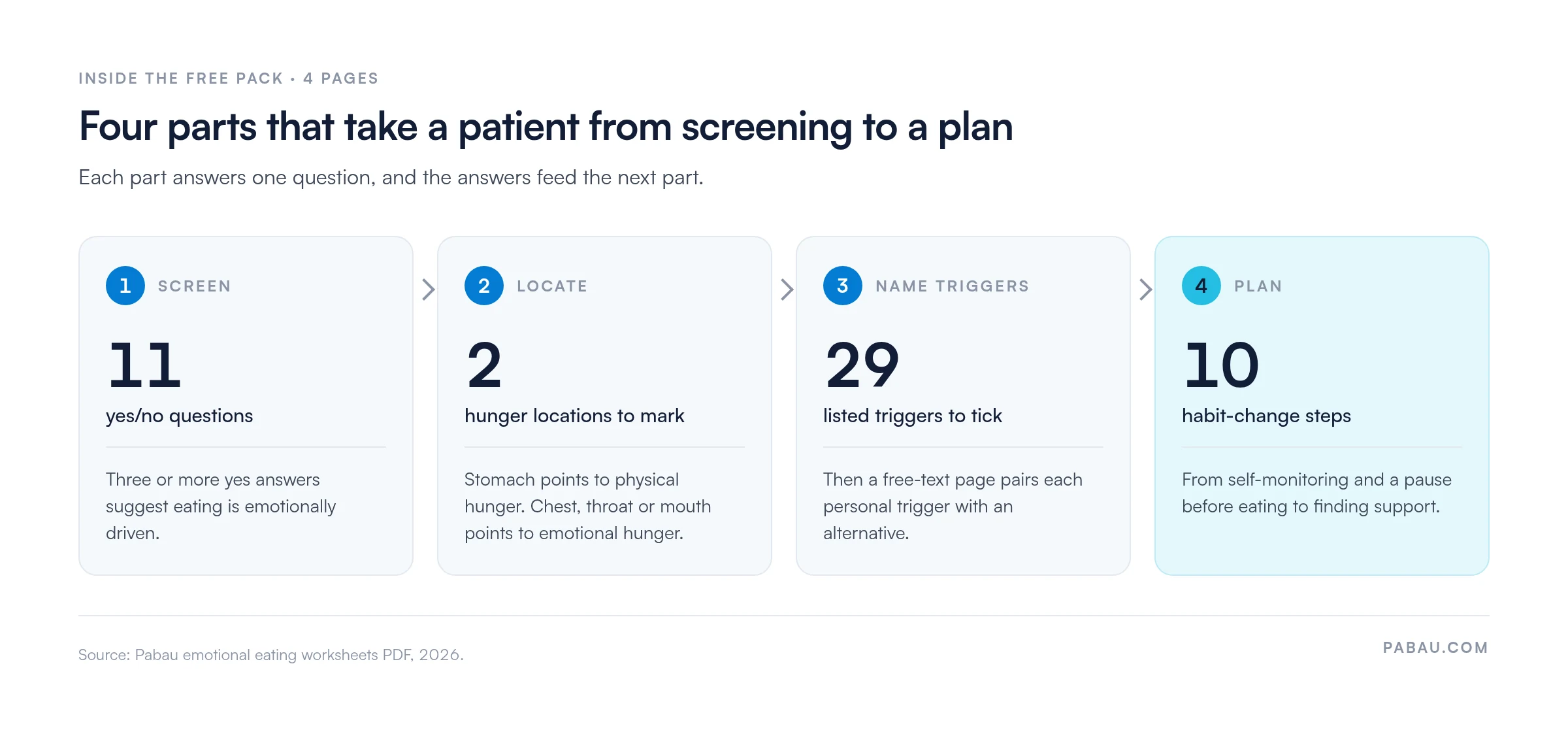
The free pack opens with 11 yes/no questions, and three or more yes answers suggest emotional eating.
Asking where hunger is felt helps separate the two types, since emotional hunger often sits in the chest, throat or mouth.
Review completed worksheets together in session before assigning the next one.
Validated scales such as the DEBQ and EAT-26 give a score that a worksheet tally cannot replace.
Emotional eating worksheets are structured self-reflection documents that guide a patient through recording eating episodes, the feelings present at the time, and the outcome. Their clinical purpose is to build awareness first, then to introduce alternative coping responses.
Unlike a generic food diary, a worksheet asks about mood, context and hunger level alongside what was eaten. This shifts the focus from calorie counting to the emotional drivers behind eating.
The free download is a four-page PDF in four parts, and each part feeds the next.
The body-location question gives patients a quick check they can run before eating. Physical hunger is usually felt in the stomach, while emotional hunger may show up in the chest, throat or mouth. The flow below shows how the four parts connect.
Use the download as a starting point. Add a food and mood journal or a hunger scale where a patient needs closer day-to-day tracking.
Emotional eating shows up as a repeated pattern across several episodes. Clinicians commonly note eating that begins suddenly, targets specific comfort foods, and continues after the body is full.
Where these signs overlap with loss of control eating, refer the patient for a specialist assessment. The Binge Eating Scale is one screening option before that referral. Worksheets support, but do not replace, a clinical diagnosis.
Physical hunger builds slowly and responds to a range of foods. Emotional hunger tends to arrive quickly and asks for a specific food.
Most packs fall into four categories, and each targets a different stage of the pattern.
A trigger log captures the time, place, preceding emotion and the urge to eat. Ask patients to complete one entry each time an urge appears, even if they do not eat.
A food and mood journal records what was eaten, mood rated before and after, and hunger level. Review patterns over a week rather than a single day.
Patients rate hunger on a 1 to 10 scale before, during and after eating. This makes physical cues easier to separate from emotional ones.
CBT thought records help patients test the beliefs that come before an eating episode. A typical thought record worksheet has columns for the situation, the automatic thought, the emotion, and a more balanced alternative.
Cognitive restructuring is the step where patients examine the evidence for their thought. CBT is an evidence-based intervention for emotional eating, and thought records are one of its most portable tools.
DBT distress tolerance skills give patients options for getting through an urge without eating. Worksheets can list skills such as distraction, self-soothing and urge surfing, with a space to log which one was used.
An urge surfing worksheet walks a patient through riding out a craving until it passes. Use it alongside a trigger log, so the patient sees which skill worked in which situation.
A worksheet works best when it is introduced with a clear rationale and reviewed on a fixed schedule. The steps below follow a typical protocol.
Worksheets gather observations, while validated scales give a standardized score. The Dutch Eating Behaviour Questionnaire (DEBQ) includes an emotional eating subscale, first described by van Strien and colleagues in 1986. The EAT-26 screens more broadly for eating disorder risk.
Scores should be interpreted by a trained clinician against the instrument’s published scoring guide. Do not treat a worksheet tally as a validated score.
A mindful eating worksheet asks patients to notice physical sensations and emotions before, during and after eating. Self-compassion worksheets address the shame that often follows an episode.
Several randomized trials show mindfulness-based interventions reducing emotional eating episodes, though effect sizes vary. These worksheets work best as one part of a wider plan.
Paper worksheets often leave the practice in a patient’s bag and come back half done, or not at all. Whatever does come back then sits in a folder away from the session notes.
Pabau is software built for therapists and other practitioners. Its digital forms let a patient fill in a worksheet on their phone before the session. The completed form lands in the patient record, ready for the review step.
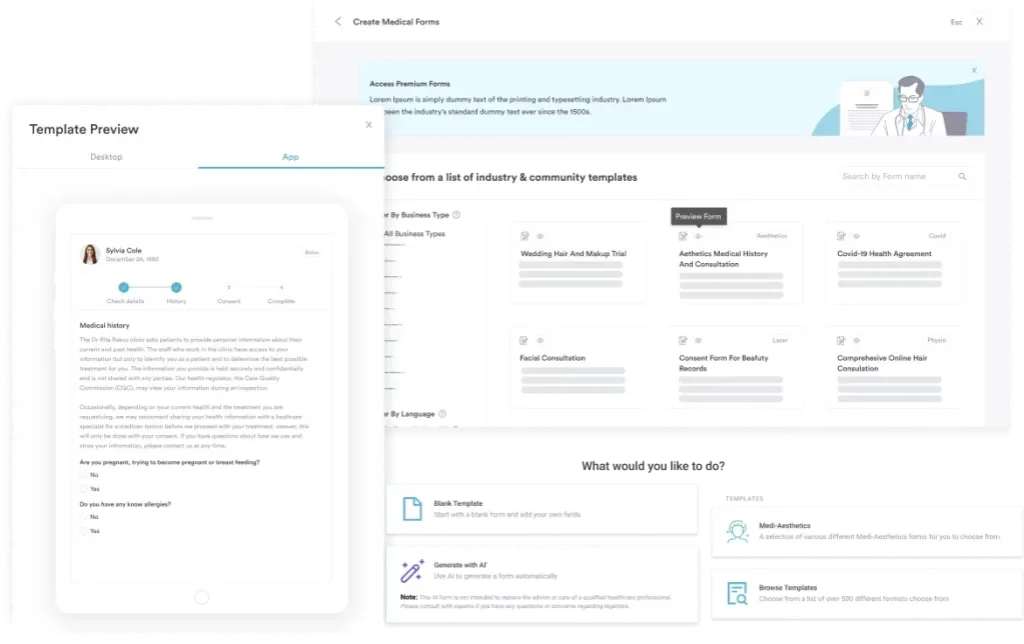
Session notes sit alongside the completed worksheets, so you can compare this week’s trigger list with last month’s in one place. Patients can also fill in forms through the Client Portal, which keeps the routine going between visits.

Pabau’s digital forms deliver each worksheet before the session and file the answers in the patient record, next to your session notes.

Emotional eating worksheets earn their place when the same patient fills them in more than once. A single screener gives a score, while a month of trigger entries shows which situations keep repeating.
Start with the screener and the hunger-location question. Move to the triggers page once the patient can tell the two hunger types apart, and keep validated scales for diagnosis.
Pabau’s Client records keep each completed worksheet next to your session notes. Book a demo to see how forms and notes fit your therapy workflow.

Working with a patient whose eating goes beyond emotional triggers? Eating disorder worksheets support therapy and recovery work between sessions.
Want more skills for riding out an urge? DBT distress tolerance skills explains the core skills and when to teach each one.
Does shame follow each episode? The self-compassion journal gives patients a structured way to respond to setbacks with kindness.
Building a patient’s list of alternatives to food? The coping skills worksheet helps patients choose and track coping strategies.
Running an exercise during the session? The mindful eating script guides a patient through eating with full attention.
An emotional eating worksheet is a structured self-reflection tool that helps patients record eating triggers, feelings and outcomes. Clinicians use it to build awareness before introducing coping skills.
Keep a trigger log for at least a week, noting the situation, emotion and urge each time eating is considered. Patterns usually become clear after a few repeated entries.
Yes. The free pack on this page is a four-page PDF with an 11-question screener, a hunger-type exercise, a triggers worksheet and a 10-step habit-change plan.
Thought records and cognitive restructuring are the most common CBT techniques for emotional eating. They help patients test the beliefs that come before an eating episode.